How to Prevent Colds and Flu
As any parent can tell you, cold and flu season isn't really about the weather. It's about all of us being shut up indoors together, along with each other's germs. When little Johnny hacks away at preschool without covering his mouth, little Annie gets a front-row seat. And she brings his germs home, alive and well, to share with the rest of the family.
Cold and flu viruses spread through the droplets we cough, sneeze and breathe out, and through our hands. They can survive for hours on doorknobs, remotes and toys, waiting for someone to touch them and then rub their eyes. The good news is that a few simple habits, and a little targeted cleaning, can keep a lot of those germs from making the rounds.
1. Wash Your Hands (the Right Way)
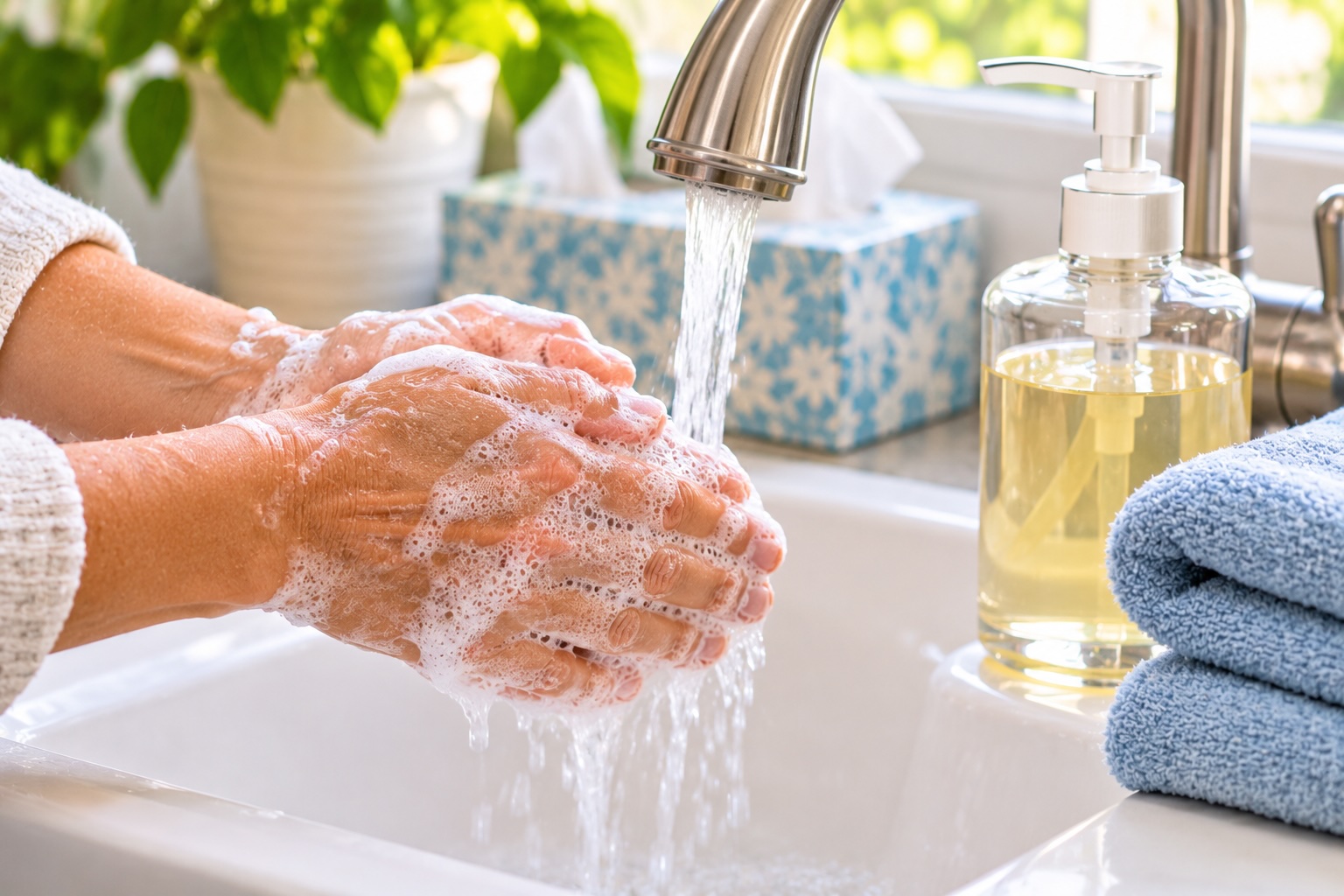
Handwashing is the single best thing you can do to prevent colds and flu. How you wash matters as much as how often:
- Wet your hands, and lather up with soap.
- Scrub for at least 20 seconds: the backs of your hands, between your fingers and under your nails. That's "Happy Birthday" twice, or the Alphabet Song once. Kids can pick.
- Rinse under running water.
- Dry with a clean towel. Change the bathroom and kitchen hand towels often, every day if someone is sick.
Wash every time: you come home, before eating or cooking, after using the bathroom, after blowing your nose and after caring for someone who's sick.
No sink? Use hand sanitizer with at least 60 percent alcohol, and rub it in until your hands are dry. Keep it in the car, your purse and the kids' backpacks. But it's a backup, not a replacement. Soap and water is better, especially when hands are visibly dirty.
2. Cover That Cough
Teach everyone to cough or sneeze into a tissue, throw the tissue away and wash their hands. No tissue? Cough into your elbow. Then throw the tissue away. (Keep the elbow.) Put a tissue box and a lined wastebasket in every bedroom and the family room during cold and flu season. And keep your hands away from your eyes, nose and mouth. That's how germs get in.
3. Get Your Flu Shot
The yearly flu vaccine is the best protection against the flu, and it's easy to get at most pharmacies. It's especially important if there's a baby, an older adult, a pregnant woman or anyone with a weakened immune system in your house. Ask your doctor or pharmacist what's right for your family. (There's no vaccine for the common cold, sadly. For that, see steps 1 and 2.)
4. Disinfect the Germ Hot Spots

You don't need to disinfect the whole house. Focus on the things everyone touches:
- Doorknobs and light switches
- Faucet handles and toilet flush handles
- Kitchen counters and the refrigerator, microwave and cabinet handles
- TV remotes, game controllers, phones, tablets and keyboards
- Hard plastic toys
- Stair railings and the car door handles
How often: Weekly during cold and flu season. Daily if someone in the house is sniffling.
How to do it right:
- Clean first. Wipe away dirt and grime with soap and water. Disinfectants don't work well on dirty surfaces.
- Then disinfect with a product labeled "disinfectant" that says it kills viruses. Disinfecting wipes are the easy way to do the quick daily wipe-down. Stash a container under the kitchen sink, in the family room and in the kids' bathroom. A bleach-based all-surface cleaner cleans and disinfects bigger areas.
- Leave it wet. Check the label for the "contact time," usually 1 to 10 minutes. A quick spray-and-wipe doesn't give it time to work.
Mix your own: Add 1/3 cup of regular unscented chlorine bleach to a gallon of room-temperature water (or 4 teaspoons to a quart). Make a fresh batch each day. Use it on hard, nonporous surfaces, leave it on for at least a minute and rinse food-contact surfaces afterward. Never mix bleach with ammonia, vinegar or other cleaners. The fumes are dangerous.
What doesn't work: Vinegar and ammonia are good cleaners, but they aren't disinfectants. Electronics need a different approach. Use alcohol-based wipes or check the manufacturer's instructions, and never spray liquid directly on them. Here's more on what each cleaning product does.
5. Don't Forget the Laundry

If Sneezy Susie handed your child her backpack or grabbed your daughter's sweatshirt sleeve at recess, her germs may still be hanging around on it.
- Wash school clothes, jackets and sweatshirts regularly, in the warmest water the care label allows. Regular detergent washes away cold and flu viruses, and a hot dryer finishes them off. Dry everything completely.
- Wash backpacks, if the label allows, every few weeks during cold and flu season. Empty them first (and brace yourself for what's at the bottom). Wipe down non-washable backpacks and lunch boxes with a disinfecting wipe.
- Use hot water for towels, bedding and pajamas when someone's sick, and add bleach for whites that can handle it. Many hardy germs can survive a warm-water swim.
- Don't shake dirty laundry, which sends germs into the air. Wash your hands after handling it, and wipe down the washer, the dryer and the laundry basket afterward.
More on choosing a temperature: What Temperature Should You Wash Clothes?
6. Take Care of Yourself
Germs are everywhere, so why aren't we sick all the time? A healthy immune system fights off most of them, and recovers faster when it doesn't. Make sure everyone in the family gets enough sleep, eats plenty of fruits and vegetables, drinks plenty of water and gets moving every day. Open a window for a few minutes now and then, too. Fresh air dilutes the germs floating around a closed-up house.
7. If Someone Gets Sick, Keep It Contained
- Stay home. If you or your child has a fever, stay home until you've been fever-free for 24 hours without fever-reducing medicine and your symptoms are getting better. That's how you keep from starting an outbreak at school or the office.
- Call the doctor early for the flu. Prescription antiviral medicines work best when they're started within 48 hours of the first symptoms.
- Set up a sick zone. If you can, keep the sick person in one room, with their own towel, cup and tissue box.
- Step up the cleaning. Disinfect the hot spots daily, and clean up after they're better. Here's how to disinfect your home after someone is sick.
When to call the doctor right away: trouble breathing or fast breathing, chest pain or pressure, confusion, a fever that improves and then comes back worse, signs of dehydration, or symptoms in a baby, an older adult or anyone with a chronic health condition. And if you're not getting better after several days, it's time to trade Doctor Mom for a licensed one.
How to Prevent Colds and Flu: Quick Answers
How long do cold and flu germs live on surfaces?
Cold and flu viruses can survive for hours on hard surfaces like doorknobs, remotes and counters, and for a shorter time on skin and fabric.
How long should you wash your hands?
At least 20 seconds with soap and water, about as long as it takes to hum "Happy Birthday" twice.
Does vinegar kill cold and flu viruses?
No. Vinegar is a good cleaner, but it isn't a disinfectant. Use a product labeled "disinfectant" or diluted bleach, and leave it wet for the time on the label.
Do you need hot water to kill flu germs in laundry?
No. Regular detergent and the warmest water the label allows, followed by thorough drying, takes care of cold and flu viruses. Use hot water for a sick person's towels and bedding.
How often should you disinfect during flu season?
Wipe down high-touch surfaces weekly, and daily when someone in the house is sick.
Keep Going
Keep your family healthy all year with these related guides:
- How to Disinfect Your Home After Someone Is Sick: Room by room.
- Cleaning for a Healthier Home: Where germs and allergens hide.
- Best Household Germ Killers: Bleach, peroxide and alcohol.
- Cleaning for Allergies: Is it a cold, or the dust mites?
- Cleaning Products Defined: What each type of cleaner does.
- What Temperature Should You Wash Clothes?: Cold, warm or hot.
- Clean Out Your Medicine Cabinet: Before you need it.
- House Cleaning Guide: Room-by-room tips.
- Clean Home
- Safe at Home
- How to Prevent Colds and Flu
Free 15-Minute Daily Reset Checklist
Get Notes on Keeping House
Fifteen minutes a day. No weekend cleaning marathons. No guilt. Sign up for my newsletter and I'll send you the printable checklist that makes it happen.
Send My ChecklistNo spam, ever. Unsubscribe anytime.
Free Printable
Notes on Keeping House
Sign up and get my 15-Minute Daily Reset Checklist. One timer, five zones, and a house that stays under control.
Send My ChecklistNo spam, ever. Just smart, funny tips for keeping house from Tara Aronson.