How to Clean Small Kitchen Appliances
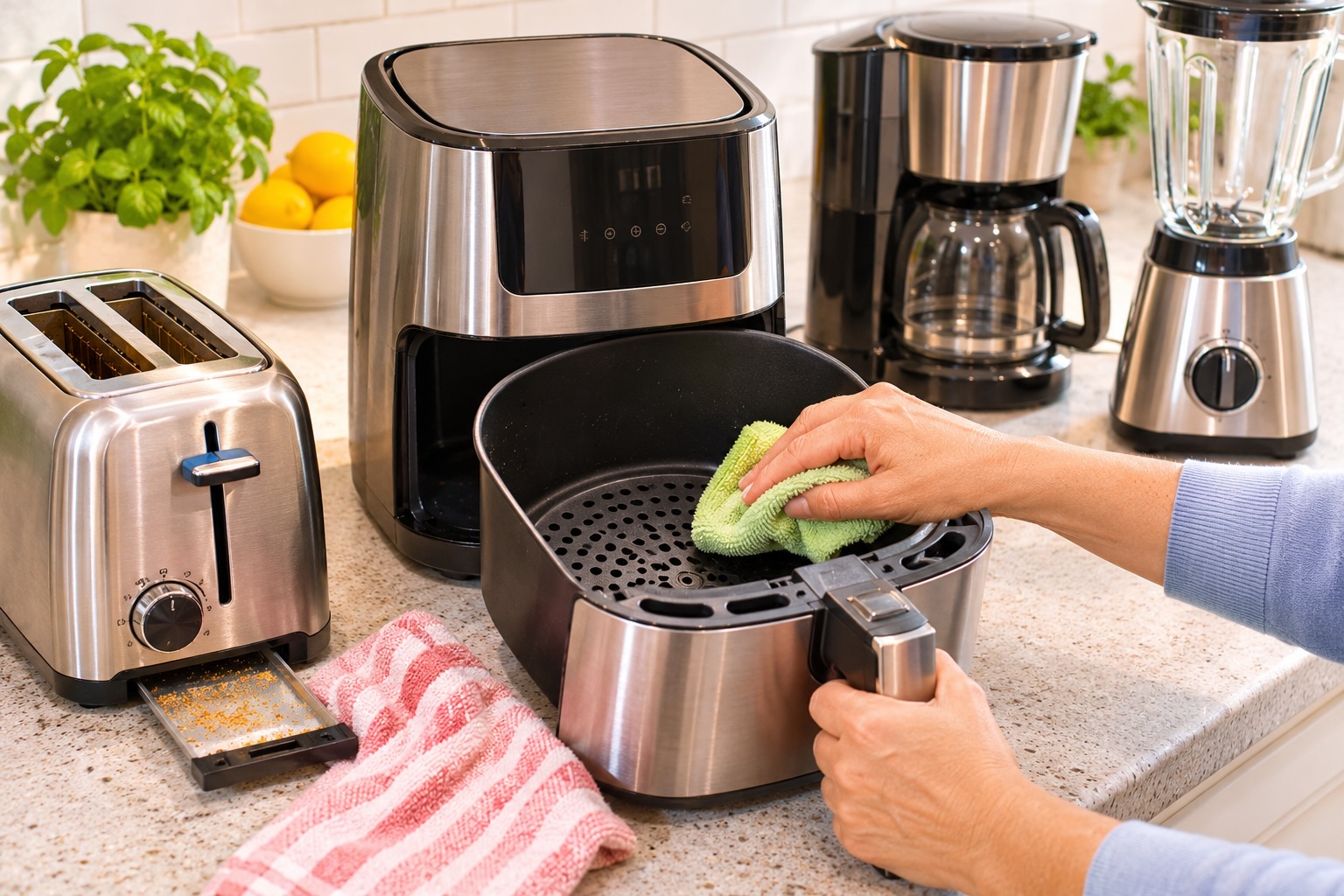
You keep a nice, clean house. Your counters sparkle. The laundry's always done. You could eat off your floors. OK, most of the time, anyway.
But how long has it been since you cleaned your coffee maker? That's what I thought. Let's face it: it's hard enough to get through the regular cleaning routine without worrying about toasters, waffle irons and the air fryer.
So small appliances get overlooked, and crumbs, grease and mineral buildup quietly move in. Most of us would clean the silly things, if we just knew how. Here's how to clean small kitchen appliances, one by one.
First, the Safety Rules
- Unplug it and let it cool completely before you clean it. Every time.
- Never submerge the base or any part with a cord or motor in water.
- Check the manual for which parts are dishwasher-safe. When in doubt, hand wash.
- Skip harsh scrubbers on nonstick coatings. Use a soft sponge.
- Dry everything completely before you plug it back in.
How to Clean a Coffee Maker
After every use: Wash the carafe and the filter basket in warm, soapy water, and toss the grounds. Leave the lid open so the reservoir can dry out.
Once a month, descale it:
- Fill the reservoir to the top with equal parts white vinegar and water.
- Run half a brew cycle, turn it off and let it sit for 30 minutes.
- Finish the cycle.
- Run two or three full cycles of plain water to rinse out the vinegar.
You could buy a commercial descaler that does the same thing. But why? If you have hard water, descale every few weeks. Coffee tastes bitter or the brew is slow? It's overdue.
Single-serve brewers (like a Keurig): Run the same vinegar-and-water mix through the machine without a pod, a cup at a time, until the reservoir is empty, then run plain water through it two or three times. Pop out the pod holder and wash it in warm, soapy water.
How to Clean a Toaster
- Unplug it and let it cool.
- Slide out the crumb tray and empty it over the trash. No crumb tray? Turn the toaster upside down over the trash can and give it a gentle shake.
- Brush out stubborn crumbs with a dry pastry brush or a soft, clean paintbrush.
- Wipe the outside with a damp, soapy cloth. For stainless steel, follow the grain.
Never stick a fork, knife or anything metal into a toaster, even when it's unplugged. You can damage the heating elements.
How to Clean a Toaster Oven
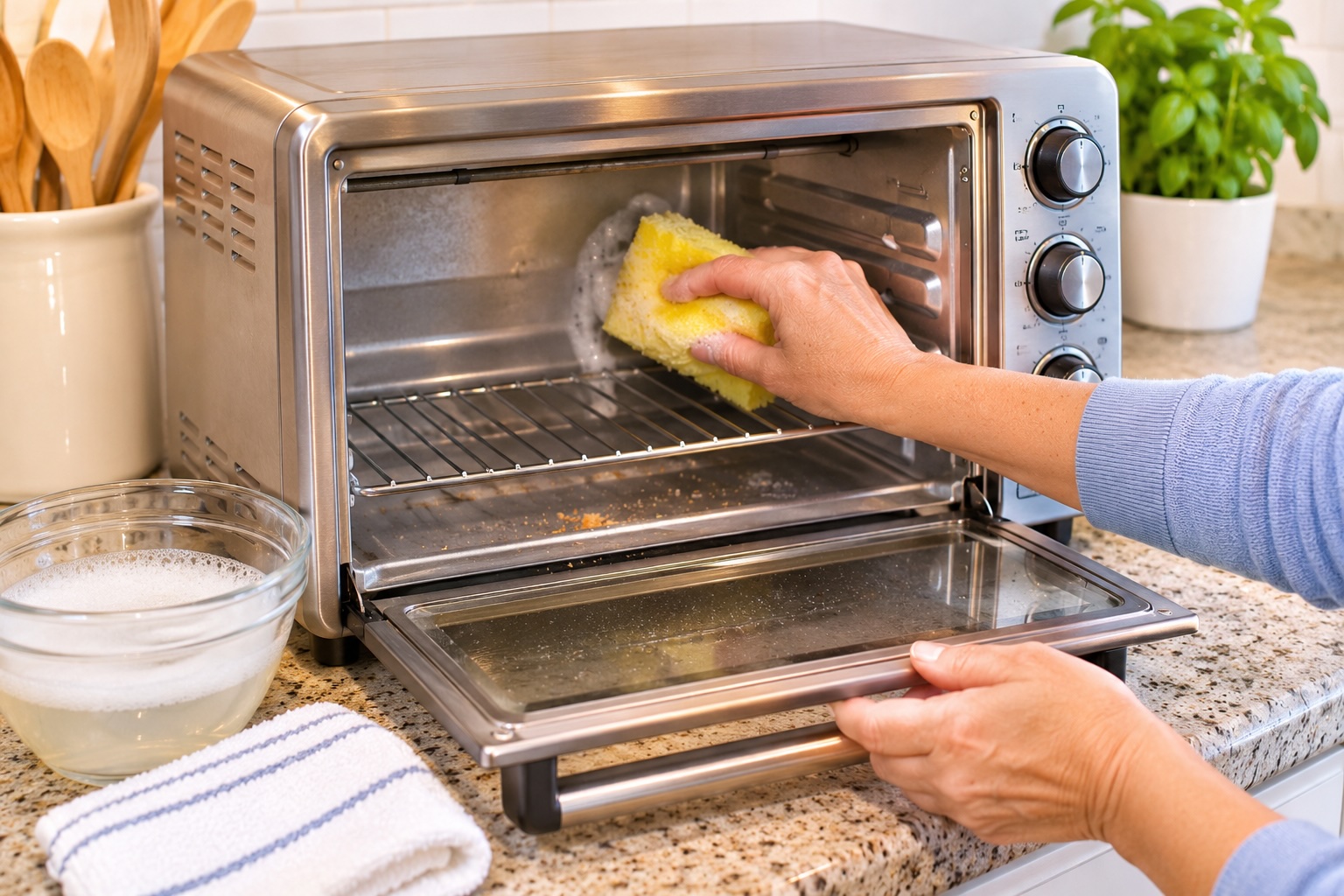
- After each use: Empty the crumb tray.
- Weekly: Wash the rack, the tray and the crumb tray in warm, soapy water. For baked-on gunk, soak them in hot water with dish soap and a few tablespoons of baking soda, then scrub.
- Inside: Wipe the walls with a damp, soapy cloth, avoiding the heating elements. For stubborn spots, use a paste of baking soda and water, let it sit for 15 minutes, then wipe it off.
- Door: Clean the glass with the same baking soda paste, and wipe it clean.
How to Clean an Air Fryer
- After every use: Once it's cool, wash the basket and tray in warm, soapy water, or in the dishwasher if the manual says so. Leftover grease smokes and smells the next time you cook.
- Baked-on grease: Soak the basket in hot, soapy water for 20 minutes, then scrub with a soft brush. Skip steel wool, which ruins the nonstick coating.
- Inside the machine: Wipe the inside with a damp, soapy cloth. Flip the unit over (unplugged and cool) and gently clean the heating element with a soft brush if grease has splattered up there.
- Outside: Wipe down with a damp cloth.
How to Clean a Microwave
- Fill a microwave-safe bowl with a cup of water and a few slices of lemon or two tablespoons of white vinegar.
- Microwave on high for 3 to 5 minutes, until it's steaming and the window fogs up.
- Leave the door closed for 5 minutes, so the steam loosens the splatters.
- Carefully remove the bowl (it's hot), and wipe the inside clean with a sponge.
- Wash the turntable in warm, soapy water.
How to Clean a Blender
Here's the easy way: right after you use it, fill the jar halfway with warm water, add a drop of dish soap and run the blender for 30 seconds. Rinse and let it air-dry upside down.
For a deeper clean, take the jar apart and wash the blade assembly and gasket by hand. The blades are sharp, so use a brush. Wipe the base with a damp cloth. Never put it in water.
How to Clean a Food Processor
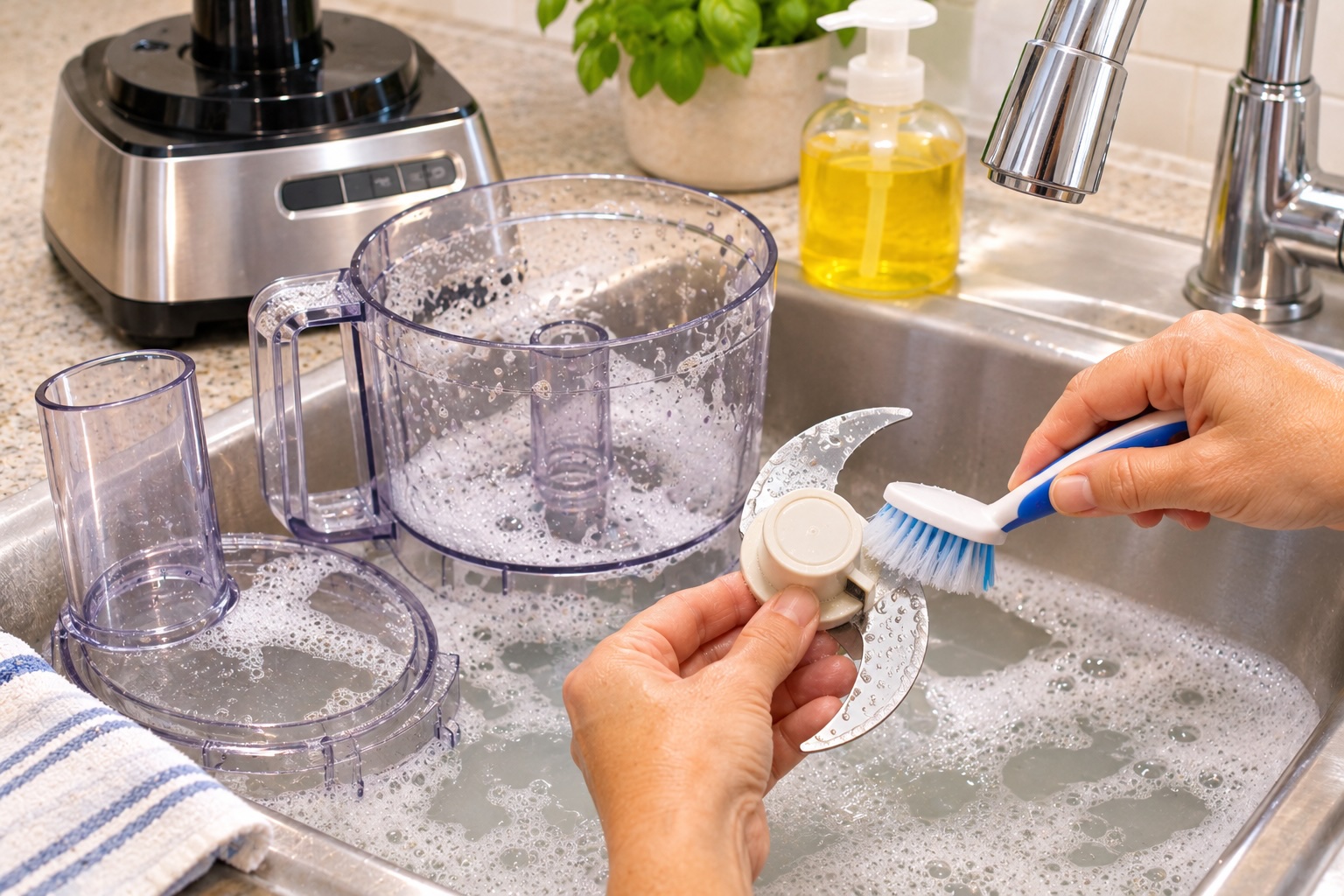
Wash the bowl, lid and blades in warm, soapy water right after you use them, before food dries on. Handle the blades by the plastic hub, and clean them with a brush. Many bowls and lids are dishwasher-safe on the top rack. Wipe the base with a damp cloth, and use a toothbrush to get crumbs out of the crevices.
How to Clean a Stand Mixer
Wash the bowl and attachments after each use. Some are dishwasher-safe, but uncoated aluminum beaters darken in the dishwasher, so wash those by hand. Wipe the head and base with a damp, soapy cloth, and use a toothbrush around the attachment hub and the bowl clamp, where flour hides.
How to Clean a Slow Cooker
Let the crock cool completely before you wash it. Sudden temperature changes can crack it. For stuck-on food, fill the crock with warm water and a squirt of dish soap and soak it. For really burned-on food, fill it with water, add 1/4 cup of baking soda, put the lid on and cook on low for an hour. Then wash as usual. Wipe the heating base with a damp cloth.
How to Descale an Electric Kettle
See white, chalky flakes in the bottom? That's mineral scale. Fill the kettle halfway with equal parts white vinegar and water, bring it to a boil, turn it off and let it sit for an hour. Pour it out, rinse well and boil a full kettle of plain water once or twice to get rid of the vinegar taste. Do it monthly in hard-water areas.
How to Clean a Waffle Iron
- Unplug it and let it cool until it's just warm.
- Wipe the grids with a paper towel or a soft brush to remove crumbs and oil.
- For stuck-on batter, lay a damp paper towel on the grids and close the lid for a few minutes to soften it, then wipe.
- Wipe with a cloth dipped in a little soapy water, then a clean damp cloth. Never submerge it.
Skip cooking spray on nonstick waffle irons. It builds up a gummy coating. Brush on a little vegetable oil instead. If waffles start sticking, re-season the grids with a light coat of oil.
How to Clean an Electric Can Opener
Remove the cutting wheel if it comes off, soak it in warm, soapy water for a few minutes and scrub it with an old toothbrush. Wipe the rest of the can opener with a damp, soapy cloth. Do it often. That cutting wheel touches the top of every can, and it gets gross fast.
Cleaning the Outside of Small Appliances
- Stainless steel: Wipe with warm, soapy water, then dry, following the grain to prevent streaks.
- Plastic and enamel: Warm, soapy water and a soft cloth.
- Greasy buildup: A paste of baking soda and water on a soft cloth, then rinse with a clean damp cloth.
- Cords: Wipe them with a damp cloth, too. They pick up grease.
Small Appliance Cleaning Schedule
Appliance
Coffee maker
Air fryer
Toaster and toaster oven
Microwave
Blender and food processor
Electric kettle
Quick clean
Carafe and basket after use
Basket after every use
Crumb tray weekly
Wipe spills right away
After every use
Empty after use
Deep clean
Descale monthly
Inside and element monthly
Monthly
Steam clean weekly
Take apart monthly
Descale monthly
How to Clean Small Kitchen Appliances: Quick Answers
How often should you clean a coffee maker?
Wash the carafe and basket after every use, and descale with equal parts vinegar and water every month, or every few weeks with hard water.
Can you put small appliance parts in the dishwasher?
Some, like blender jars, food processor bowls and air fryer baskets, are often dishwasher-safe. Check the manual. Never put a base with a motor or cord in water.
What's the easiest way to clean a microwave?
Microwave a bowl of water with lemon slices or vinegar for 3 to 5 minutes, let it steam for 5 more, then wipe the inside clean.
How do you clean the inside of a toaster?
Unplug it, empty the crumb tray, then turn it upside down over the trash and shake gently. Use a soft brush for stubborn crumbs. Never use metal utensils inside.
Keep Going
Keep the rest of the kitchen sparkling with these related guides:
- How to Clean an Oven: Racks, glass and baked-on spills.
- How to Clean a Kitchen: 7 steps and the germiest spots.
- Refrigerator Maintenance Tips: Keep your fridge running.
- Garbage Disposal Maintenance: Clean, freshen and unjam it.
- Kitchen Organization Ideas: Including where to put the appliances.
- How to Clean Copper: Pots, mugs and decor.
- How to Clean Cleaning Supplies: Sponges, brushes and more.
- Kitchen Cleaning & Organizing: The complete guide.
- Clean Home
- Kitchen Cleaning & Organizing
- How to Clean Small Kitchen Appliances
Free Printable
Notes on Keeping House
Sign up and get my 15-Minute Daily Reset Checklist. One timer, five zones, and a house that stays under control.
Send My ChecklistNo spam, ever. Just smart, funny tips for keeping house from Tara Aronson.