How to Clean and Organize Your Kitchen
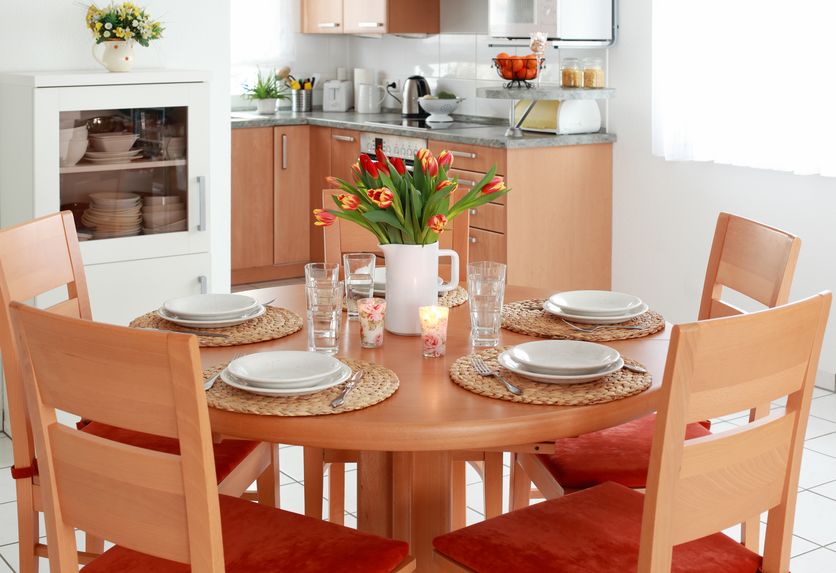
The kitchen is the busiest room in the house. It's where meals get made, mail gets dumped, homework gets done and groceries get unloaded. It's also where someone leaves a glass on the counter approximately three seconds after you cleaned it.
Kitchens fall apart fast because everything happens here at once: food, water, heat, appliances, storage and a steady stream of people looking for snacks.
The goal isn't a magazine-perfect kitchen. It's a kitchen that's easy to clean, easy to use and easy to reset.
That comes down to three things: clear the clutter, clean the surfaces and give everything a home. Here's how.
Jump to:
- Clear the Kitchen Clutter
- Kitchen Zones
- How to Clean a Kitchen
- Counters
- The Sink
- The Dishwasher
- Refrigerator Care & Temperature
- Oven and Stovetop
- Pots and Pans
- Kitchen Floors
- Cabinets and Containers
- The Pantry
- How Long Food Lasts
- Kitchen Cleaning With Kids
- Kitchen Safety & Grease Fires
- Food Safety, Sponges & Cutting Boards
- Daily Kitchen Reset
- Weekly and Monthly Tasks
- Kitchen Cleaning FAQ
Start by Clearing the Kitchen Clutter

First, get out everything that doesn't belong in the kitchen:
• School papers
• Toys
• Jackets
• Shopping bags
• Tools
• Random household items
• Empty packaging
Then look hard at what does belong there. Ask:
• Do we use this?
• How often?
• Does it need to live on the counter?
• Do we own duplicates?
• Is this appliance worth the space it takes up?
• Is this food still good?
• Would I buy this gadget again today?
Counters are workspace, not storage. If the blender comes out twice a year, it probably doesn't need waterfront property beside the sink.
Create Kitchen Zones
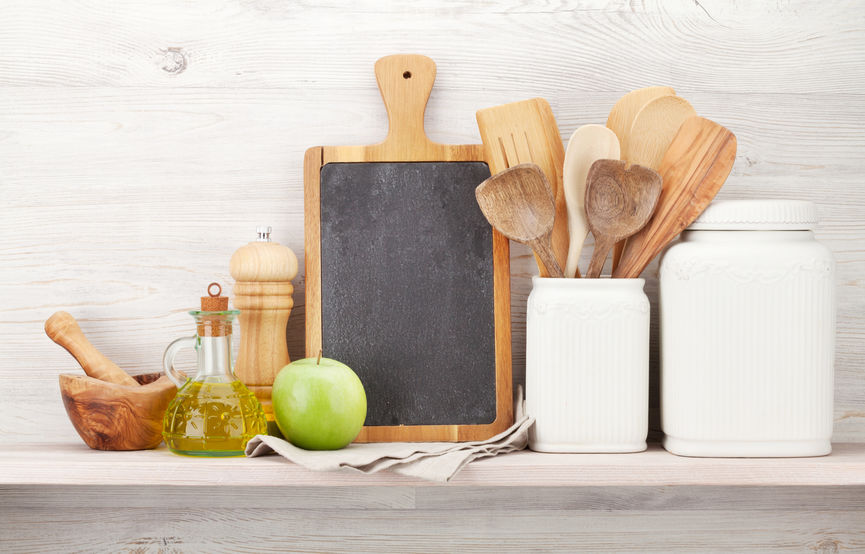
Organize the kitchen around what you do there, so you're not crossing the room six times to make toast.
Food Preparation
Cutting boards, knives, mixing bowls and measuring cups, all near your main stretch of counter.
Cooking
Pots, pans, spatulas, oils and spices within reach of the stove.
Baking
Sheet pans, mixing bowls, flour, sugar and the hand mixer, together in one cabinet or shelf.
Food Storage
Containers, wraps and bags near the fridge, or near wherever leftovers get packed up.
Cleaning
Dish soap, sponges, cloths and cleaners under or next to the sink.
Coffee or Beverage Area
Mugs, coffee, tea and filters all in one spot, so the first person up isn't opening every cabinet before they're awake.
How to Organize Kitchen Cooking →
How to Clean a Kitchen

Clean from top to bottom, so crumbs and drips land on surfaces you haven't cleaned yet instead of ones you just finished:
1. Put away food and clutter.
2. Load or wash the dishes.
3. Wipe the tops of the fridge and cabinets and the range hood, as needed.
4. Clean the counters and backsplash.
5. Clean the appliances.
6. Clean the sink and faucet.
7. Wipe the cabinet fronts, especially around the handles.
8. Sweep or vacuum.
9. Mop.
A thorough kitchen clean usually takes about an hour, not all day.
One rule before you start: never mix cleaning products. Bleach plus ammonia, or bleach plus vinegar or any other acid, gives off toxic fumes. Use one product at a time, and rinse the surface well before you switch to another.
Clean Kitchen Counters
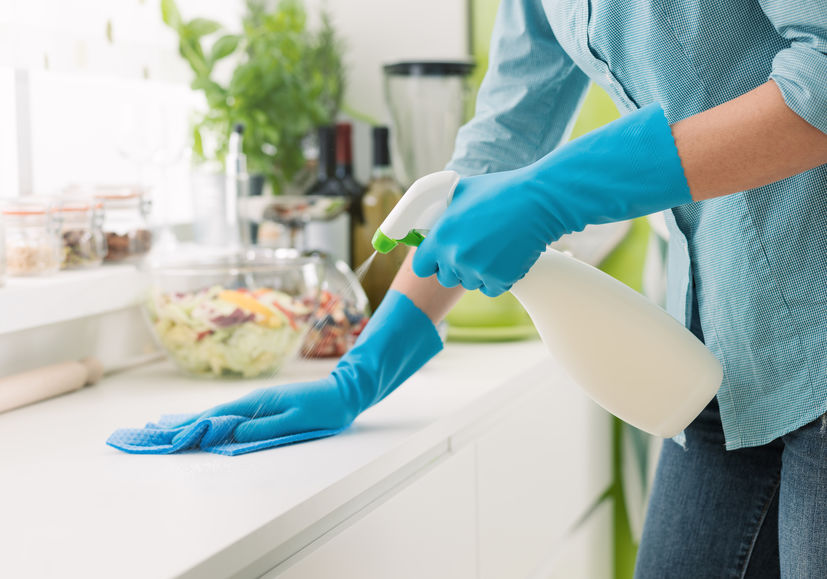
Clear everything off first. You can't clean around the toaster. Well, you can, but you'll find out exactly what's been living behind it.
Then use a cleaner made for your countertop. Granite, marble and quartz need a pH-neutral cleaner, never vinegar or bleach. Laminate does fine with mild dish soap and water. Butcher block wants soap and water and an occasional coat of food-safe mineral oil.
Every day:
• Wipe spills before they dry.
• Brush away crumbs.
• Clean food-prep areas after every use, especially after raw meat.
• Degrease the area around the stove before it gets sticky.
• Dry spots where water pools.
Clean the Kitchen Sink
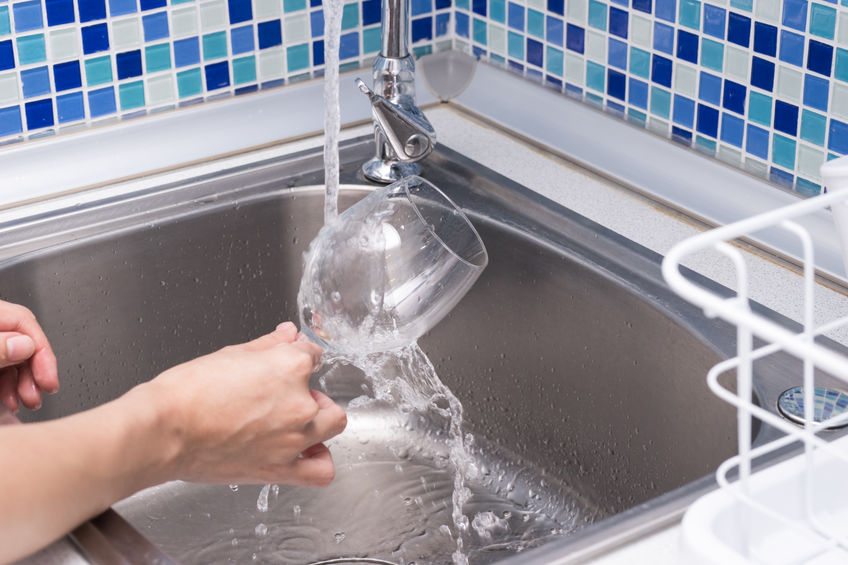
The sink washes everything else, so it's easy to forget the sink itself needs washing. Clean:
• The basin
• The faucet
• The handles
• The drain and strainer
• The rim
• The seam where the sink meets the counter
Use a non-abrasive cleaner or baking soda on stainless steel, and wipe in the direction of the grain. For porcelain, try a gentle cream cleanser. Dry the sink and faucet afterward to prevent water spots.
Maintain the Dishwasher
A dishwasher can't clean your dishes if it can't clean itself. Once a month:
• Pull out any trapped food, bits of glass and stray labels.
• Clean the filter. Most newer models have a removable one at the bottom, and it's the number one reason a dishwasher starts to smell.
• Check that the spray arms spin freely and the holes aren't clogged.
• Wipe the door seals.
• Run an empty cycle with a dishwasher cleaner, or put a cup of white vinegar upright on the top rack, if your manufacturer allows it.
Scrape food into the trash, but you don't need to pre-rinse. Today's detergents actually work better with a little food to grab onto. And don't overload it. Water has to reach the dishes to clean them.
Clean and Maintain the Refrigerator
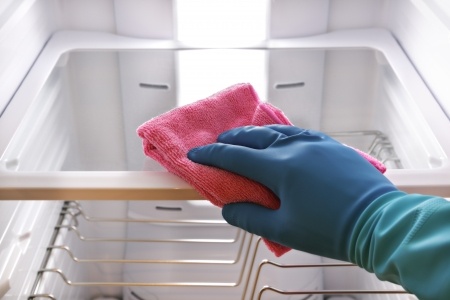
Once a week, usually right before you grocery shop, check for:
• Expired food
• Forgotten leftovers
• Leaking containers
• Produce past its prime
Wipe up spills as soon as they happen, before they glue themselves to the shelf. Vacuum the condenser coils every 6 to 12 months, and replace the water filter as often as your manual says, usually every six months.
Refrigerator Maintenance Tips →
Make Kitchen Cleanup Easier
From everyday spills to stubborn messes, the right tools can make kitchen cleanup faster and less frustrating.
I’ve gathered practical cleaning essentials and organizers that help keep counters, sinks, cabinets, and other hardworking kitchen spaces under control.
→ Shop Kitchen Organization & Cleaning Favorites
Check Refrigerator Temperature

Keep your refrigerator at 40°F (4°C) or below and your freezer at 0°F (−18°C). Those are the FDA's recommendations.
Don't trust the dial, and don't trust your hand. Your hand is not a calibrated instrument. A $5 appliance thermometer on the middle shelf tells you the truth.
Why the Right Refrigerator Temperature Matters →
Clean the Oven

Clean the oven before spills bake on, because they only get harder to remove. Put a sheet pan on the rack below anything that might bubble over.
If you use the self-cleaning cycle:
• Take out the racks, unless your manual says they can stay in.
• Open a window and turn on the range hood. It gets smoky.
• Keep pet birds out of the house, or at least far away. The fumes can kill them.
• Never use commercial oven cleaner inside a self-cleaning oven.
If your oven has a steam-clean cycle or a special coating, follow the manual.
Clean the Stovetop
Match the method to the cooktop. Glass and ceramic tops need a cooktop cleaner and a razor scraper held flat, never steel wool. Gas burner grates can soak in hot, soapy water. On coil burners, wipe the drip pans or line them.
Wipe up spills once the stove has cooled, before they burn on.
Clean Small Kitchen Appliances

These collect grime faster than you'd think:
• Toasters (empty the crumb tray)
• Blenders
• Coffee makers (descale once a month or so)
• Stand and hand mixers
• Air fryers (wash the basket after every use)
• Microwaves
Unplug them first. Never put the electrical base in water. To clean a microwave, heat a bowl of water with a slice of lemon for three minutes, let it sit for a few more, then wipe. The steam does the scrubbing for you.
How to Clean Small Kitchen Appliances →
How to Clean Pots and Pans

One scrubber doesn't fit all:
• Nonstick: Use a soft sponge only. No metal utensils, no steel wool, and no dishwasher unless the pan says it's dishwasher-safe.
• Cast iron: Wash with hot water and a little soap if you like, then dry it right away and rub on a thin coat of oil. Never put it in the dishwasher or let it soak.
• Stainless steel: Baking soda or a cleanser like Bar Keepers Friend takes care of burned-on food and rainbow stains.
• Copper: Use a copper cleaner, or lemon and salt, on the outside. Don't scrub the tin lining.
How to Clean Copper Pots & Pans →
Cleaning Stainless Steel Pans →
Clean Glassware and Silver
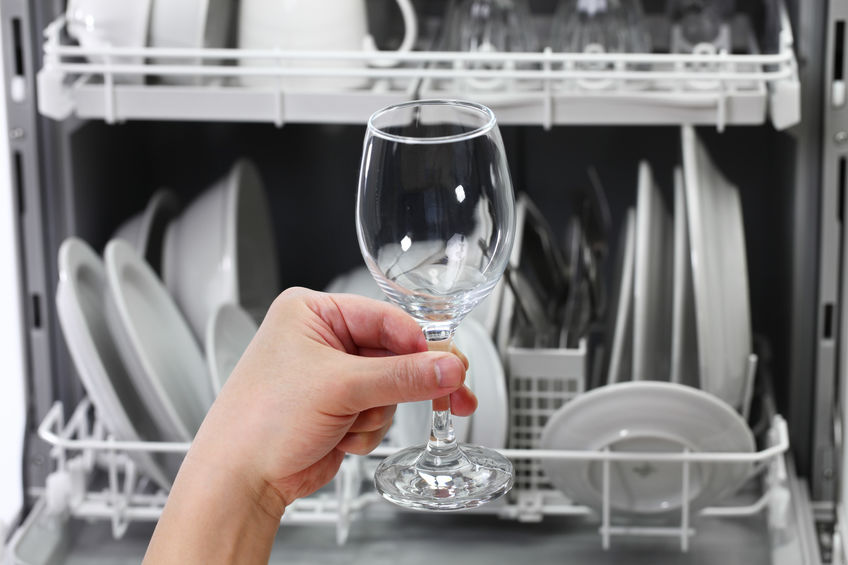
Before you scrub a cloudy glass, figure out why it's cloudy. If a little vinegar wipes the haze away, it's hard-water film. If it doesn't, the glass is etched, and that's permanent. Using less detergent and running a cooler wash keeps it from getting worse.
Hand-wash crystal and good silver. The dishwasher is not their friend.
How to Clean Crystal Glassware →
Clean Kitchen Floors

Kitchen floors catch everything: crumbs, grease, water and pet hair. Sweep or vacuum first, every time. Then mop with the right method for your floor:
Hardwood
Use a barely damp microfiber mop and a hardwood cleaner. Never use a soaking-wet mop, steam or vinegar.
Laminate
Use a damp mop, never a wet one. Water that seeps into the seams makes the planks swell.
Linoleum
Use a mild, pH-neutral cleaner and warm water. Skip anything harsh that strips the finish.
A clean kitchen floor also means less dirt tracked through the rest of the house.
Regular floor maintenance also prevents dirt from being tracked into the rest of the house.
How to Clean Hardwood Floors →
Organize Kitchen Cabinets
Put the things you use every day between your shoulders and your knees. Group like with like:
• Plates
• Bowls
• Glasses
• Mugs
• Food storage containers
• Baking supplies
• Small appliances
And don't overstuff. If opening a cabinet means catching a falling colander, it's too full.
Organize Pots and Pans
Keep cookware near the stove. Store the lids so you can find the right one without conducting an excavation. A lid rack, a deep drawer or a tension-rod divider all work. The best system is the one you'll actually keep up.
Organize Food Storage Containers
Match every container to a lid. Recycle anything without a partner, and anything warped or stained beyond saving. You don't need forty-seven containers for leftovers unless you're operating a restaurant.
Organize the Pantry

Group food by category:
• Breakfast
• Pasta and grains
• Baking
• Snacks
• Canned goods
• Condiments
• School-lunch supplies
Put what you use most at eye level, and move older food to the front so it gets eaten first.
A quick note on dates: "best by" and "use by" dates are usually about quality, not safety. Baby formula is the exception. Shelf-stable food is often fine past its best-by date if the package is intact. Toss anything with bulging cans, off smells or signs of pests.
How Long Does Food Last?

How long does food last? The answer varies by item and storage location.
For refrigerated, frozen, and shelf-stable foods, current food-safety recommendations can give you a ballpark for storage times.
When you're unsure about safety, don't rely on smell or appearance alone. Some harmful microorganisms aren't courteous enough to announce themselves.
How Long Does Food Last?
A few USDA basics to keep on hand:
• Leftovers: 3 to 4 days in the fridge
• Raw chicken and ground meat: 1 to 2 days in the fridge
• Raw steaks, chops and roasts: 3 to 5 days in the fridge
• Hard-boiled eggs: 1 week in the fridge
• Perishable food left out: refrigerate within 2 hours, or within 1 hour if it's over 90°F
Don't rely on smell or looks. Some harmful microorganisms aren't courteous enough to announce themselves. When in doubt, throw it out.
Food Shelf-Life: How Long Foods Last →
Frozen Food Storage Tips for Success →
Create a Kitchen Recycling Center
Make recycling as easy as throwing something away. Set up bins:
• Under a counter
• Inside a cabinet
• In the pantry
• By the door to the garage
Follow your city's rules, and take bins out before they overflow onto the floor.
How to Create a Kitchen Recycling Center →
Control the Kitchen Paper Pile
Paper expands to fill any horizontal surface you surrender to it. Give incoming paper one landing spot, go through it every few days, and give each kind of paper a home:
• School papers
• Bills
• The family calendar
• Forms that need action
• Things that need to leave the house, like permission slips that apparently require signatures by 7:45 tomorrow morning
Kitchen Cleaning With Kids
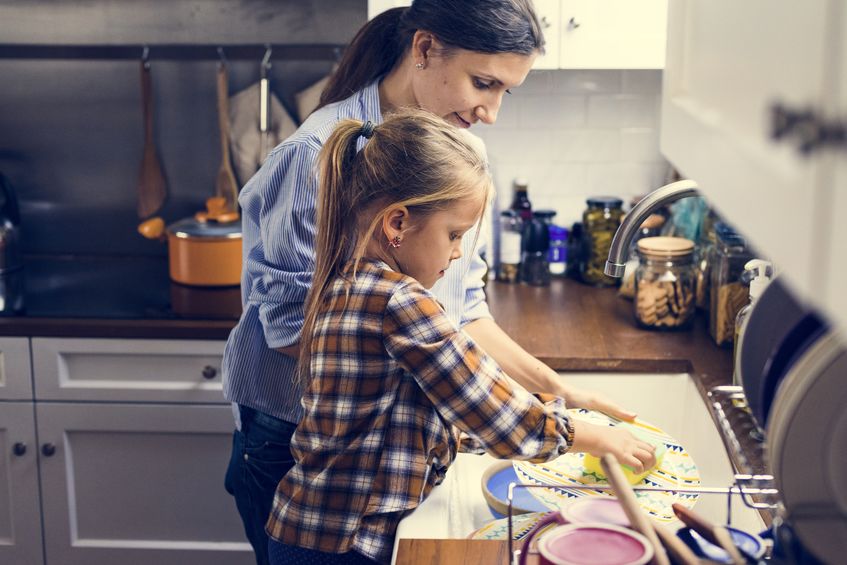
Kids can help, and they should. Give them jobs that fit their age:
• Clearing dishes
• Wiping the table and low counters
• Loading or unloading unbreakable dishwasher items
• Putting groceries away
• Sweeping
• Setting the table
• Putting away unbreakable items
• Helping with simple food prep, with you watching
The results won't be perfect, and that's fine. They learn by doing, and you get one fewer chore.
Kitchen Chores for Kids by Age →
Kitchen Safety With Kids
Match the job to the kid's maturity, not just their age. Teach:
• Knife safety, starting with a butter knife or a kid-safe knife around age 5 to 7
• How to handle hot pans (always use pot holders, and turn handles toward the back of the stove)
• Which appliances they're allowed to use
• Which jobs need a grown-up nearby
• How to stay safe around the stove
• Why running through the kitchen during cooking is a bad plan
And make sure everyone knows how to handle a grease fire: turn off the heat and cover the pan with a lid or baking sheet. Never use water. Water makes burning grease explode. If the fire doesn't go out right away, get everyone out and call 911.
Food Safety
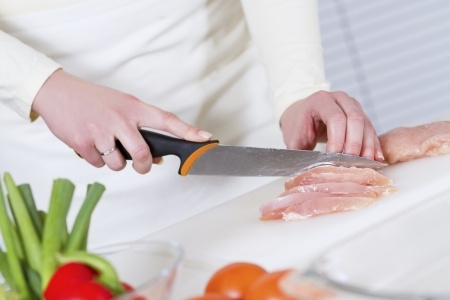
A clean-looking kitchen isn't automatically a food-safe one. The basics:
• Wash your hands for 20 seconds before handling food, and again after touching raw meat.
• Keep raw meat, poultry and seafood away from ready-to-eat foods.
• Cook to safe temperatures: 165°F for poultry, 160°F for ground meat, and 145°F for steaks, chops and fish (let them rest 3 minutes). Use a food thermometer.
• Get leftovers into the fridge within 2 hours.
• Use separate cutting boards for raw meat and produce. Plastic boards can go in the dishwasher. Wash wood boards by hand, and replace any board with deep grooves.
• Replace sponges every week or two. In between, microwave a damp sponge for one minute, or run it through the dishwasher with a drying cycle. A sponge that smells is a sponge that's done.
Kitchen Safety Tips for Cooking Dinner →
Food Safety Tips: Handling and Storing Food Safely →
Create a Pet Feeding Area

Give the dog or cat a feeding spot away from foot traffic and away from where you prep food. A washable mat under the bowls catches the splashes. Keep pet food in a sealed container, out of reach of curious pets (and toddlers). Wash the bowls daily, separately from your dishes.
How to Create a Kitchen Pet Feeding Center →
Use the Kitchen for Homework - Carefully
The kitchen table makes a great homework spot, as long as homework can move out of the way before dinner. Keep a portable caddy stocked with:
• Pencils
• Paper
• School supplies
• The current assignment
Make School Lunches Easier

Give lunch supplies their own shelf, bin or drawer:
• Lunch bags
• Reusable containers
• Snacks
• Napkins
• Water bottles
Then packing lunch is a grab-and-go job instead of a morning scavenger hunt.
School Lunch Ideas Kids Might Actually Eat →
Decorate the Kitchen Without Losing Workspace
Decorate the walls and windows, not the counters:
• Paint
• Lighting
• Window treatments
• Towels
• Artwork
• A few good-looking, practical accessories, like a pretty utensil crock or a nice cutting board
Save Energy in the Kitchen
• Run the dishwasher only when it's full, and skip heated dry.
• Keep the fridge door seals clean and tight.
• Skip preheating for anything that doesn't need it, like casseroles and roasts.
• Use the microwave, toaster oven or air fryer for small jobs instead of the big oven.
• Match the pan to the burner size.
• Turn off lights and appliances you're not using.
Kitchen Energy Saving Solutions → (kitchen-energy-saving-solutions.html)
Kitchen Energy Saving Solutions →
A Simple Daily Kitchen Reset
Ten to fifteen minutes at the end of the day:
1. Put food away.
2. Load or wash the dishes.
3. Clear the counters.
4. Wipe the counters and table.
5. Clean the sink.
6. Sweep up the obvious crumbs.
7. Put away anything that wandered into the kitchen.
No deep cleaning. Just a reset, so tomorrow starts with a clean kitchen instead of yesterday's dishes.
Weekly Kitchen Cleaning
Rotate these through the week:
• Wipe the cabinet fronts.
• Clean the outsides of the appliances.
• Clean the microwave.
• Go through the fridge.
• Scrub the sink and faucet.
• Clean the stovetop.
• Mop the floor.
• Wash the trash and recycling bins, as needed.
Monthly and Seasonal Kitchen Tasks
• Clean the inside of the refrigerator.
• Clean the oven.
• Clean the dishwasher filter.
• Declutter the pantry.
• Clean behind and under small appliances.
• Go through cookware you rarely use.
• Check food storage and expiration dates.
• Wipe out the cabinet interiors.
• Descale the coffee maker and vacuum the fridge coils.
Seasonal maintenance keeps small jobs from quietly becoming archaeological sites.
Common Kitchen Cleaning and Organizing Mistakes
Keeping too much on the counters
Counters are for working, not for storing seventeen things.
Organizing before decluttering
You'll just end up neatly organizing stuff you don't want.
Buying too many organizers
Bins don't create space. Getting rid of things does.
Using the wrong cleaner
Vinegar on marble and steel wool on nonstick are expensive mistakes.
Using too much cleaning product
It leaves residue, which attracts more dirt.
Letting food disappear into the refrigerator abyss
If you can't see it, you won't eat it. Do a weekly check.
Creating complicated systems
If it takes more than one step to put something away, it won't get put away.
Making one person responsible for everything
Everyone eats. Everyone helps.
Kitchen Cleaning FAQ
What temperature should my refrigerator be? 40°F (4°C) or below. The freezer should be at 0°F (−18°C). Use an appliance thermometer to check.
How long are leftovers good in the fridge? Three to four days. When in doubt, throw it out.
How often should I replace my kitchen sponge? Every week or two. In between, microwave a damp sponge for one minute, or run it through the dishwasher.
What's the right order to clean a kitchen? Top to bottom: dishes, upper surfaces, counters, appliances, sink, cabinet fronts, then the floor.
How do you put out a grease fire? Turn off the heat and cover the pan with a lid or baking sheet. Never use water. If it doesn't go out right away, get out and call 911.
Want a Kitchen That Resets Itself in 15 Minutes?
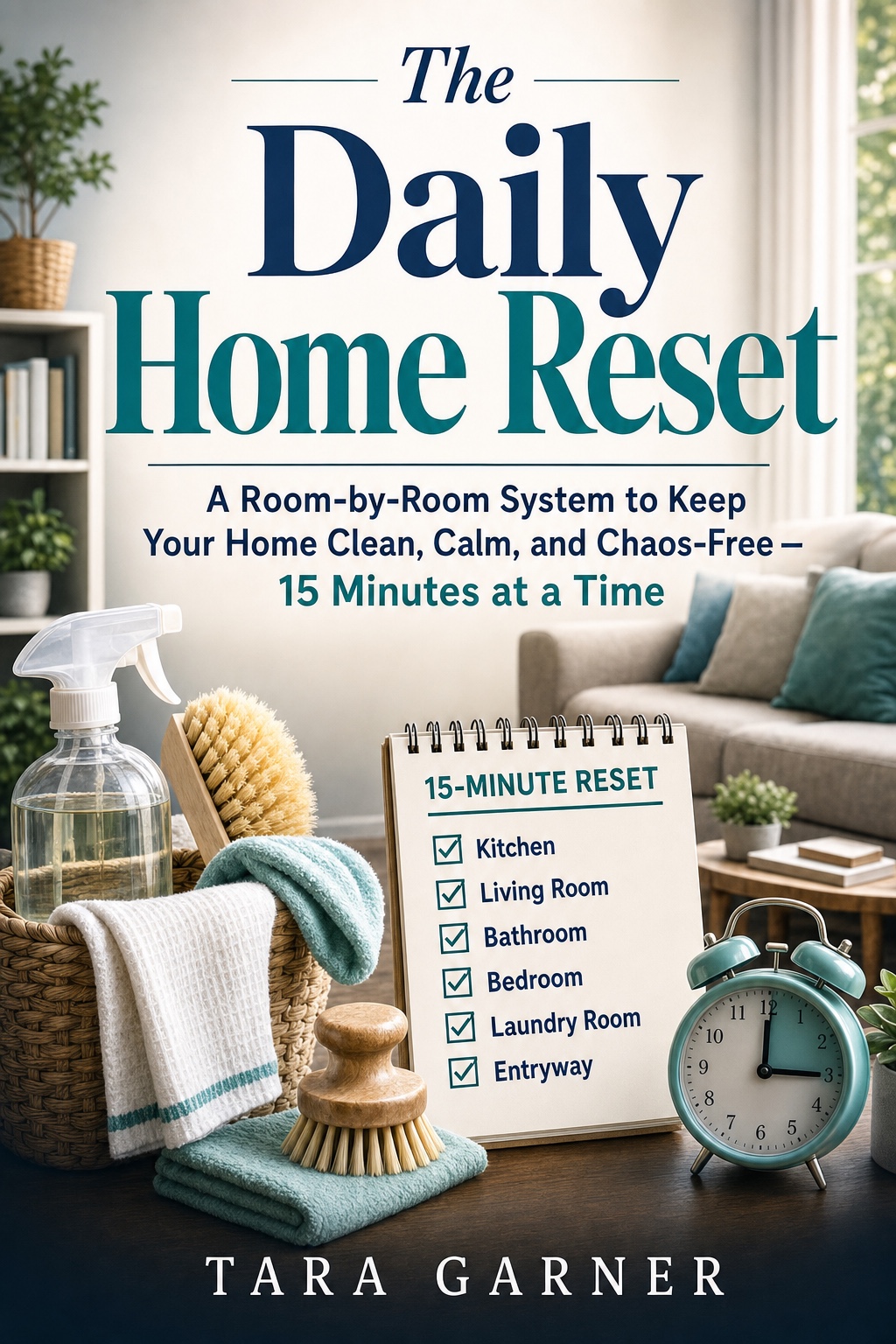
The Daily Home Reset is my 15-minute daily routine for keeping the kitchen, and the rest of the house, under control without spending your whole weekend cleaning.
And if your cabinets are full of gadgets you haven't touched since the Clinton administration, Room by Room: How to Declutter a Lifetime of Stuff and Get Your Space Back will help you decide what stays.
Keep Going
The kitchen is just the start, so keep your whole home clean, organized and running smoothly with these related guides:
• Easy House Cleaning Tips: Faster, smarter ways to clean every room in the house.
• How to Organize Your Home Room by Room: Simple systems for every room, from the entryway to the closets.
• Bathroom Cleaning and Organizing: Get the bathroom clean and keep it that way.
• Green Cleaning Guide: Clean safely with fewer products, and save money.
• Home Maintenance: Month-by-month upkeep that keeps small problems small.
• Simplify Family Life at Home: Chores, routines and systems that make every day easier.
• Safe at Home: Practical safety tips for every room and every age.
• Backyard Family Living: Take the cooking outside and make your yard work for the whole family.
- Clean Home
- Kitchen Cleaning & Organizing