Tips For Cleaning Linoleum Floors
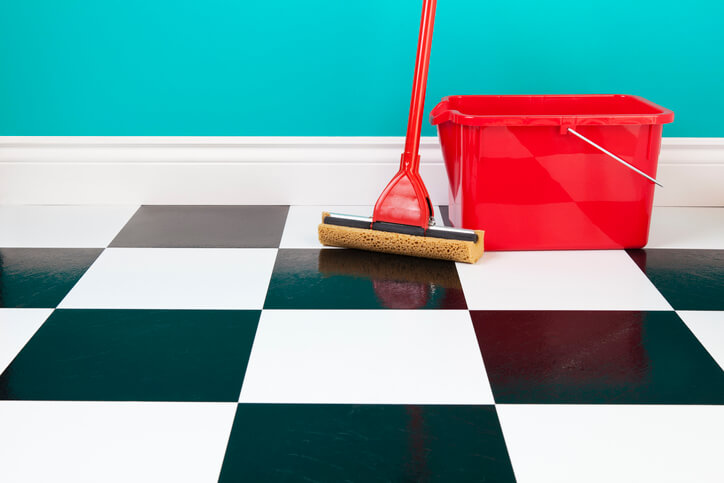
Tips for cleaning linoleum floors. Vinyl floors are often called "linoleum," but they are two different materials.
Vinyl flooring is synthetic. While linoleum is a blend of natural products such as linseed oil, limestone, resins, and wood powder, it is more like a wood floor than a vinyl floor.
Linoleum is very durable, burn-resistant, and allergen-free. It's more durable than vinyl and not as prone to indentations. These tips for cleaning linoleum floors are easy and effective.
Tips For Cleaning Linoleum Floors
Cleaning linoleum floors requires regular damp mopping (use very little water, as it can make the surface brittle) or dry dust-mopping to remove grit and dust before they are ground in.
Each week, deep-clean with a neutral-pH cleaner, such as a little dishwashing detergent dissolved in lukewarm water.
To keep floors shiny and lustrous, each year, apply a wax such as carnauba wax to seal and protect the surface. Areas that get heavy use should be stripped and rewaxed as needed.
For heavy-wear areas, you may need to wax once a month.
- Sweep or vacuum regularly.
- Damp-mop with cool water and a mild dishwashing detergent for daily cleaning. Apply a capful of baby oil to the mop to make no-wax floors shiny. (To save time, I sometimes pour the solution into a spray bottle, squirt just the areas that need cleaning, and then damp-mop.)
- If the floor is excessively dirty, use the cleaning agent the manufacturer recommends.
- Keep water away from seams and edges to prevent loosening.
- Allow the floor to air-dry before walking on it.
Linoleum Floor Cleaning Don'ts:
You might like these:
The kitchen is the room where everyone congregates. That's one of the reasons it's the messiest rooms in the house. Here's how to get it organized.
The refrigerator temperature matters. Not having the proper refrigerator temperature could make you sick. Used correctly, your refrigerator will keep food safe from spoilage and bacteria.
Easy kitchen cleaning tips. One study of the germiest areas of the home found the top 5 areas were in the kitchen: These kitchen cleaning tips for debugging these areas can help
Easy kitchen clutter solutions. Since the kitchen is where memories and meals are made, it needs to be organized. These easy kitchen clutter solutions can help.
Kitchen food safety tips. Contaminated food is the worst. These kitchen food safety tips can help ensure your family is safe at mealtime,
Whether your hardwood floors are oak, maple, ash, or beech, cleaning them is as safe and simple as it gets. Here's how to clean hardwood floors and keep them scratch-free.
Frozen food storage is essential to do right so that the items inside won't spoil as quickly or get the dreaded freezer burn. These frozen food storage tips can help.
Safe food handling can stop most germs and bacteria from multiplying to levels that can make you and your family ill.These easy food safety tips can help.
Tips for cleaning floors. I love walking into a room with clean and shiny floors. Who doesn't? But cleaning floors? Not so much. Our floors are a potluck of dirt, germs, and grime.
Hey! You're not the only one chowing down in here. How can you and the pets peacefully coexisit in the kitchen? Create a kitchen pet feeding center.
Cleaning small kitchen appliances. You keep a nice clean house. But how long has it been since you cleaned your coffee maker - or any other small kitchen appliances?
These kitchen study room ideas can help you create a functional, efficient space for your child's homework efforts, whether that is in the kitchen, or elsewhere in your home.
How to organize kitchen cooking. The immediate benefit once you organize kitchen cooking: Two people can work at once without tripping over each other.
Kitchen food storage tips. No pantry? No problem. Kitchen food storage is as simple as organizing a few large cabinets close to your refrigerator and stove.
Used correctly, your refrigerator provides safe food storage. Used incorrectly, it could cause big trouble. These fridge food storage tips can help.
What does the "sell by" date on a food label really mean? How long is it good after that date? Here's help for deciphering a food label.