How to Clean a Kitchen
The kitchen is the hardest-working room in the house. It feeds everybody, hosts homework, collects the mail, charges the phones and serves as the official drop zone for anything anyone carries through the back door. It's also where grease, crumbs and germs throw their biggest party, usually right around the sink.
The good news: a seriously clean kitchen doesn't take all Saturday. Do it in the right order and you'll get through the whole room in about an hour, letting the cleaners do the hard work while you move on.
Here's how to clean a kitchen in seven steps, plus how to deal with the germiest spots in the house (spoiler: one of them is the sponge you clean with).
What You'll Need
- All-purpose cleaner
- A disinfecting spray or unscented household bleach
- Dish soap and baking soda
- A degreaser, for the range hood and stovetop
- Glass cleaner, for the faucet and appliance fronts
- A stack of microfiber cloths
- A non-scratch scrub sponge and an old toothbrush
- A plastic scraper or dull knife
- A broom or vacuum, and a mop
- Rubber gloves
How to Clean a Kitchen in 7 Steps
This is the weekly deep clean. The secret is the order. You'll start a few things soaking and spray the worst messes early, so by the time you circle back, the grime wipes right off instead of needing an elbow-grease workout.
1. Clear the Decks
Get everything out of the way that doesn't belong. Load the dishwasher and empty the sink. Send the kids' homework, the mail and the stray hoodie back to their rightful owners. Move small appliances and canisters off the counters. Toss dish towels and oven mitts in the wash.
While you're at it, do a quick sweep of the fridge and toss anything past its prime, along with leftovers nobody is going to eat, no matter how hungry. You can't clean a surface you can't see.
2. Spray and Walk Away
Spritz the dried-on spills on the counters, the stovetop and the front of the appliances with all-purpose cleaner, and the greasy range hood and backsplash behind the stove with degreaser. Then leave them alone. The cleaner needs a few minutes to loosen the gunk, and that's time you can spend on step three.
3. Start the Soak
Fill the sink with hot water and a good squirt of dish soap. Drop in the stove grates or burner rings, drip pans, stovetop knobs (if they pull off) and the range hood filter. Let them soak for 15 to 20 minutes while you keep going. For a really greasy hood filter, add 1/4 cup of baking soda to the water.
Hand-washing beats the dishwasher here. The dishwasher can scratch or discolor some burner grates and drip pans.
4. Tackle the Oven and Microwave
Open the oven (make sure it's cool) and pull out the racks. Scrape off anything burned on with a plastic scraper or a dull knife held at a low angle. Wipe up crumbs and loose spills with a damp cloth.
- Self-cleaning oven: Run the self-clean cycle when you can stay home and open the windows. Never use oven cleaner in a self-cleaning oven. It can damage the enamel.
- Regular oven: Use an oven cleaner or a baking soda paste. Here are my easy oven cleaning tips.
Microwave: Microwave a bowl of water with a few lemon slices or a splash of vinegar on high for 3 to 5 minutes, until it's steamy. Leave the door closed a few more minutes, then wipe it out. Baked-on splatters wipe off with barely any scrubbing.
5. Wipe Every Surface, Once Around the Room

Now work your way around the kitchen in one direction, so you don't miss anything or clean the same spot twice. First wipe up everything you sprayed in step two. Then wipe down:
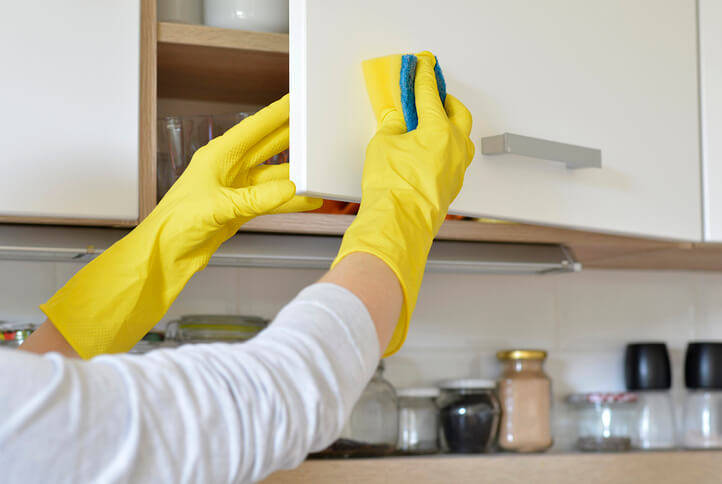
- Cabinet doors and handles (the ones near the trash and the stove are the grimiest)
- The backsplash
- The fronts of the fridge, dishwasher, oven and microwave
- The stovetop
- Light switches, the cabinet pulls and the fridge handle
- The countertops, last
The no-streak trick: On big vertical surfaces like appliance fronts, wipe from the bottom up. Drips running down a dirty surface leave streaks, but drips running down a clean surface wipe right off. On stainless steel, wipe with the grain and buff dry with a microfiber cloth.
Put the small appliances and canisters back once the counters are clean and dry.
6. Finish the Sink and Put It All Back
Scrub the soaked grates, drip pans and filter with a non-scratch sponge, rinse, dry and put them back. Drain the sink, then clean it with dish soap or a sprinkle of baking soda and a scrub sponge. Get the gunk around the drain and the base of the faucet with an old toothbrush. Shine the faucet with glass cleaner.
Give the dishwasher a quick wipe around the door gasket, and pull out and rinse the filter if yours has one. If the garbage disposal is starting to smell, here's how to clean and freshen your garbage disposal.
Finally, disinfect the spots that need it most (see "The Germiest Spots in Your Kitchen" below).
7. Do the Floor Last
Everything you just cleaned dropped crumbs on the floor, so it goes last. Sweep or vacuum, getting into the corners and under the edge of the cabinets, where the crumbs and the dog's kibble hide.
Then mop with a cleaner made for your type of floor, starting at the far side of the room and mopping your way out the door. A no-rinse floor cleaner keeps the floor from getting a cloudy film. Here's how to clean every kind of floor.
Then step back and admire it. Take a picture if you must. It won't last.
The Germiest Spots in Your Kitchen
The kitchen is home to more germs than the bathroom, believe it or not, and they love the places you touch most. Clean these spots first to remove grime, then disinfect. A disinfectant can't do its job through a layer of grease.
Sponges and Dishcloths
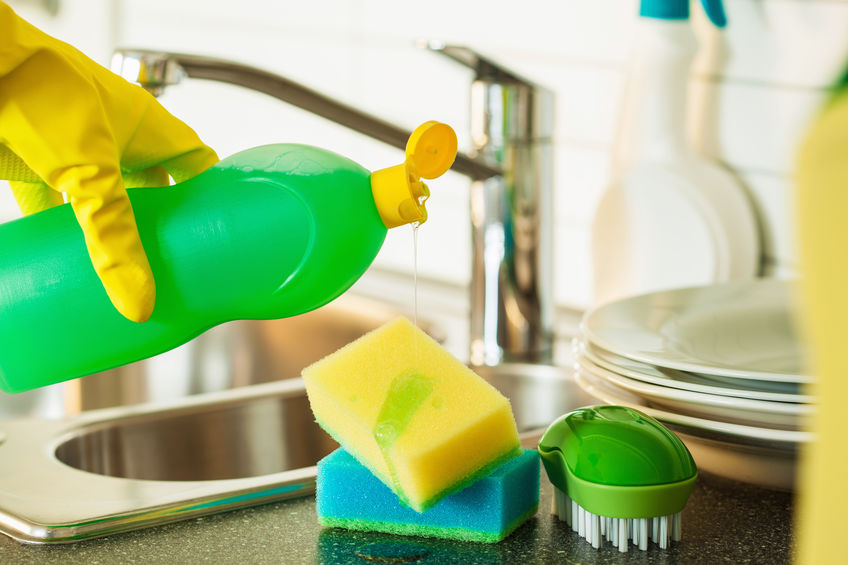
The sponge you wipe the counters with is the germiest thing in your kitchen. Every swipe spreads whatever's living in it. Clean it every day or two: microwave a damp sponge (no metal parts) on high for 1 minute, or run it through the dishwasher with a heated dry cycle.
Toss dishcloths in the wash every couple of days. And replace the sponge every week or two, or sooner if it smells funky. A sponge should never have a smell.
The Sink and Drain
Raw chicken juice, rinsed produce and leftover food all end up in the sink. Clean it daily with dish soap and hot water. Once a week, after cleaning, disinfect it with a disinfecting spray or a bleach solution (1/3 cup of unscented bleach per gallon of water). Let it stand for the time on the label, usually a few minutes, then rinse.
Faucet Handles, Knobs and the Fridge Handle
Everyone touches these with raw-meat hands, cookie-dough hands and just-came-in-from-outside hands. Wipe them daily, and disinfect them a couple of times a week with a disinfecting spray, letting it sit for the contact time on the label.
Cutting Boards
Wash cutting boards in hot, soapy water after every use, and use a separate one for raw meat. To sanitize, flood the board with 1 tablespoon of unscented bleach per gallon of water, let it stand a few minutes, then rinse and air dry. Plastic boards can also go in the dishwasher. Replace any board with deep grooves, which trap bacteria even after cleaning.
Bleach safety: Use plain, unscented bleach, open a window and wear gloves. Never mix bleach with vinegar, ammonia or other cleaners. The combination makes toxic fumes. Mix a fresh solution each time.
For more on keeping germs out of your food, see my easy food safety tips.
How to Clean the Refrigerator
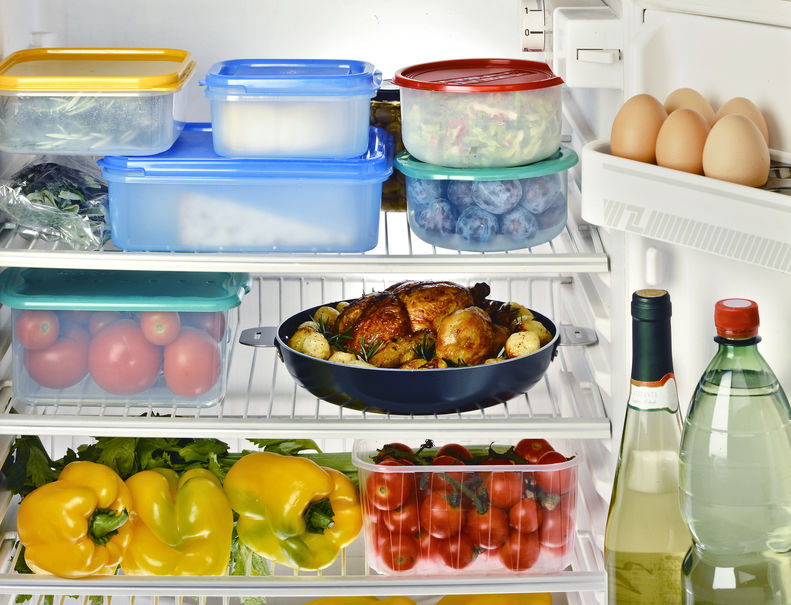
- Right away: Wipe up spills when they happen, especially raw meat juices. Use warm, soapy water, then dry.
- Weekly: Toss old leftovers and expired food the night before trash day. Move the oldest milk, yogurt and leftovers to the front so they get eaten first.
- Every month or two: Empty the fridge into a cooler. Wash the shelves, drawers and walls with a solution of 1 tablespoon of baking soda in a quart of warm water. It cleans without leaving a chemical smell near your food. Rinse, dry and reload.
Funky smell that won't quit? Here are my fridge odor removal tips.
The 10-Minute Daily Kitchen Reset
The weekly deep clean is a lot easier when the kitchen doesn't hit the weekend looking like a crime scene. After dinner each night:
- Load the dishwasher and hand-wash what's left. Run the dishwasher if it's full.
- Wipe the counters, the stovetop and the table.
- Wipe out the sink.
- Sweep up the crumbs, or spot-clean the floor.
- Hang a clean dish towel and start tomorrow fresh.
Keep a spray bottle of all-purpose cleaner and a microfiber cloth on the counter, so the kids can wipe up their own crumbs, too. (Yes, really. Here's how to get the kids cleaning the kitchen.) And if you want a whole-house version of this, it's the heart of my book, The Daily Home Reset.
Kitchen Cleaning Schedule
- Daily: Dishes, counters, stovetop, sink, crumbs off the floor, sponge clean.
- Weekly: The 7-step clean, including disinfecting the sink, handles and cutting boards. Toss old food from the fridge. Wash the dish towels and replace the sponge as needed.
- Monthly: Deep clean the fridge, microwave and range hood filter. Clean the dishwasher filter and freshen the garbage disposal. Wipe the cabinet fronts and small appliances.
- A few times a year: Clean the oven. Wipe out the cabinets and pantry shelves. Vacuum the fridge coils. Clean the tops of the cabinets.
How to Clean a Kitchen: Quick Answers
What order should you clean a kitchen in?
Declutter first. Then spray the worst messes and soak the stove grates so they soften while you clean the oven and microwave. Wipe every surface in one trip around the room, finish the sink, and do the floor last.
How long does it take to deep clean a kitchen?
About an hour for a weekly deep clean, if you work in order and let your cleaners sit while you move on to the next step. A daily reset takes about 10 minutes.
What's the dirtiest thing in the kitchen?
The kitchen sponge, followed by the dishcloth, the sink and drain, the faucet handles, cutting boards and the fridge handle. Clean the sponge every day or two and replace it every week or two.
How much bleach do I need to disinfect kitchen surfaces?
For cutting boards and other food-contact surfaces, use 1 tablespoon of unscented bleach per gallon of water. For sinks and other hard surfaces, use 1/3 cup per gallon. Never mix bleach with vinegar, ammonia or other cleaners.
Can I clean my kitchen with vinegar?
Vinegar cuts grease and polishes the faucet, but it isn't a registered disinfectant. Don't use it on granite, marble or other natural stone, because the acid etches the surface.
Keep Going
Keep the whole kitchen in shape with these related guides:
- Easy Oven Cleaning Tips: Get rid of the baked-on gunk.
- Garbage Disposal Maintenance Made Easy: Clean, freshen and unjam it.
- Fridge Odor Removal Tips: For when something in there has gone very wrong.
- Cleaning Small Kitchen Appliances: The toaster, coffee maker and blender.
- Easy Food Safety Tips: Keep germs out of what you eat.
- 10 Kitchen Cleaning Rules: The rules everyone in the house has to follow.
- Kitchen Cleaning With Kids: Put the whole family to work.
- Kitchen Organizing Tips: Set up a kitchen that's easier to keep clean.
- Clean Home
- Kitchen Cleaning & Organizing
- How to Clean a Kitchen

Free Printable
Notes on Keeping House
Sign up and get my 15-Minute Daily Reset Checklist. One timer, five zones, and a house that stays under control.
Send My ChecklistNo spam, ever. Just smart, funny tips for keeping house from Tara Aronson.