How To Declutter Your Home:
A Room-by-Room Guide
How To Declutter Your Home Without Getting Overwhelmed
If you're looking around your house thinking, Where on earth do I even start?, start smaller than you think you should.
Not with the whole house. Not with the garage you've been avoiding since 2019. And definitely not by dumping the entire contents of a closet onto the bed at 8 p.m.
Start with one manageable space and one round of decisions. The basic process for decluttering your home is simple:
- Choose one small area.
- Remove obvious trash first.
- Sort what remains into Keep, Donate, Sell, and Toss.
- Get the things you're not keeping out of the house.
- Organize what's left.
- Move to the next area.
The decisions aren't always easy, of course. That's where most decluttering systems conveniently change the subject.
So let's deal with those too.
Decluttering vs. Organizing: Do Them in the Right Order
Decluttering and organizing are related, but they aren't the same job.
Decluttering asks: Do I want or need to keep this?
Organizing asks: Where should the things I'm keeping go?
Declutter first.
Otherwise, you can spend an entire weekend beautifully organizing things you don't use, don't need, and didn't particularly want in the first place.
Storage bins have their uses. Making unwanted possessions easier to stack isn't necessarily one of them. Once you've reduced what you're keeping, organizing becomes much easier.
How to Organize Your Home Room by Room →
Where to Start Decluttering When You're Overwhelmed

When the whole house feels cluttered, choosing a starting point can become its own form of procrastination.
Don't start with the hardest room. Start somewhere you can make visible progress quickly.
Good first choices include:
- One kitchen counter.
- A bathroom cabinet.
- One dresser drawer.
- The entryway.
- One shelf.
- A small section of a closet.
- The top of your nightstand.
- One box you've been meaning to deal with.
Avoid beginning with photographs, family heirlooms, or emotionally loaded possessions.
You are trying to build momentum, not begin your decluttering project with the box most likely to stop you for three hours.
Start With Obvious Decisions
The first pass through a cluttered area shouldn't require deep thought.
Look for:
- Trash.
- Broken items you aren't going to repair.
- Expired products.
- Empty containers.
- Obvious donations.
- Duplicates you clearly don't need.
- Things that belong somewhere else.
Get those out first.
A room becomes much less intimidating once you've removed the easy stuff.
Then tackle the decisions that require more thought.
The Four-Way Decluttering Method
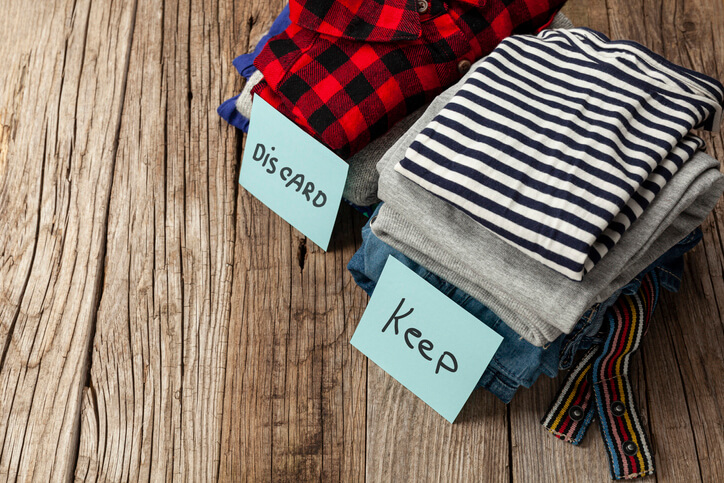
When you're deciding what stays and what goes, give each item one of four destinations.
Keep
Keep something because you use it, need it, or genuinely want it.
Not because you've already owned it for twelve years. Not because it cost money. Not because someone might theoretically need it someday.
And not because getting rid of it feels more complicated than putting it back.
The Keep pile should contain things that have a reasonable place in your current life.
Donate

Donate useful things that you no longer need but someone else reasonably could.
Good donation candidates are generally:
- Clean.
- Usable.
- Complete.
- In reasonable condition.
- Something an organization actually accepts.
Donation isn't a magic word that turns garbage into generosity.
If an item is broken, badly stained, missing essential pieces, or otherwise unusable, don't make a charity dispose of it for you.
Sell
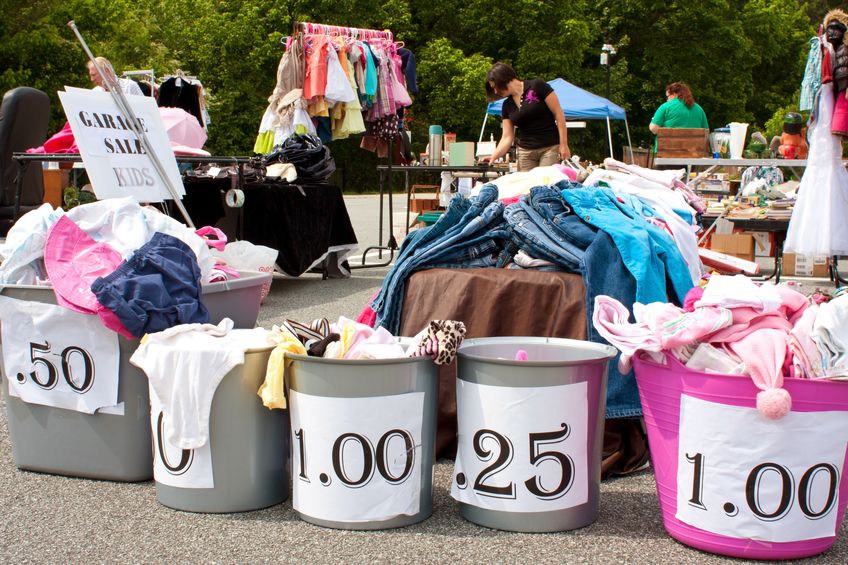
Selling sounds wonderful. You get rid of clutter and make money.
Sometimes.
Other times you photograph an old lamp, write a description, answer seven messages asking whether it's still available, arrange three pickups nobody attends, and discover you've earned $14 for a part-time job you never applied for.
Sell things that are genuinely worth the effort. Set a deadline. If an item hasn't sold by that date, reduce the price, donate it, or make another decision.
Don't let the Sell pile become long-term storage with entrepreneurial aspirations.
Toss
Some things have reached the end of their useful lives. Throw away or recycle items that can't reasonably be used, donated, or sold.
Check local recycling and disposal requirements for electronics, paint, chemicals, batteries, and other materials that shouldn't go into ordinary household trash.
How to Declutter Room by Room
Once you understand the basic process, work through your home one room at a time. You don't have to follow a particular order. Start where reducing clutter will improve your daily life the most.
Declutter the Kitchen
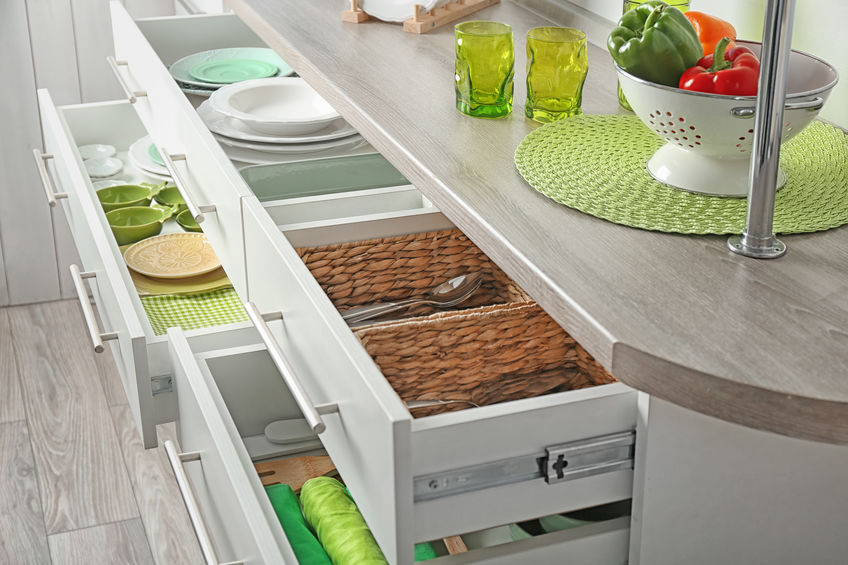
Kitchens accumulate things because almost everything in them seems potentially useful.
The question isn't whether you could use it. The question is whether you do.
Start with:
- Expired food.
- Duplicate utensils.
- Chipped dishes.
- Food-storage containers without matching pieces.
- Small appliances you don't use.
- Gadgets that seemed ingenious in the store.
- Duplicate pots and pans.
- Mugs multiplying beyond available cabinet space.
Be especially suspicious of single-purpose gadgets.
If an appliance has survived three moves without ever performing its single assigned purpose, its résumé isn't improving.
Once you've decluttered, organize what's left according to how you cook.
Declutter the Living Room
Living-room clutter tends to be highly visible because it lands on tables, chairs, and floors.
Start by removing things that belong elsewhere.
Then look at:
- Books.
- Magazines.
- Toys.
- Games.
- Decorative objects.
- Electronics.
- Cords and chargers.
- Blankets.
- Furniture.
Ask whether each item contributes enough to the room to justify the space it occupies.
A living room needs room for people too.
Declutter the Bedroom
Bedrooms often become holding areas for decisions we don't want to make elsewhere.
Start with visible clutter:
- Clothes.
- Shoes.
- Papers.
- Books.
- Empty packaging.
- Things piled on dressers.
- Whatever has taken permanent possession of The Chair.
Clear surfaces first. Then tackle drawers and closets in smaller sections.
The goal isn't a minimalist bedroom. It's a bedroom that can return to order without requiring an archaeological excavation.
Declutter Your Closet
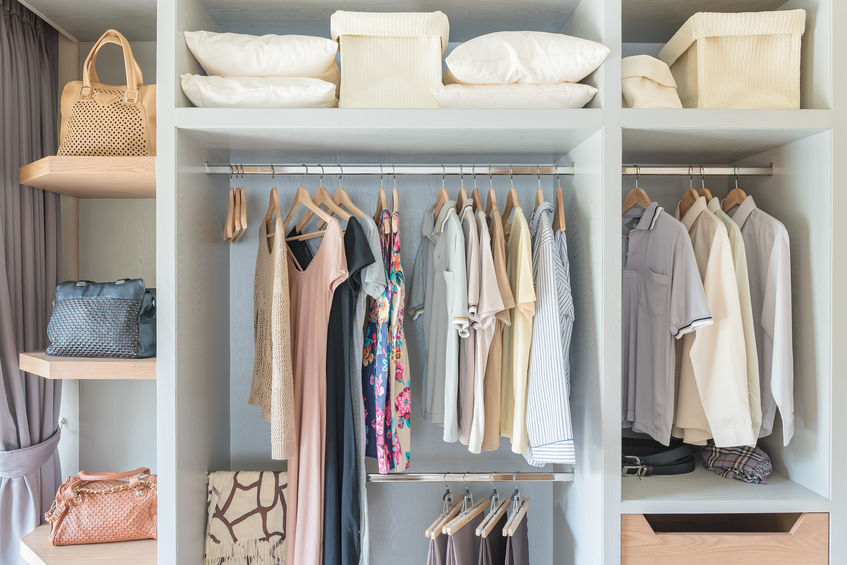
Closets are where optimism goes to hang.
The pants that will fit again. The jacket that might come back into fashion. The dress requiring an event you haven't attended in fifteen years.
Go category by category rather than pulling everything out at once. Ask:
Does it fit?
Do I wear it?
Do I like it?
Does it suit my life now?
If the answer keeps being no, the hanger isn't making a stronger case. Keep the clothing that earns its space.
Declutter the Bathroom
Bathrooms usually contain plenty of easy decisions.
Look for:
- Expired products.
- Empty containers.
- Makeup you no longer use.
- Hotel toiletries you've apparently been saving for the collapse of civilization.
- Duplicate products.
- Worn towels.
- Broken grooming tools.
Be careful when disposing of medications. Follow appropriate local or pharmacy disposal guidance rather than automatically putting medications in household trash or flushing them.
Once you've reduced the contents, organize everyday products where they're easy to reach.
Declutter the Home Office and Paperwork

Paper clutter looks harmless because each individual piece is thin.
A thousand individual pieces remain thin. Unfortunately, they're now a pile. Sort paperwork into:
Act — something requires your attention.
File — you genuinely need to retain it.
Shred — it contains sensitive information you don't need.
Recycle — you don't need it.
Don't keep paper merely because it looks official.
And don't create elaborate filing systems before deciding what actually deserves filing.
How to Organize Financial Records →
Declutter Kids' Rooms
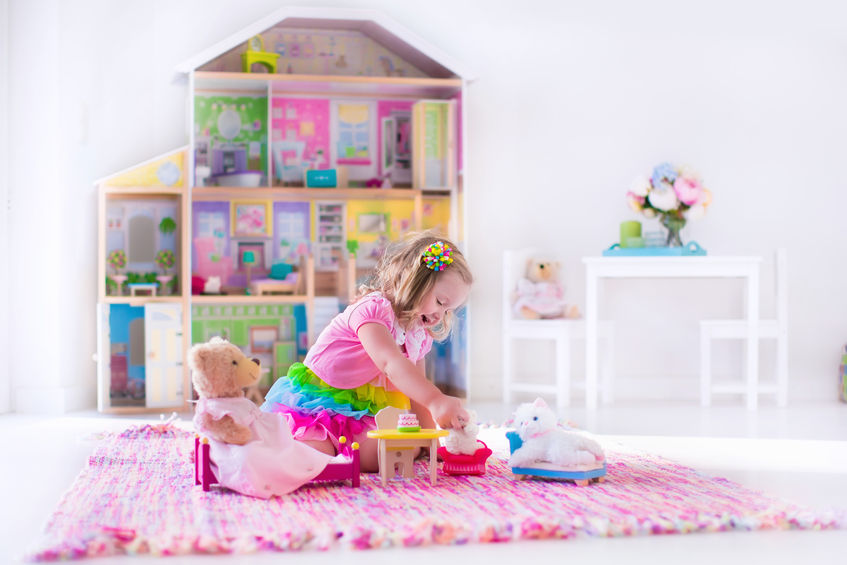
Kids outgrow belongings quickly.
Clothes stop fitting. Toys lose their appeal. School papers accumulate. Broken crayons apparently become protected artifacts.
Work with children when age-appropriate rather than secretly purging possessions they may care about.
Focus on:
- Outgrown clothing.
- Broken toys.
- Toys they've stopped playing with.
- Duplicate items.
- Old school supplies.
- Excess artwork and papers.
- Books they've outgrown.
Keep the storage system simple enough that the child can actually maintain it.
Declutter the Garage
Garages have a special ability to absorb anything the rest of the house doesn't know what to do with.
Start with obvious categories:
- Trash.
- Broken equipment.
- Old paint and chemicals.
- Sports equipment.
- Tools.
- Automotive supplies.
- Holiday decorations.
- Gardening equipment.
- Boxes from previous moves.
Don't begin by buying garage shelving.
First determine how much stuff actually deserves garage space. Then create zones for what remains.
Declutter the Attic, Basement and Storage Areas
These spaces are harder because they often contain belongings you haven't seen in years.
That is also useful information.
If you haven't opened a box since your last move, ask what role its contents are actually playing in your life.
Work one box or one small section at a time.
Don't empty an entire attic into the rest of the house. That's not decluttering. That's relocation.
How to Declutter a Storage Unit
Storage units deserve special attention because clutter outside your home is easy to forget.
Until the bill arrives.
A storage unit can be useful during a move, renovation, or temporary transition. But if you've been paying to store belongings indefinitely, it's worth asking what you're buying with that monthly payment.
Before you begin:
- Bring trash bags.
- Bring donation boxes.
- Bring labels and a marker.
- Arrange transportation for large items.
- Know where donations can go.
- Set a realistic time limit for the session.
Then work from the front inward.
Remove obvious trash first. Separate donations. Identify anything genuinely worth selling.
Keep only the things you're willing to continue paying to store—or that you're ready to bring back into your home.
And avoid the classic storage-unit accomplishment: rearranging every box beautifully and going home with exactly the same amount of stuff.
How to Declutter a Storage Unit →
How to Declutter Sentimental Items
This is where decluttering gets harder.
A chipped bowl isn't always just a chipped bowl.
It may have belonged to your mother. The box of baby clothes may represent a part of your life that's over. A set of dishes may carry family expectations along with twelve place settings.
Don't start here.
Build your decision-making muscles on easier possessions first.
When you are ready, ask:
- Do I genuinely want this?
- Would I choose to keep it if nobody else knew what I decided?
- Am I keeping it because I love it—or because I feel guilty?
- Is this the best object to represent this person or period of my life?
- Do I have room to keep it properly?
- Would another family member actually want it?
You don't have to eliminate sentimental possessions.
The point is to make deliberate choices instead of keeping everything by default.
Keep the things that matter most.
Let them have room to matter.
How to Declutter Inherited Belongings
Inherited possessions can carry an extra layer of responsibility.
Someone else chose these things, valued them, and eventually left them behind.
That doesn't automatically create a lifelong storage obligation for you.
First, determine whether other family members want particular items.
Then decide what you genuinely want to keep.
Be realistic about value.
Something can be old without being valuable. Something can have been expensive without having a strong resale market today.
If you believe an item may have significant financial value, get appropriate advice before donating or discarding it.
For everything else, make decisions based on your current home and life—not solely on the fact that someone before you owned it.
How to Decide What to Keep When Everything Feels Important
If you're stuck, change the question.
Instead of asking: "Can I get rid of this?"
Ask: "Would I choose to make room for this today?"
That shift matters.
Almost anything can produce an argument for staying.
You might need it.
It might become valuable.
Someone gave it to you.
You paid good money for it.
You've had it forever. But your home has finite space.
Keeping something is a decision too.
Try the Replacement Test
Ask:
If I didn't already own this, would I buy it today?
If not, why are you continuing to store it?
That doesn't mean everything failing the test automatically goes.
It simply exposes the difference between something you actively value and something you've retained through inertia.
What About Things You Might Need Someday?
"Someday" is responsible for an impressive amount of household clutter.
You may someday need twelve spare flowerpots, an obsolete cable and the instruction manual for a microwave you no longer own.
But probably not all on the same Tuesday.
For just-in-case possessions, consider:
- How likely am I to need this?
- How difficult would it be to replace?
- How expensive would replacement be?
- How much space does it occupy?
- Have I needed it during the years I've been storing it?
Keep sensible backups. Question the private warehouse.
How to Get Rid of Decluttered Stuff Quickly
Making the decision is only half the job.
The stuff has to leave.
Otherwise, the donation bags sit by the door for six weeks and slowly become part of the furniture.
Donations
Choose the destination before you start when possible.
Load donations into your car or arrange pickup promptly.
Items to Sell
Photograph and list worthwhile items quickly.
Give yourself a deadline.
If they don't sell, reduce the price or donate them.
Trash and Recycling
Remove them immediately.
For hazardous or restricted materials, use the appropriate local disposal program.
Items Going to Family
Ask the person directly.
Give them a reasonable deadline to collect the item.
"I thought you might want this" should not become another six-month storage arrangement in your garage.
How to Declutter Without Making a Bigger Mess
One common decluttering mistake is pulling everything out at once.
It looks dramatic in before-and-after photographs.
In real life, you may run out of time halfway through and discover that your bed is now covered with the contents of a closet.
Instead:
Finish what you start.
One drawer.
One cabinet.
One shelf.
One section of closet.
One box.
Complete the decisions, remove what is leaving, and put the Keep items back before opening the next area.
Small completed spaces create progress.
Half-finished rooms create despair.
How Long Does It Take to Declutter a House?
There isn't a useful universal answer.
A small apartment with modest clutter is different from a four-bedroom house containing thirty years of belongings.
Don't measure progress only by how many rooms you've completed.
Measure:
- Bags donated.
- Trash removed.
- Drawers made usable.
- Surfaces cleared.
- Decisions completed.
- Space recovered.
A fifteen-minute session that removes twenty unwanted things is progress.
So is an afternoon spent sorting one emotionally difficult box.
The objective isn't speed for its own sake.
It's reducing the amount of stuff you're responsible for.
Decluttering Mistakes That Make the Job Harder
Buying storage before decluttering
Don't purchase containers for things you may not keep.
Reduce first.
Organize second.
Shop for storage last.
Starting with sentimental belongings
Begin with easy decisions and build momentum.
Grandma's letters can wait.
Creating an enormous "maybe" pile
A tiny undecided category is understandable.
A room-sized Maybe pile means the decisions have merely changed addresses.
Trying to sell everything
Your time has value. Sell what is worth selling.
Donate the rest.
Moving Clutter from room to room
Taking something from the bedroom and putting it in the garage doesn't reduce the amount you own.
It just changes the scenery.
Keeping things out of guilt
Guilt is a remarkably inefficient storage system.
If the primary reason you're keeping something is fear of disappointing someone—particularly someone who isn't using your closets—it's worth reconsidering the decision.
How to Keep Clutter From Coming Back
Decluttering isn't finished when the donation truck leaves.
New things continue entering the house.
The long-term solution is controlling the flow.
Pause before buying
Ask where the item will live before bringing it home.
Deal with mail immediately
Recycle obvious junk before it reaches a pile.
Keep a donation box
When you realize you no longer want something, give it somewhere to go.
When the box is full, donate it.
Watch your problem categories
Most of us have one.
Clothes. Books. Kitchen equipment. Beauty products. Hobby supplies.
You don't need to stop buying things you enjoy.
You do need to notice when a category is expanding faster than your space.
Do small decluttering resets
You don't need another whole-house purge every six months.
Occasionally revisit drawers, closets, and other areas where excess tends to accumulate.
Ten minutes of editing now can prevent ten hours of excavation later.
Frequently Asked Questions About Decluttering Your Home
What is the fastest way to declutter a house?
Start with obvious trash and easy decisions, work in small areas, use Keep/Donate/Sell/Toss, and remove outgoing items promptly. Don't start with sentimental possessions or attempt the entire house at once.
Where should I start decluttering when overwhelmed?
Choose a small, visible area with relatively easy decisions—a counter, drawer, shelf, or bathroom cabinet. Finishing one area is more useful than partially decluttering five rooms.
What should I get rid of when decluttering?
Start with trash, broken items, expired products, unnecessary duplicates, and things you clearly don't use or want. Then move on to more difficult categories.
Should I organize or declutter first?
Declutter first. Decide what you're keeping before spending time or money organizing it.
How do I declutter when I have too much stuff?
Reduce the size of the job. Work one room, category or small area at a time. Don't attempt to make every decision in one weekend.
How do I declutter sentimental items?
Handle sentimental belongings after you've practiced on easier possessions.
Keep the items that genuinely matter most rather than assuming you must keep everything associated with a person or memory.
What are the four categories for decluttering?
A simple system is: Keep, Donate, Sell, and Toss. It pushes each item toward a clear destination instead of creating endless piles of undecided possessions.
You Don't Need to Become a Minimalist
Decluttering is sometimes presented as though success means owning three shirts, one saucepan, and an aggressively empty countertop.
It doesn't.
You can own books.
You can collect things.
You can keep family treasures.
You can have a kitchen drawer containing more than one spatula.
The question isn't whether you own things.
It's whether the amount you own works in the amount of space you have—and whether you're willing to spend the time, money and energy required to take care of it.
Your home should have room for the life you're living now. Not just storage for every version of your life that came before it.
Start small.
Make one decision.
Then another.
Eventually, you don't just have less clutter.
You have less to clean, less to organize, less to move around, and less demanding your attention.
And that's the real payoff.
Ready to Declutter Room by Room?
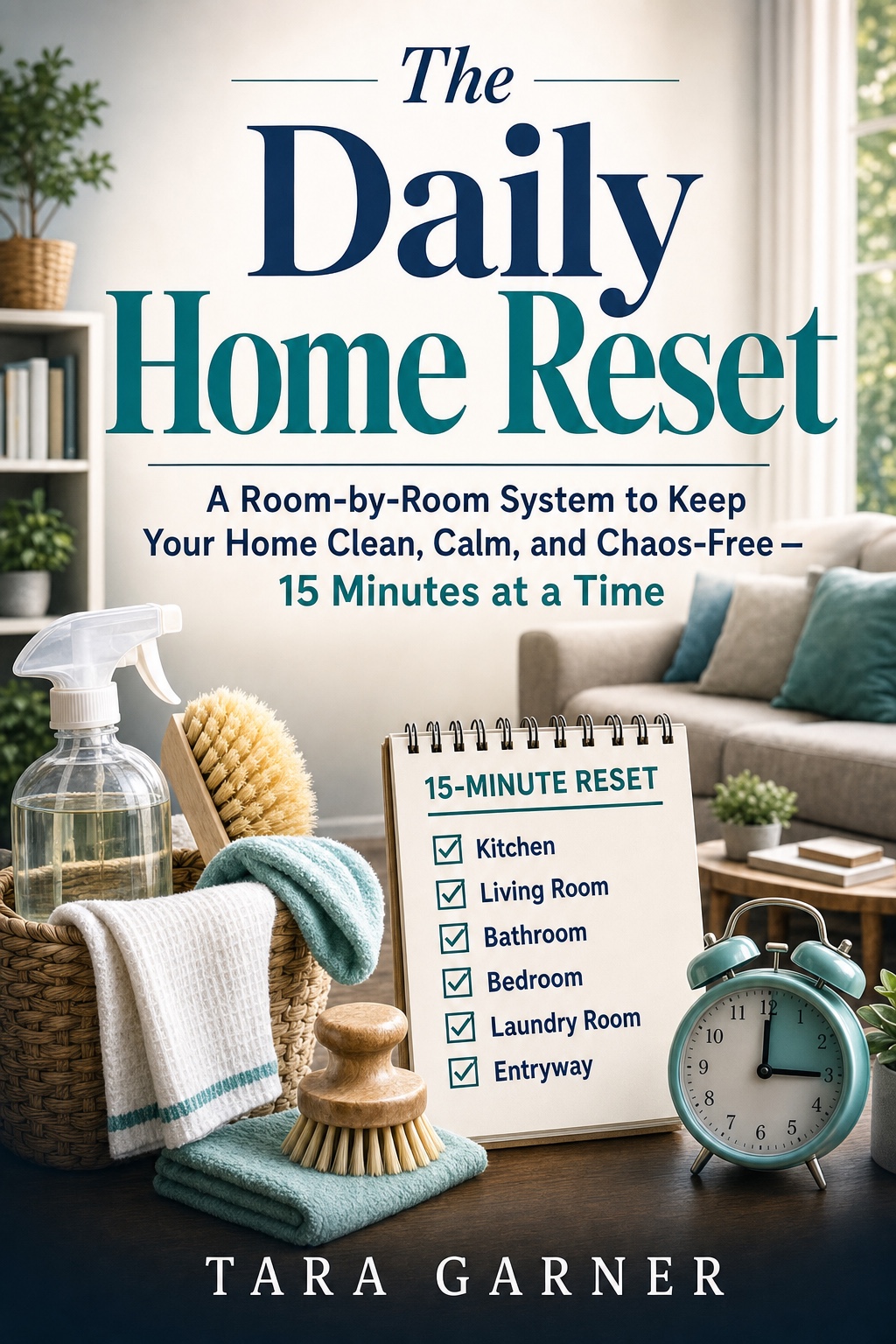
If you're dealing with years—or decades—of accumulated belongings, Room by Room: Declutter Your Home, Let Go of the Guilt, Get Your Space Back takes the same practical approach further.
It walks through the house one space at a time, including the harder parts: guilt, sentimental possessions, inherited belongings, family expectations, storage areas, and deciding what deserves to stay.
More Help for a Manageable Home
How to Organize Your Home Room by Room →
How to Declutter a Storage Unit →
- Clean Home
- Organize Your Home
- Declutter