Tips for Organizing Your Closet:
Make More Room Without a Makeover
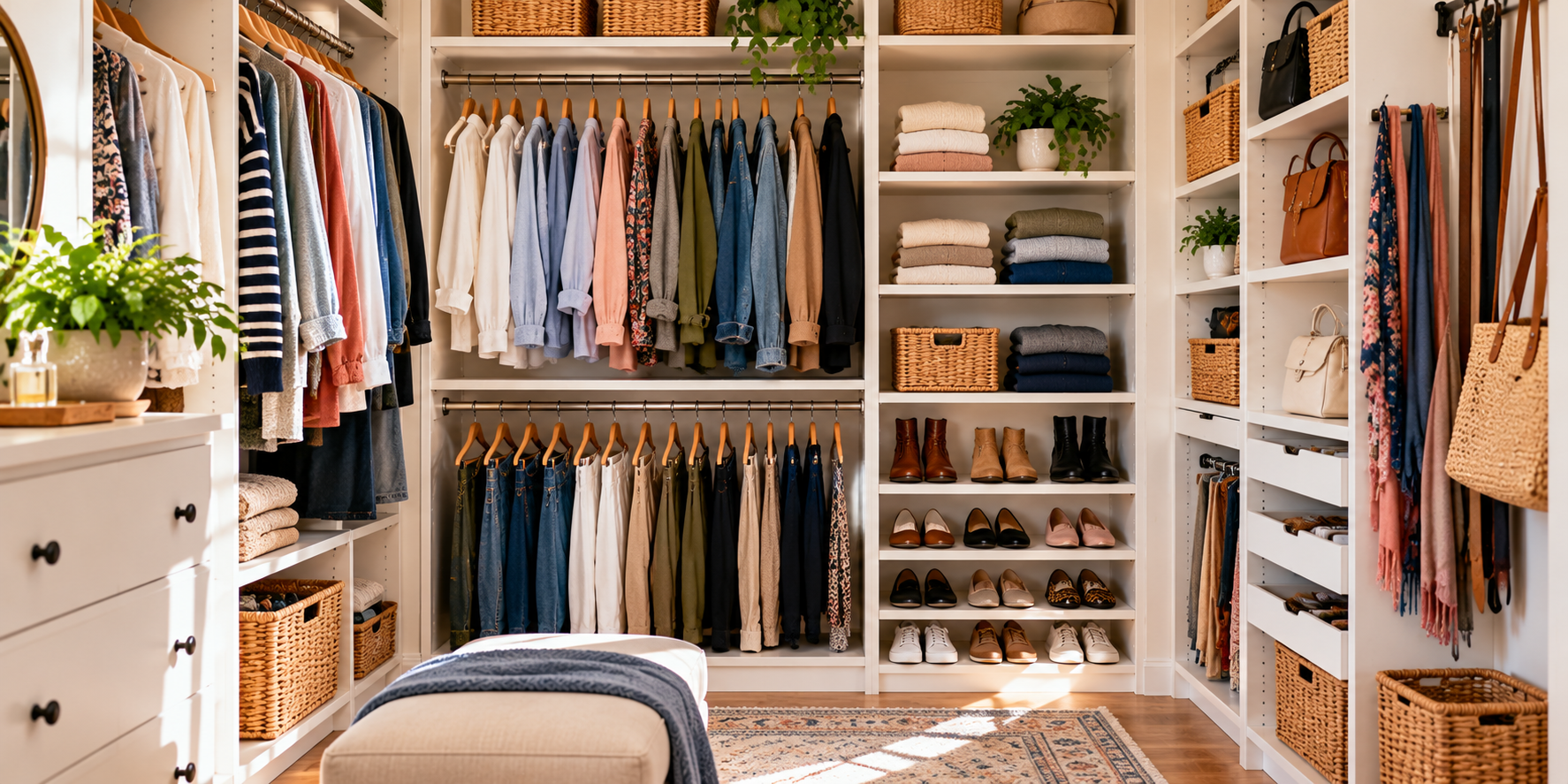
Does finding your favorite shirt require moving half your wardrobe?
Do freshly laundered clothes come out of the closet looking as though they've spent the night in a suitcase?
Or do you wear the same handful of outfits because everything else has disappeared behind a wall of hangers?
If any of this sounds familiar, your closet could probably use some attention.
The good news? You don't need a custom closet system or a collection of expensive organizers to make a difference.
These tips for organizing your closet will help you sort what you own, make better use of your available space, and arrange clothes so they're easier to find, wear, and put away.
And you may even rediscover a few things you forgot you owned.
1. Start With One Section of Your Closet
The traditional advice is to empty the entire closet before organizing it. That works if you have plenty of time and somewhere to spread everything out.
If you don't, it's a good way to end the afternoon surrounded by clothing and wondering where you're supposed to sleep.
Instead, start with one manageable section. Choose your hanging shirts, shoes, a shelf, or one category of clothing. Take those items out, sort them, and return what you're keeping before moving on.
If your closet is small and you can comfortably finish in one session, tackling the whole space is fine. The important part is completing the project you start.
2. Sort Your Clothes by Category
Group similar belongings together so you can see what you have. Common categories include:
- Shirts and blouses
- Pants and jeans
- Dresses and skirts
- Suits and jackets
- Coats
- Shoes
- Belts and scarves
- Handbags and accessories
Once you've gathered a category, look at each item and ask yourself:
- Do you wear it?
- Does it fit comfortably?
- Is it in good condition?
- Do you still like it?
- Does it suit your current lifestyle?
Don't automatically discard something because you haven't worn it recently. Formal clothing, seasonal garments, and special-occasion outfits may be worth keeping.
But if you're hanging onto clothes that no longer fit, suit your needs, or make you feel comfortable, consider whether they're earning their space.
A closet should hold clothes for the life you're living—not just the life you had ten years ago.
3. Decide What to Do With Clothes You No Longer Wear
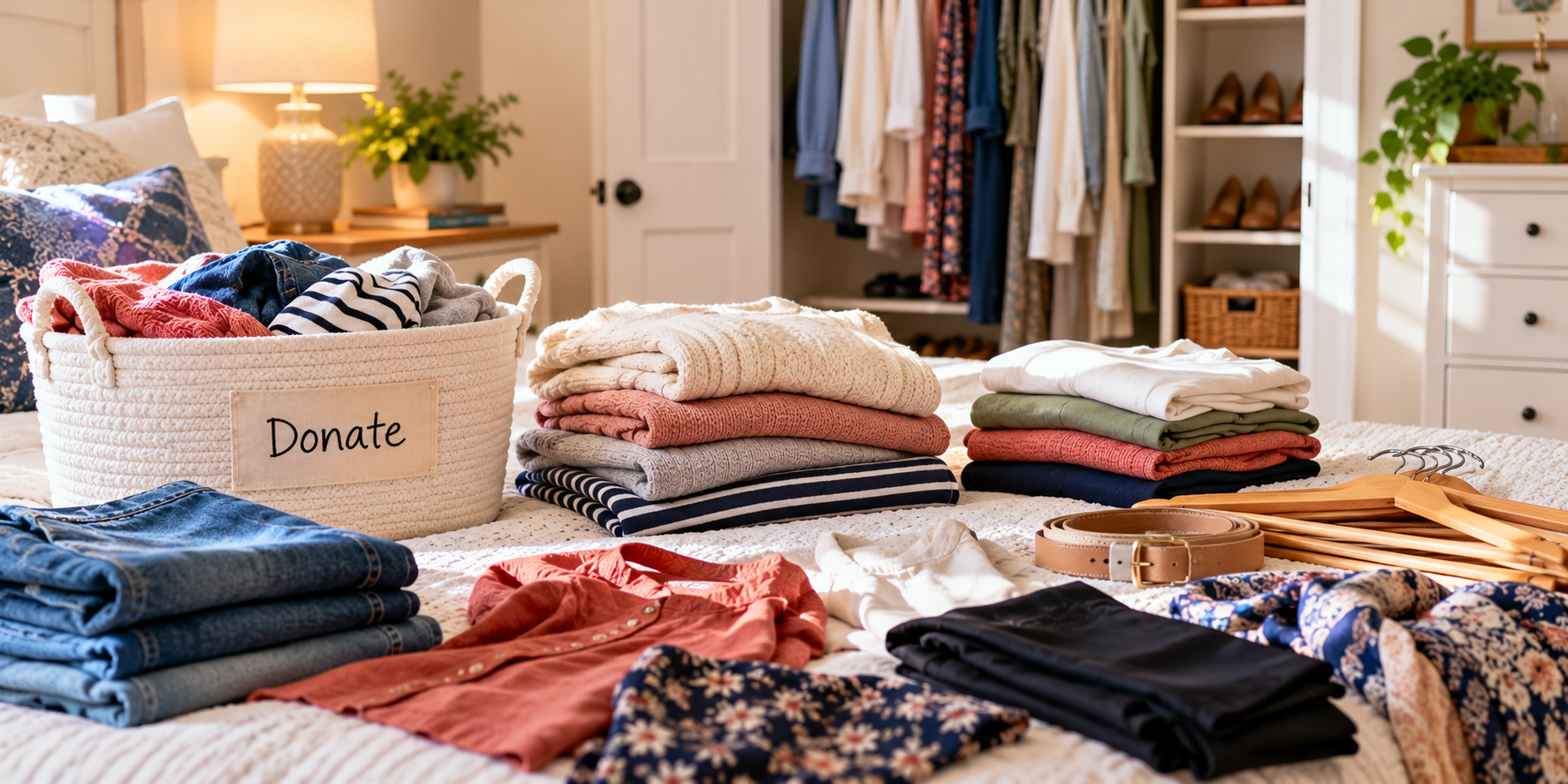
Not everything you remove from your closet belongs in the trash. Depending on the garment, you may be able to:
Store it seasonally. Put away winter or summer clothing when it's not needed, provided you have suitable storage.
Have it altered. A garment you love may be worth adjusting if the cost makes sense.
Donate it. Clean, wearable clothing may be useful to someone else. Check your chosen organization's donation requirements.
Sell it. Higher-value clothing, handbags, or accessories may be worth selling through consignment or resale.
Repurpose it. Some soft, absorbent fabrics can become household cleaning rags.
Recycle or discard it appropriately. Check local textile-recycling options for worn-out items that aren't suitable for donation.
Make these decisions as you go. And give yourself a deadline for dropping off donations or listing items for sale.
Otherwise, your newly organized closet may simply acquire a permanent bag labeled "Someday."
4. Rediscover the Clothes You Forgot About
One of the nicest surprises of closet organizing is finding perfectly good clothing that has been hidden for months.
You may uncover a favorite sweater behind the coats. Or a pair of pants that somehow migrated into the dress section.
Set aside these rediscovered items and give them a visible, convenient location. If they need laundering or pressing, take care of that before returning them to the closet.
You may find you have more outfit options than you realized. Sometimes the best wardrobe refresh doesn't involve shopping at all.
It involves finding what you already own.
5. Organize Clothes in the Way You Get Dressed
There's no single correct way to arrange a closet. The best system is the one that makes getting dressed easier. Consider these approaches:
Organize by Clothing Type
Hang shirts together, pants together, dresses together, and jackets together. This is a simple method if you like mixing and matching separates.
Organize by Color
Within each clothing category, arrange items by color. This can make coordinating outfits easier and helps you see what you own.
Organize by Outfit
If you regularly wear certain pieces together, hang them near each other. A favorite suit and shirt, for example, can share the same section of the closet.
Organize by Occasion
Separate work clothes, casual clothing, exercise wear, and special-occasion outfits. This may be especially useful if your daily routine includes several different kinds of clothing.
You can also combine methods. Group by type first, then arrange each group by color.
Try an arrangement for a couple of weeks and adjust it if necessary. Your closet should work for you, not the other way around.
6. Make Better Use of Hanging Space
If your closet has one long hanging rod, you may be wasting useful space beneath shorter garments. One option is to install a second rod below the first.
This can work well for shirts, folded trousers, skirts, and other shorter clothing.
Before making changes, measure the available height and check that the rod and supports can safely carry the weight.
Leave enough room for longer dresses, coats, and other garments that need full-length hanging space.
Don't crowd clothes so tightly that you have to force hangers along the rod. A little space between garments makes them easier to see and helps reduce wrinkling.
7. Know Which Clothes Should Be Folded
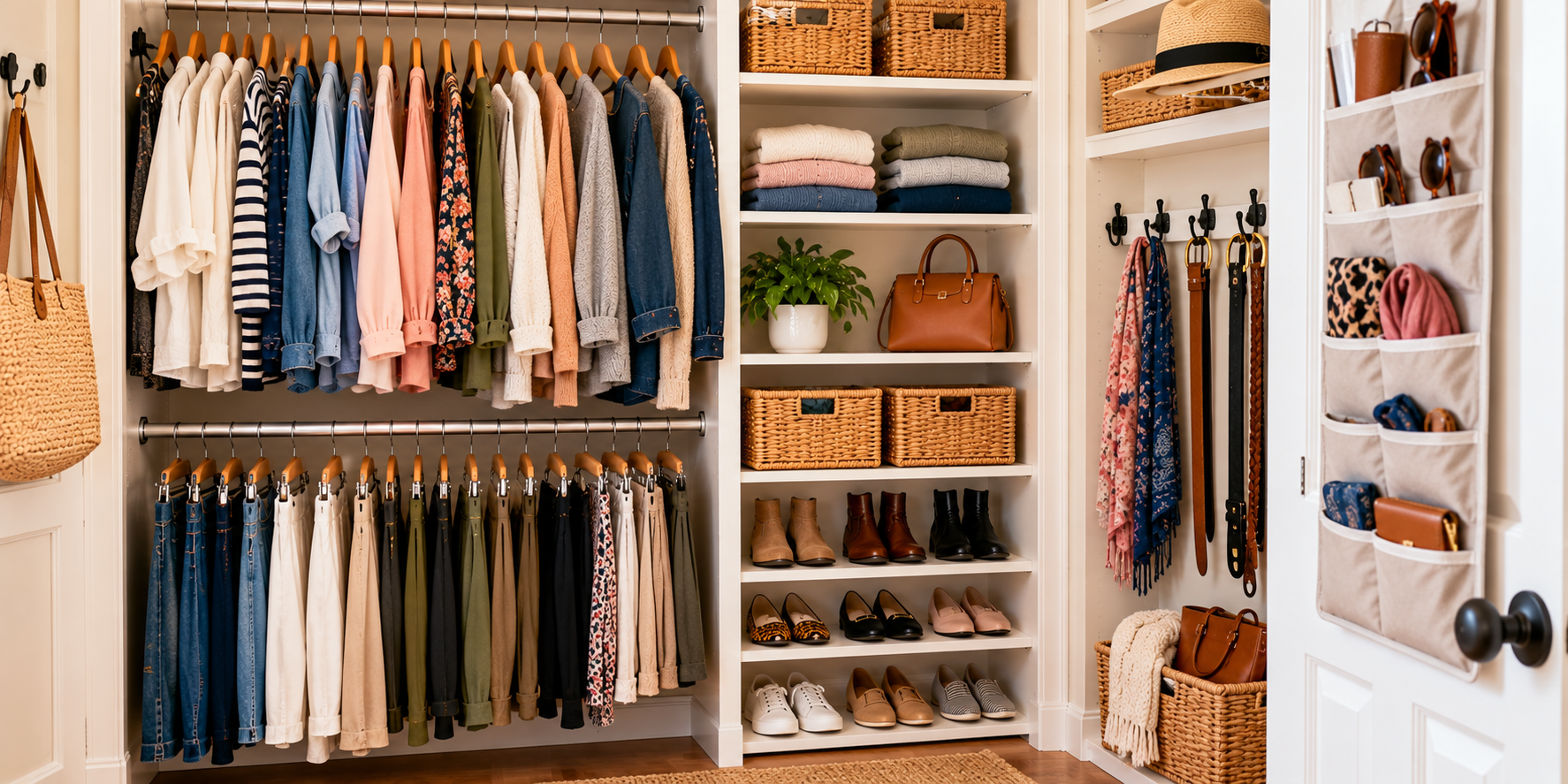
Not everything belongs on a hanger. Some garments can lose their shape when hung for long periods, particularly if they're heavy. Sweaters often do better folded on shelves or in drawers.
Other clothing may benefit from hanging, depending on its construction and fabric. Use suitable hangers for jackets, shirts, dresses, and trousers.
Avoid forcing several garments onto a hanger that isn't designed to support them. And give freshly cleaned clothing enough space so it doesn't become wrinkled before you have a chance to wear it.
There's little point carefully laundering and pressing a shirt only to squeeze it between fifteen other garments.
8. Use Shelves for Sweaters, T-Shirts, and Shoes
Shelves can make a closet much more functional. They're useful for folded sweaters, T-shirts, jeans, handbags, and certain accessories.
Keep stacks at a manageable height so you can remove one item without pulling down everything above it.
If you have deep shelves, consider using appropriately sized baskets for smaller belongings. Shoe shelves or racks can also keep footwear visible and off the floor.
Store shoes clean and dry, and choose storage that allows materials to remain in good condition.
If your shelves are already crowded, declutter before adding more containers. A basket doesn't create extra space. It just changes how that space is divided.
9. Give Belts, Scarves, and Accessories Their Own Homes
Small accessories can create a surprising amount of closet clutter. Belts get tangled. Scarves slip off hangers.Handbags pile up on the floor.
Fortunately, these items often need only simple storage solutions.
Try:
- Hooks for belts and suitable handbags.
- A scarf hanger or shallow drawer for scarves.
- A small container for lightweight accessories.
- Shelf space for hats that need to retain their shape.
- Drawer dividers for socks and other small garments.
A hanging mesh bag can also be useful for lightweight accessories that don't need special protection.
Choose storage based on what you own rather than buying an organizer for every possible category.
10. Put the Back of the Closet Door to Work
If your closet door has enough clearance, an over-the-door organizer may provide useful additional storage.
Shoe pockets can hold certain footwear or lightweight accessories. Hooks may be useful for belts, scarves, or bags.
Before installing anything, check the door's construction, weight limits, and available clearance.
Make sure the organizer doesn't prevent the door from closing or interfere with its hardware.
If the door is unsuitable, wall-mounted hooks or a small freestanding rack may be better alternatives.
11. Consider Closet Organizers
Sometimes the closet itself needs a better arrangement. But that doesn't mean you need a major renovation.
Depending on your space, useful options may include:
- An additional hanging rod.
- Adjustable shelving.
- A compact shoe rack.
- Shelf dividers.
- Drawer organizers.
- Hooks for accessories.
- A freestanding wardrobe or armoire.
Measure carefully before buying. Think about what you actually need to store and whether you have enough room to use the organizer comfortably.
For example, an extra shelf isn't especially helpful if it's so high you can't safely reach it.
For larger changes, a prefabricated closet system or professional design may be worth considering. But start with the simplest solution.
Your closet doesn't need to look like a luxury boutique to work beautifully.
12. Keep Everyday Clothes Easy to Reach
The clothes you wear most frequently should be the easiest to access. Keep everyday shirts, pants, and shoes within comfortable reach.
Move occasional-use garments to less prominent locations. Store seasonal clothing elsewhere if needed, but choose conditions that protect it from moisture, pests, and damage.
If you have limited mobility or find high shelves difficult to use, prioritize accessible storage and avoid arrangements that require climbing or excessive reaching.
An organized closet should save effort, not create an obstacle course.
13. Keep Your Closet Organized With a Few Simple Habits
Once you've arranged everything, keeping it organized should take less effort than the initial project.
Return clothing to its designated place after wearing or laundering it. Put dirty clothes in the hamper rather than leaving them on the floor.
Hang or fold clean garments promptly. Review clothing when seasons change. And occasionally check for items that no longer fit or serve your needs.
You don't have to maintain a perfectly arranged rainbow of clothing. You just need to be able to find what you want without dismantling the entire closet.
14. What If You Still Have More Clothes Than Closet Space?
You can add rods, shelves, baskets, and organizers. But if your closet is still overflowing, the problem may not be the closet. It may be the amount you're asking it to hold. That's where decluttering can help.
You don't have to get rid of everything you love or adopt a minimalist wardrobe. You simply need to decide which belongings deserve the space they occupy.
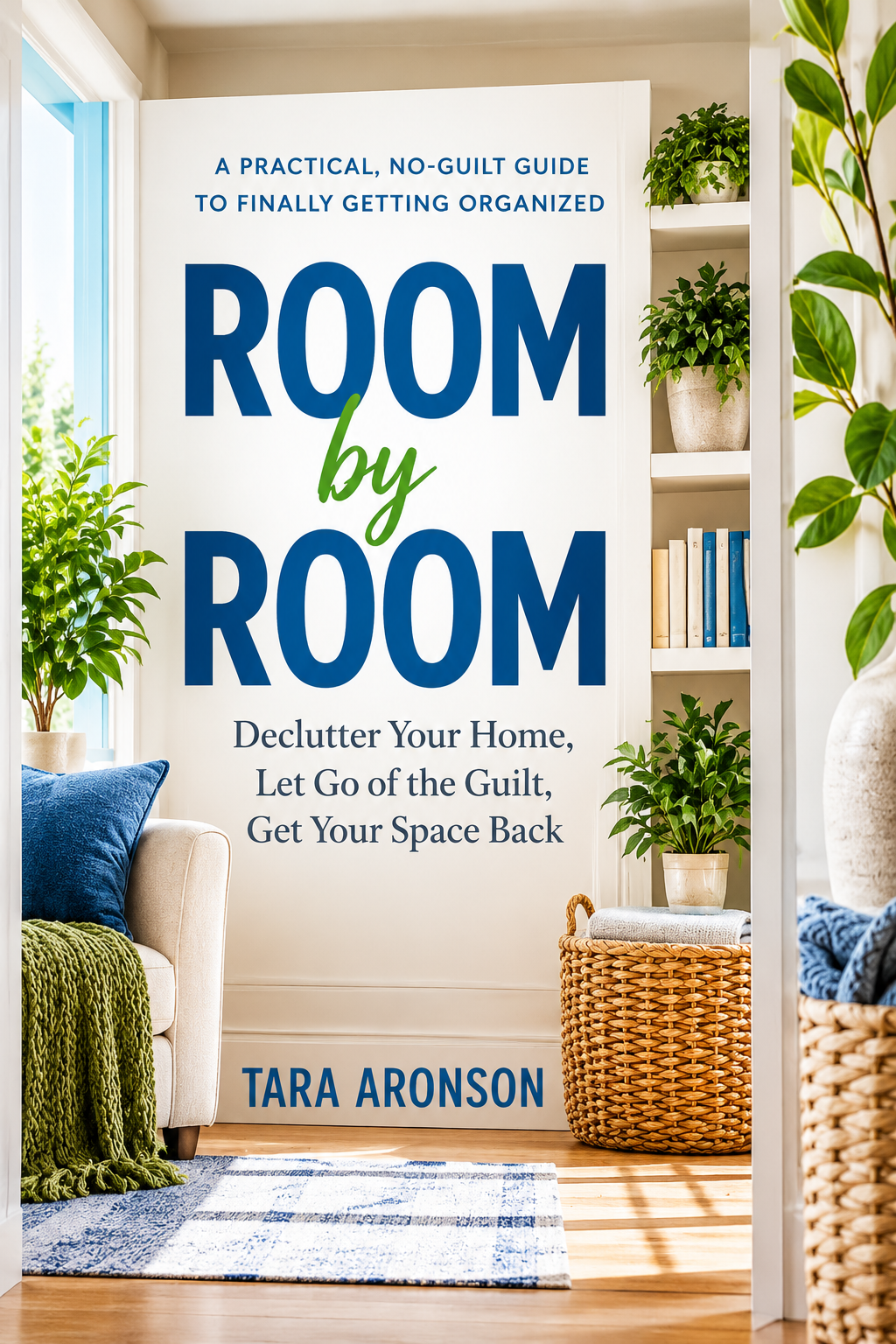
My book, Room by Room: Declutter Your Home, Let Go of the Guilt, Get Your Space Back, offers a practical approach to making those decisions without rigid rules or guilt.
It helps you work through crowded spaces—including closets—one manageable project at a time.
More Help Organizing Your Home
Once your closet is under control, these guides can help with the rest of the house.
How to Organize Clothes — More ideas for arranging clothing and accessories.
Creating an Organized Home — Build practical organizing systems throughout the house.
Easy Household Organization — Simple solutions for everyday clutter.
How to Declutter Your Home — Decide what to keep and what you're ready to let go.
Home Organization Guide — Explore organizing ideas for every room.
A Closet That Works Is Better Than a Closet That Looks Perfect
You don't need matching hangers, expensive cabinetry, or a wardrobe arranged like a department store.
You need a closet that makes getting dressed easier. Start with the clothes you actually wear. Give everything a sensible place.
Use the storage space you already have before buying more. And leave enough room to put clean laundry away without a struggle.
That's successful closet organizing. Finding your favorite shirt in under a minute is just a nice bonus.
Once you've cleared out what you no longer need, the goal isn't to fill the closet with organizers. It's to use a few smart storage solutions that make what you kept easy to see, reach, and put away.
→ Shop Closet Essentials
- Clean Home
- Organize Your Home
- Tips For Organizing Your Closet
A monthly note from me: checklists, stain rescues and shortcuts from 30 years of keeping house.