How to Organize a Kid’s Room
So It Stays Organized
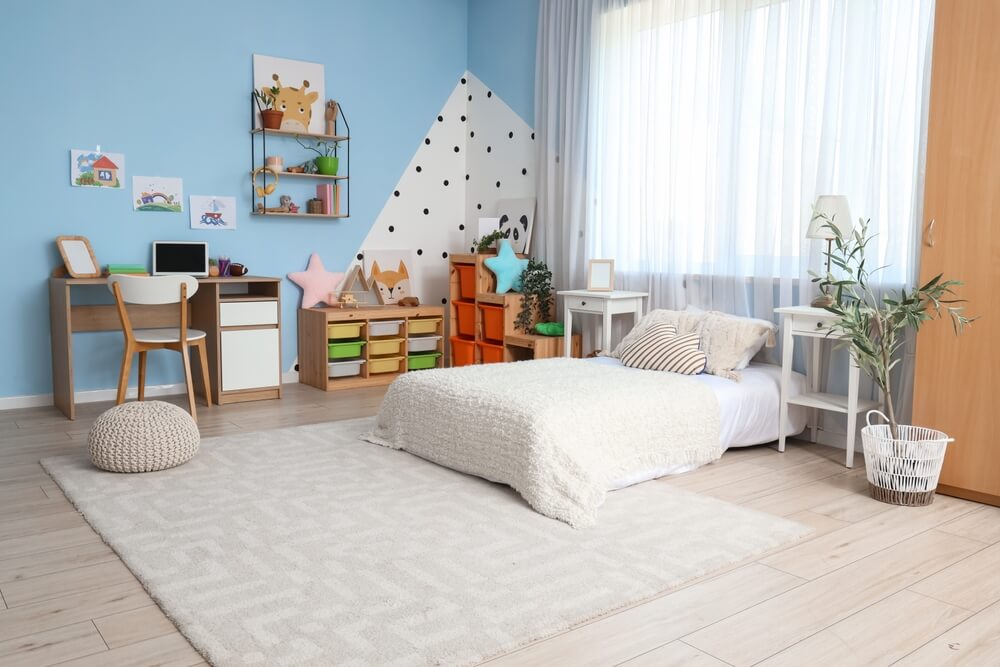
Kids' rooms get messy for one very obvious reason:
Kids live in them.
They sleep there, get dressed there, read there, play there, do homework there, dump backpacks there, and occasionally use the floor as a filing system.
So the goal is not to create a room that looks untouched.
The goal is to create a room that’s easy for a child to use and easy enough to reset without adult supervision becoming a full-time job.
That means simple categories:
Low storage.
Clear homes for things.
And far fewer complicated systems than adults tend to invent.
Start by Decluttering the Room
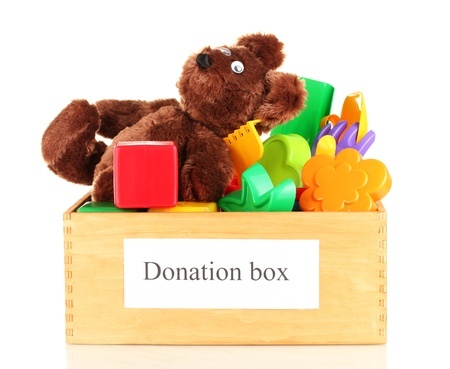
Before you organize, reduce what you store.
Go through:
- Clothes.
- Toys.
- Books.
- Art supplies.
- Games.
- Stuffed animals.
- School papers.
- Sports gear.
- Random treasures.
Sort into four groups:
Keep. Donate. Sell. Toss.
Include your child when age-appropriate, especially for things that belong to them.
You don't need to turn it into a courtroom proceeding over every broken plastic dinosaur.
But giving kids some ownership helps them understand that organizing starts with deciding what deserves space.
Need a bigger whole-house system? See How to Declutter Your Home Without Getting Overwhelmed →
Organize the Room Around Activities
A child's bedroom usually does several jobs at once.
Instead of thinking only in terms of furniture, think in terms of activity zones.
You might create:
- A sleeping area.
- A dressing area.
- A toy/play area.
- A reading area.
- A homework or art area.
These zones do not need walls or matching furniture. They simply need to make sense.
Keep books near the reading spot. Put toy storage near the floor space where play actually happens.
Keep clothes near the dresser or closet. Store school supplies near the desk.
The less a child has to carry something across the room to put it away, the better your odds that it gets put away at all.
Keep Storage at Kid Height
One of the fastest ways to create a failed organizing system is to put everything out of a child's reach.
Frequently used items should be low enough for the child to:
- Get them out.
- Put them back.
- See what belongs there.
Use:
- Low shelves.
- Bins.
- Cubbies.
- Baskets.
- Lower closet rods.
- Easy-open drawers.
If a five-year-old needs an adult every time they want to put away a toy, the system is not really theirs.
It's yours.
Use Broad Categories
Kids do better with simple categories.
Instead of creating twelve highly specific toy bins, try:
- Blocks.
- Cars.
- Dolls.
- Dress-up.
- Art.
- Games.
- Stuffed animals.
The more decisions cleanup requires, the less likely cleanup is to happen.
A child shouldn't have to stop and debate whether a plastic dinosaur belongs under "prehistoric animals," "figures," or "educational toys."
Use Picture Labels for Younger Kids
For children who aren't reading yet, picture labels can work beautifully.
Use:
- Photos.
- Simple drawings.
- Printed icons.
Put the picture on the front of the bin or shelf.
For example:
A picture of blocks on the block bin.
A picture of cars on the car bin.
A picture of stuffed animals on the stuffed-animal basket.
Now the storage system explains itself. No literacy required.
Limit the Number of Toy Categories
Toy storage expands quickly because every new toy seems to demand its own container.
Resist.
Keep categories broad and the number of bins manageable.
If the room has twenty-seven bins, you've created a miniature warehouse. Children do not need warehouse management experience.
They need to know where the Legos go.
Give Large Toys a Parking Spot
Big toys rarely fit neatly into bins.
That's okay.
Give them a defined home on the floor or along a wall.
For example:
- Dollhouse.
- Toy kitchen.
- Large trucks.
- Ride-on toys.
- Large building sets.
Call it a parking spot if that language works for your child. The point is that large items still need a predictable place to return to.
Otherwise, they become permanent floor residents.
Rotate Toys if the Room Is Overloaded
If your child owns more toys than the room can comfortably hold, rotation can help.
Keep a manageable number available at any one time. Store the rest elsewhere.
Every few weeks or months, swap some.
This can make old toys feel new again and reduce the amount a child has to manage at once.
But don't use rotation as an excuse to keep every toy forever.
If something is consistently ignored, broken, or outgrown, it may simply be ready to leave.
Create an Easy Book Area
Books deserve a simple system too.
For younger children, front-facing book storage can make it easier to choose. For older kids, ordinary shelves work fine.
Keep:
- Favorites within reach.
- Current school books together.
- Library books in one designated spot.
That last one matters.
Library books have a special talent for vanishing beneath beds two hours before they're due.
Give them one home.
Make the Bed Easy to Make
If you expect a child to make the bed, don't set up a system that requires fourteen pillows and advanced linen training.
Keep it simple. A fitted sheet. A blanket or comforter. Maybe one or two pillows.
The easier the bed is to make, the more realistic the expectation.
A child's room does not need hotel styling. It needs a bed a child can actually manage.
Organize Clothes by Type
Kids' clothes are easier to manage when drawers have simple jobs.
For example:
Drawer 1: underwear and socks.
Drawer 2: shirts.
Drawer 3: pants.
Drawer 4: pajamas.
For younger children, labels or picture labels can help.
Keep everyday clothes within reach.
If you want kids to help get dressed or put laundry away, give them access.
Keep an Outgrown-Clothes Bin
Children grow. Frequently and inconveniently. Keep a small bin or basket for clothes that no longer fit.
When you notice something is too small, put it there immediately.
Don't return it to the drawer where it will reappear next Tuesday and cause exactly the same problem.
When the bin is full, decide what gets:
- Donated.
- Passed down.
- Sold.
- Stored for a younger child.
This one system can prevent closets from filling with clothing nobody can wear.
Put the Hamper Where Clothes Actually Land
If dirty clothes routinely end up on the floor beside the bed, put the hamper there. Don't place it across the room just because it looks nicer.
Organize around behavior. A hamper near the natural drop zone is much more likely to be used.
You may even find that children can get dirty clothes into it when the basket is about two feet away.
Miracles happen.
Make the Closet Child-Friendly
Keep frequently worn clothing within reach.
Use:
- Lower closet rods.
- Low shelves.
- Bins.
- Shoe cubbies.
Move formal, seasonal, or rarely used clothing higher.
If the closet is packed so tightly that your child can't put anything away, simplify it.
You cannot teach closet organization in a closet with no available space.
Create a Homework or Study Zone
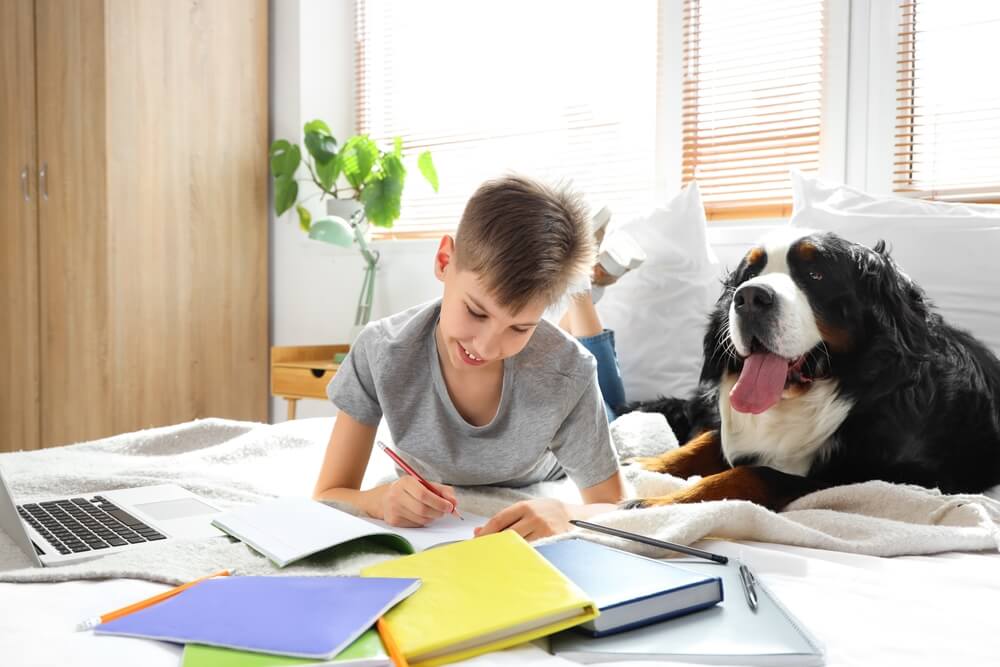
If your child does schoolwork in the bedroom, give them one workable area.
You need:
- A flat surface.
- Good lighting.
- A chair.
- Basic school supplies.
- A small place for current papers.
That's enough. You don't need to build a miniature corporate office.
Keep pencils, pens, scissors, paper, and frequently used supplies nearby. Store extra supplies elsewhere.
The desk should remain usable for homework.
It should not become a storage platform for everything related to school.
Control School Papers
School papers multiply at alarming speed.
Decide what happens when they come home.
Some are:
- Homework.
- Forms requiring action.
- Current study materials.
- Artwork or keepsakes.
- Recycling.
Don't let every worksheet become a permanent document.
Keep current papers in one folder or tray.
Process the rest.
See How to Organize Paperwork →
Create an Artwork System
Kids produce a lot of art. You do not need to keep every piece forever.
Choose a simple system.
For current favorites, you might use:
- Clip frames.
- A wire or ribbon with clips.
- A bulletin board.
- A few magnetic frames.
- One display shelf.
When new artwork comes in, rotate out older pieces.
Then decide whether the older art gets:
- Saved.
- Photographed.
- Given to family.
- Recycled.
Displaying some work makes it feel special. Displaying every piece ever created makes the wall disappear.
Use One Keepsake Container
For special drawings, cards, awards, and school memories, give each child a defined keepsake container.
This creates a limit.
When it gets full, review it together.
Keep the best. Let go of the rest.
Children can learn that choosing a few meaningful things does not mean the others didn't matter.
It means you're deciding what is worth saving.
Create a Reading Corner
A reading corner can be very simple.
You need:
- A comfortable place to sit.
- Good light.
- Books nearby.
That's it.
No themed canopy required.
If your child prefers to read sprawled on the floor, that counts too.
Organize around actual habits.
Limit Stuffed Animals
Stuffed animals are charming individually.
In groups of seventy-three, they become a population-management issue.
Choose a defined home:
- One basket.
• One shelf.
One hammock if you already use one safely.
One section of the bed.
When the space is full, choose your favorites.
Storage limits are useful because they make the decision visible.
The container tells you when the category has grown too large.
Store Dress-Up Clothes Simply
Dress-up clothes work best when they're easy to grab and easy to return.
Try:
- Hooks.
- A small clothing rack.
- One basket.
- One low bin.
Avoid complicated folding.
The child is pretending to be a pirate. They do not need archival textile storage.
Give Sports Gear Its Own Zone
If sports equipment lives in the bedroom, contain it.
Use:
- One basket.
- Hooks.
- A bin.
- A section of the closet.
If possible, bulky gear may work better in the garage, entryway, or another area closer to where it leaves the house.
Don't make the bedroom store everything simply because it belongs to the child.
Don't Overfill the Room With Furniture
Storage furniture can solve problems. It can also consume the entire room.
Before adding:
- Another bookcase.
- Another toy cabinet.
- Another dresser.
- Another storage bench.
Ask whether you need more furniture or fewer things.
Sometimes the better solution is not finding more places to put stuff.
It's reducing the stuff.
Use Under-the-Bed Storage Carefully
Under-bed storage can be useful for:
- Off-season clothes.
- Extra bedding.
- Infrequently used toys.
Use labeled containers.
Do not use the space as a hiding place for random clutter.
If you just shove everything under the bed, you haven't organized it.
You have lowered it.
Make Cleanup Fast
A child should be able to reset the room without needing a 42-step checklist.
Try a simple cleanup order:
- Trash.
- Dirty clothes.
- Toys.
- Books.
- School stuff.
- Make the bed.
For younger children, give one instruction at a time.
"Clean your room" is broad.
"Put all the blocks in this bin" is clear. Specific jobs are easier to finish.
Do a Five-Minute Nightly Reset
A short reset can keep the room from becoming overwhelming.
Before bed:
- Put toys in bins.
- Put dirty clothes in the hamper.
- Return books.
- Clear the floor.
- Put school items where they belong.
Five minutes is enough.
The goal isn't a perfect bedroom. It's to make tomorrow easier.
Use a One-In, One-Out Rule for Fast-Growing Categories
This works particularly well for:
- Stuffed animals.
- Toys.
- Clothes.
- Books.
When a new item arrives, consider whether an older one can leave.
It doesn't have to be rigid. It's simply a way to prevent constant accumulation.
Otherwise, birthdays and holidays can turn the room into a storage challenge twice a year.
Teach Kids Where Things Go
Don't assume a child understands the organizing system because you do.
Show them.
"This bin is for cars."
"Books go here."
"Dirty clothes go here."
"School papers go in this tray."
Keep repeating it until the system becomes familiar.
Organization is a skill.
Children learn it the same way they learn other skills: through repetition and practice.
Let Kids Help Design the System
Children are more likely to use a system they understand and helped create.
Ask:
- Where do you want your books?
- Which toys do you use most?
- Where should your backpack go?
- Which drawer would make sense for pajamas?
You still provide boundaries.
But giving them some choice can make the room feel like theirs rather than a system imposed from headquarters.
Organizing a Shared Kids' Room
Shared rooms need clear personal zones.
Give each child a defined space where possible.
For example:
- Separate drawers.
- Separate shelves.
- Separate toy bins.
- Separate bedside storage.
Shared items can have shared zones.
Personal items need clear ownership. This reduces arguments and makes cleanup more obvious.
What Should Stay in a Kid's Room?
Usually:
- Everyday clothes.
- Favorite books.
- A manageable number of toys.
- Current school supplies.
- A few keepsakes.
- Bedroom essentials.
Everything the child has ever owned does not need to fit in one room.
Use the rest of the house strategically. Seasonal gear, extra supplies, and archived keepsakes may belong elsewhere.
What Should Leave?
Question:
- Broken toys.
- Outgrown clothes.
- Dried-up art supplies.
- Games missing essential pieces.
- Books nobody wants.
- Toys nobody plays with.
- Random packaging.
- School papers that no longer matter.
Children's rooms become much easier to organize when you stop asking the storage system to accommodate things that have already served their purpose.
The Goal Isn't a Perfect Kid's Room
A child’s bedroom is supposed to be used.
Sometimes there will be toys on the floor.
There will be pajamas on the bed.
Art projects will be in progress.
That's normal.
The goal is not to make the room look untouched.
The goal is to make cleanup straightforward.
Keep categories simple.
Put storage within reach.
Give each activity a sensible home.
Limit what the room has to hold.
Then teach the child how the system works.
If a room can go from messy to reasonably reset in ten minutes, you're doing very well.
No matching bins required.
Keep Organizing
How to Organize Your Home Room by Room →
How to Declutter Your Home Without Getting Overwhelmed →
Want Help Organizing the Rest of the House?
Room by Room by Tara Aronson helps you declutter and organize your home one space at a time, with practical systems designed for real households—not rooms that never get used.
Learn more about Room by Room →
- Clean Home
- Organize Your Home
- Organizing Kids Rooms