Storage Solutions for Kids' Clutter
That Make Cleanup Easier
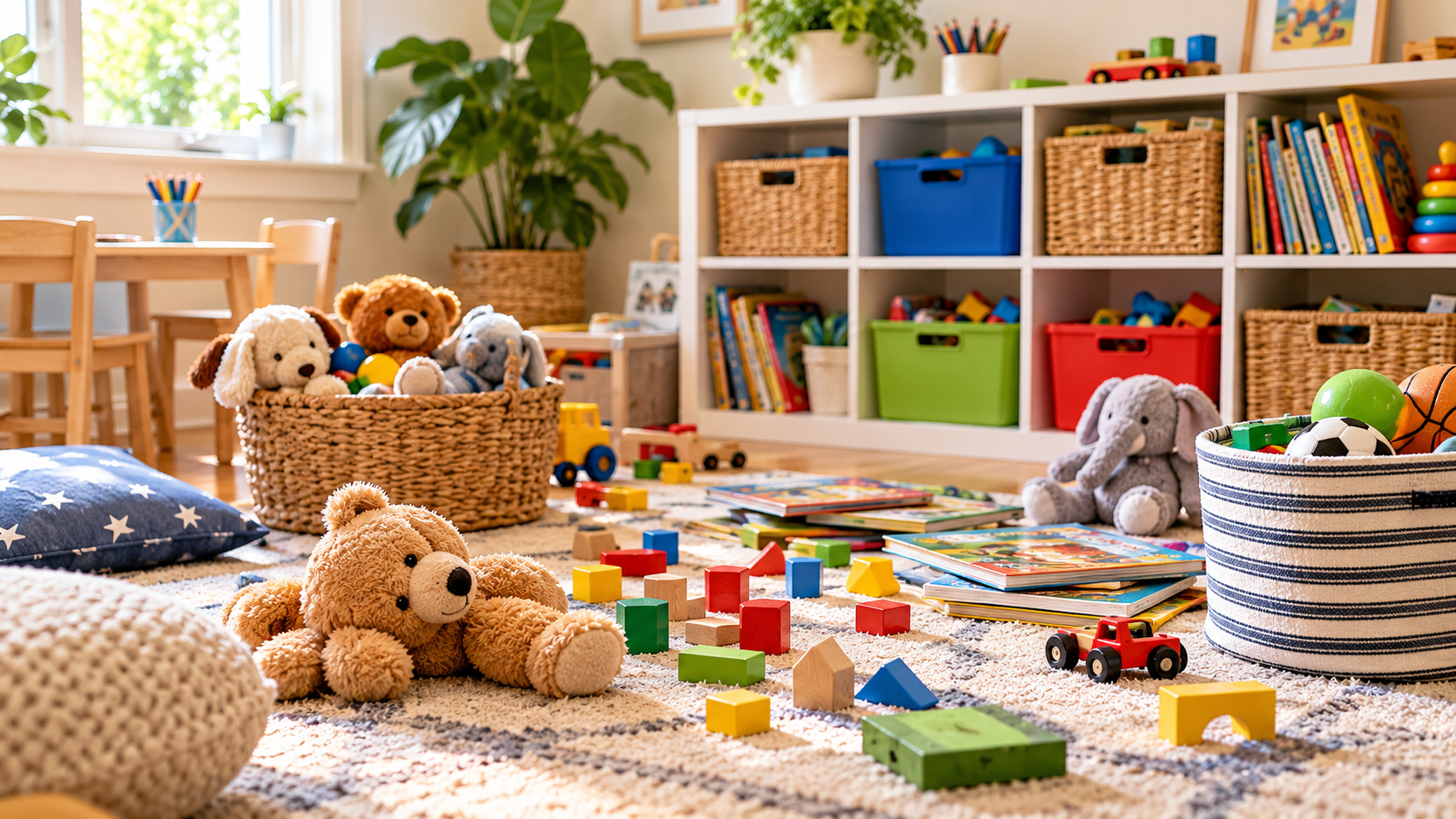
Tired of stepping over toys, hunting for missing shoes, and wondering how one small child can accumulate so much stuff?
These practical storage solutions for kids' clutter can help you get the mess under control—without turning your home into a toy store showroom.
If the patter of little feet is a familiar sound in your home, chances are the sight of pint-size clutter is, too.
Rainbow drawings, school papers, stuffed animals, crayons, building blocks, and tiny plastic toys seem to multiply overnight.
And just when you've cleared the living room floor, somebody decides it's the perfect place to build an entire dinosaur civilization.
Messiness is a normal part of childhood. Kids need room to play, create, and explore.
But that doesn't mean your home has to surrender every available surface to toys and art projects.
The secret is creating simple storage systems your children can actually use.
Here's how to get started.
1. Set a Few Simple Rules for Kids' Clutter
Before you buy another storage basket, gather the kids and establish a few basic household rules. Keep them simple and appropriate for your children's ages.
For example:
- Toys stay out of doorways, hallways, and stairways.
- Clean clothes go back into drawers or closets, not the laundry hamper.
- Art supplies get put away after projects are finished.
- Toys return to their designated storage spots before bedtime.
Younger children will need help remembering and following these rules. That's perfectly normal. Rather than expecting a spotless room, focus on teaching the habit of putting things back.
A five-minute family cleanup before bedtime can make mornings much more pleasant. And it beats discovering a building block with your bare foot at 6 a.m.
2. Choose Storage Kids Can Reach
The best toy storage system isn't necessarily the prettiest one. It's the one your children can use without asking you for help every five minutes.
Low shelves, shallow baskets, and open-front bins make it easier for kids to find their toys and put them away. Keep everyday toys within easy reach, and reserve higher storage areas for items that require adult supervision.
Avoid unstable stacks of bins, and securely anchor furniture that could tip over, including dressers and shelving units.
For younger children, picture labels can work better than words. A photo of building blocks on one bin and stuffed animals on another helps children recognize where everything belongs.
Older kids can use simple written labels.
The easier you make cleanup, the more likely it is to happen.
3. Use Baskets and Bins to Contain Toy Clutter
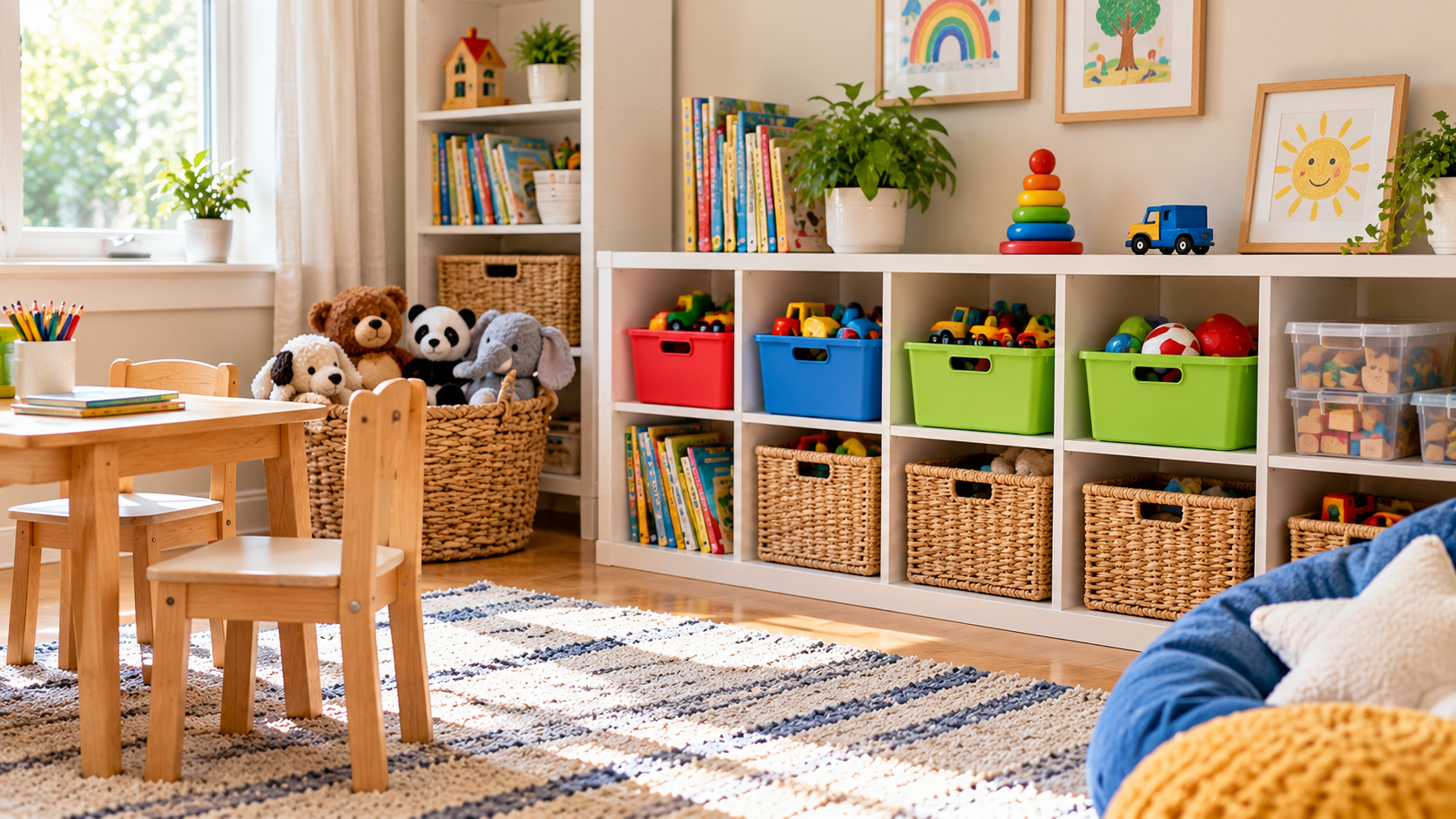
Baskets are among the simplest storage solutions for kids' clutter. Place a sturdy basket or bin in each main room where your children play.
Instead of carrying toys individually back to their bedrooms throughout the day, kids can collect them in one convenient spot. At cleanup time, everything is easier to find. Choose containers based on what they'll hold.
Open-front bins: Great for frequently used toys because children can see and retrieve the contents without emptying an entire container.
Clear storage boxes: Useful for toys that aren't used daily, such as puzzles, building sets, or seasonal playthings. Choose containers appropriate for the child's age and store heavier boxes low.
Shallow baskets: Ideal for action figures, toy animals, dolls, and other small collections.
Stackable storage: Helpful for making use of limited floor space, provided the units are stable and used according to their safety instructions.
Don't overfill the containers. If toys regularly spill over the sides, it may be time to reduce the collection rather than purchase another bin.
4. Give Kids' Artwork a Special Home
Children's artwork deserves a place of honor. But when every drawing, painting, and school project becomes a permanent resident of the kitchen counter, things can get crowded.
One practical solution is to repurpose a small dresser or low cabinet for artwork and supplies. Use drawers to store finished projects and keep age-appropriate art materials in containers that are easy to access.
A basket can hold fresh paper. Small pails or containers can organize crayons, markers, and colored pencils.
For younger children, keep scissors and other potentially hazardous supplies stored appropriately and supervise their use.
Then establish a simple routine for sorting finished artwork. Display a few favorites on the refrigerator or a designated art wall.
Once a week, help your child choose special pieces to save. Store the keepers in a labeled portfolio, folder, or memory box.
You can also include school photos, certificates, and meaningful notes. You don't need to save every finger painting to preserve the memories.
And if you feel guilty letting some go, photograph a few favorites before recycling them.
5. Repurpose Furniture for Clever Kids' Storage
Before spending money on new storage furniture, look around your home. You may already have something that can do the job.
A small dresser can hold art supplies, games, or dress-up accessories. A sturdy, low bookcase can organize books and toy baskets.
Wall hooks installed at child-friendly heights can provide convenient spots for backpacks, hats, jackets, and lightweight accessories.
Choose hooks without sharp projections, and avoid hanging necklaces, cords, or other potentially hazardous items within reach of very young children.
An old trunk or footlocker may look charming, but traditional trunks with heavy lids or locking mechanisms can be dangerous for children.
Don't use one as an accessible toy chest unless it has been appropriately modified or designed to prevent entrapment and lid injuries.
Sometimes the safest storage solution is also the simplest: an open basket or low shelf.
6. Keep Bath Toys Under Control
Rubber ducks, boats, cups, and bath toys have a remarkable ability to take over the bathroom. Fortunately, you don't need an elaborate storage system to keep them organized.
A mesh bath toy bag or a draining corner organizer can help contain the collection. Choose a design that allows toys to drain and dry between uses.
Periodically wash and inspect bath toys, especially those that trap water inside.
Discard toys that develop persistent mold, damage, or other signs that they can no longer be cleaned adequately.
Keep bath toy storage securely installed and away from anything a child could pull down. And remember that toy organizers are no substitute for adult supervision during bath time.
7. Make Room for Clothes, Shoes, and School Gear
Not all kids' clutter comes from toys. Backpacks, jackets, shoes, sports equipment, and clean clothes can quickly overwhelm bedrooms and entryways. Create simple landing spots for everyday belongings.
A low hook can hold a backpack. A basket or shoe rack near the door can collect frequently worn shoes. A designated drawer or shelf can hold sports accessories.
In bedrooms, make sure children can reach the clothing they're expected to put away. Keep frequently used clothes in the easiest-to-reach drawers.
For younger children, picture labels can help them remember where socks, pajamas, and shirts belong.
These small changes make it easier for kids to keep their rooms organized.
8. Reduce the Toys Before Adding More Storage
Here's something worth remembering:
Sometimes the problem isn't a lack of storage. It's simply too much stuff.
Before investing in more shelves and bins, take a look at what your children actually play with. Sort toys into manageable categories.
Set aside broken toys that can't be repaired safely, incomplete games that are no longer useful, and items your children have outgrown.
Invite children to participate in choosing toys they no longer want, using age-appropriate guidance. You might also consider rotating some toys.
Store a portion of the collection safely out of the way, then switch toys periodically. This can reduce everyday clutter without requiring children to give up everything at once.
For donation, choose clean, complete toys in good condition that meet the receiving organization's guidelines. Check for product recalls before passing along older toys or equipment.
And don't feel obligated to keep every plastic party favor that enters your home. Some toys have served their purpose by the time the birthday cake is gone.
9. Create a Five-Minute Family Cleanup Routine
Even the best storage system won't work if nobody puts anything away. That's where a short daily cleanup routine helps.
Before bedtime, spend five minutes putting toys, books, clothing, and school supplies back in their designated places.
Give younger children one simple job at a time.
Instead of saying, "Clean your room," try, "Put all the stuffed animals in this basket."
Then move on to the next task. Older children can take responsibility for their own spaces, with reasonable expectations and occasional reminders. Make cleanup part of the daily routine rather than a punishment.
And remember that a child's room doesn't need to look like a magazine photo. It needs to be safe, functional, and reasonably easy to maintain.
Ready to Declutter More Than the Kids' Rooms?
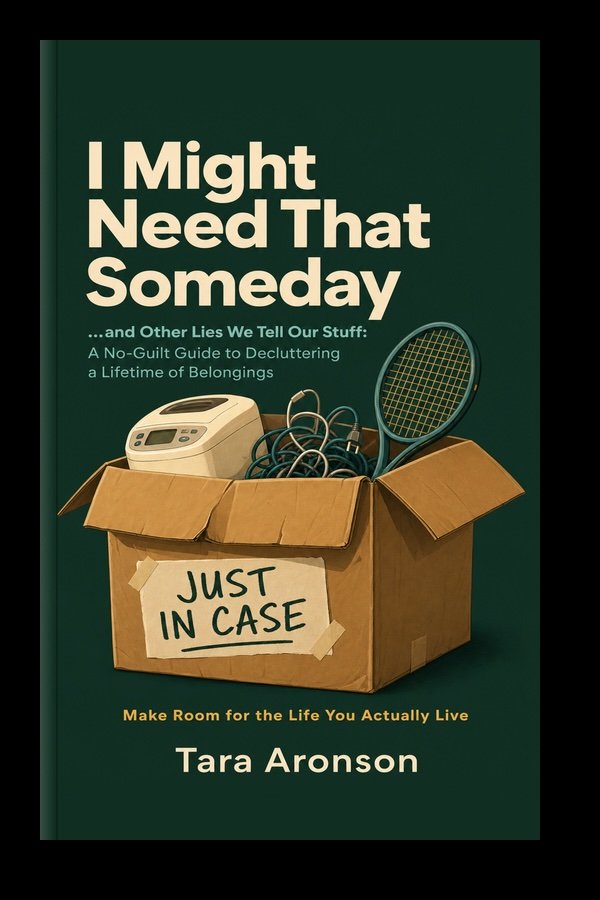
Too Much Stuff? Not Enough Space? Clear the clutter, let go of the guilt, and reclaim your home, one room at a time. Discover I Might Need That Someday by Tara Aronson.
Keep Going: More Ways to Get Organized
Ready to tackle another clutter trouble spot?
How to Declutter Your Home, One Step at a Time →
Easy Kitchen Clutter Solutions →
Explore More Home Organizing Tips →
Remember, the goal isn't to eliminate every toy or keep your house spotless.
It's to create a home where children have room to play—and you can walk across the living room without navigating an obstacle course.
- Clean Home
- Organize Your Home
- Storage Solutios for Kids Clutter
Free Printable
Notes on Keeping House
Sign up and get my 15-Minute Daily Reset Checklist. One timer, five zones, and a house that stays under control.
Send My ChecklistNo spam, ever. Just smart, funny tips for keeping house from Tara Aronson.