How to Clean, Declutter
and Organize Your Garage
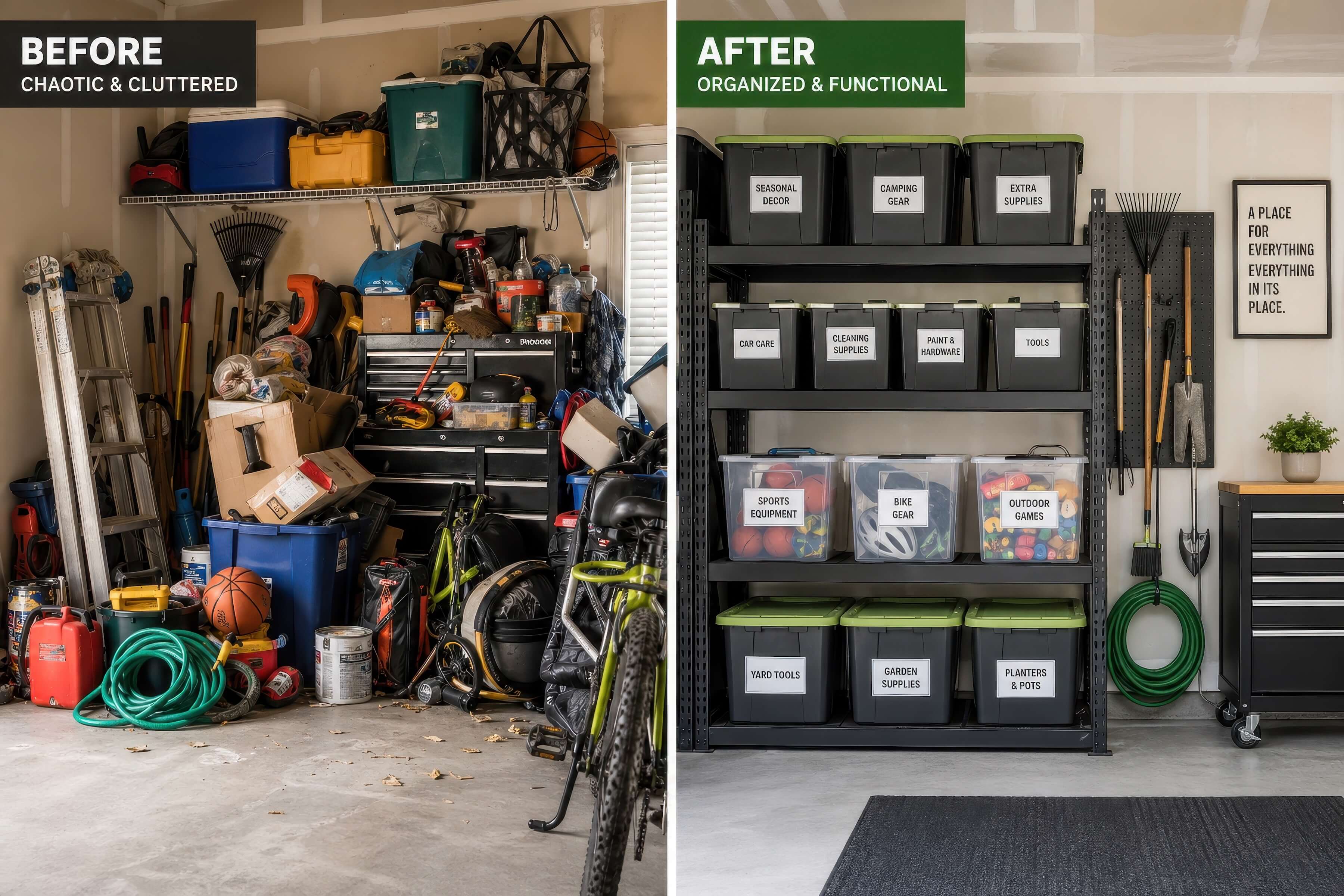
The garage has one major disadvantage compared with the rest of the house: You can close the door.
That makes it remarkably easy to put something out there "for now" and discover it four years later behind a broken lamp, three paint cans, and a bicycle nobody remembers owning.
Garages become cluttered because they're asked to do too many jobs at once.
They store cars, tools, sports equipment, gardening supplies, holiday decorations, household overflow, recycling, and everything we haven't quite decided what to do with yet.
The solution isn't buying more shelving.
It's deciding what deserves garage space, getting rid of what doesn't, cleaning the space, and creating simple storage zones for what remains.
Here's how to do it without emptying the entire garage onto the driveway and immediately regretting your life choices.
Start by Deciding What Your Garage Is For
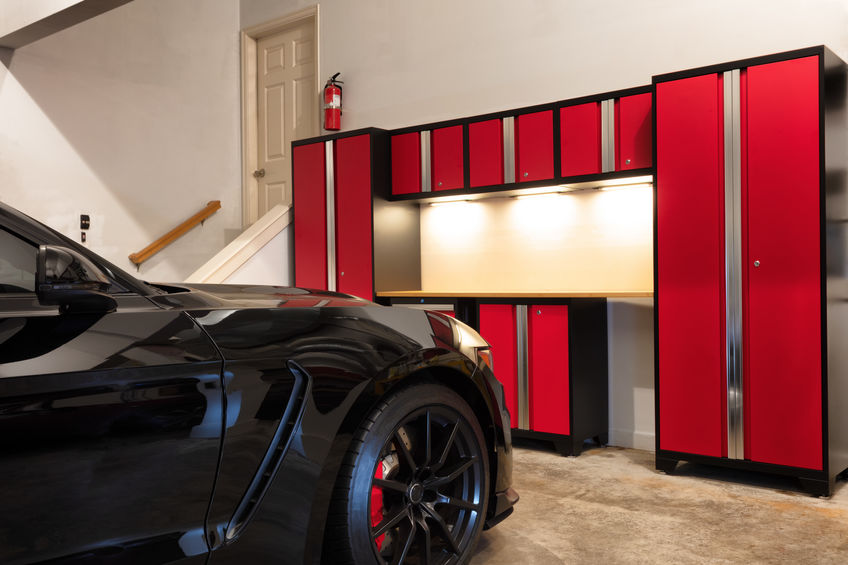
Before reorganizing anything, decide what you actually need the garage to do.
- Do you want to park cars there?
- Store tools?
- Keep bicycles and sports equipment?
- House a workshop?
- Store gardening supplies?
- Keep household overflow?
Probably some combination of those. Make a quick list of the garage's real jobs. Those priorities determine what gets the best space.
If parking a car in the garage is important, for example, the car gets priority over six boxes of things you haven't opened since your last move.
Your garage has finite square footage. Decide what deserves it.
Declutter Before You Organize
Don't begin a garage project at the storage-container store.
First, reduce what you're storing. Work through the garage one section at a time rather than dragging everything into the driveway.
Use four basic categories:
- Keep
- Donate
- Sell
- Toss
Then make the decisions.
Keep
Keep things you use, need, or genuinely want. The fact that something has been sitting in the garage for nine years isn't evidence that you need it.
It's evidence that you've successfully lived without it for nine years.
Donate
Donate usable items that someone else could reasonably use. Get donations out of the garage promptly.
Otherwise, congratulations: you've created a newly labeled pile of garage clutter.
Sell
Sell items that are genuinely worth your time and effort. Give yourself a deadline. If they don't sell, reduce the price or donate them.
The garage shouldn't become a fulfillment center for a business you're not actually running.
Toss
Dispose of things that are broken, unusable, or no longer safe.
But don't automatically put paint, automotive fluids, batteries, chemicals, electronics, or other potentially hazardous materials into household trash.
Follow your local requirements for appropriate disposal.
What Should You Get Rid of in a Garage?
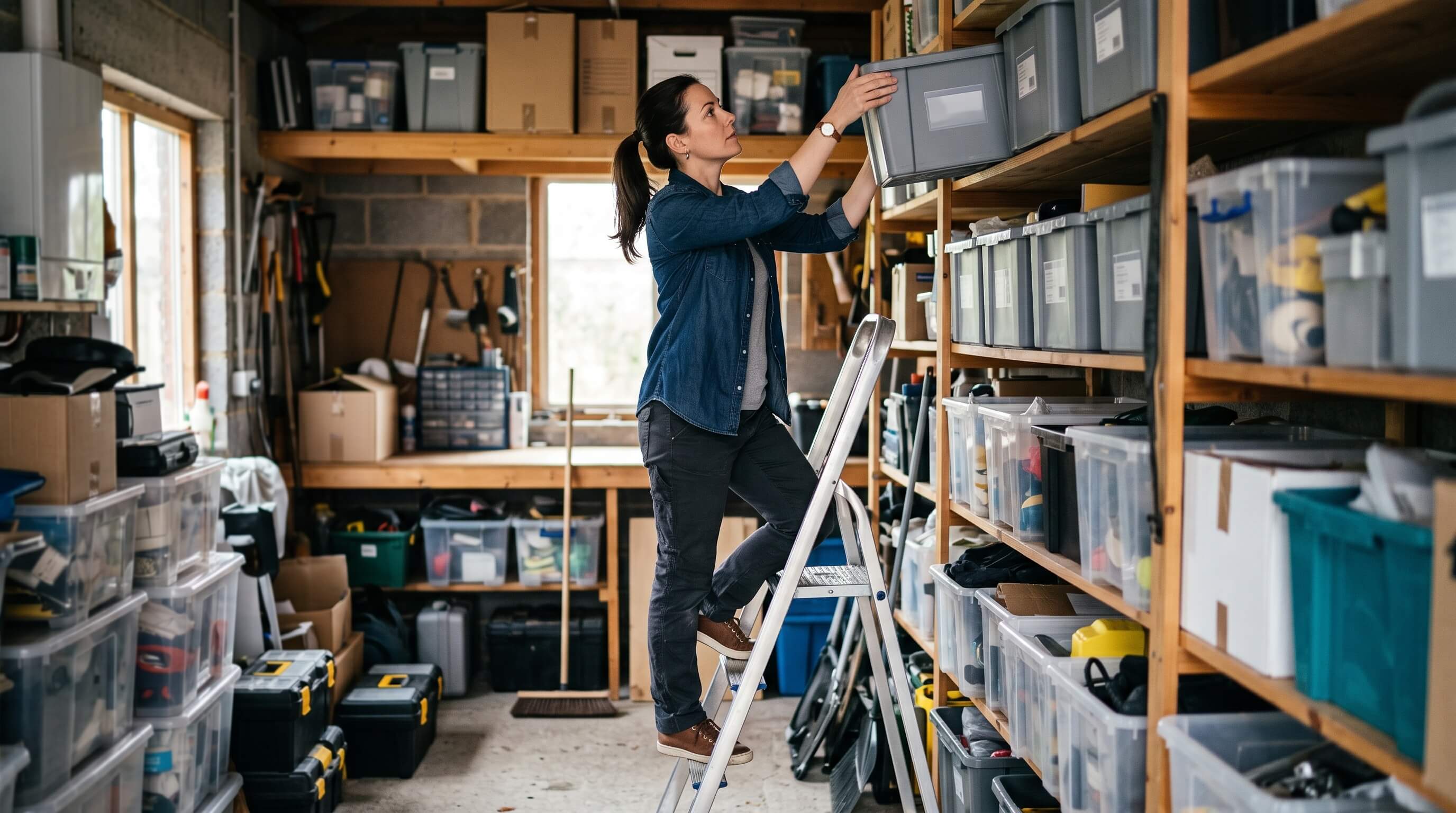
Start with the easy decisions. Look for:
- Broken tools you're not going to repair.
- Empty boxes.
- Trash.
- Unwanted furniture.
- Outgrown sports equipment.
- Duplicate tools.
- Dried-up or unusable products.
- Abandoned hobbies.
- Household items nobody wants.
- Things you've replaced.
- Items that belong somewhere else.
Then tackle the harder category:
Things you might need someday.
Ask:
- When did I last use this?
- How likely am I to need it?
- Could I easily borrow or replace it?
- How much space is it occupying?
- Is it still usable?
- Would I buy it today if I didn't already own it?
You don't have to get rid of every just-in-case item. But "maybe someday" shouldn't be the largest storage category in the garage.
Don't Empty the Entire Garage at Once
The dramatic garage-cleanout method goes something like this:
- Remove everything.
- Cover the driveway.
- Become exhausted.
- Realize it's getting dark.
- Put everything back.
Try a different approach:
Divide the garage into sections.
For example:
- One shelving unit.
- One wall.
- One workbench.
- Sports equipment.
- Gardening supplies.
- The area around the garage door.
- One mysterious pile you've been pretending isn't there.
Finish one section before moving to the next. You don't need the garage to look dramatically worse before it can look better.
How to Clean a Garage
After you remove clutter from a section, clean it before putting things back. Start high and work down.
A basic garage cleaning may include:
- Removing cobwebs.
- Dusting appropriate shelves and surfaces.
- Sweeping.
- Vacuuming appropriate areas.
- Wiping storage containers.
- Cleaning spills.
- Cleaning doors and handles.
- Cleaning windows if present.
- Cleaning the garage floor as appropriate.
Garages collect dust, leaves, dirt, and debris more quickly than most indoor rooms.
They don't need to be spotless. They do need to be clean enough that dirt isn't being tracked into the house every time someone walks through.
How to Clean a Garage Floor
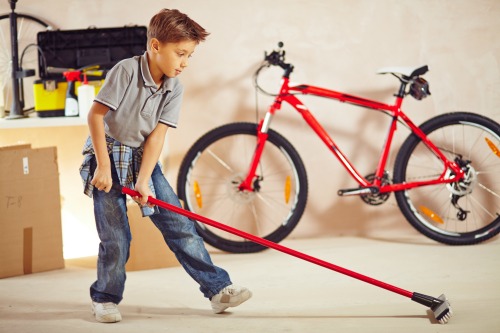
First, remove loose dirt and debris. Sweep or vacuum thoroughly before introducing water or cleaning products.
Then identify the floor surface and the type of stain you're dealing with.
Concrete, coated concrete, and other garage-floor finishes may have different cleaning requirements. Oil and automotive stains may require different treatment from ordinary dirt.
Use products appropriate for the surface and follow product directions. And don't casually wash unknown automotive fluids, chemicals, or contaminated water into storm drains.
Sometimes garage cleaning involves disposal—not simply moving the mess somewhere else.
Create Garage Storage Zones
Once you've decided what to keep, group similar items together. Common garage zones include:
Tools
Keep hand tools, power tools, and related supplies together.
Gardening
Group pots, soil products, hand tools, hoses, and gardening equipment.
Sports
Give balls, rackets, helmets, and other equipment a defined area.
Bikes
Create a designated bicycle area instead of letting bikes migrate across the garage.
Automotive
Keep car-care supplies together.
Seasonal
Group holiday decorations and other seasonal items by season or purpose.
Household overflow
If you genuinely need household overflow storage, define exactly where it goes.
Without boundaries, "overflow" can quickly mean the entire garage.
Use Garage Walls Before Filling the Floor
Garage floor space is valuable. Especially if you want to park a car.
Use appropriate wall storage for things such as:
- Tools.
- Bicycles.
- Garden equipment.
- Folding chairs.
- Sports equipment.
- Ladders.
- Frequently used supplies.
Hooks, rails, pegboards, and shelving can move appropriate items off the floor while keeping them accessible.
But don't hang something merely because there's an empty piece of wall. Storage still needs to make sense.
And anything mounted to a wall or ceiling needs to be installed appropriately for its weight and intended use.
Garage Shelving and Cabinets
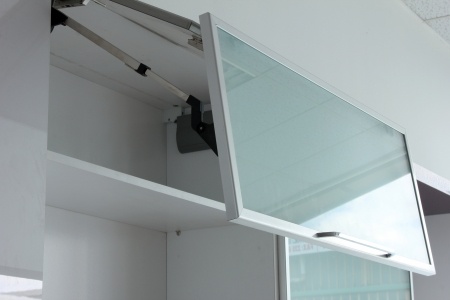
Shelving makes stored items easier to see and access. Cabinets can hide visual clutter and may be useful for items that shouldn't remain openly accessible.
Whichever you choose, avoid one common mistake:
Filling every available inch.
Leave some room. Storage needs change. If every shelf is packed from edge to edge the day you organize the garage, the system has nowhere to absorb anything new.
And don't put extremely heavy items on shelving that isn't designed to support them. Storage furniture has limits too.
Use Clear Containers and Labels
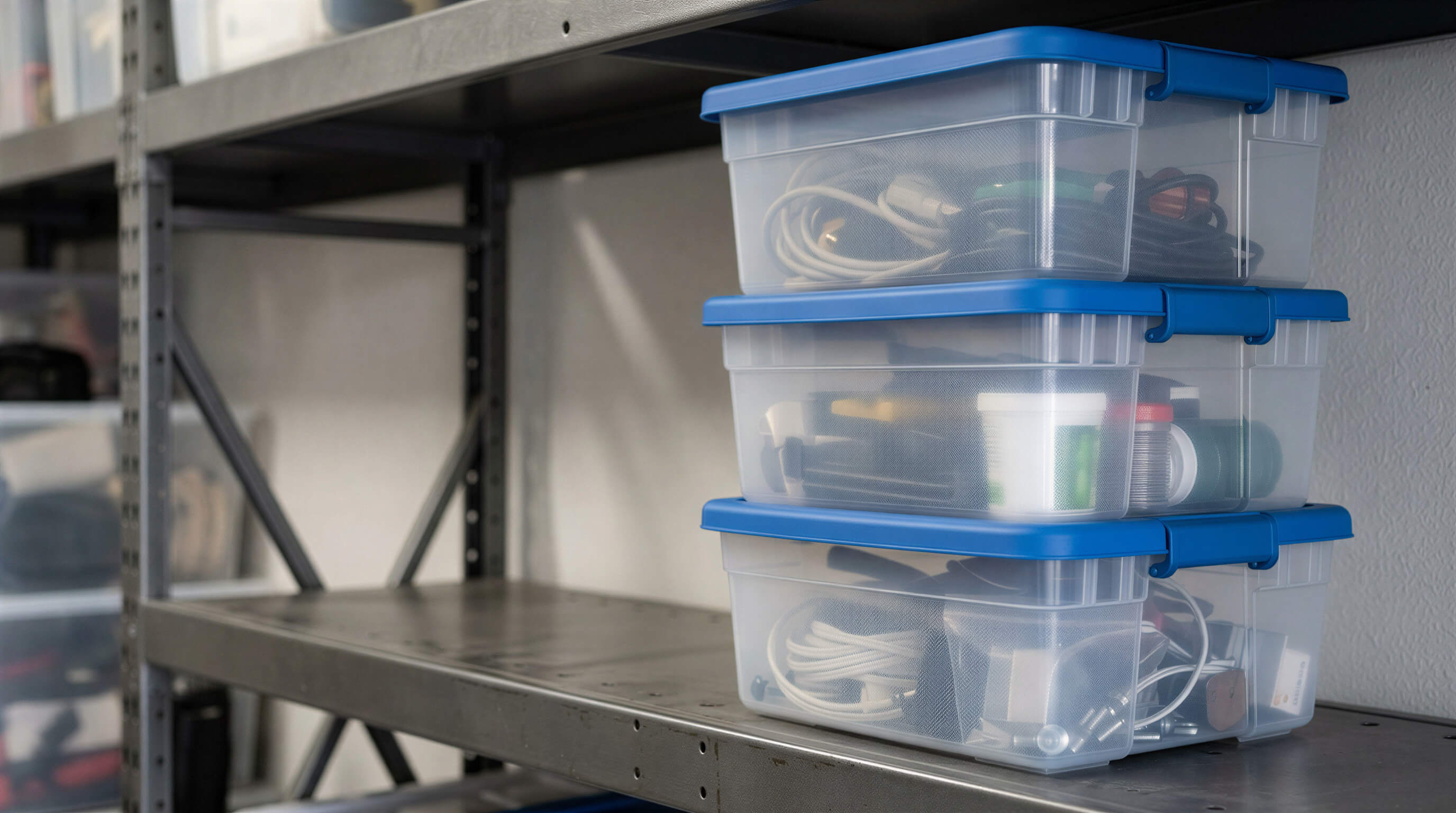
Containers can be useful for garage storage, especially for categories containing many smaller items. Label them.
You may be absolutely certain you'll remember what's inside the blue container on the third shelf. Future You has other plans.
Labels such as:
Camping
Holiday Lights
Baseball
Car Care
Garden Supplies
are considerably more useful than:
MISC.
"Miscellaneous" isn't really a category. It's where decisions go to hide.
Clear containers can also make contents easier to identify, although they're not necessary for everything.
Choose storage based on what you're keeping and where it will be stored—not because twenty matching bins looked impressive online.
Store Frequently Used Things Where You Can Reach Them
Storage should reflect how often you use something.
Everyday and weekly items belong in easy-to-reach locations.
Seasonal or rarely used items can go higher or farther back.
This sounds obvious until you realize the soccer equipment you use four days a week is behind the Christmas decorations you use once a year.
Put the things you use most in the easiest locations. Your garage should support your life, not test your obstacle-course skills.
Organize Sports Equipment
Sports equipment can take over a garage quickly because it's bulky, irregularly shaped, and constantly moving in and out. Group equipment by sport or family member.
Depending on what you own, use appropriate:
- Bins.
- Baskets.
- Racks.
- Hooks.
- Shelves.
- Ball storage.
Make the system simple enough for children to use.
If putting a basketball away requires opening a cabinet, moving a box, and carefully placing it on a shelf six feet high, the basketball will live on the floor.
Organize Bikes and Outdoor Gear
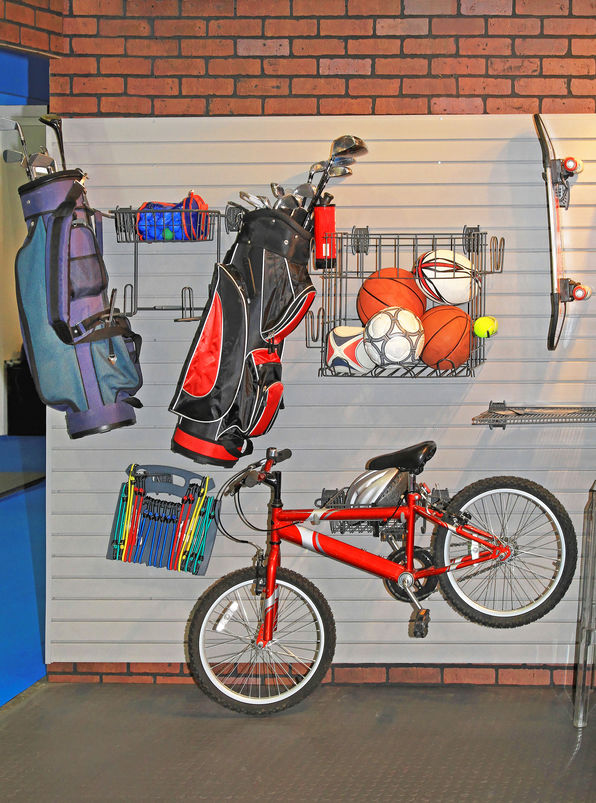
Bicycles need a designated home. That might be:
- Floor racks.
- Wall-mounted systems.
- Other appropriately installed bicycle storage.
Choose a system that works for the people actually using the bikes. A clever overhead system isn't especially useful if nobody in the family can comfortably put a bike into it.
Keep helmets and frequently used accessories nearby.
The goal is to make getting a bike out and back in easy.
Otherwise, the organizational system won't survive the first ride.
Organize Tools and DIY Supplies
You don't need a professional workshop to keep tools organized.
Start by grouping:
- Hand tools.
- Power tools.
- Hardware.
- Electrical supplies.
- Painting supplies.
- Project materials.
Remove duplicates and tools that are broken beyond reasonable repair.
Store tools so you can see or easily identify them. Small hardware such as screws, nails, and anchors benefits from clearly labeled storage.
Nothing makes a ten-minute household repair more exciting than spending forty minutes searching for the correct screw.
Be Careful With Garage Chemicals
Garages often contain products that require more thought than ordinary household storage.
These may include:
- Paint.
- Solvents.
- Automotive products.
- Pesticides.
- Fertilizers.
- Pool chemicals.
- Cleaning products.
- Fuels or other flammable materials.
Follow each product's storage instructions.
Don't assume the garage is automatically an appropriate place for every chemical simply because you don't want it inside the house.
Temperature extremes can also affect some products.
Keep hazardous materials appropriately secured and inaccessible to children and pets.
Dispose of unwanted products according to local hazardous-waste requirements.
What Shouldn't Be Stored in the Garage?
A garage isn't simply an extra room without carpeting.
Heat, cold, humidity, and pests can damage stored belongings.
Depending on your garage conditions, it may be a poor location for things such as:
- Important documents.
- Irreplaceable photographs.
- Delicate fabrics.
- Certain electronics.
- Some paints and chemicals.
- Items vulnerable to moisture.
- Food vulnerable to temperature or pests.
- Other temperature-sensitive possessions.
Before moving something into long-term garage storage, ask whether the environment is appropriate for it.
"There's room out there" isn't the same as "this should be stored out there."
Holiday and Seasonal Storage
Seasonal decorations are good candidates for garage storage when garage conditions suit the items.
- Group them by holiday or season.
- Label containers clearly.
- Keep related items together.
Don't create one giant category called "HOLIDAY" containing Halloween costumes, Easter baskets, and Christmas lights.
You'll inevitably need the thing at the bottom.
Also, declutter seasonal items as you use them. If you didn't put a decoration out because you no longer like it, don't automatically pack it away for another year.
Create a Garage Drop Zone
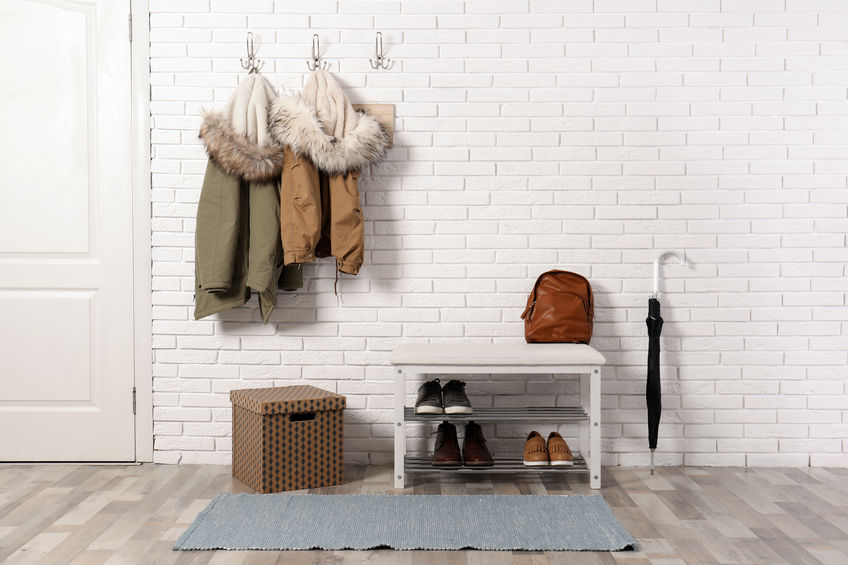
If your family enters the house through the garage, part of the clutter problem may actually be an entryway problem.
Backpacks.
Shoes.
Sports bags.
Umbrellas.
Jackets.
Reusable shopping bags.
Instead of letting these things land wherever they fall, create a small transition zone near the house door.
Use appropriate:
- Hooks.
- Shoe storage.
- Baskets.
- Shelves.
- Sports-bag storage.
Don't allow the drop zone to expand until the entire garage becomes the drop zone.
Give it boundaries.
Garage Chores for Kids
Kids can help maintain the garage when chores fit their age and ability.
Possible jobs include:
- Putting sports equipment away.
- Returning outdoor toys.
- Sweeping appropriate areas.
- Carrying safe items to their proper places.
- Helping sort family belongings.
- Keeping their own gear organized.
Older children may gradually handle additional jobs with appropriate supervision.
But garages can contain tools, vehicles, chemicals, machinery, and other hazards.
Don't treat every garage job as a children's chore simply because you'd rather not do it. Safety comes first.
Make Room for the Car
If your garage was built to hold a car and you'd like it to hold a car again, make that an actual organizing goal.
Measure the space you need. Then protect it. Don't allow boxes, donations, or "temporary" projects to creep back into the parking area.
Use a simple rule: Nothing gets stored permanently in the car zone.
The garage can store many things. It doesn't have to store them where the car goes.
Common Garage Organizing Mistakes
Buying storage before decluttering
Shelves don't reduce clutter. They elevate it.
Decide what you're keeping first.
Moving everything onto the driveway
Work section by section unless you genuinely have the time and help to finish the entire garage in one session.
Keeping too much "just in case"
Some backup supplies make sense. A garage full of hypothetical future needs doesn't.
Creating complicated storage systems
If everyone can't easily put things away, they won't.
Ignoring vertical space
Walls can provide useful storage while preserving floor space.
Filling every shelf
Leave room for the system to grow as needed.
Storing things the garage may damage
Consider temperature, moisture, and pests before choosing the garage for long-term storage.
Making a donation pile and leaving it there
Donations haven't been decluttered until they leave your property.
A Simple Garage Maintenance Routine
Once you've organized the garage, maintaining it shouldn't require another massive cleanout.
Weekly
Take a few minutes to:
- Remove trash.
- Put sports equipment away.
- Return tools.
- Bring household items inside.
- Clear the parking area.
Monthly
Check:
- Floors.
- Work surfaces.
- Recycling.
- Donation items.
- Supplies accumulating where they shouldn't.
Seasonally
Do a larger reset.
Review:
- Seasonal equipment.
- Sports gear.
- Gardening supplies.
- Holiday storage.
- Unfinished projects.
- Items to donate or sell.
If something has been sitting in the "deal with later" area since the previous seasonal reset, later has arrived.
How to Keep the Garage Organized
The secret isn't finding the perfect garage storage system.
It's controlling what enters. Before putting something in the garage, ask:
Why am I putting this here?
If the answer is:
"Because I don't know what else to do with it,"
Stop. Make the decision now.
Keep it.
Donate it.
Sell it.
Dispose of it appropriately. Or give it a legitimate storage location. The garage shouldn't be where household decisions are postponed indefinitely.
Your Garage Doesn't Have to Be Beautiful
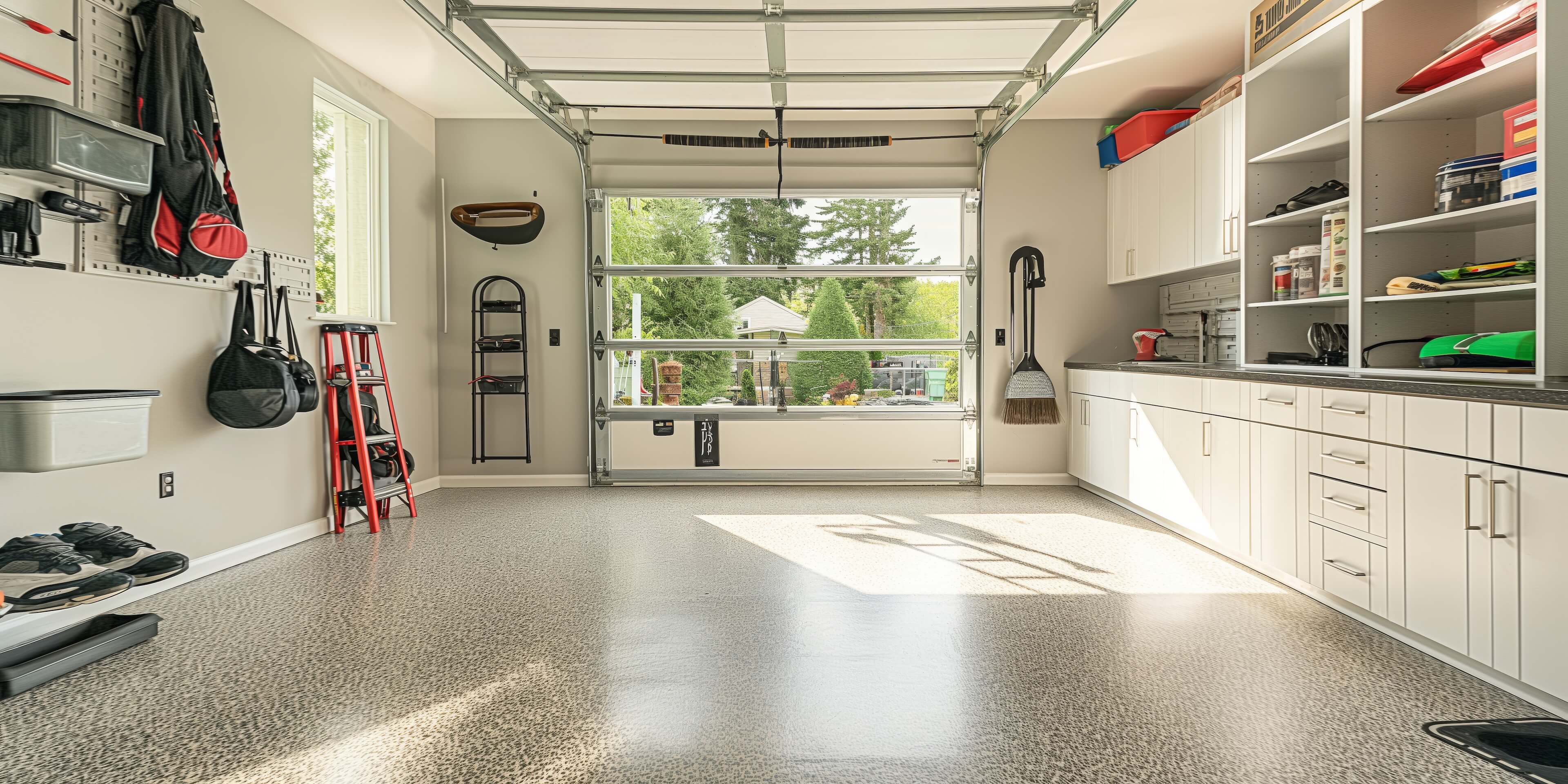
A garage is a working space.
It can contain tools.
The floor can look like a garage floor.
The shelves don't need matching containers with handwritten calligraphy labels.
What matters is that the space functions.
You should be able to find the drill.
Children should be able to put away a basketball.
You shouldn't have to climb over boxes to reach the freezer.
And if you'd like to park the car inside, there should ideally be enough room for the car.
Declutter first.
Clean the space.
Create simple zones.
Use the walls wisely.
Give everything you're keeping a reasonable home.
Then close the garage door because you're finished—not because you don't want to look at what's behind it.
Explore Garage Cleaning & Organization
Garage Storage Solutions: Setting Up Your Space →
Garage Storage Ideas: Grungy Garages No More →
Garage Organizing: A Home for Everything →
- Clean Home
- Garage Cleaning & Organizing