Easy Garage Storage Solutions:
25 Ways to Reclaim Your Space
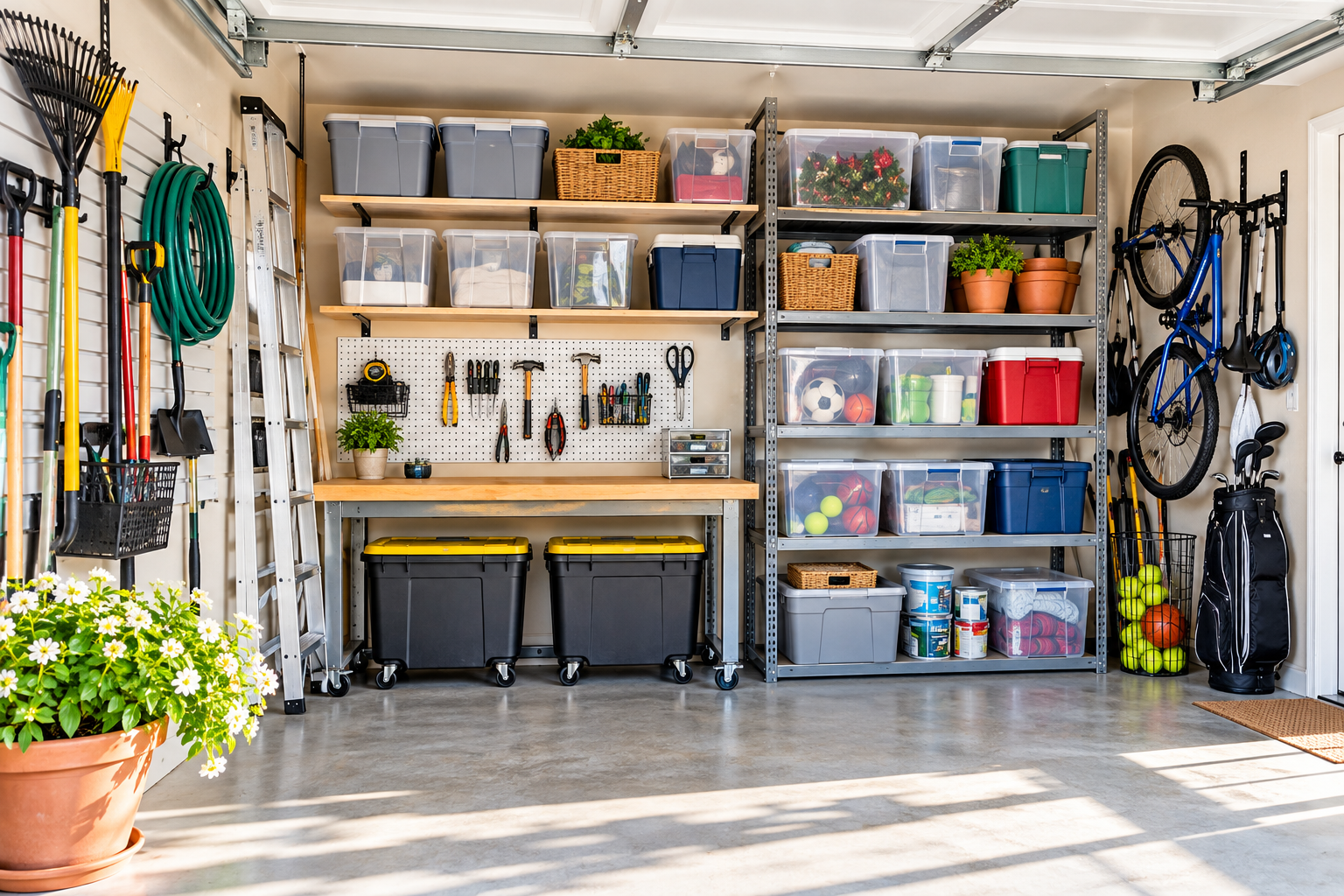
The garage is supposed to be a place to park the car. At least, that was probably the original idea.
Somewhere along the way, it became the official holding area for bicycles, holiday decorations, gardening tools, half-empty paint cans, sports equipment, and things nobody remembers buying.
And the car? It's out in the driveway, wondering what happened.
The good news is that you don't need custom cabinets, an expensive renovation, or a three-day organizing marathon to reclaim your garage.
The best garage storage solutions are usually the simplest ones: sturdy shelves, useful wall hooks, clearly labeled bins, and designated places for the things your family actually uses.
These 25 ideas will help you make better use of your garage space without turning the project into another full-time job.
1. Start With What You're Actually Storing
Before buying shelves, hooks, or containers, take a quick inventory. What lives in your garage?
Common categories include:
- Gardening supplies
- Hand tools and power tools
- Sports equipment
- Bicycles and scooters
- Holiday decorations
- Car-care supplies
- Seasonal household items
- Cleaning equipment
- Camping gear
You don't need to empty the entire garage to make this list. Just walk around and identify the major groups. Then choose storage based on what you have.
Buying containers before you know what you're storing is how you end up with 14 matching bins and absolutely nowhere to put the lawn mower.
2. Use Heavy-Duty Shelving
Sturdy shelving is one of the most useful garage storage investments. It gets belongings off the floor and makes everything easier to see.
Look for shelving that:
- Is rated for the weight you plan to store
- Fits the available space
- Resists garage humidity and temperature changes
- Allows convenient access
- Can be secured against tipping when appropriate
Metal or durable resin shelving often works well in garages. Place heavy items on lower shelves. Keep frequently used supplies within easy reach. And don't overload the top shelf because you've decided gravity is merely a suggestion.
3. Install Wall Hooks for Bulky Equipment
Garage walls are valuable storage space. Use properly installed, weight-rated hooks for items such as:
- Rakes
- Shovels
- Brooms
- Extension cords
- Lightweight folding chairs
- Garden hoses
- Sports equipment
Choose hooks suited to the item and the wall material. Secure them according to the manufacturer's instructions, using appropriate structural supports.
Don't hang heavy equipment from drywall alone. A shovel falling off the wall is annoying. A bicycle falling onto your car is considerably more expensive.
4. Create a Dedicated Tool Wall
If your tools are scattered among drawers, shelves, and mystery boxes, a tool wall can make life easier. Pegboard, slatwall, or a properly installed tool rail can keep commonly used tools visible.
Group similar items together:
- Screwdrivers
- Pliers
- Hammers
- Measuring tapes
- Wrenches
- Small hand tools
Use hooks and holders rated for the tools you're hanging. Keep sharp tools secured and out of children's reach. The goal is to find a screwdriver without opening six containers and questioning your life choices.
5. Store Small Hardware in Labeled Containers
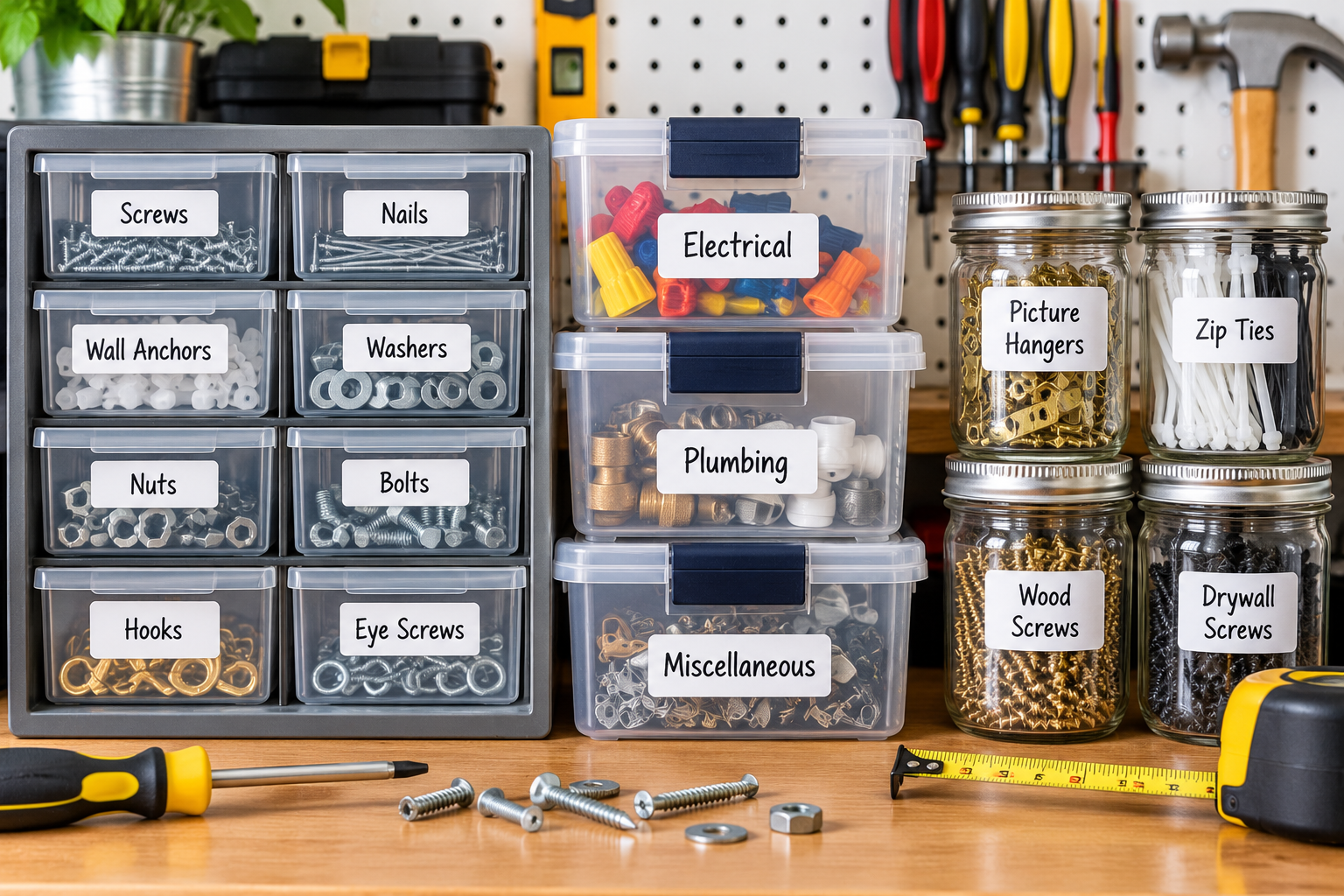
Screws, nails, nuts, bolts, washers, and assorted fasteners have a special talent for spreading throughout the garage. Use small compartment organizers or labeled containers. Separate hardware by type and size. You don't need a professional workshop system.
Even a few stackable organizers can make a dramatic difference. Just avoid the classic approach of tossing everything into a coffee can labeled "miscellaneous."
That isn't organization. It's a future archaeological dig.
6. Use Clear Storage Bins
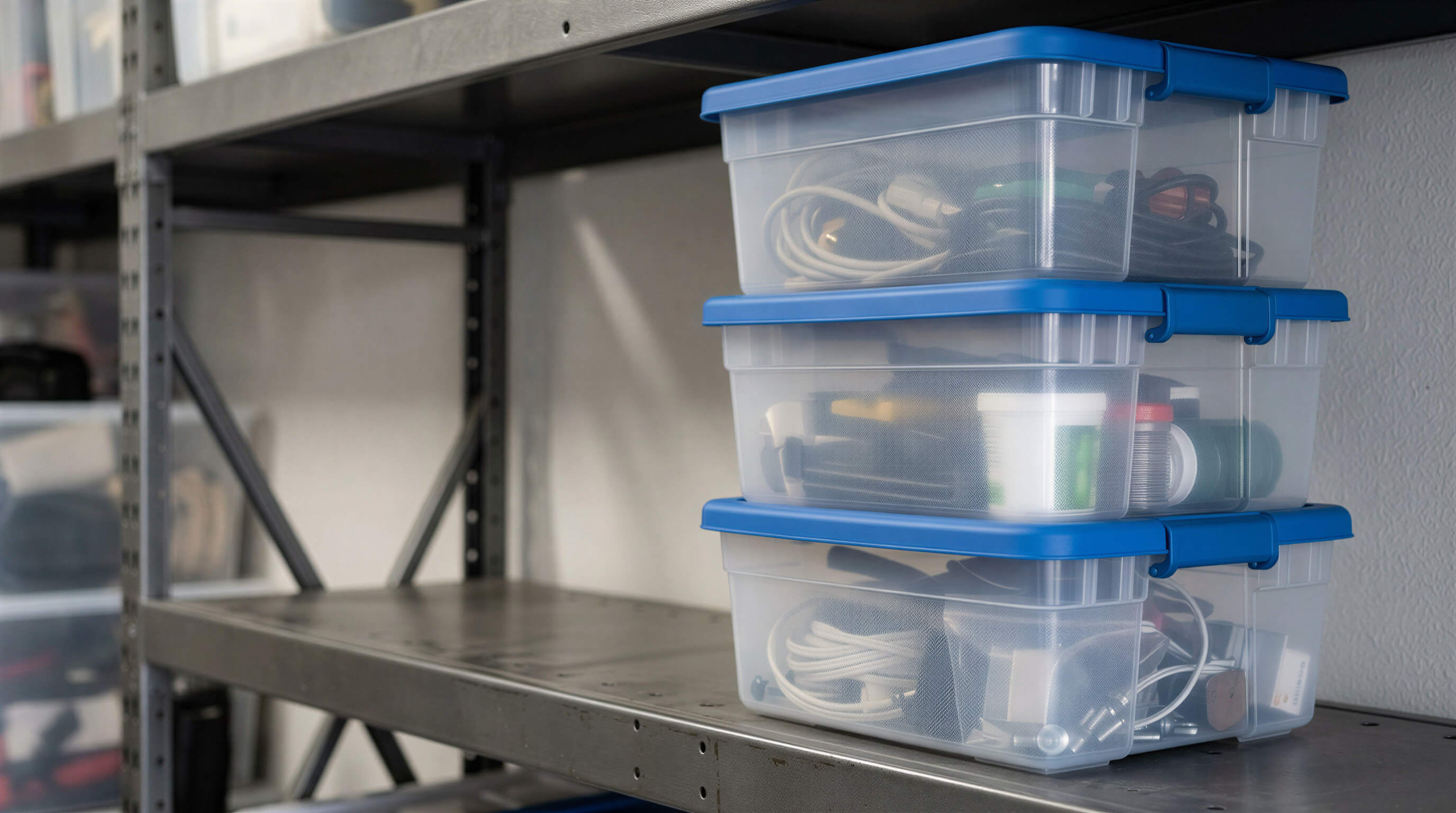
Clear bins are particularly useful for items you don't access every day. They let you see what's inside without opening every container.
Use them for:
- Seasonal decorations
- Camping accessories
- Extra household supplies
- Sports accessories
- Small gardening items
Choose bins appropriate for garage temperatures and conditions. Make sure lids fit securely. And label them anyway. Clear plastic isn't nearly as helpful when the container is packed so tightly that all you can see is a corner of a tangled extension cord.
7. Label Everything Clearly
Labels save time. They also reduce the odds that your carefully organized garage will return to chaos within two weeks.
Keep labels simple:
- Holiday Lights
- Gardening Gloves
- Car Washing
- Camping Supplies
- Baseball Equipment
- Extension Cords
Use large, readable lettering. If several family members use the garage, choose labels everyone understands.
"Miscellaneous Household Infrastructure" may sound impressive. "Tools" is probably more useful.
8. Store Bicycles Off the Main Floor
Bicycles take up a surprising amount of garage space. Wall-mounted racks, freestanding bike stands, and suitable ceiling systems can help.
Choose based on:
- The number of bikes
- Their size and weight
- Who uses them
- How frequently they're needed
- Whether the storage system is easy to operate safely
A wall-mounted bike rack may work well for adults. But if a child needs help lifting a bike every afternoon, that system may not be practical for daily use.
Don't sacrifice accessibility just to gain a few square feet. And never install overhead bike storage where a falling bike could strike someone or a vehicle.
9. Give Sports Equipment Its Own Storage Area
Balls, bats, helmets, skates, and protective gear can take over a garage quickly. Give sports equipment a designated zone.
Consider:
- Open baskets for balls
- Wall hooks for helmets
- Racks for bats
- Shelves for shoes and skates
- Labeled bins for smaller accessories
Keep regularly used items at a height children can safely reach. A storage system works much better when the people using the equipment can also put it away. Otherwise, congratulations. You've created another job for yourself.
10. Create a Grab-and-Go Area Near the Door
If your garage connects to the house, use the area near the door for frequently used items. Depending on your household, that might include:
- Reusable shopping bags
- Sports bags
- Outdoor shoes
- Dog-walking supplies
- Bicycle helmets
- Small everyday tools
Use hooks, shelves, or a narrow storage unit. Keep the doorway and walking path clear. The idea is to make daily routines easier, not create an obstacle course between the garage and the kitchen.
11. Store Gardening Tools Together
Gardening equipment is easier to manage when everything has a home.
- Use wall racks for long-handled tools.
- Store small tools in a portable container.
- Keep gloves, twine, and other accessories in labeled bins.
Place fertilizers and garden chemicals in their original containers, following label storage instructions and keeping them securely away from children and pets.
Avoid storing products where extreme temperatures or moisture could damage them.
Your gardening supplies should be ready when you need them. Not scattered across the garage like evidence of an unfinished landscaping project.
12. Use Vertical Space for Seasonal Items
Garage walls often have more unused space than the floor. Use higher shelves for lightweight, infrequently used items.
Good candidates may include:
- Empty seasonal containers
- Lightweight decorations
- Infrequently used camping accessories
- Other nonhazardous household items
Keep heavy objects lower. Never block electrical panels, exits, ventilation openings, or garage door mechanisms. And don't stack boxes so high that retrieving the Christmas wreath requires a rescue operation.
13. Consider Overhead Storage Carefully
Overhead garage racks can free valuable floor space. But they're not suitable for every garage or every item.
Before installing one:
- Confirm the ceiling structure can support the system.
- Follow the manufacturer's installation requirements.
- Check the rated load capacity.
- Allow clearance for vehicles and garage doors.
- Keep heavy, fragile, and hazardous items out of overhead storage.
- Consider professional installation.
Never attach a loaded storage rack to unsupported drywall. Overhead storage can be useful. It's considerably less useful when it lands on the roof of your car.
14. Create a Holiday Decoration Zone
Holiday decorations have a way of multiplying. One year you own a wreath. Three years later, you have seven storage bins, two artificial trees, and a collection of decorative reindeer that apparently reproduce during the summer.
Keep holiday supplies together. Use separate labeled bins for:
- Ornaments
- Lights
- Wreaths and garlands
- Outdoor decorations
- Gift wrapping supplies
- Seasonal table decorations
Store fragile items in suitable protective packaging. Keep the containers accessible enough that putting everything away doesn't become an annual ordeal.
15. Organize Car-Care Supplies
Car washing and maintenance supplies deserve their own shelf or cabinet.
Group compatible items such as:
- Microfiber towels
- Wash mitts
- Buckets
- Appropriate automotive cleaners
- Tire-care accessories
- Other routine car-care tools
Keep chemicals in their original labeled containers and follow storage instructions. A small dedicated area is easier to maintain than having car wax in one corner and the wash mitt buried beneath the camping equipment.
16. Add a Workbench If You Actually Need One
A workbench can be useful for repairs, hobbies, and small household projects. But it isn't mandatory.
If you rarely use tools, a full-size workbench may become another surface for collecting clutter.
Consider a compact or folding workbench if space is limited. Choose a stable model suitable for the work you do.
Keep tools organized and maintain a clear working surface. A workbench should make projects easier. It shouldn't become the garage's most expensive junk table.
17. Use Cabinets for Items You Want Hidden or Secured
Open shelving is convenient, but cabinets have advantages. They can protect some items from dust and help keep the garage looking tidier.
Lockable cabinets may be appropriate for tools or other items that require controlled access. Choose cabinets rated for the environment and intended contents.
Remember that a standard storage cabinet isn't automatically suitable for flammable liquids, corrosive chemicals, or other hazardous materials.
Those products may require specialized storage—or may not belong in the garage at all. Follow their labels and local safety requirements.
18. Keep Cleaning Equipment in One Place
The garage often becomes home to brooms, mops, buckets, and other cleaning supplies. A wall-mounted utility rack can help.
Use it for suitable items such as:
- Brooms
- Dustpans
- Mops
- Cleaning brushes
- Empty buckets
Store cleaning chemicals separately according to their labels, away from heat and incompatible substances.
Keep handles from sticking into walkways. You shouldn't have to dodge a falling broom every time you reach for the recycling bin.
19. Store Extension Cords Neatly
Tangled extension cords are a garage classic. Use suitable hooks, cord reels, or straps to keep them organized when not in use. Inspect cords for damage before using them.
Don't store cords tightly wound while they're in operation unless the product is specifically designed for that use.
Never use damaged cords or treat extension cords as permanent household wiring.
A neatly stored cord is easier to find and less likely to become a tripping hazard. Which is a considerable improvement over the traditional giant knot.
20. Make Room for Bulky Seasonal Equipment
Some items don't fit neatly into bins or onto ordinary shelves.
Think:
- Coolers
- Camping chairs
- Snow or beach equipment
- Folding tables
- Large sports gear
- Seasonal yard tools
Group bulky items according to how often you use them. Keep frequently needed equipment accessible.
Store rarely used items farther from your main working area. If you need to remove eight things to reach the cooler, your storage arrangement needs another look.
21. Use Narrow Shelves in Small Garages
A small garage can still be organized. The trick is choosing storage that doesn't interfere with parking or movement. Narrow shelves may work along suitable walls. Measure carefully before buying anything.
Account for:
- Vehicle width
- Opening car doors
- Walking paths
- Garage door movement
- Access to utilities
- Space for loading and unloading
A shelf that technically fits isn't helpful if you can no longer open the driver's door. Measure twice. Return the oversized storage unit zero times.
22. Keep Frequently Used Items at Eye Level
Storage should reflect how often you use something. Place everyday supplies where they're easy to reach.
Store less frequently used items on higher or lower shelves, depending on their weight and safe accessibility.
For example:
Easy reach: Sports gear, gardening gloves, everyday tools.
Lower shelves: Heavy bins, toolboxes, bulky equipment.
Higher shelves: Lightweight, rarely used seasonal items.
This simple arrangement reduces unnecessary lifting and searching. It also makes it easier to put things away. Which, let's face it, is half the battle.
23. Leave Room for the Car
This sounds obvious. Yet somehow the car is often the first thing evicted when garage storage gets out of control. Before adding shelves or cabinets, mark the space your vehicle needs.
Allow room for:
- Opening doors
- Walking around the car
- Loading groceries
- Accessing stored equipment
- Safe entry and exit
Don't block the garage door's safety sensors or operating mechanisms. If parking inside is one of your goals, design the storage around that goal. The car shouldn't have to apply for permission to enter its own garage.
24. Not Everything Can Be Safely Stored Stored in the Garage
Not every household item belongs in the garage. Temperature extremes, moisture, pests, and other conditions can damage belongings.
Be cautious with:
- Important documents
- Photographs
- Electronics
- Delicate fabrics
- Certain paints and adhesives
- Batteries
- Food
- Medications
Also remember that gasoline, propane cylinders, solvents, and other hazardous materials require special handling and storage precautions. Some should be kept outside living spaces or in locations specified by applicable fire codes and product instructions.
Don't use ordinary garage shelving as a catchall for hazardous materials. And don't store things in the garage simply because you don't know where else to put them. That's how the problem started.
25. Choose Storage You Can Maintain
The best garage storage system isn't necessarily the most impressive one. It's the one your household will actually use.
If your children can't reach the sports equipment, it won't get put away.
If a storage bin requires moving six other bins, nobody will use it.
If every hook is overloaded, items will end up back on the floor.
Keep the system simple. Give everything a sensible place.
Make frequently used items easy to access. And leave a little empty space. Because somehow, more things always seem to arrive.
Easy Garage Storage Solutions on a Budget
You can make significant improvements without spending hundreds of dollars. Start with inexpensive changes.
Use the shelves you already own. Rearrange them to make better use of vertical space.
Reuse suitable containers. Clean, sturdy bins can work perfectly well even if they don't match.
Add a few well-placed hooks. One properly installed utility rack may free more floor space than several storage boxes.
Label existing bins. Sometimes the problem isn't a lack of storage. It's that nobody knows what's inside anything.
Buy storage gradually. Start with the most troublesome area and see what you actually need.
There's no rule that says an organized garage must look like a showroom.
Your Weekend Garage Storage Checklist
You don't have to reorganize the entire garage in one day. Start with one wall or one storage category.
- Identify the items that need storage.
- Remove obvious trash and unusable belongings.
- Group similar items together.
- Measure available wall and floor space.
- Choose shelves, hooks, or bins that fit.
- Check weight ratings and installation requirements.
- Keep heavy items low.
- Store frequently used items within easy reach.
- Label containers.
- Secure tools and hazardous materials appropriately.
- Keep walkways and exits clear.
- Leave enough room for vehicles.
- Put everything in its new location.
- Check whether the system is easy to use.
Then stop and enjoy the improvement. You can tackle another section next weekend.
The Bottom Line: Give Everything a Place
Easy garage storage solutions don't require a custom renovation or a collection of expensive organizing products.
Start with sturdy shelving. Use your walls. Keep small items contained. Store heavy equipment safely. And make sure the things you use most are easy to reach.
Most importantly, choose a system that works for the people who actually use the garage. Because the point isn't to create a picture-perfect space that nobody dares touch.
It's to find the gardening gloves, get the bicycles out, and maybe—just maybe—park the car inside again. Imagine that.
Keep Going
Get the rest of your garage and storage spaces under control with these guides:
- Garage Organization Tips: A practical starting point for sorting, decluttering, and organizing the entire garage.
- Easy Garage Storage Systems: More ideas for choosing and setting up garage storage.
- How to Organize Storage: Keep seasonal belongings and household extras under control.
- Decluttering Your Home: Decide what deserves space before buying more containers.
- Home Maintenance Tips: Stay on top of the practical jobs that keep your home running smoothly.
- Home Organization Tips: Find organizing ideas for every room.
- Clean Home
- Garage Cleaning & Organizing
- Garage Storage
Free 15-Minute Daily Reset Checklist
Get Notes on Keeping House
Fifteen minutes a day. No weekend cleaning marathons. No guilt. Sign up for my newsletter and I'll send you the printable checklist that makes it happen.
Send My ChecklistNo spam, ever. Unsubscribe anytime.

Free Printable
Notes on Keeping House
Sign up and get my 15-Minute Daily Reset Checklist. One timer, five zones, and a house that stays under control.
Send My ChecklistNo spam, ever. Just smart, funny tips for keeping house from Tara Aronson.