20 Easy Garage Storage Systems for an Organized Garage
The garage is supposed to be a place to park your car. At least, that was the original idea.
Somewhere along the way, it became a storage facility for holiday decorations, gardening supplies, sports equipment, old paint, tools, and furniture that nobody wants but nobody is quite ready to get rid of.
And the car? It's out in the driveway wondering what happened.
The good news is that the right garage storage system can make even a crowded garage easier to use.
You don't necessarily need custom cabinetry, an expensive renovation, or a weekend spent building something that requires 14 trips to the hardware store.
You need a storage setup that fits your space and the things you actually own.
These 20 easy garage storage systems will help you get belongings off
1. Start With a Garage Storage Plan
Before buying shelves, hooks, or cabinets, take a good look at what's already in your garage. And yes, this means opening those boxes you've been carefully avoiding.
Group your belongings into categories:
- Tools and hardware
- Gardening supplies
- Sports equipment
- Holiday decorations
- Car care products
- Household overflow
- Items to donate, recycle, or discard
Decide what actually belongs in the garage. Then measure the available floor space, wall space, and ceiling clearance. If you park a car inside, account for opening doors, walking around the vehicle, and reaching stored items.
Don't forget garage door tracks, windows, electrical panels, and other areas that need to remain accessible.
The best storage system starts with knowing what you're storing—not with buying more containers.
2. Use Heavy-Duty Freestanding Shelving
Freestanding shelving is one of the easiest ways to add substantial garage storage without a complicated installation. Look for sturdy shelves designed for garage use.
Metal and heavy-duty resin shelving are common choices. They're useful for storing:
- Plastic bins
- Car care supplies
- Gardening equipment
- Household extras
- Seasonal decorations
Choose shelves with adequate weight ratings. Place heavy items on lower levels. Keep the shelving stable, level, and secured against tipping where required or recommended.
Avoid placing heavy objects on top shelves simply because there's room. Gravity is remarkably consistent.
3. Install Wall-Mounted Shelving
Wall-mounted shelves can free up valuable floor space. They're particularly useful in garages where parking space is limited.
Use them for lighter supplies, storage bins, and items you don't need every day. Choose brackets, fasteners, and shelves rated for the intended loads.
Install them into suitable structural supports according to manufacturer instructions. Don't assume ordinary drywall anchors can support heavy garage storage.
And remember to leave enough clearance for car doors, people, and garage door operation. A shelf isn't especially useful if you hit your head on it every time you get out of the car.
4. Try Adjustable Garage Track Systems
Wall track systems use horizontal rails with compatible hooks, baskets, and other accessories. They're useful because you can rearrange the storage as your needs change.
Depending on the system, you may be able to hang:
- Garden tools
- Sports equipment
- Extension cords
- Folding chairs
- Small baskets
- Lightweight outdoor accessories
Choose a system rated for the weight and dimensions of your belongings. Follow the manufacturer's mounting requirements.
Adjustable systems are especially helpful for families whose storage needs change throughout the year. Because somehow, every season brings another collection of equipment.
5. Add a Pegboard Tool Organization System
Pegboards are a classic garage storage solution for good reason. They make small tools easy to see and reach.
Use pegboard hooks and accessories to organize:
- Screwdrivers
- Pliers
- Wrenches
- Measuring tapes
- Small hand tools
- Lightweight accessories
Arrange tools by type or frequency of use. Keep heavier tools on appropriately rated storage. And make sure the pegboard is installed securely.
You can outline tool positions or add labels if that helps everyone return items to the right place.
Of course, the system only works if the tools actually go back. That's the part no storage manufacturer can guarantee.
6. Choose Slatwall Panels for Flexible Storage
Slatwall systems offer another way to organize garage walls. They use grooved panels with compatible hooks, shelves, and baskets.
Slatwall can work well for:
- Sports gear
- Garden supplies
- Small equipment
- Frequently used accessories
Compared with basic pegboard, some slatwall systems accommodate larger accessories and more varied storage arrangements.
But capacity varies considerably. Check panel ratings, accessory ratings, and installation requirements. A decorative wall panel isn't automatically designed to hold heavy equipment.
7. Use Garage Cabinets for Concealed Storage
Not everything needs to be visible. Cabinets can make a garage look tidier while protecting certain belongings from dust and accidental contact.
They're useful for:
- Small tools
- Hardware
- Car care accessories
- Household supplies
- Frequently used equipment
Choose materials appropriate for garage temperature and moisture conditions. Secure tall cabinets against tipping.
For potentially hazardous products, use appropriate locked storage and follow label instructions. And don't mistake a cabinet door for permission to keep every useless object you've ever owned.
Clutter is still clutter when it's hidden.
8. Add Lockable Storage for Hazardous Supplies
Some garage belongings require extra care. These may include certain automotive chemicals, pesticides, solvents, and other hazardous household products.
Store them in their original labeled containers. Follow the product manufacturer's instructions for temperature, ventilation, compatibility, and storage location. Keep them securely inaccessible to children and pets.
And don't assume every product belongs in a garage, especially if temperatures become extreme. Flammable materials require particular attention to fire safety and applicable storage requirements.
A lockable cabinet may be appropriate for certain products, but it must be suitable for what you're storing. Safety comes before convenience.
9. Install a Garden Tool Rack
Rakes, shovels, brooms, and other long-handled tools have an annoying habit of falling over. Usually in groups.
A wall-mounted garden tool rack can keep them upright and accessible. Choose a rack with appropriate grips or hooks.
Make sure tools won't slide out unexpectedly. Store sharp edges and points safely. Keep frequently used tools within easy reach.
A good rack eliminates the familiar experience of removing one shovel and watching five other tools collapse in protest.
10. Use Bike Storage Racks
Bicycles take up a surprising amount of garage space. A suitable rack can help reclaim some of it.
Options include:
- Floor stands
- Wall-mounted horizontal racks
- Vertical wall hooks
- Ceiling-mounted systems designed for bicycles
The right choice depends on the bikes' size and weight, available space, and the ability of household members to lift them safely.
For children's bikes, low floor stands may be more practical than high wall storage. Always follow rack weight ratings and installation instructions.
Don't suspend a heavy bicycle above a vehicle or walkway unless the system is specifically designed, installed, and rated for that use.
11. Create a Sports Equipment Storage System
Sports gear seems to multiply overnight. Basketballs. Soccer balls. Baseball gloves. Tennis rackets. Helmets. Skateboards. And one unidentified piece of equipment that nobody remembers buying.
Use a combination of:
- Open baskets
- Ball racks
- Wall hooks
- Labeled bins
- Shelving
Keep frequently used equipment accessible. Place children's items at heights they can reach safely.
And give every category a designated spot. The easier the system is to use, the more likely equipment will actually be put away.
12. Use Clear Storage Bins for Seasonal Items
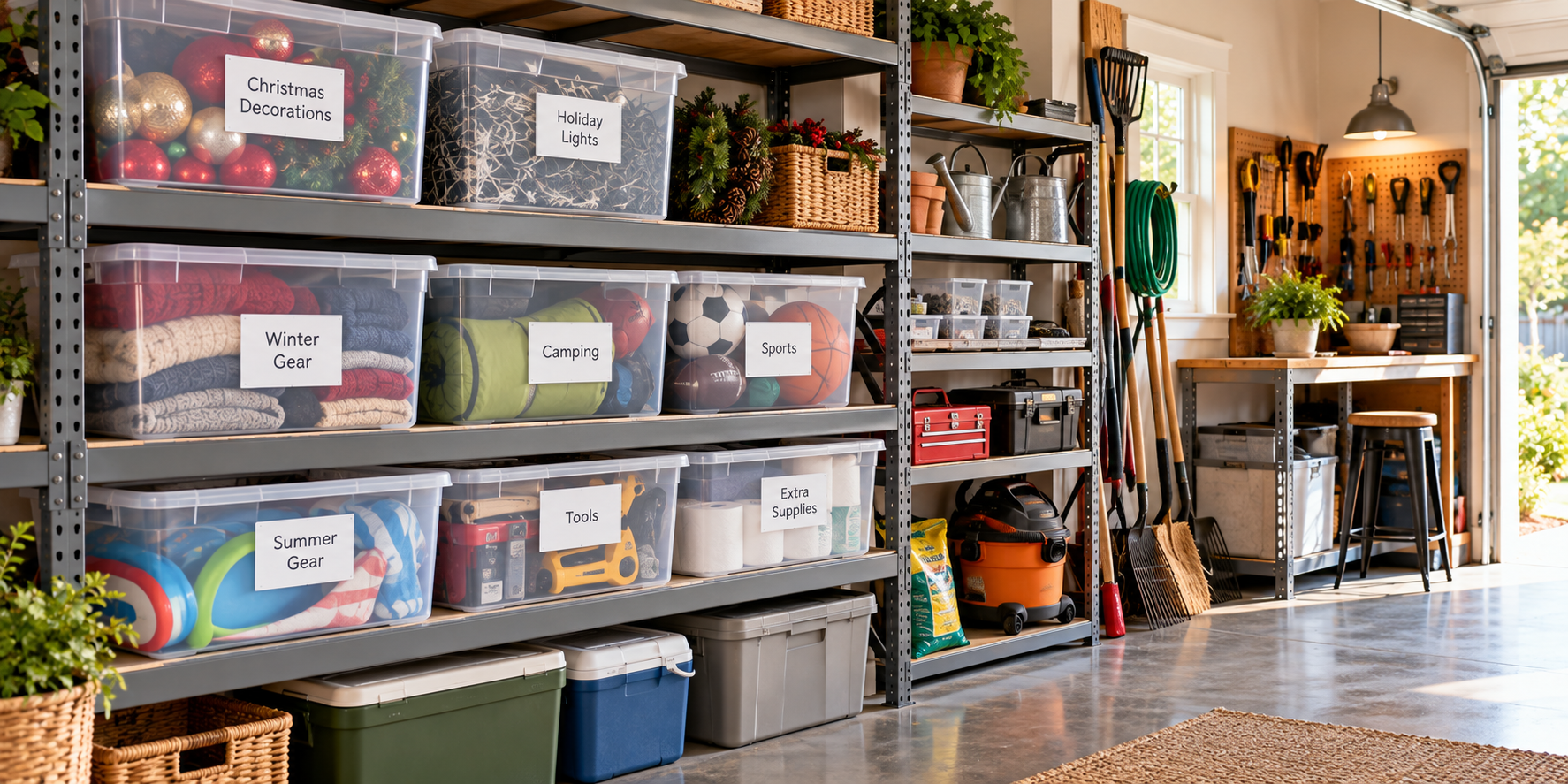
Clear bins make it easier to identify stored belongings. They're particularly useful for holiday decorations and seasonal supplies. Choose durable containers suited to your storage conditions.
Label them even if you can see through the sides. For example:
- Holiday lights
- Gift wrap
- Summer decorations
- Camping accessories
- Winter gear
Don't overfill containers. Keep heavy bins low. And avoid stacking them higher than the manufacturer's recommendations. The goal is to retrieve your holiday decorations without recreating an avalanche scene.
13. Create a Labeled Bin-and-Shelf System
Bins become much more useful when they're organized as part of a larger system. Group related belongings. Give each category a specific shelf or area.
Use labels that describe what's inside. Instead of labeling everything "Miscellaneous," try:
- Painting supplies
- Car cleaning tools
- Outdoor games
- Extension cords
- Household hardware
A label should help you find something. "Stuff" is technically accurate but not especially useful.
Keep frequently used bins at comfortable heights. Store rarely used items in less convenient locations.
14. Use Stackable Drawer Units for Small Parts
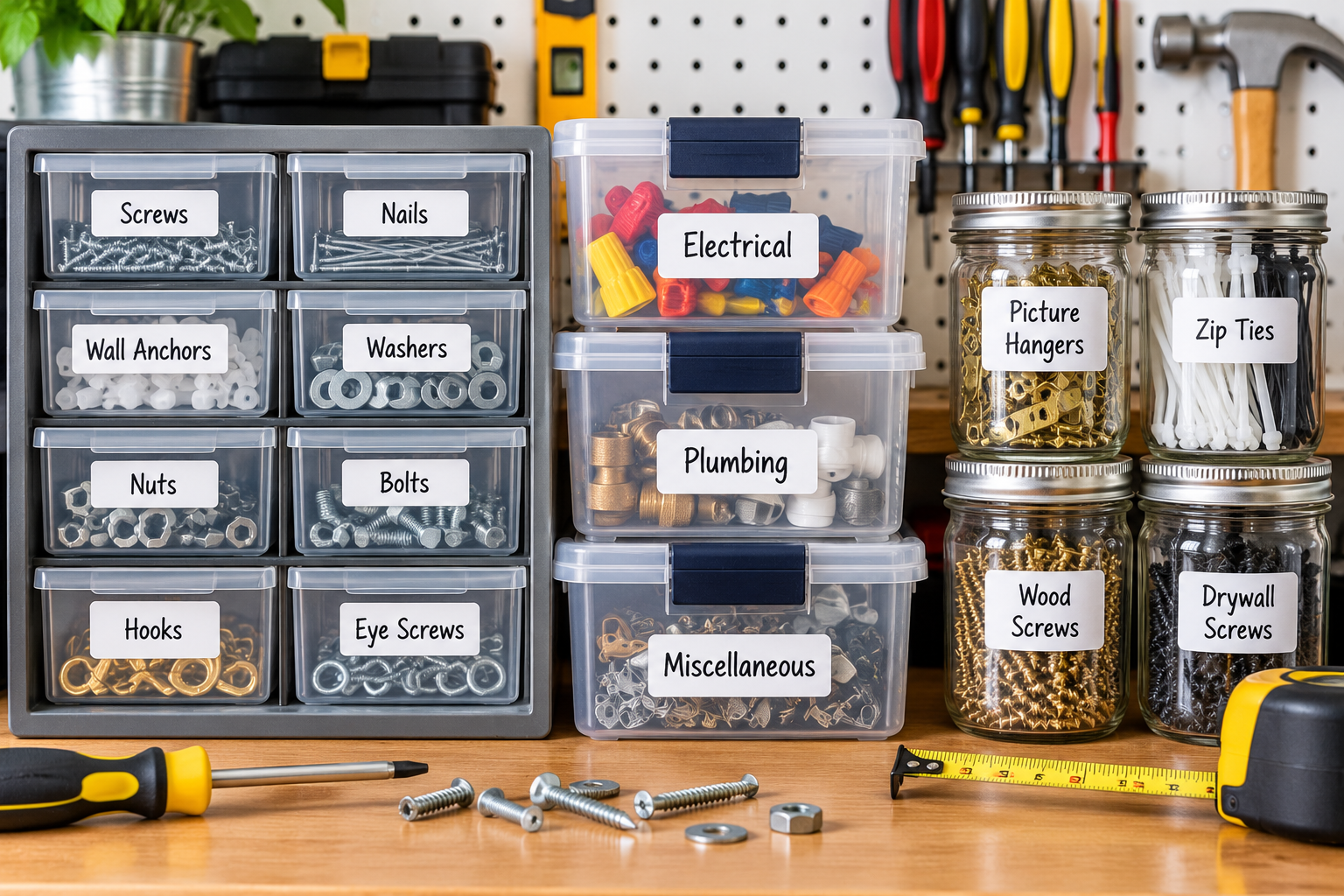
Small hardware can turn a garage into a treasure hunt. Screws, nails, washers, bolts, hooks, and fasteners are much easier to manage in small drawers or compartment organizers. Sort by type and size.
Label drawers clearly. Keep frequently used items near your work area. Choose stable drawer units and secure them when necessary.
You'll spend less time searching for a particular screw. And fewer afternoons insisting that you definitely saw it somewhere last week.
15. Add a Workbench With Built-In Storage
If you regularly handle household repairs or DIY projects, a workbench may be worth the space. Look for a design with:
- A sturdy work surface
- Drawers or shelves
- Tool storage
- Adequate lighting
- Space for commonly used supplies
Keep the work area clear enough to use. Store sharp tools securely. Follow appropriate electrical and fire safety practices.
If your garage is small, consider a compact or fold-down workbench designed for the intended use. A workbench shouldn't become another horizontal surface where random objects go to retire.
16. Try a Rolling Storage Cart
Rolling carts are useful when supplies need to move between different areas.
They can work well for:
- Gardening accessories
- Car washing supplies
- Lightweight tools
- Hobby materials
- General household projects
Choose a cart with adequate capacity and suitable wheels. Lock the wheels when necessary. Keep heavier items on lower shelves.
Don't use a rolling cart to store hazardous products where children can reach them. The advantage is flexibility.
You can bring the supplies to the job instead of carrying everything across the garage individually
17. Consider Overhead Garage Storage Racks
Overhead storage can be useful for bulky, infrequently used belongings. But it requires careful planning.
Before installing an overhead rack, verify:
- The ceiling structure can support the intended load.
- The mounting system is compatible with that structure.
- The rack is rated for the stored weight.
- Garage door tracks and mechanisms have adequate clearance.
- Stored items won't obstruct lights, sprinklers, or other equipment.
- The system can be accessed safely.
Garage ceiling framing is not automatically designed for additional storage loads. If you're uncertain about structural capacity, consult a qualified professional.
Never overload overhead storage. And avoid placing heavy or dangerous objects where they could fall onto people or vehicles.
Overhead space can be valuable. But not every ceiling should become a second attic.
18. Use Ceiling-Mounted Hooks
Certain lightweight, bulky items may be suitable for purpose-designed ceiling hooks or hangers. Examples might include compatible ladders or recreational equipment, depending on the product.
Use hardware specifically rated for the intended item. Install it into appropriate structural supports. Check the manufacturer's instructions.
Avoid improvised hooks, unknown fasteners, and unverified load capacities.
Keep suspended items clear of walkways and vehicle movement. If accessing an item requires an unsafe climb or awkward lifting, choose a different storage
19. Create Storage Zones for Different Activities
Once you've selected your storage systems, organize the garage by activity.
For example:
Car Care Zone
Keep appropriate car washing supplies and accessories together.
Gardening Zone
Store garden tools, gloves, and equipment in one area.
Sports Zone
Use baskets, racks, and hooks for family recreation gear.
Household Maintenance Zone
Keep tools and repair supplies organized near a suitable work surface.
Seasonal Storage Zone
Group holiday and infrequently used belongings in labeled containers.
Zones make it easier to find things and return them afterward. And they reduce the chance that you'll discover Christmas lights in the gardening supplies next July.
20. Choose a System You Can Maintain
This is the most important step. A garage storage system should make your life easier. Not create a new household management job.
Choose storage that's:
- Easy to reach
- Appropriate for the weight of stored items
- Simple to understand
- Flexible enough for changing needs
- Safe for everyone who uses the garage
- Realistic for your budget
Leave some open space. Don't fill every available shelf simply because it's empty. And review the garage occasionally to remove things you no longer need.
The goal isn't to maximize the amount of stuff you can cram into the garage. It's to make the garage useful again.
Seven Garage Storage Mistakes to Avoid
1. Buying Storage Before Decluttering
Don't pay to organize things you no longer want.
2. Ignoring Weight Limits
Shelves, racks, hooks, and cabinets all have capacity restrictions. Follow them.
3. Installing Hardware Incorrectly
Wall and ceiling systems require suitable structural supports and proper fasteners.
4. Storing Heavy Items Too High
Keep heavy belongings low whenever practical.
5. Blocking Important Access Points
Keep exits, electrical panels, garage door mechanisms, and required access areas clear.
6. Forgetting About Temperature and Moisture
Garages may expose stored belongings to heat, cold, humidity, and pests. Not everything belongs there.
7. Making the System Too Complicated
If returning a rake requires moving three bicycles and opening two cabinets, nobody is going to do it.
Your Weekend Garage Storage Plan
You don't need to complete a major garage makeover in one day. Try this manageable approach.
Saturday: Sort and Plan
- Remove obvious trash.
- Separate donations and recycling.
- Group similar belongings.
- Identify what needs storage.
- Measure available space.
- Decide which systems would help.
Sunday: Set Up and Organize
- Assemble or install suitable storage according to instructions.
- Secure shelving and cabinets where required.
- Place heavy items low.
- Group belongings into zones.
- Label containers.
- Clear the floor and walking paths.
- Confirm the garage door and vehicle can operate safely.
If a project requires structural modifications, electrical work, or overhead installation beyond your abilities, schedule qualified help rather than rushing.
A safe garage is more important than finishing everything before Monday.
Frequently Asked Questions
What Is the Best Garage Storage System?
The best system depends on your belongings, available space, and budget. Heavy-duty shelving works well for bins, wall tracks are useful for tools and equipment, and cabinets provide concealed storage.
Are Garage Wall Storage Systems Worth It?
They can be especially useful in smaller garages because they free up floor space. Choose a system with appropriate load ratings and install it correctly.
Is Overhead Garage Storage Safe?
It can be when the structure is suitable, the system is correctly installed, and weight limits are followed. Have the structure evaluated by a qualified professional if you're unsure.
How Can I Organize My Garage Cheaply?
Start by decluttering. Reuse existing shelves and containers, label belongings, and add only the storage equipment you genuinely need.
Should I Use Plastic or Metal Garage Shelving?
Both can work. Compare load ratings, stability, resistance to moisture and temperature conditions, and suitability for the items you're storing.
How Do I Keep My Garage Organized?
Give belongings designated locations, label bins, return equipment after use, and periodically remove items you no longer need.
The Bottom Line: Make Your Garage Work for You
A well-organized garage doesn't require expensive cabinets, custom flooring, or an elaborate wall system.
It requires a practical plan.
Choose storage that fits your belongings.
Use wall space wisely.
Keep heavy and hazardous items stored safely.
Make frequently used equipment easy to reach.
And don't forget to declutter before investing in more storage.
The best garage storage system is the one your household can actually use and maintain.
Because the goal isn't to create the world's most impressive collection of shelves.
It's to find the rake without knocking over three bicycles.
And maybe—just maybe—park the car in the garage again.
Keep Going
Make the most of your garage and household storage with these related guides:
- Easy Garage Storage Solutions: Practical ideas for organizing tools, sports equipment, and household supplies.
- Garage Organization: More ways to make your garage functional.
- How to Organize Storage: Simple systems for keeping belongings under control.
- Decluttering Your Home: Decide what to keep before adding more storage.
- 7 Easy Decluttering Tips: Start clearing clutter without getting overwhelmed.
- Easy Money-Saving Ideas: Make practical household improvements without overspending.
- Home Organization Tips: Find more ideas for organizing your home.
- Clean Home
- Garage Cleaning & Organizing
- Garage Storage Systems