Storage Units for Decluttering:
When They Help (and When They Don't)
There's something wonderfully appealing about renting a storage unit.
You load up the things cluttering your closets, garage, and spare bedroom, drive them to another location, close the door, and return home to all that beautiful empty space.
Problem solved. Except now you're paying monthly rent for belongings you didn't want taking up space in your house.
A storage unit can be a useful decluttering tool. But it can also become an expensive way to avoid making decisions.
The difference comes down to what you're storing, why you're storing it, and how long you intend to keep it there.
Before you rent a unit and begin transporting boxes of things you haven't looked at since 2014, here's how to decide whether self-storage actually makes sense.
1. Decide Why You Need a Storage Unit
Before looking at storage facilities, ask yourself one question:
What problem am I trying to solve?
There are several good reasons to rent storage space. Maybe you're moving between homes and the dates don't line up. Perhaps you're renovating the kitchen and need somewhere to put furniture.
You might be downsizing and need a little time to decide which belongings will fit in your new space. Or you have seasonal equipment that genuinely gets used but doesn't fit comfortably at home.
These are specific problems with practical storage solutions. Now consider a different reason:
"I have too much stuff, and I don't want to deal with it."
That's understandable. But a storage unit won't necessarily fix it. It may just give the clutter a new address.
2. Know When Renting Storage Makes Sense
Storage units can be particularly helpful during temporary transitions. Consider renting one when you're:
- Moving and need short-term storage between homes
- Renovating rooms that must be emptied
- Staging a house for sale
- Temporarily living in a smaller space
- Storing furniture you'll use again in the near future
- Keeping seasonal equipment that doesn't fit at home
- Managing belongings during a family transition
The important distinction is that you have a clear reason for storing the items. Ideally, you also have a plan for when they'll come out.
Storage works best when it solves a defined problem. Not when it becomes a permanent holding area for decisions you're hoping to avoid.
3. Recognize When Storage Is Just Delaying Decluttering
Sometimes a storage unit isn't really about storage. It's about postponing decisions.
Warning signs include:
- You don't remember what's in the boxes.
- You haven't visited the unit in years.
- You're storing inexpensive items you could easily replace.
- You keep paying because sorting everything feels overwhelming.
- You're storing furniture that won't fit in your current or future home.
- You have no plan for removing anything.
None of these automatically means you should empty the unit tomorrow. But they suggest it's time to take a closer look.
If you're paying to store belongings you don't use, need, or particularly like, the arrangement may be benefiting the storage company more than you.
4. Declutter Before You Rent
This is the step that can save you the most money. Before moving anything into storage, sort through it. Create four categories:
Keep at home: Things you use regularly or want readily available.
Store temporarily: Belongings you have a specific reason to keep but don't currently need.
Donate or sell: Usable items you no longer want.
Recycle or discard: Broken, unusable, or unwanted items that cannot reasonably be donated.
Be selective. A storage unit shouldn't automatically receive everything that doesn't fit in the garage. Ask yourself whether each item is worth the cost of moving, storing, and eventually retrieving.
That old coffee table may have cost $75. Paying hundreds of dollars to store it for a year probably isn't a brilliant financial strategy.
5. Calculate the Real Cost of Storage
The advertised monthly rental price isn't necessarily the full cost. Depending on the facility, you may also pay for:
- Administrative fees
- A required or recommended lock
- Insurance or a protection plan
- Climate-controlled storage
- Moving supplies
- Truck rental
- Transportation
- Price increases
- Additional services
Ask for the complete pricing terms before signing. And calculate what you'll spend over the time you expect to rent. Here's a simple example using hypothetical monthly rates.
Storage Unit at $75 Per Month
- 6 months: $450
- 1 year: $900
- 2 years $1,800
Storage Unit at $125 Per Month
- 6 months: $750
- 1 year: $1,500
- 2 years: $3,000
Storage Unit at $175 Per Month
- 6 months: $1,050
- 1 year: $2,100
- 2 years: $4,200
Storage Unit at $250 Per Month
- 6 months: $1,500
- 1 year: $3,000
- 2 years: $6,000
These figures include rent only, not fees, insurance, or rate increases. Now think about what's going into the unit.
Is it worth the expense? Would replacing some of those belongings cost less than storing them? Sometimes the answer is yes. Sometimes the answer is a very expensive no.
6. Choose the Smallest Unit
Storage units come in different sizes, but the exact dimensions and usable space vary by facility. Don't automatically rent a large unit because you're worried everything won't fit. First, measure your larger belongings.
Make a list of what you're storing. Then ask the facility about suitable unit sizes. The amount you can fit depends on furniture dimensions, ceiling height, stacking limits, and the space needed for access.
A well-organized smaller unit may be more economical than a large one filled with poorly stacked boxes.
But don't cram everything so tightly that retrieving one lamp requires dismantling the entire arrangement.
7. Decide Whether You Need Climate-Controlled Storage
Not every belonging needs climate control. But some materials are sensitive to extreme temperatures and humidity.
Items that may benefit from more stable conditions include:
- Wood furniture
- Certain electronics
- Books and important papers
- Photographs
- Artwork
- Some musical instruments
- Delicate fabrics
Climate-controlled units generally cost more. And the term doesn't necessarily mean the environment is maintained at museum-quality temperature and humidity levels.
Ask the facility what conditions it actually maintains. Also check its policies on prohibited or sensitive items.
For irreplaceable documents, valuables, or family photographs, secure storage at home or another appropriate specialized location may be preferable.
A climate-controlled unit is useful. It isn't a guarantee against every kind of damage.
8. Check Security Before Signing
Security features vary widely among storage facilities.
Look for appropriate measures such as:
- Controlled access
- Adequate lighting
- Surveillance cameras
- Secure unit doors
- Well-maintained locks and gates
- Clear access policies
- Staff or management availability
Ask how access is controlled and whether the facility has procedures for reporting suspicious activity.
No security system guarantees protection against theft or damage. And don't assume the facility's insurance automatically covers your belongings.
Read the rental agreement and coverage terms. If you're storing valuable items, find out what protection is available and what exclusions apply.
9. Make Sure the Location Is Convenient
A storage unit 40 minutes away may have an attractive monthly rate. But consider how often you'll need to visit.
If you're storing holiday decorations, sports equipment, or frequently used supplies, convenience matters.
Think about:
- Driving distance
- Traffic
- Access hours
- Parking
- Loading areas
- Elevators
- Hallway widths
- Availability of carts
A cheaper unit may not be cheaper once you account for repeated trips and transportation costs.
On the other hand, if you're storing furniture for three months during a renovation, you may not need frequent access.
Choose based on how you'll actually use the space. Not just the number on the advertisement.
10. Read the Rental Agreement Carefully
Storage contracts aren't particularly exciting reading. Neither is discovering a fee you didn't know existed.
Before signing, check:
- Monthly rental terms
- Promotional pricing and expiration dates
- Rate increase policies
- Required notice before moving out
- Late payment fees
- Insurance requirements
- Access restrictions
- Prohibited items
- Facility liability limitations
- Procedures for ending the rental
Ask whether the quoted rate is introductory. Find out how much notice you must give before vacating. And understand what happens if you miss a payment.
Storage laws and contract requirements vary by location. Don't assume every facility operates the same way.
11. Use Sturdy, Stackable Containers
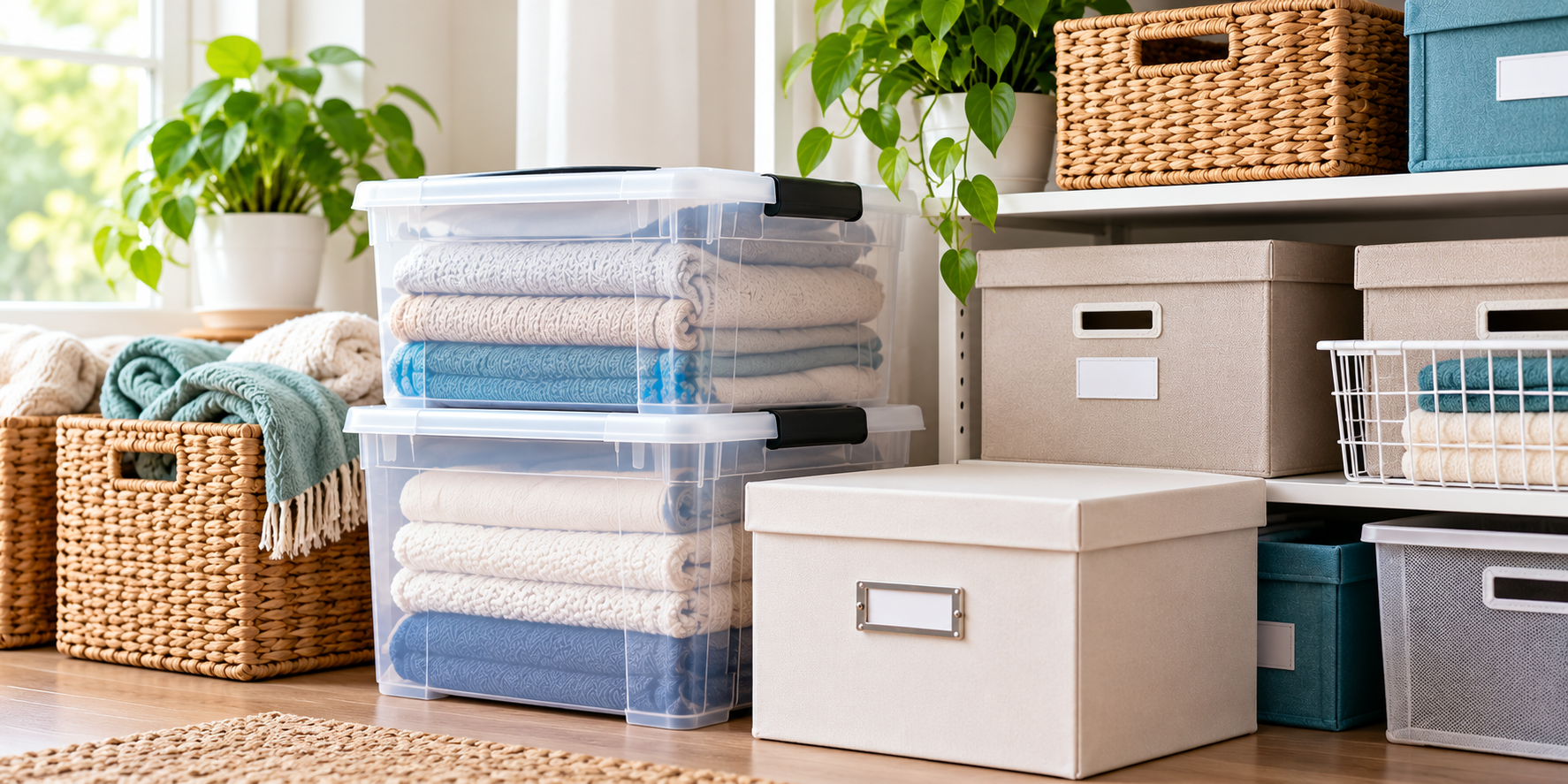
Once you've decided what belongs in storage, pack it properly. Sturdy boxes or suitable storage bins make stacking and organizing easier. Try to use containers of consistent sizes.
This can help you:
- Stack items more securely
- Make better use of vertical space
- Prevent boxes from collapsing
- Keep categories together
- Retrieve belongings more easily
Avoid overpacking boxes. Heavy items should go in smaller containers. Lighter items can go in larger ones.
And don't assume a plastic bin is completely waterproof or pest-proof.
Choose packaging based on the belongings, storage conditions, and manufacturer's recommendations.
12. Label Every Box Clearly
You may remember exactly what's in every box when you pack it. Six months later? Not so much.
Label containers on at least two visible sides. Use specific descriptions.
Instead of:
"Miscellaneous"
Try:
"Holiday lights and extension cords"
Or:
"Guest bedroom bedding"
Or:
"Winter coats and scarves"
Numbering boxes can also help.
Create a simple inventory on your phone or computer.
For example:
- Box 1: Holiday decorations
- Box 2: Winter clothing
- Box 3: Kitchen serving dishes
- Box 4: Children's keepsakes
You don't need a sophisticated inventory system. Just enough information to avoid opening 19 boxes when you're looking for one set of Christmas lights.
13. Organize the Unit So You Can Actually Find Things
A storage unit should be more than a space where boxes disappear. Plan the layout before unloading. Place larger, heavier items where they can be safely supported.
Keep frequently needed belongings accessible. If space allows, leave a walkway.
Use suitable shelving when permitted by the facility and follow weight limits and installation rules. Don't block doors or access points.
And never create a situation where heavy items could fall while you're retrieving something.
The goal is to open the unit, locate what you need, and leave. Not spend Saturday excavating a cardboard mountain.
14. Protect Furniture and Fragile Belongings
Furniture and breakable items need extra attention. Before storing furniture:
- Clean and dry it thoroughly.
- Remove loose items from drawers.
- Disassemble pieces when appropriate.
- Protect vulnerable surfaces.
- Keep hardware in labeled bags.
Use suitable protective covers and padding. Fragile items should be packed securely and clearly labeled.
Don't stack heavy boxes on furniture that isn't designed to support them. And take photographs of valuable items before storage when appropriate.
They may help with inventory and insurance documentation.
15. Never Store Hazardous or Prohibited Materials
Storage facilities commonly restrict certain items.
These may include:
- Gasoline and other fuels
- Propane tanks
- Fireworks and explosives
- Flammable chemicals
- Perishable food
- Items that attract pests
- Illegal materials
- Certain batteries or equipment
Rules vary by facility. Check the rental agreement and ask about anything you're unsure of. And don't assume that because something fits in a box, it's safe to store.
A storage unit is not a substitute for proper hazardous-waste disposal.
16. Give Temporary Storage an End Date
This is one of the most useful ways to prevent a temporary solution from becoming permanent. If you're renting storage during a move, renovation, or downsizing project, choose a realistic review date.
For example:
"After the renovation is finished, we'll bring the furniture home and empty the unit."
Or:
"We'll review everything in storage within three months of moving."
Put the date on your calendar. You don't necessarily have to empty the unit on that day. But you should decide whether continuing to pay for it still makes sense.
Without a review date, temporary storage has a remarkable tendency to become a recurring monthly expense. For years.
17. Review What's in Storage Regularly
If you're renting long-term, review the contents periodically.
Ask yourself:
- Have I used anything from the unit recently?
- Do I still need these belongings?
- Has my living situation changed?
- Could I store some items at home?
- Would selling or donating anything make sense?
- Is the monthly cost still worthwhile?
You may discover that some items have become unnecessary. Or that the reasons you originally rented the unit no longer apply.
The goal isn't to empty a useful storage space simply for the sake of it. It's to make sure you're still getting value from what you're paying for.
18. Don't Store Things You Can Easily Replace for Less
This is where a little arithmetic can save a surprising amount of money. Suppose you're paying $150 per month to store several pieces of inexpensive furniture and household accessories.
That's $1,800 a year before other costs. If the items are worth considerably less than the cost of keeping them, it may be more sensible to sell, donate, or otherwise rehome them.
Of course, replacement value isn't the only consideration. Some belongings are difficult to replace, needed in the near future, or personally important.
But don't let the original purchase price make every item seem worth storing indefinitely.
Money already spent doesn't become more valuable because the item is sitting behind a locked metal door.
19. Consider Alternatives Before Renting
A storage unit isn't always the best solution. Depending on your circumstances, consider:
Decluttering more thoroughly: Remove belongings you no longer use or want.
Reorganizing existing storage: Make better use of closets, shelves, and cabinets.
Selling unused furniture: Recover some value while freeing space.
Donating usable items: Give belongings a chance to be used elsewhere.
Borrowing or renting occasional-use equipment: Avoid storing items you rarely need.
Using short-term moving storage: Compare services designed specifically for a move or renovation.
Avoid simply moving excess belongings into an already overcrowded garage or unsafe attic. The goal is to solve the space problem. Not create a new one somewhere else.
Five Storage Unit Mistakes That Cost Money
1. Renting Before Decluttering
You end up paying to store belongings you don't actually want.
2. Choosing a Unit That's Too Large
Unused square footage becomes a recurring expense.
3. Ignoring Rate Increases
An introductory rate may not last as long as you expect.
4. Forgetting What's Inside
Without an inventory, it's easy to keep paying for items you no longer need.
5. Never Setting an Exit Plan
A temporary rental can quietly become a long-term financial commitment. The solution isn't complicated.
Sort first, compare costs, organize carefully, and review the arrangement regularly
Your Storage Unit Decluttering Checklist
Before Renting
- Identify why you need storage.
- Decide how long you'll need it.
- Declutter before packing.
- Measure large items.
- Compare unit sizes.
- Calculate the full cost.
- Review security features.
- Consider climate control.
- Read the rental agreement.
- Check insurance coverage.
Before Moving In
- Clean and dry belongings.
- Use sturdy containers.
- Label boxes clearly.
- Create an inventory.
- Protect furniture.
- Separate fragile items.
- Remove prohibited materials.
- Plan the unit layout.
While Renting
- Keep access routes clear.
- Check stored items periodically.
- Review monthly charges.
- Reassess what you're keeping.
- Maintain an updated inventory.
- Schedule a storage review date.
When Moving Out
- Sort everything before bringing it home.
- Donate or sell unwanted items.
- Dispose of unusable items properly.
- Remove all belongings.
- Follow the facility's cancellation process.
- Confirm that billing has ended.
Frequently Asked Questions About Storage Units for Decluttering
Is Renting a Storage Unit Worth It?
It can be worthwhile when you have a specific temporary storage need or belongings whose usefulness justifies the cost. It's less likely to be economical when you're storing unused items indefinitely simply to avoid decluttering.
Should I Declutter Before Getting a Storage Unit?
Yes. Sorting first can reduce the amount of space you need and prevent you from paying to store unwanted belongings.
What Should You Never Put in a Storage Unit?
Commonly prohibited items include flammable liquids, explosives, perishable food, and other hazardous materials. Check the facility's rules because restrictions vary.
Is Climate-Controlled Storage Necessary?
It depends on the belongings, local climate, and storage duration. Items sensitive to temperature or humidity may benefit from more stable conditions. Ask the facility what its climate-control service actually provides.
How Long Should You Keep a Storage Unit?
There's no universal limit. Temporary storage should ideally have a planned review or end date. Long-term storage can make sense when the items remain useful and the expense is justified.
How Can I Save Money on a Storage Unit?
Declutter first, choose an appropriately sized unit, compare total costs, review promotional terms, and avoid storing low-value items unnecessarily.
The Bottom Line: Don't Pay Rent for Clutter
A storage unit can be a smart solution during a move, renovation, or other temporary transition. It can protect useful belongings, free up living space, and give you time to make thoughtful decisions.
But it isn't automatically a decluttering solution.
If you move unwanted belongings into storage without deciding what to do with them, you haven't eliminated the clutter. You've simply added a monthly payment.
Start by sorting what you own. Keep the things that genuinely deserve space in your life.
Use storage when it serves a clear purpose. And if you discover you're paying $150 a month to preserve a collection of forgotten lamps, mismatched chairs, and mystery boxes?
You may have found the easiest household expense to eliminate.
Keep Going
Ready to make more room without paying for additional square footage? These guides can help:
- Decluttering Your Home: A complete guide to clearing clutter throughout the house.
- 7 Decluttering Tips: Seven easy ways to start clearing clutter today.
- How to Organize Storage: Make better use of the storage space you already have.
- Easy Garage Storage Solutions: Organize tools, seasonal supplies, and household overflow.
- How to Organize Clothes: Free up closet and drawer space.
- Easy Money-Saving Ideas: Cut unnecessary household expenses.
- Home Organization Tips: Practical solutions for every room.
- Clean Home
- Organize Your Home
- Storage Units For Decluttering