Creating an Organized Home:
Simple Steps That Actually Work
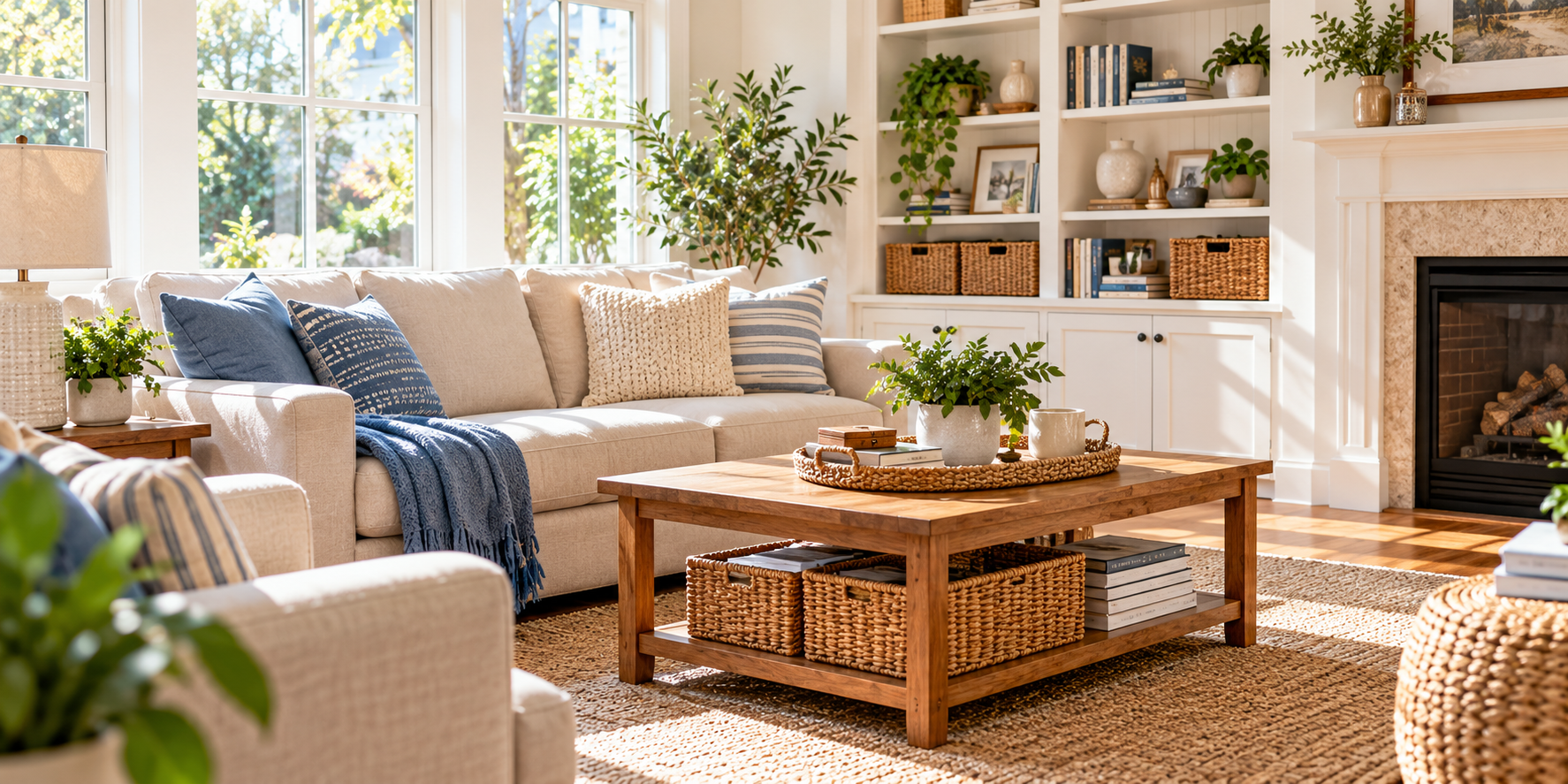
Creating an organized home doesn't require more closets, expensive storage systems, or a weekend spent emptying every cabinet. It starts with clearing out what you don't need, finding sensible places for what remains, and making everyday organization easier for everyone in the family.
Have you ever opened a drawer and wondered how so much stuff could possibly fit inside?
Or tried to find something in the basement, only to discover that getting to it would require moving six boxes, a broken lamp, and last year's Christmas decorations?
We've all heard the expression out of sight, out of mind.
Unfortunately, you can only stuff things into drawers, pile them in closets, and toss them into boxes for so long.
Eventually, the drawers won't close. The closet doors won't shut. And the basement becomes a place where belongings go to disappear.
The solution isn't necessarily another storage container.
It's creating an organized home where the things you use have practical places to live—and the things you no longer need aren't taking up valuable space.
Here's how to get started.
1. Decide What Deserves Space in Your Home
Before you begin organizing, take a closer look at what you're trying to store. It's tempting to buy baskets, bins, drawer dividers, and shelving before sorting through your belongings.
But organizing things you don't need just makes your clutter look tidier.
Start by asking a few questions:
- Have I used or enjoyed this item recently?
- Does it serve a useful purpose in our household?
- Does someone in the family value it?
- Will I realistically need it again?
- Would I choose to keep it if I were organizing this space from scratch?
Not everything has to be useful. Family photographs, children's artwork, treasured gifts, and other sentimental belongings deserve consideration, too.
And some items are worth keeping even if they're rarely used, such as important records, emergency supplies, and seasonal equipment.
The goal isn't to get rid of everything you haven't touched in six months. It's to make thoughtful decisions about what belongs in your home.
Don't Let Guilt Make the Decisions
That expensive sweater you never wear?
The wedding gift that doesn't suit your home?
The exercise equipment you bought with excellent intentions?
Keeping something out of guilt doesn't make it more useful.
If it no longer serves a purpose and you're comfortable letting it go, give yourself permission to move it along.
Someone else may be delighted to have it.
For more help with these decisions, visit my complete guide to decluttering your home.
2. Start Where Organization Will Make the Biggest Difference
Where should you begin creating an organized home? Not necessarily with the messiest room. Start with the area where a little organization will improve your daily life the most.
If your family enters through the garage, begin with the entrance where shoes, bags, and jackets accumulate. If the kitchen counter is buried under mail and school papers, tackle that space first.
If you spend every morning searching for clothes, start with your bedroom closet.
Choose a manageable area that you can finish without turning the entire house upside down. A single drawer, shelf, countertop, or closet section is perfectly acceptable.
In fact, smaller projects are often easier to complete and maintain.
Look for an Early Win
Try organizing a space you use several times a day. Clearing the kitchen counter might make meal preparation easier.
Organizing the entryway might make mornings less frantic. Straightening the bathroom cabinet might eliminate the daily search for toothpaste.
Visible improvements help keep you motivated. And motivation is considerably easier to find when you can actually see what you've accomplished.
3. Sort Your Belongings Into Five Categories
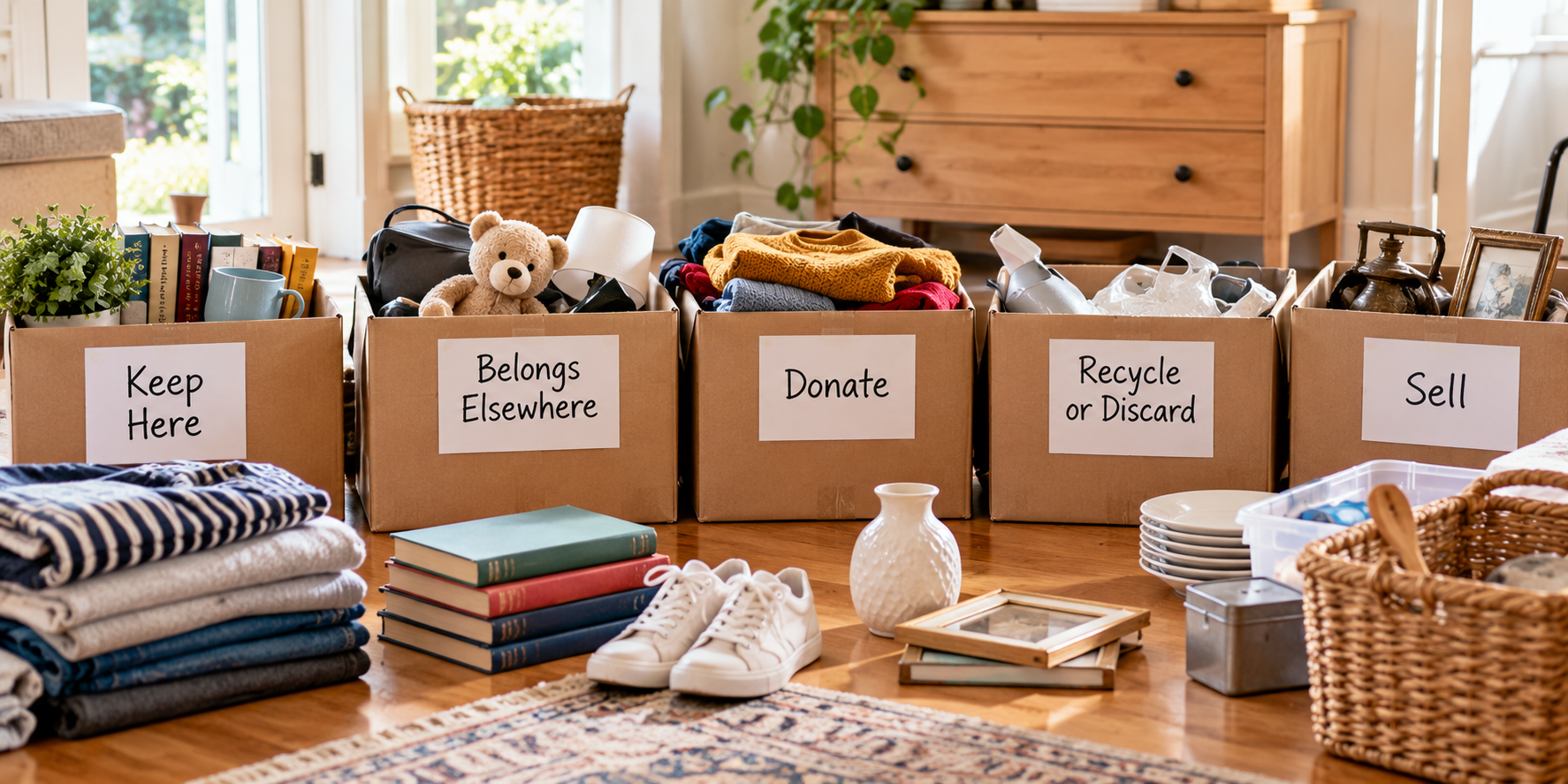
Once you've chosen an area, gather a few boxes, baskets, or bags. Label them according to what needs to happen to the items you find.
Keep Here: Things that belong in the space you're organizing.
Belongs Elsewhere: Items that need to be returned to another room.
Donate or Give Away: Usable belongings you no longer need.
Recycle or Discard: Things that are broken, worn out, or no longer usable.
Sell: Items worth the time and effort of selling.
You can add a separate container for seasonal storage if needed. Work through the space systematically.
You might begin with one shelf and move downward, or start at one end of a cabinet and work across. Pick up each item and decide where it belongs.
Try not to get distracted by things that need to be carried into other rooms. Place them in the "Belongs Elsewhere" container and return them when you've finished sorting.
Otherwise, you may spend the afternoon wandering from room to room without completing the original project. I call that ricochet organizing.
It's closely related to ricochet cleaning, and it's just as exhausting.
Don't Empty More Than You Can Finish
Before pulling everything out of a large closet, consider how much time you have.
If you only have 20 minutes, organize one shelf.
If you have an hour, tackle a small cabinet or drawer unit.
Leaving a room covered with half-sorted belongings overnight is rarely the fresh start you were hoping for.
4. Finish the Sorting Job
Sorting is only half the work. Those bags and boxes need somewhere to go. Otherwise, you've simply relocated the clutter.
Handle Donations Promptly
Choose a donation center or organization that accepts the types of items you're giving away. Check its current donation requirements before loading the car.
Some charities offer pickups, but availability varies. Set a realistic deadline to drop off the donations or arrange collection. Don't let the donation bags become permanent residents of your hallway.
Make Selling Worth the Effort
Selling unwanted belongings can be worthwhile, particularly for valuable items.
But be realistic about the time involved in photographing, listing, communicating with buyers, and arranging pickup or shipping.
Set a deadline. If an item hasn't sold by then, decide whether to reduce the price, donate it, or try another option.
A garage sale pile that sits untouched for two years isn't helping you create an organized home.
Recycle and Discard Responsibly
Check local recycling rules before placing items in the recycling bin. Batteries, electronics, paints, and other household hazardous waste may require special disposal.
For items you plan to store, use sturdy containers appropriate for their contents and storage conditions.
Label boxes clearly so you don't have to open six of them to find the holiday tablecloth.
5. Give Everything You're Keeping a Sensible Home
Now comes the actual organizing. Look at the belongings you've decided to keep and ask:
Where would this item be easiest to find, use, and put away?
The answer isn't always where you've traditionally stored it.
For example:
- Keep everyday dishes near the dishwasher or where they're most frequently used.
- Store gift-wrapping supplies together rather than scattering tape, ribbons, and paper throughout the house.
- Place frequently used school supplies in an accessible homework area.
- Keep seasonal decorations grouped by holiday.
- Store spare linens near the bedrooms or bathrooms where they're needed.
There's no rule that says every household must organize things in exactly the same way. Your storage system should fit how your family actually lives.
Put Frequently Used Items Within Easy Reach
Everyday belongings deserve the most convenient storage locations. Items used only occasionally can go on higher shelves or in less accessible cabinets, provided they can be retrieved safely.
Heavy objects should generally be stored on lower, sturdy shelves.
Keep emergency supplies accessible, and store medicines, cleaning chemicals, batteries, and other potentially hazardous items securely as appropriate for your household.
Convenience matters, but safety comes first.
Store Similar Things Together
Grouping related items makes them easier to find. Think of holiday decorations, spare light bulbs, sewing supplies, office materials, or sports equipment.
You don't necessarily need special organizers. Sometimes a sturdy box or an existing drawer is all that's required.
The goal is to make the system obvious enough that everyone knows where things belong.
6. Make Storage Work Harder Without Creating More Clutter
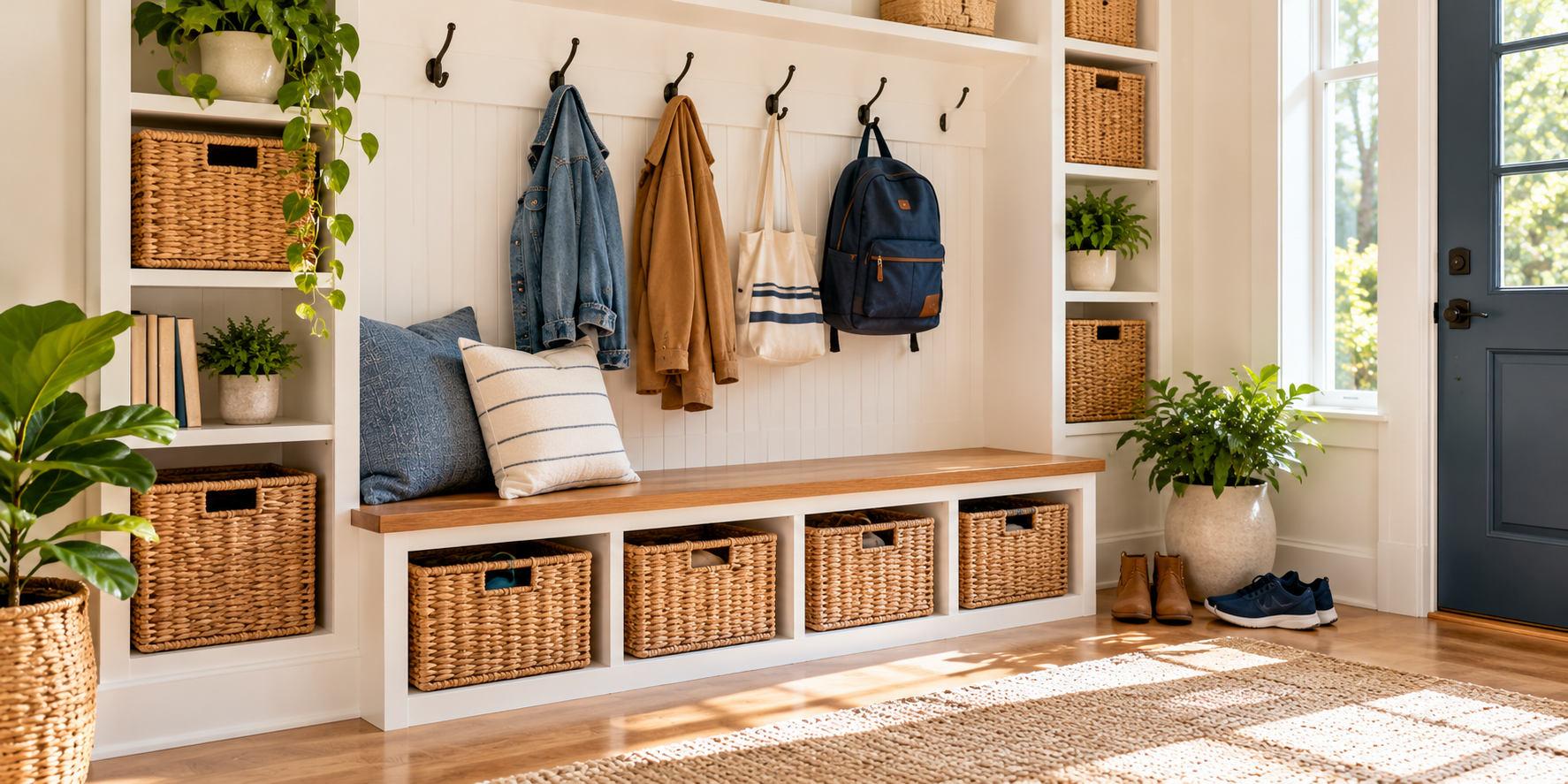
Once you've reduced the amount you're storing, look for ways to use the space you already have more effectively.
Use Vertical Space
Shelves, hooks, and wall-mounted organizers can free up floor and counter space.
An entryway with sturdy hooks for coats and backpacks may work better than a chair covered in jackets.
A closet with adjustable shelving may hold folded clothing more efficiently than one with a single long shelf.
Install storage securely and follow manufacturer weight limits, especially in areas used by children.
Use Drawer Dividers and Small Containers
Deep drawers can become a jumble of unrelated items. Simple dividers help separate categories. Use them for kitchen utensils, desk supplies, socks, bathroom accessories, and other small belongings.
Before buying organizers, measure the space and decide what actually needs storing. The prettiest basket in the store isn't much help if it doesn't fit your shelf.
Choose Storage That Makes Putting Things Away Easy
A complicated storage system may look wonderful in a photograph but be difficult to maintain. If everyone has to remove three boxes to put away one item, the item probably won't get put away.
Choose solutions that make everyday tasks simple. Open baskets can work well for frequently used toys. Clearly labeled bins may be better for seasonal supplies.
Drawers can keep small items contained without leaving them on display. The best organizing system is one your family will actually use.
7. Decide What to Display and What to Put Away
Creating an organized home doesn't mean hiding every decorative object. Your home should still look and feel like yours.
Family photographs, favorite books, souvenirs, and collections can add warmth and personality.
The trick is giving them enough space to be appreciated.
Group Collections Together
Instead of scattering small decorative objects across every surface, try arranging related pieces together.
Group items by color, shape, material, or theme. A collection of framed family photographs might look more intentional on one shelf than spread throughout the room.
A few favorite souvenirs displayed together can be more appealing than dozens competing for attention.
Use Trays and Baskets to Contain Small Items
A tray on the coffee table can hold remotes and other everyday essentials. A small basket near the entryway can provide a home for appropriate miscellaneous items.
A decorative box can keep frequently used accessories from spreading across a tabletop.
Just remember that containers aren't supposed to become miniature junk drawers. Occasionally empty them and check what has accumulated.
8. Create Simple Habits That Keep Your Home Organized
Getting organized is one thing. Staying organized is another. The most successful systems are supported by small habits that prevent clutter from building up again.
Put Things Away Where They Belong
If something has a designated home, return it after use whenever practical. Make the storage location convenient enough that putting the item away doesn't become another chore.
Give Incoming Belongings a Place
Mail, groceries, packages, school papers, and new purchases enter the house regularly. Decide where they should go.
Sort incoming mail rather than letting it accumulate indefinitely. Put groceries away promptly.
Make room for new clothing, toys, and household purchases instead of continually squeezing them into already-full storage.
Try a Five-Minute Evening Pickup
Before bed, spend a few minutes collecting things that have wandered out of place. Invite other family members to help.
Five minutes won't organize the entire house, but it can prevent small messes from growing.
Revisit Systems That Aren't Working
If backpacks keep landing on the kitchen floor, perhaps the designated hooks are too far away.
If the mail always collects on the counter, maybe the household needs a more convenient paper-sorting spot.
Instead of repeatedly blaming people for not following a system, consider whether the system needs adjusting.
A good organizing method should make everyday life easier—not require constant reminders and supervision.
Need Help Decluttering Before You Organize?
Too Much Stuff? Not Enough Space? Clear the clutter, let go of the guilt, and reclaim your home, one room at a time. Discover I Might Need That Someday by Tara Aronson.
Keep Going: More Home Organizing Ideas
Once you've started creating an organized home, these guides can help you tackle specific trouble spots:
Explore organizing ideas for different rooms and household needs.
Bring order to the bills, mail, and household documents that accumulate.
Tips for Organizing Your Closet →
Make clothing and accessories easier to find and put away.
Start with the belongings that are making your rooms harder to organize.
- Clean Home
- Organize Your Home
- Creating An Organized Home
Free 15-Minute Daily Reset Checklist
Get Notes on Keeping House
Fifteen minutes a day. No weekend cleaning marathons. No guilt. Sign up for my newsletter and I'll send you the printable checklist that makes it happen.
Send My ChecklistNo spam, ever. Unsubscribe anytime.
Free Printable
Notes on Keeping House
Sign up and get my 15-Minute Daily Reset Checklist. One timer, five zones, and a house that stays under control.
Send My ChecklistNo spam, ever. Just smart, funny tips for keeping house from Tara Aronson.