Garbage Disposal Maintenance Made Easy
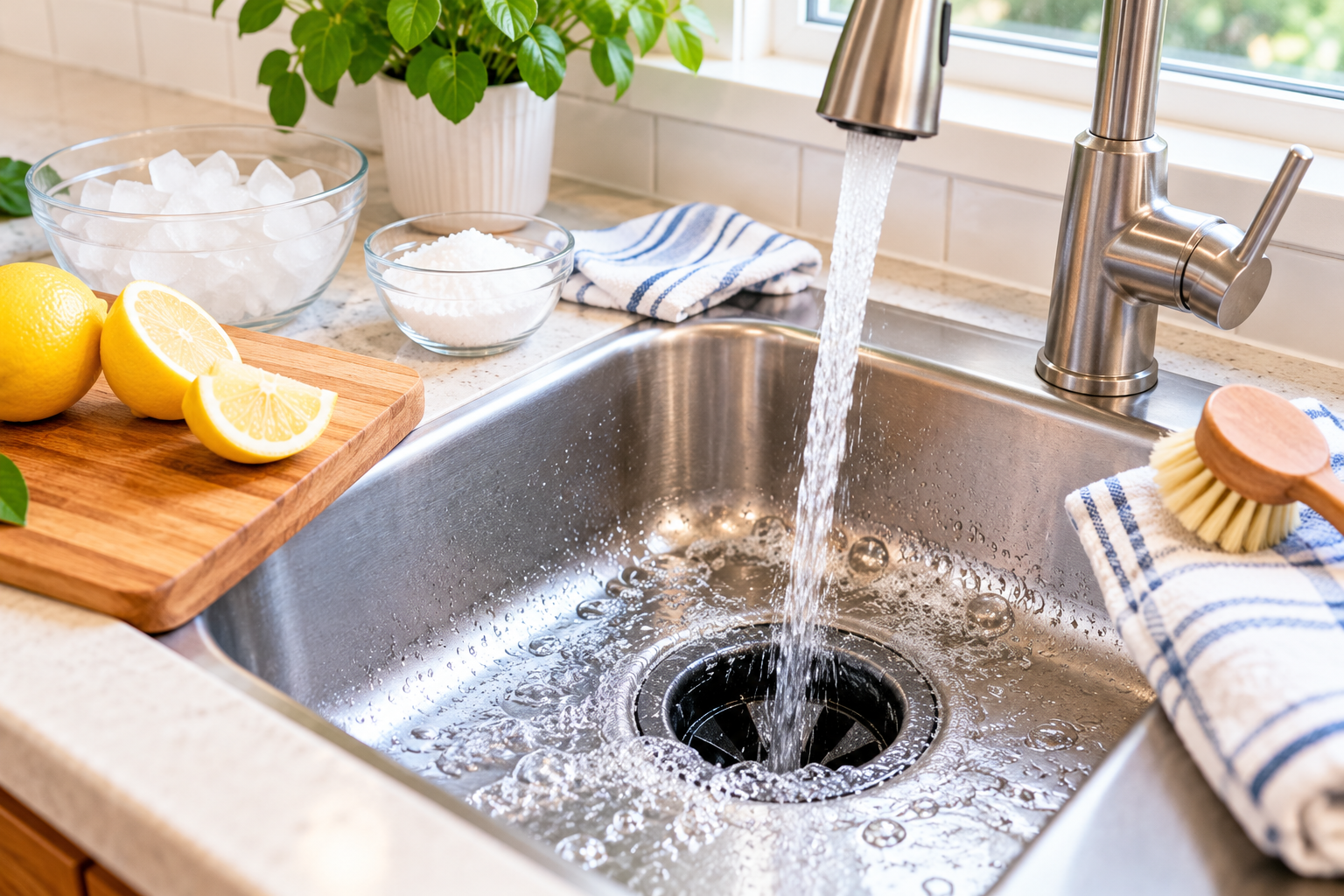
Your garbage disposal is one of those appliances you never think about, until the kitchen starts smelling like something crawled into the drain and gave up. Or until you flip the switch and hear that low, sad hum that means it has eaten something it shouldn't have.
Good news: garbage disposal maintenance takes almost no time. A few good habits keep it fresh, keep it from jamming, and keep you from making an expensive call to the plumber. Here's exactly what to do, what never to put down the drain, and how to fix a jam yourself.
First, a Myth: Your Disposal Doesn't Have Blades
Most people picture a blender down there. It's not. A garbage disposal has a spinning plate with two blunt metal arms, called impellers, that fling food against a rough grinding ring until it's small enough to wash away. No blades.
That means you never need to "sharpen the blades" with ice or eggshells, and it explains why some foods give it trouble. Hard things jam it. Stringy things wrap around it. Starchy things turn into paste. Keep that in mind, and the rest of this list makes perfect sense.
Your Garbage Disposal Maintenance Schedule
How oftenEvery use Weekly Monthly |
What to doRun cold water before, during and after. Feed food in gradually. Grind a handful of ice, and freshen it with a few small pieces of citrus peel. Scrub the splash guard, and give it a baking soda and vinegar deep clean. |
The Everyday Rules
1. Always Run Cold Water
Turn on the cold water before you start the disposal, keep it running while it grinds, and let it run for 15 seconds after you turn the disposal off. The water carries the food down the drain.
And yes, it has to be cold. Cold water keeps any fat solid, so it gets chopped up and flushed away. Hot water melts fat into a liquid that travels farther into your pipes, then cools and sticks somewhere you'd rather it didn't.
2. Feed It Gradually
Your garbage disposal is not a wood chipper. Don't dump a sink full of leftovers into it and expect heroic results. Add a little at a time, and let it finish grinding before you add more. It's easier on the motor and much less likely to clog.
3. Let It Finish the Job
Don't switch it off the second the food disappears. Let it run until the grinding sound changes to a smooth whir. Then turn it off and keep the cold water running for a few more seconds, so the last bits flush through the drain instead of sitting there and starting tomorrow's mystery smell.
4. Scrape First, Grind Second
Having a disposal doesn't mean every leftover goes down the drain. Scrape the big stuff into the trash or the compost bin, and use the disposal for the small scraps left on the plates.
5. Check Before You Flip the Switch
Look in the drain before you turn it on, especially after clearing a table full of dishes. A teaspoon meeting a running garbage disposal is memorable for all the wrong reasons.
What Never Goes Down the Garbage Disposal
- Grease, oil and fat. They go down as liquids and cool into solid plugs in your pipes. Today's bacon grease is next month's plumbing bill. Let it cool in a can and throw it in the trash.
- Fibrous and stringy foods: celery, corn husks, artichoke leaves, onion skins, asparagus and big piles of vegetable peelings. The strings wrap around the impellers.
- Starchy foods that swell: pasta, rice, bread, oatmeal and potato peels. They turn into a thick paste that clogs the drain.
- Hard things: bones, fruit pits, seafood shells and popcorn kernels.
- Coffee grounds and eggshells, except in tiny amounts. They don't grind away. They pile up in the pipes like sand.
- Anything that isn't food: silverware, bottle caps, twist ties, paper towels, sponges, and that little rubber band from the broccoli.
- Chemical drain cleaners. They can damage the disposal and its seals. If the drain is clogged, use a plunger or call a plumber.
- Paint and harsh chemicals. Never.
Tempted to test whether the disposal can handle something? Don't. The answer may technically be yes. Your plumber may still disagree.
How to Clean a Garbage Disposal
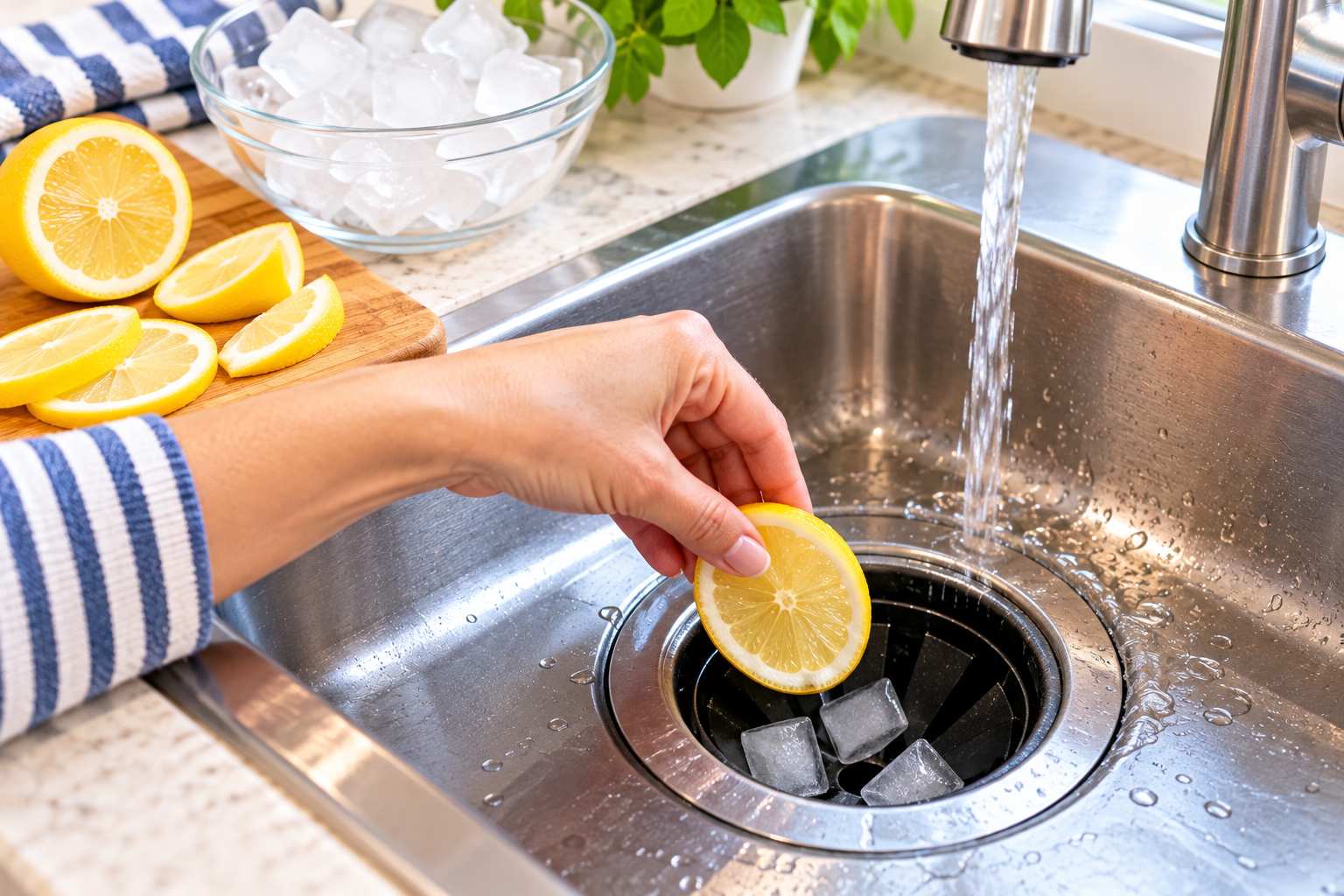
Safety first: Turn the disposal off at the wall switch, and unplug it under the sink or flip off its circuit breaker before you clean anything near the opening. And never, ever put your hand inside the disposal, even when it's off. Use tongs or a brush.
Scrub the Splash Guard
The rubber flaps around the drain opening are where most of the stink lives. On many models, the splash guard pulls straight out. Pop it out and scrub both sides with dish soap and an old toothbrush, or run it through the dishwasher if your manual says it's safe. If it doesn't come out, lift each flap with the toothbrush and scrub underneath. You'll be horrified. Then you'll be glad you did it.
Deep Clean It Once a Month
- With the disposal off, pour half a cup of baking soda into the drain.
- Follow it with one cup of white vinegar. Let it fizz for 10 minutes.
- Turn on the cold water, run the disposal, and flush it for 30 seconds.
Grind Ice Every Week
Toss a handful of ice cubes into the disposal and run it with cold water. The ice doesn't sharpen anything (no blades, remember?), but it does knock built-up gunk off the grinding chamber. For extra cleaning power, freeze white vinegar in an ice cube tray and grind those.
How to Fix a Smelly Garbage Disposal
- Scrub the splash guard. It's the culprit most of the time.
- Do the baking soda and vinegar deep clean.
- Grind a handful of ice.
- Finish with citrus. Grind a few small pieces of lemon, lime or orange peel with cold water for a fresh smell. Small is the operative word. Don't stuff half a lemon down there and call it maintenance.
Still smelly? There may be food stuck in the drain line below the disposal. That's a job for a plumber. And if the whole fridge smells, too, see these fridge odor removal tips.
How to Fix a Jammed Garbage Disposal
f you flip the switch and hear humming but no grinding, something is stuck. Turn it off right away. A jammed motor can overheat. Here's how to clear it:
- Cut the power. Turn off the wall switch, then unplug the disposal under the sink or turn off its circuit breaker.
- Look for the culprit. Shine a flashlight into the drain. If you can see what's stuck, pull it out with tongs or needle-nose pliers. Never your fingers.
- Turn it by hand. Most disposals have a small hexagonal hole in the center of the bottom of the unit. Fit a hex key (usually a 1/4-inch Allen wrench, and many disposals come with one) into the hole and work it back and forth until it turns freely all the way around.
- Press the reset button. Wait a few minutes for the motor to cool, then press the small red reset button on the bottom of the disposal.
- Test it. Restore the power, turn on the cold water, and switch the disposal on.
Always check your manual for your specific model. If it still won't run, or you can't safely reach what's stuck, call a plumber rather than turning a minor jam into a broken disposal, or worse, damaged fingers.
Garbage Disposal Troubleshooting
What's happeningIt hums but won't grind It makes no sound at all It grinds, but the water drains slowly It's leaking under the sink It keeps jamming or tripping the reset |
What it usually meansIt's jammed. Follow the jam steps above. The reset button tripped, the breaker flipped or it's unplugged. Press reset, then check the breaker. The clog is in the pipe below. Try a plunger, or see how to fix a backed-up sink. A loose connection or a worn seal. Tighten the connections, and call a plumber if the unit itself is leaking. It may be wearing out. See below. |
When to Replace a Garbage Disposal
Most garbage disposals last about 10 to 12 years. Start shopping for a new one if yours jams constantly, trips the reset button again and again, leaks from the body of the unit, or smells bad no matter how often you clean it.
On a septic system? A garbage disposal adds solids to your septic tank, which means it may need pumping more often. Look for a disposal labeled septic-safe, and scrape even more of your scraps into the trash or compost.
The Day After Thanksgiving: Go Easy on It
Plumbers say the day after Thanksgiving is one of their busiest days of the year. Potato peels, turkey grease and a houseful of guests all heading for the same kitchen drain is a recipe for a clog. Scrape the plates into the trash, keep the grease out of the drain, and run the disposal in small batches with plenty of cold water. More holiday cleanup tips: Post-Thanksgiving Recovery.
A Little Maintenance Goes a Long Way
Remember what a garbage disposal really is: a handy way to deal with the little bits of food left after you've scraped the dishes. It is not a hungry metal monster that needs to be fed everything in your refrigerator. Give it cold water, small bites and a monthly cleaning, and it'll quietly do its job for years.
Garbage Disposal Maintenance: Quick Answers
How do you clean a garbage disposal?
With the power off, scrub the rubber splash guard with dish soap and an old toothbrush. Then pour in half a cup of baking soda and a cup of white vinegar, let it fizz for 10 minutes, and flush it with cold water while the disposal runs.
Should you run hot or cold water with a garbage disposal?
Cold. Cold water keeps fat solid so it gets chopped up and flushed away. Hot water melts fat, which then cools and sticks inside your pipes.
What should you never put in a garbage disposal?
Grease, oil, bones, fruit pits, fibrous foods like celery and corn husks, starchy foods like pasta, rice and potato peels, large amounts of coffee grounds or eggshells, and anything that isn't food.
How do you fix a garbage disposal that hums but won't work?
It's jammed. Turn off the power, remove anything stuck with tongs, then turn the hex key in the bottom of the unit back and forth until it moves freely. Press the red reset button, restore the power and test it with cold water running.
Keep Going
Keep your kitchen and plumbing running smoothly with these related guides:
- Fixing a Backed-Up Sink: What to do when the water won't go down.
- How to Prevent Plumbing Problems: Stop clogs and leaks before they start.
- Home Maintenance: Monthly and seasonal tasks to keep small problems small.
- Preventative Home Maintenance Checklist: Monthly to yearly.
- Do It Yourself Home Repairs: Simple fixes you can handle with a basic toolkit.
- Cleaning Small Kitchen Appliances: Toasters, coffeemakers, waffle irons and more.
- Fridge Odor Removal Tips: Banish that funky smell for good.
- Post-Thanksgiving Recovery: Roasting pans, carpet spills and leftovers.
- Clean Home
- Home Maintenance
- Maintaining Your Garbage Disposal
Free 15-Minute Daily Reset Checklist
Get Notes on Keeping House
Fifteen minutes a day. No weekend cleaning marathons. No guilt. Sign up for my newsletter and I'll send you the printable checklist that makes it happen.
Send My ChecklistNo spam, ever. Unsubscribe anytime.
Free Printable
Notes on Keeping House
Sign up and get my 15-Minute Daily Reset Checklist. One timer, five zones, and a house that stays under control.
Send My ChecklistNo spam, ever. Just smart, funny tips for keeping house from Tara Aronson.