Fixing a Backed-Up Toilet Without Making Things Worse
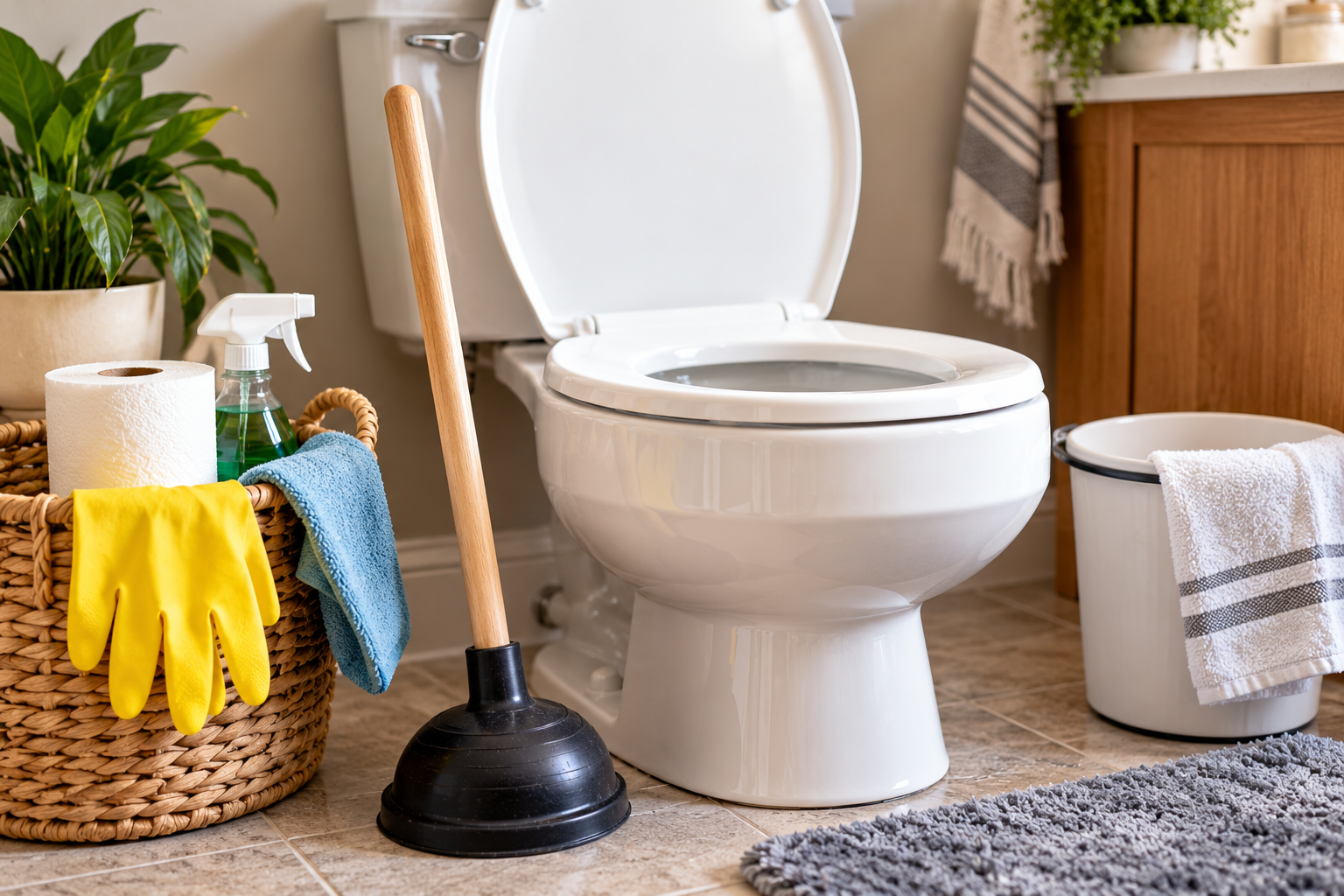
Few household problems get your attention quite like a toilet that isn't draining. You flush. The water rises. And rises.
And suddenly you're standing there staring into the bowl as though intense eye contact might convince it to reconsider.
It won't.
The most important thing to do when a toilet backs up is stop more water from entering the bowl.
Then you can deal with the clog without turning a plumbing problem into a bathroom-floor problem.
Most ordinary toilet clogs can be cleared with a good plunger, a little patience and, if necessary, a toilet auger.
The trick is knowing what to do first. And what not to do.
Starting with the most important rule of all: Do not flush again just to see what happens. We already know what happens.
More water.
1. Don't Flush the Toilet Again
Your first instinct may be: Maybe one more flush will push everything through. Sometimes it might.
But if the toilet is already backed up, another flush can send more water into a bowl that has nowhere to put it.
That's how a clogged toilet becomes an overflowing toilet. So resist the handle. The toilet has had its chance.
2. Stop the Water If the Bowl Is Rising
If the water continues rising, stop the toilet from refilling.
Look for the shutoff valve on the wall or floor behind the toilet. Turn it clockwise until the water stops.
If you can't reach the valve quickly and the tank is still filling, remove the tank lid carefully and stop the flapper from allowing more water into the bowl.
Once the immediate crisis is over, take a moment. The water is no longer rising.
Your bathroom floor is still a bathroom floor. We're making progress.
3. Protect the Floor
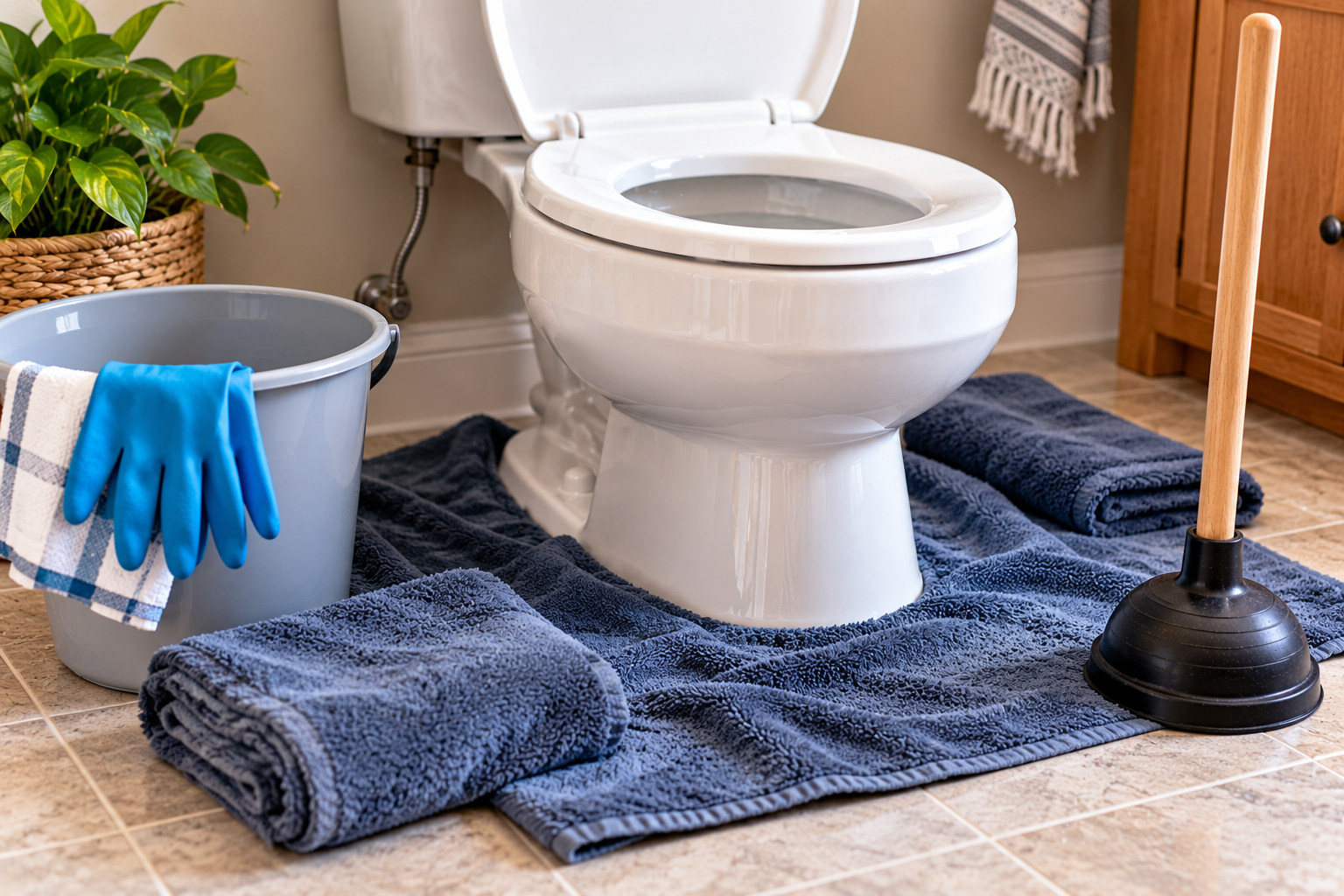
Before plunging, put old towels or absorbent rags around the base of the toilet.
Even if the bowl isn't overflowing now, plunging can produce splashes.
And we're going to assume those splashes are not something you'd like distributed around the room.
Wear rubber gloves. Move bath mats, baskets and anything else nearby out of the way. This is not the moment for decorative accessories.
4. Give a Very Full Bowl Time to Drain
If the water level is unusually high, don't immediately start plunging with enthusiasm. Wait several minutes.
With many partial clogs, the water will slowly drain. Once the level drops, you'll have more room to work without sloshing water over the rim.
If necessary, remove some water with a disposable container and place it into a bucket. Not glamorous. Very useful. Homeownership contains both.
5. Use the Right Plunger
Not all plungers are equally good at unclogging toilets. For a toilet, use a flange plunger.
It has an extended rubber section beneath the main cup that fits into the toilet drain opening and helps create a seal.
A flat-bottomed cup plunger is better suited to sinks and tubs.
Yes, there are specialized plungers. Apparently even plungers have career paths.
6. Make Sure There's Enough Water for the Plunger
The rubber portion of the plunger should be submerged. Water helps create the pressure needed to move the clog.
If the bowl has drained almost completely, carefully add enough water to cover the plunger cup.
Don't fill the bowl unnecessarily. We're trying to clear the drain. Not recreate the problem we're solving.
7. Get a Good Seal Before You Plunge
Place the flange directly into the drain opening. You want the plunger to seal around the opening rather than simply bounce around the bottom of the bowl.
Begin gently. The first push should force out trapped air without sending toilet water toward your face.
Once you have a good seal, use firm, controlled plunges.
Push down.
Pull back.
Repeat.
The pulling action is important too.
You're trying to move the clog back and forth until it breaks free—not merely shove it deeper with every ounce of strength you possess.
8. Plunge Several Times Before Giving Up
One plunge probably isn't going to do it. Try a series of steady plunges. You may feel the clog release. The water level may suddenly drop.
That is the moment when a plunger becomes your favorite household possession.
If nothing happens, reposition the plunger and try again. A poor seal is often the problem.
9. Test the Toilet Carefully
Once the water drains normally, don't immediately celebrate with a full flush.
First, pour a modest amount of water into the bowl. If it drains freely, that's a good sign.
Then turn the water supply back on if you shut it off and allow the tank to fill.
Try one normal flush while watching the bowl closely. If the water rises again, stop. The clog isn't fully cleared. No encore performance is necessary.
10. Try Dish Soap and Warm Water for a Stubborn Clog
For some soft clogs, dish soap and warm water may help lubricate things enough to get them moving.
Add a small amount of dish soap to the bowl. Let it sit for several minutes. Then carefully add warm water. Not boiling water.
Let the mixture sit before trying the plunger again.
This isn't guaranteed to clear a serious clog, but it can help with some ordinary blockages.
And it's considerably less aggressive than pouring random chemicals down the toilet.
11. Don't Pour Boiling Water In the Toilet
Boiling water may sound like a good way to attack a clog. Your toilet bowl may disagree.
Very hot water can subject porcelain to sudden temperature changes.
Use warm or hot tap water instead. Your goal is to loosen the clog. Not conduct a thermal experiment on the toilet.
12. Skip Harsh Chemical Drain Cleaners
Chemical drain cleaners generally aren't my first choice for a clogged toilet.
They may not solve the blockage, and now you can end up with caustic chemicals sitting in the bowl.
That becomes particularly unpleasant if you later need to plunge, snake or otherwise work on the toilet.
And if you eventually call a plumber, make sure you tell them if you've added a chemical drain cleaner. They deserve to know what they're about to encounter.
13. Use a Toilet Auger for a Stubborn Clog
If plunging doesn't work, the next useful tool is usually a toilet auger, also called a closet auger.
It's designed specifically for toilets. Insert the curved end into the toilet drain according to the tool's directions.
Turn the handle to feed the cable into the trap. The auger may:
- Break through the blockage
- Hook the obstruction
- Loosen material enough to flush away
Work carefully so you don't scratch the porcelain.
If you've reached the point where you're attacking the toilet with random pieces of wire from the garage, stop. Use the tool designed for the job.
14. Consider Whether Something Is Stuck in the Toilet
Sometimes the problem isn't too much toilet paper. Sometimes something went in that was never supposed to go in.
Common offenders can include:
- Toys
- Personal-care items
- Wipes
- Paper towels
- Small household objects
- Too much toilet paper
If you know an object was flushed, repeated plunging may push it farther into the plumbing.
A toilet auger may retrieve some objects. Others may require removing the toilet.
This is also an excellent time to question any small child who has recently been unusually interested in plumbing.
15. Be Careful With "Flushable" Wipes
A product being labeled flushable doesn't mean your plumbing will be delighted to receive it.
Toilets are happiest handling what they're designed for: Human waste and toilet paper.
Paper towels, cleaning wipes, facial tissues, feminine hygiene products and other materials can contribute to blockages.
The trash can is considerably less dramatic.
16. Pay Attention if More Than One Drain Is Backing Up
One clogged toilet is often a local toilet problem.
But if you're seeing problems elsewhere too—such as multiple toilets backing up or other drains gurgling or draining poorly—you may have a larger drain or sewer-line problem.
That's different from an ordinary toilet clog. Stop repeatedly testing fixtures and consider calling a plumber.
If wastewater is backing up through tubs, showers or floor drains, professional help moves considerably higher on the list.
17. Know When to Call a Plumber
There is no household award for refusing professional help until the bathroom is underwater.
Call a plumber when:
- Repeated plunging doesn't clear the toilet
- A toilet auger doesn't solve the problem
- You suspect a solid object is lodged inside
- The toilet repeatedly clogs
- Several drains or toilets are backing up
- Water or sewage is backing up elsewhere
- You suspect a sewer-line problem
- The toilet leaks around its base
- You're not comfortable doing the repair
A recurring clog is particularly important. If you're plunging the same toilet every week, the plunger isn't really fixing the problem. It's managing it.
What If the Toilet Is Already Overflowing?
First, stop the water supply. Then keep everyone away from the contaminated area.
Wear gloves. Remove standing water using appropriate disposable or washable materials.
Clean and disinfect affected hard surfaces after the plumbing problem is resolved.
Anything porous that becomes heavily contaminated may be difficult to clean adequately.
And wash your hands thoroughly afterward even if you wore gloves. This is one cleaning job where enthusiasm is less important than hygiene.
Why Does My Toilet Keep Backing Up?
If the problem keeps returning, possible causes include:
- Too much toilet paper
- Items being flushed that shouldn't be
- A partial obstruction
- A problem farther down the drain line
- A toilet that isn't flushing effectively
- A larger plumbing or sewer issue
Don't simply accept frequent clogs as one of your toilet's personality traits.
A toilet should not require regular negotiations. If the cause isn't obvious, have it checked.
What Not to Flush
Keep this rule simple. Toilet paper and human waste belong in the toilet. Many other things don't.
Avoid flushing:
- Wipes
- Paper towels
- Facial tissues
- Feminine hygiene products
- Cotton swabs
- Dental floss
- Diapers
- Cat litter
- Grease
- Food
- Household objects
And yes, small children occasionally expand this list creatively.
Keep a Toilet Plunger Where You Can Find It
Every home should have a proper toilet plunger. Preferably before the toilet backs up.
Store it somewhere accessible near the bathroom. Not buried beneath 11 boxes in the garage.
A toilet clog is not the ideal moment to discover that you once owned a plunger but have no idea where it went.
A toilet auger is also useful to have if clogs aren't unusual in your home.
These aren't glamorous household tools. Neither is a fire extinguisher. Some things earn their storage space by being very useful on one particularly bad day.
The Five Rules for a Backed-Up Toilet
If you remember nothing else:
1. Don't keep flushing.
More water will not improve an already full toilet bowl.
2. Stop the water if the bowl is rising.
Prevent the overflow before attacking the clog.
3. Use a flange plunger correctly.
A good seal and controlled plunging matter more than brute force.
4. Move to a toilet auger if plunging doesn't work.
Use the right tool rather than improvising.
5. Know when the problem is bigger than the toilet.
Multiple backed-up drains or recurring clogs deserve professional attention.
The Bottom Line
A backed-up toilet feels like an emergency because sometimes it is about 30 seconds away from becoming one.
But don't panic. And definitely don't keep flushing.
Stop the water.
Protect the floor.
Give a high bowl time to drain.
Use the right plunger and get a good seal. If that doesn't work, move to a toilet auger.
And if several drains are acting strangely, the clog keeps returning or nothing you try clears it, call a plumber.
The goal isn't to prove that you can personally defeat every plumbing problem in your house.
The goal is to get the toilet working again without turning one unpleasant problem into three.
And when you finally flush and the water goes exactly where it's supposed to go?
You may experience a level of appreciation for indoor plumbing you haven't felt in years.
Keep Going
Now that the toilet is working again, you may want to give the rest of the bathroom some attention.
See Bathroom Cleaning and Organizing for practical help keeping the whole room clean and under control.
If moisture and mildew are another bathroom problem, continue with Bathroom Mold Removal.
And for more everyday cleaning help throughout the house, head to Cleaning.
- Clean Home
- Home Maintenance
- Fixing A Backed-Up Toilet