Building A Home Toolkit
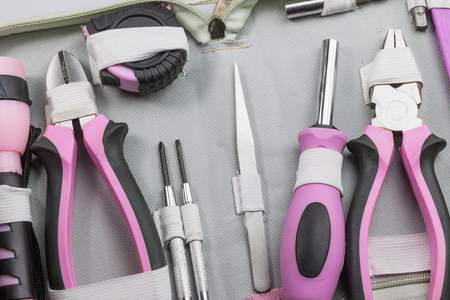
After building a home toolkit, you will be equipped to handle many minor repairs and home improvement projects.
What could be more rewarding than doing it yourself? With the right tools, you can make many common repairs around your home - even if you've never taken a shop class.
Remember, a basic toolkit is all you'll need. Here are the essential tools to include when building a home toolkit.
Building A Home Toolkit - The Basics
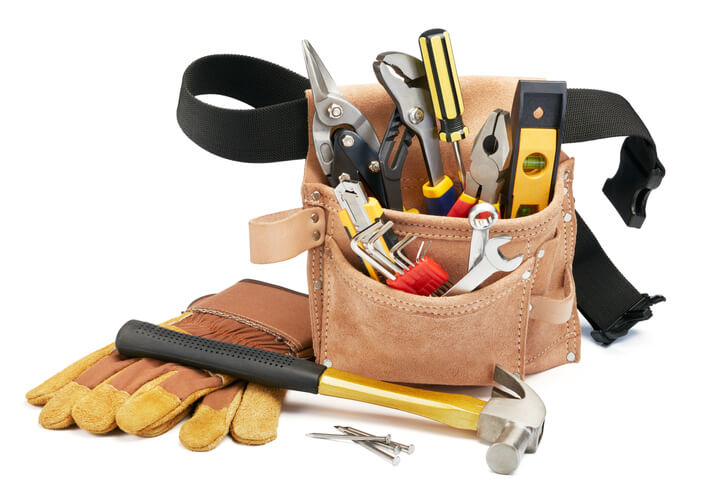
You'll need a standard claw hammer, an adjustable wrench, a tape measure, several sizes of screwdrivers (both standard and Phillips head), a cordless drill and set of bits, and standard slip-joint, needle-nose, and wire-cutting pliers.
You'll also want to include a hacksaw for cutting metals and plastics, a medium-size pair of tongue-and-groove pliers, a pair of locking pliers, a general-purpose wood saw, a putty knife, a utility knife, a square, a small level, a utility light, and several long, heavy-duty extension cords.
Also include:
- a dependable flashlight
- a battery-operated stud finder
- a plunger for minor plumbing fixes.
Your essential tools will be handy for routine repairs, such as stopping leaks at the base of a faucet (with your adjustable wrench) or hanging shelves or pictures (with your hammer, drill, stud finder, tape measure, and level).
Needle-nose pliers are:
- Just the thing for reaching into tight spaces.
- Twisting small wires.
- Holding small metal parts and nails in place for screwing or hammering.
Building A Home Toolkit - Other Items To Include
Other useful tools to include when building your home toolkit include:
- an electric saber saw
- a set of socket wrenches
- a circular saw
- an electric palm or orbital sander
- an assortment of paintbrushes
- a staple gun
Finally, stock an assortment of nuts, bolts, screws, and metal washers; rubber washers for leaky faucets; duct tape; several sizes of nails or tacks; fine sandpaper; lubricating oil for door hinges; and a versatile glue.
Keep Tools Accessible and Together
Building a home toolkit is the first step toward simplifying home maintenance. Here's how to keep these items accessible and together.
- For on-the-move repairs, stash essentials in a wide-mouthed carpenter's bag explicitly designed for toting tools
- Store extra screws and bolts in jars where they're easy to see. Secure lids to the undersides of shelves so you can open jars with one hand
- Keep your workshop neat by mounting tools on a pegboard and drawing outlines of items to show where they go
- Short on space? Keep essential tools in a roll-up canvas bag. It's easy to stash in a hall closet or kitchen drawer, where it's always ready for quick fixes around the house.
- Clean Home
- Home Maintenance
- Building A Home Toolkit