Preventative Home Maintenance Checklist: Monthly to Yearly

A house can last for generations. Its parts and systems can’t, at least not without some regular attention.
A roof can spring a leak. A furnace can quit on the coldest night of the year. A washing machine hose can burst while you’re at work and turn the laundry room into a water feature.
The good news: most of these disasters send warning signs first, and a preventative home maintenance checklist is how you catch them. Most of these jobs take five or ten minutes. A few need a pro once a year. All of them are cheaper than the emergency they prevent.
What should be on a home maintenance checklist? Monthly: test smoke and CO alarms, check the HVAC filter, test GFCI outlets and the garage door’s auto-reverse. Seasonally: clean gutters, service the AC in spring and the furnace in fall, and winterize outdoor faucets. Yearly: inspect the roof and chimney, clean the dryer vent, flush the water heater, and check caulk and weatherstripping.
Home Maintenance Schedule at a Glance
How oftenSpring Summer Fall Winter Twice a year Yearly Every few years |
JobsGutters, AC tune-up, roof and exterior check, sump pump test, ceiling fans to counterclockwise Wash the exterior and windows, check the deck and fences, trim shrubs back from the house Gutters, furnace tune-up, chimney, winterize outdoor faucets, ceiling fans to clockwise Watch for ice dams, check for drafts, keep vents and the dryer exhaust clear of snow Check for leaks, inspect caulk, check washer and dishwasher hoses, clean fridge coils, clean the exterior Dryer vent, water heater, chimney inspection, weatherstripping, floors, smoke alarm batteries Replace smoke and CO alarms, replace washer hoses, reseal the deck, pump the septic tank |
Monthly Home Maintenance Checklist
Five minutes a month. That’s the whole commitment. Pick a day you’ll remember, like the first of the month or the day you pay the mortgage.
• Test smoke and carbon monoxide alarms. Press the test button on every alarm until it beeps. If one doesn’t, replace the battery today, not “when you get around to it.”
• Check the HVAC filter. Pull it out and hold it up to the light. If you can’t see light through it, replace it. Change it at least every three months, and monthly if you have pets.
• Test GFCI outlets. These are the outlets with the TEST and RESET buttons, in kitchens, bathrooms, garages and outside. Press TEST (the power should cut off), then RESET.
• Test the garage door auto-reverse. Lay a roll of paper towels or a 2x4 flat in the door’s path and close the door. It should reverse as soon as it touches. If it doesn’t, stop using the opener and get it fixed.
• Check the fire extinguisher. The needle on the gauge should be in the green. Make sure it’s where you can grab it, not behind the paint cans.
• Clear the walkways. Sweep off debris, algae, leaves and snow, anything somebody could slip on.
Seasonal Home Maintenance Checklist
Spring
• Clean the gutters and downspouts once the trees finish dropping their seeds and blossoms. Make sure the downspouts send water at least a few feet away from the foundation.
• Schedule an AC tune-up before the first hot day, while the repair people still have openings.
• Look over the roof from the ground with binoculars. You’re looking for missing, curled or cracked shingles and loose flashing. No ladder required.
• Check the exterior for cracks in the foundation, masonry and stucco. Seal small hairline cracks with masonry caulk. Call a pro for cracks wider than about 1/4 inch, or ones that keep growing.
• Test the sump pump by pouring a bucket of water into the pit. The pump should kick on and drain it.
• Set ceiling fans to spin counterclockwise to push cool air down.
For the cleaning side of spring, see our March, April and May checklists.
Summer
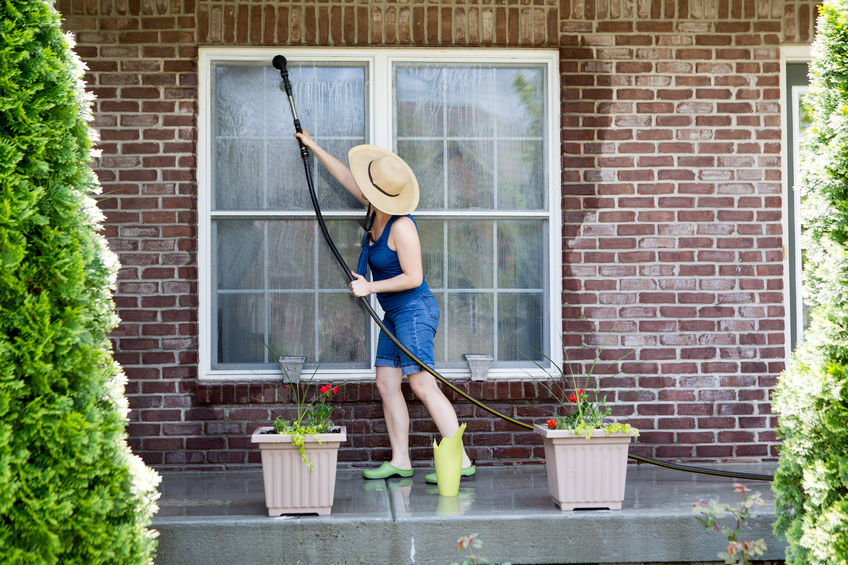
• Wash the exterior and windows (see Twice a Year, below).
• Check the deck, porch and fences for loose boards, popped nails and splinters.
• Trim shrubs and branches back from the house so they don’t trap moisture against the siding or give pests a bridge to the roof.
• Clean the grill and dryer vents of the season’s buildup.
Fall

• Clean the gutters again after the leaves drop.
• Schedule a furnace tune-up before the first cold night.
• Have the chimney inspected if you use the fireplace or a wood stove.
• Winterize outdoor faucets: disconnect the hoses, close the indoor shutoff valve, and open the outside faucet to drain it. A frozen pipe can split and flood the wall.
• Set ceiling fans to clockwise on low to push warm air down from the ceiling.
• Drain and store garden hoses and sprinkler lines.
For the full fall list, see How to Winterize Your Home.
Winter
• Watch for ice dams, thick ridges of ice along the roof edge. They’re a sign that heat is escaping into the attic.
• Check for drafts around windows and doors on a windy day.
• Keep outside vents clear of snow, especially the dryer, furnace and water heater exhausts.
Twice-a-Year Home Maintenance Checklist

• Check for leaks in the attic, basement, garage and under every sink. Look for water stains, drips, musty smells and warped flooring. Catching a slow drip early is the difference between a $10 washer and a new kitchen floor. [new joke]
• Inspect washing machine and dishwasher hoses for cracks, bulges and drips at the connections.
• Check the caulk around tubs, showers, sinks and the kitchen backsplash. If it’s cracked, peeling or moldy, scrape it out and recaulk. See our easy bathroom caulking tips.
• Clean the refrigerator coils. Unplug the fridge and vacuum the coils behind the bottom grille or on the back. Dusty coils make it work harder.
• Wash mold and mildew off the exterior. Use an oxygen bleach (sodium percarbonate) house wash mixed according to the package. Or use 1 cup of regular bleach per gallon of water, with the plants watered down first and rinsed afterward so the bleach doesn’t burn them. Scrub with a soft brush and rinse.
Yearly Home Maintenance Checklist
• Have the HVAC system professionally serviced. AC in spring, furnace in fall. A tune-up catches small problems before they become a no-heat emergency.
• Have the chimney inspected, and cleaned if needed, by a certified chimney sweep.
• Clean the dryer vent from the back of the dryer all the way to the outside. Lint buildup is the leading cause of dryer fires. (Clean the lint screen after every load, too.)
• Flush the water heater. Attach a hose to the drain valve and drain a few gallons until the water runs clear, which removes the sediment that makes it work harder. Check your manual first; some tankless heaters need a different process.
• Replace the batteries in smoke and CO alarms if they aren’t sealed 10-year units. Pick an easy date to remember, like New Year’s Day.
• Check the weatherstripping on doors and windows. Close a door on a dollar bill; if it slides out easily, the seal is leaking air. Replace worn weatherstripping and you’ll notice it on the heating bill.
• Check the floors for wear, and plan to refinish, repair or replace them before small problems spread.
• Find your main water shutoff valve and make sure it turns. In a burst-pipe emergency, you don’t want to be searching the basement with a flashlight.
Every-Few-Years Home Maintenance
JobReplace smoke alarms Replace carbon monoxide alarms Replace rubber washing machine hoses Reseal a wood deck Pump the septic tank Repaint or re-stain the exterior trim |
How oftenEvery 10 years (the date is on the back) Every 5–7 years, according to the date on the alarm Every 5 years, with braided stainless steel Every 2–3 years, or when water stops beading Every 3–5 years When it starts peeling |
Why Maintenance Never Gets Done (and How to Fix That)
Some jobs only need doing once or twice a year. The problem is that we forget to do them once or twice a year.
Otherwise, we tend to put them off until spring cleaning, which makes the chore so daunting that it never happens.
The best plan is to break the yearly and seasonal jobs into small pieces and spread them across the calendar. That way, nothing gets backed up, and everything eventually gets done.
A few tricks that help:
• Put the monthly checks on your phone as a repeating reminder.
• Pair jobs with dates you already know: smoke alarm batteries on New Year’s Day, ceiling fans when the clocks change.
• Book the HVAC and chimney appointments for the same time every year, or ask to be put on the company’s reminder list.
• Focus on one area each month. Concentrating on one room or area is more rewarding because you can see the results.
Month-by-Month Home Maintenance and Cleaning Schedule
Here’s the month-by-month schedule that works best for me. Each month’s checklist combines the cleaning and maintenance jobs that make sense at that time of year.
Month
January
February
March
April
May
June
July
August
September
October
November
December
Focus
Fresh start, winter checks
Indoor deep-clean before spring
Spring cleaning begins
Spring cleaning, behind and under
Summer prep: fans, screens, grill, AC
Summer traffic control
Mid-summer: coolers, vacation, heat
Late-summer reset, back to school
Fall cleaning
Winter prep
Holiday prep
Holidays and year-end
Checklist
Try it, and see if this is the year it all gets done.
Home Maintenance FAQ
What is preventative home maintenance?
It’s the regular checks and small repairs that catch problems before they turn into expensive emergencies: testing smoke alarms, changing HVAC filters, cleaning gutters, servicing the furnace and AC, and checking for leaks.
How often should I test my smoke detectors?
Once a month. Replace the batteries once a year (unless it’s a sealed 10-year alarm), and replace the whole alarm every 10 years.
How often should gutters be cleaned?
At least twice a year, in spring and fall. More often if you have a lot of trees overhanging the roof.
How often should I flush my water heater?
Once a year for most tank water heaters. Drain a few gallons until the water runs clear to remove sediment. Check your manual for tankless models.
What home maintenance should I hire a pro for?
HVAC tune-ups, chimney inspections, roof repairs, anything involving gas lines, electrical panel work, and foundation cracks wider than about 1/4 inch. Most monthly and seasonal checks are easy do-it-yourself jobs.
How do I keep track of home maintenance?
Set repeating reminders on your phone for the monthly checks, pair yearly jobs with dates you already know, and follow a month-by-month checklist so the work is spread across the year.
Keep Going
Keep your home in good shape with these related guides:
• 7 Resolutions for a Cleaner New Year: The cleaning side of the yearly schedule.
• Weekly Cleaning Checklist: The everyday routine that keeps the house clean between big jobs.
• Washing Machine Cleaning Tips: Keep the washer clean and smelling fresh.
• Bathroom Mold Removal Tips: Get rid of mold before it spreads.
• How to Clean Hardwood Floors: Protect your floors between refinishing.
• How to Clean Patio Furniture: Keep outdoor furniture lasting season after season.
• Easy Fall Cleaning Checklist: Get the house ready for cold weather.
• Safe at Home: More ways to keep your family safe at home.
For more, visit our Home Maintenance Guide.
Too Much Stuff? Not Enough Space? Clear the clutter, let go of the guilt, and reclaim your home, one room at a time. Discover I Might Need That Someday by Tara Aronson.
As an Amazon Associate, I earn from qualifying purchases.
- Clean Home
- Home Maintenance
- Preventative Home Maintenance Checklist

Free Printable
Notes on Keeping House
Sign up and get my 15-Minute Daily Reset Checklist. One timer, five zones, and a house that stays under control.
Send My ChecklistNo spam, ever. Just smart, funny tips for keeping house from Tara Aronson.