- Clean Home
- Home Maintenance
- January House Cleaning Checklist
January Cleaning Checklist:
15 Things to Clean and Reset

January arrives with an unreasonable amount of pressure.
Apparently we're supposed to reorganize the house, overhaul our routines, improve our finances, exercise daily, eat differently, and become substantially better human beings by approximately January 8.
Let's lower the bar. Your house has just survived December.
Decorations need to be put away, gifts need permanent homes, leftovers are taking up fridge space, and at least one object is sitting in the living room because nobody knows where it belongs yet.
So forget the whole-house transformation.
This January cleaning checklist is about getting your home back to normal after the holidays and starting the year with less mess—not launching a domestic reinvention campaign.
Here are 15 useful places to start.
1. Take Down Holiday Decorations—Without Creating a Storage Disaster

When you're ready to take down decorations, don't simply throw everything into boxes and make it next January's problem.
Discard broken decorations and anything you already know you don't want.
Wrap fragile items properly. Untangle lights before storing them. Label boxes clearly enough that you'll know what's inside eleven months from now.
And resist the temptation to keep every empty gift box, ribbon, and scrap of wrapping paper because it might be useful someday.
Keep what you'll realistically reuse. Recycle or discard the rest.
2. Put New Gifts Away
One reason January feels cluttered is that December brought new things into the house without necessarily creating places for them.
Walk through the main rooms and identify gifts still living in temporary locations.
Clothes go into closets or drawers. Books go onto shelves. Kitchen equipment goes into the kitchen. Toys get actual homes.
If something has nowhere to go, that's useful information. You may need to remove something else instead of inventing another storage container.
The goal isn't to store more stuff. It's to make room for what you actually want.
3. Clear the Entryway
The January entryway tends to be carrying a heavy load: coats, shoes, umbrellas, bags, and remnants of holiday traffic. Remove anything that doesn't belong there.
Vacuum or sweep the floor. Clean the entry mat. Put stray shoes away and give everyday winter gear an accessible home.
You don't need an elaborate organizing system. Hooks work. A shoe basket works. The revolutionary concept of actually hanging up the coat also works.
4. Clean Out the Refrigerator
Holiday leftovers have had their opportunity. Now it's time.
Remove spoiled food, expired products, and leftovers nobody will realistically eat. Wipe shelves and drawers as needed.
Clean sticky bottles before returning them. Then take inventory of what remains.
January meal planning becomes considerably easier when you can actually see the food.
5. Reset the Pantry
Don't start by buying containers. Start by removing things.
Discard expired food. Combine duplicates when appropriate. Group similar foods and move frequently used items to easy-to-reach spots.
If holiday baking left behind four half-used bags of something, consolidate what you can safely consolidate. Then make a shopping list based on what you genuinely need.
A pantry becomes organized surprisingly quickly once it stops storing food nobody intends to eat.
6. Give the Kitchen a Post-Holiday Clean
After weeks of heavier cooking, the kitchen deserves some attention. Clean:
- Cabinet fronts around handles
- Countertops
- Sink and faucet
- Stovetop
- Microwave
- Appliance exteriors
- Backsplash
- Trash and recycling containers
- Floors
Don't empty every cabinet unless one genuinely needs attention. January cleaning doesn't need to become an expedition.
For more help, visit our Kitchen Cleaning & Organizing Guide.
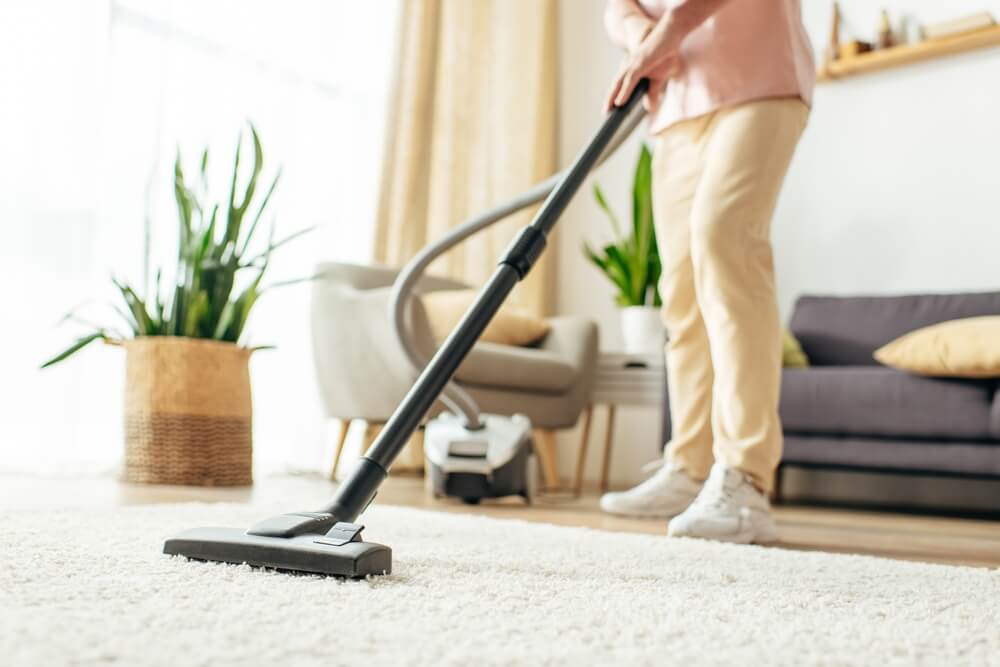
7. Vacuum Upholstery and Under the Cushions
The holidays leave evidence. Crumbs. Pet hair. Glitter. Small objects. Possibly part of a snack nobody remembers serving.
Vacuum sofas and chairs, including under removable cushions.
Clean upholstery according to manufacturer instructions if it needs more than vacuuming.
Then check beneath the furniture if it's safe and practical to do so. If you find anything valuable, consider it a January bonus.
8. Wash Frequently Used Blankets and Throws
Those blankets that spent December on the sofa have been working overtime. Wash washable throws and blankets according to their care labels.
While you're at it, decide whether you actually need every blanket occupying the room. Keep enough for comfort.
The sofa does not need its own linen department.
9. Deep-Clean One Bathroom
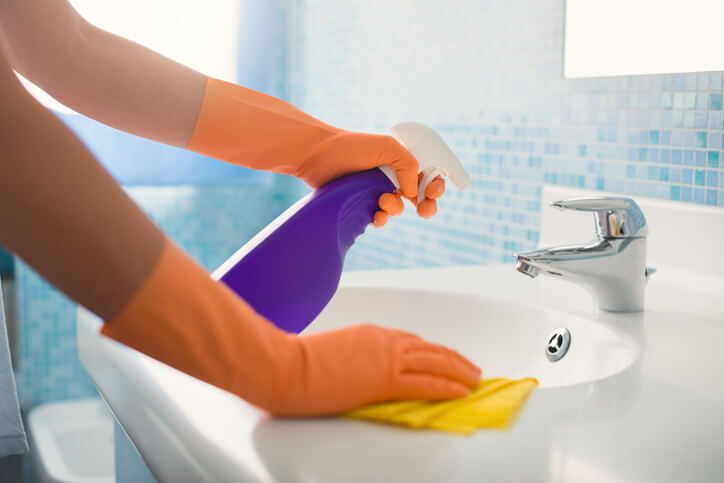
Choose the bathroom you use most. Give it more than the routine wipe-down:
- Clean the toilet.
- Scrub the sink and faucet.
- Clean the mirror.
- Clean the tub or shower.
- Remove buildup where appropriate.
- Wash bath mats according to their care instructions.
- Empty and clean the trash can.
- Vacuum and mop the floor.
Then remove empty bottles and products nobody uses.
For a full bathroom reset, visit our Bathroom Cleaning & Organizing Guide.
10. Check Towels and Bed Linens
January is a useful time to take inventory.
Pull out towels that are badly worn. Check sheets for damage. Match sheet sets if that makes them easier for your household to use.
Keep enough. You don't need seventeen backup bath towels in case the entire neighborhood unexpectedly showers at your house.
Donate usable extras where appropriate and repurpose worn textiles for cleaning when practical.
11. Clean the Places Winter Makes Dirtier
Winter changes where dirt accumulates. Pay attention to:
- Entry floors
- Door mats
- Mudroom areas
- Baseboards near entrances
- Hallways
- Pet areas
- Floors around exterior doors
Rain, mud, road grime, and wet shoes can make these areas dirtier than usual.
A few extra minutes here can keep the mess from traveling through the rest of the house.
12. Check Your Cleaning Supplies
January is a good time for a quick cleaning-cabinet inventory. Remove empty containers and products you no longer use. Check labels and storage requirements.
Make sure basic supplies are available before you need them. But don't turn this into an excuse to buy twelve specialized cleaners.
You probably don't need a separate product for every square foot of your house.
A useful cleaning cabinet contains products you actually use—not a museum of optimistic purchases.
13. Clear One Clutter Hotspot
This is where New Year's enthusiasm becomes dangerous. Do not decide to declutter the entire house.
Choose one place that's annoying you:
- Kitchen counter
- Dining table
- Entryway
- Bathroom counter
- Nightstand
- Desk
- Coat closet
- One drawer
Set a timer for 15 minutes.
Throw away trash. Put obvious keepers where they belong. Donate obvious giveaways.
If you encounter an item requiring an internal debate about identity, family history, and the passage of time, leave it for another project.
Today we're clearing a counter. For bigger projects, use our Decluttering Guide.
14. Deal With the Paper That Arrived During the Holidays
December generates paper. Receipts. Cards. Shipping slips. Catalogs. School papers. Return information. Instruction manuals.
Random pieces of paper whose purpose was apparently known only at the moment they entered the house. Gather it.
Recycle what you don't need. File what needs to be kept. Act on anything requiring action. Pay particular attention to receipts for items you might need to return before return windows close.
A pile of paper becomes considerably less intimidating once you remove everything that never needed to be saved.
15. Restart Your Normal Cleaning Routine
This is the most important task for January. Don't create a new, elaborate cleaning system just because the calendar changed.
Return to a manageable routine. Kitchen after meals. Quick bathroom upkeep. Laundry before it becomes mountainous.
Regular vacuuming. A short daily pickup. A weekly cleaning session for the jobs that don't need daily attention.
The system that works in February is more valuable than the heroic cleaning plan you abandon on January 19.
For a simple framework, use our Weekly House Cleaning Checklist.
Your Quick January Cleaning Checklist
Save this version:
- Put away holiday decorations
- Find homes for new gifts
- Reset the entryway
- Clean out the refrigerator
- Reset the pantry
- Clean the kitchen
- Vacuum upholstery
- Wash blankets and throws
- Deep-clean one bathroom
- Check towels and linens
- Clean winter dirt from entry areas
- Check cleaning supplies
- Clear one clutter hotspot
- Deal with accumulated paperwork
- Restart your regular cleaning routine
If You Only Have One Hour
Don't try to complete the whole list. Use your hour like this:
15 minutes: Remove holiday clutter and put obvious things away.
15 minutes: Clean out the refrigerator.
15 minutes: Reset the kitchen counters and sink.
15 minutes: Clear your home's most annoying clutter hotspot.
That's an hour. And your house will probably feel noticeably better.
What Should You Clean in January?
If you only tackle five January cleaning jobs, prioritize:
- Remove holiday clutter and decorations.
- Clean the refrigerator and pantry.
- Reset the kitchen.
- Deep-clean the most-used bathroom.
- Clear one visible clutter hotspot.
These jobs give you the biggest visual and practical reset without turning January into National Clean Your House Month.
Which, thankfully, is not a thing.
Don't Organize What You Should Declutter
January is prime season for buying bins.
Bins are seductive. They suggest that if you purchase enough attractive containers, your possessions will suddenly become manageable.
Sometimes containers are useful. But if a closet is overflowing with things you don't use, twelve new bins don't solve the problem. They simply make the excess stackable.
Before buying storage, ask:
Do I need to organize this—or do I need less of it?
Remove first. Organize second. Buy storage only when you know what you actually need to store.
Skip the New Year's Cleaning Marathon
You may feel highly motivated on January 2. Wonderful.
Don't use that enthusiasm to empty four closets onto the floor at once. Start small enough to finish.
One drawer. One shelf. One countertop. One bathroom. One bag of donations.
Completed projects create momentum. Half-finished projects create a house that looks substantially worse than when you began.
January Is a Reset, Not a Reinvention
Your home doesn't know it's a new year. It doesn't require resolutions.
It needs the decorations put away, the refrigerator cleaned out, the new stuff given homes, and the ordinary routines restarted.
That's your January reset. Not perfection. Not minimalism. Not an elaborate system requiring labels, matching containers, and a three-hour tutorial.
Just less leftover clutter, cleaner high-use spaces, and a home that works again after December.
That's a perfectly respectable way to start the year.
Keep Going
For a manageable weekly routine, visit our Weekly House Cleaning Checklist.
For help clearing excess belongings instead of simply reorganizing them, visit our Decluttering Guide.
For room-by-room kitchen help, visit our Kitchen Cleaning & Organizing Guide.
For bathroom cleaning and organization, visit our Bathroom Cleaning & Organizing Guide.
- Clean Home
- Home Maintenance
- January House Cleaning Checklist