Fireplace Safety & Maintenance Tips for a Cozy, Safe Winter
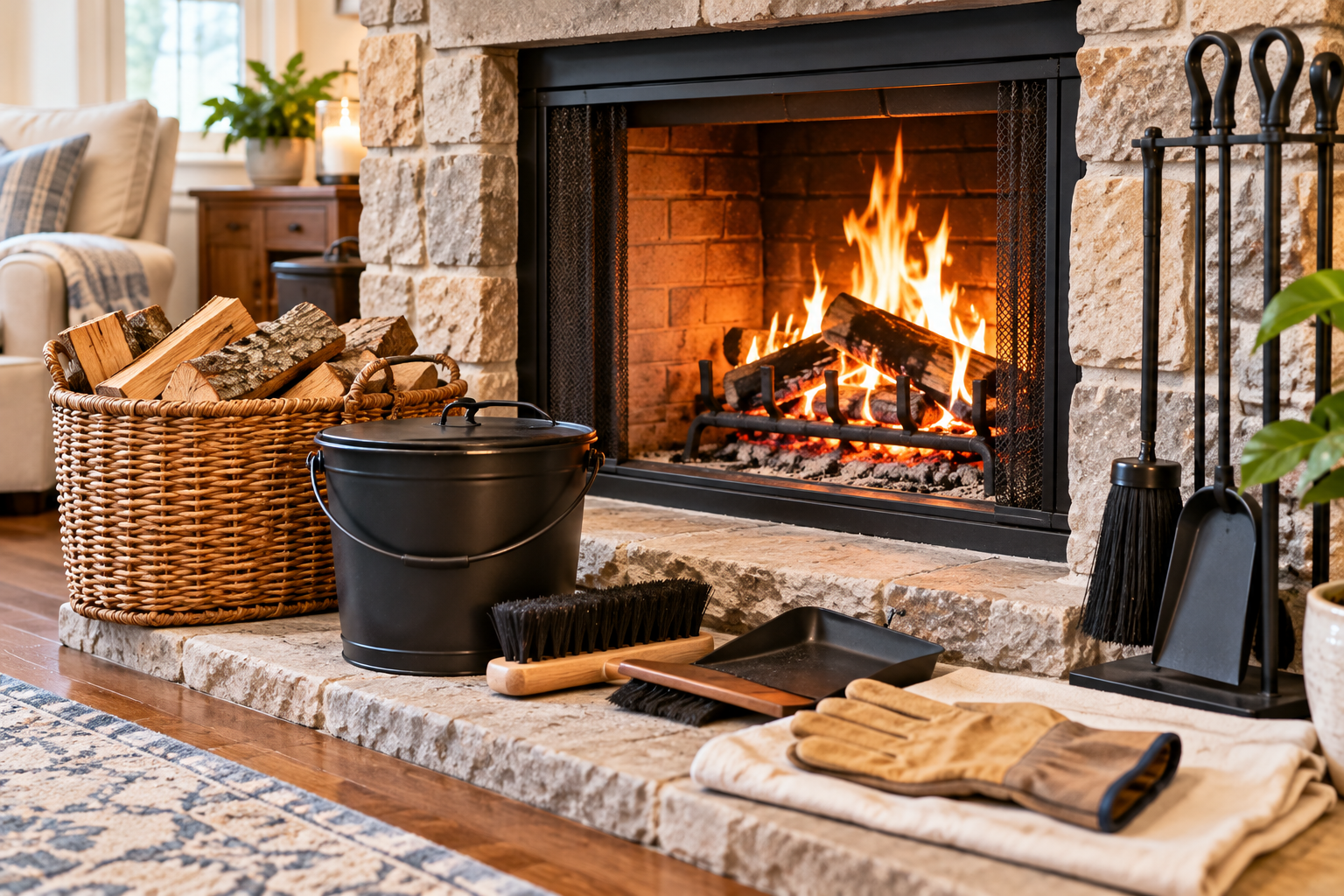
A fireplace is one of those home features that looks wonderfully low-maintenance. Put in wood. Light fire. Enjoy cozy evening. What could possibly be complicated?
Quite a bit, as it turns out. Ash builds up. Soot collects. Chimneys need attention. Dampers need to work. And anything whose basic job description includes containing fire inside your house deserves a little respect.
The good news: fireplace safety and maintenance don’t have to become another enormous home project. A few simple habits keep the fire safe, the hearth cleaner, and tell you when it’s time to call a chimney professional.
The goal is not to become a chimney expert. The goal is to enjoy the fireplace without wondering whether something alarming is happening somewhere above the mantel.
What are the most important fireplace safety tips? Have the chimney inspected every year. Burn only dry, seasoned wood, a few logs at a time. Open the damper before lighting and keep it open until the fire is completely out. Use a screen, and keep anything that can burn at least 3 feet away. Never leave a fire unattended. Put cold ashes in a covered metal can outside, at least 10 feet from the house, and keep your smoke and carbon monoxide alarms working.
Part 1: Fireplace Safety Every Time You Light a Fire
1. Burn Dry, Seasoned Wood
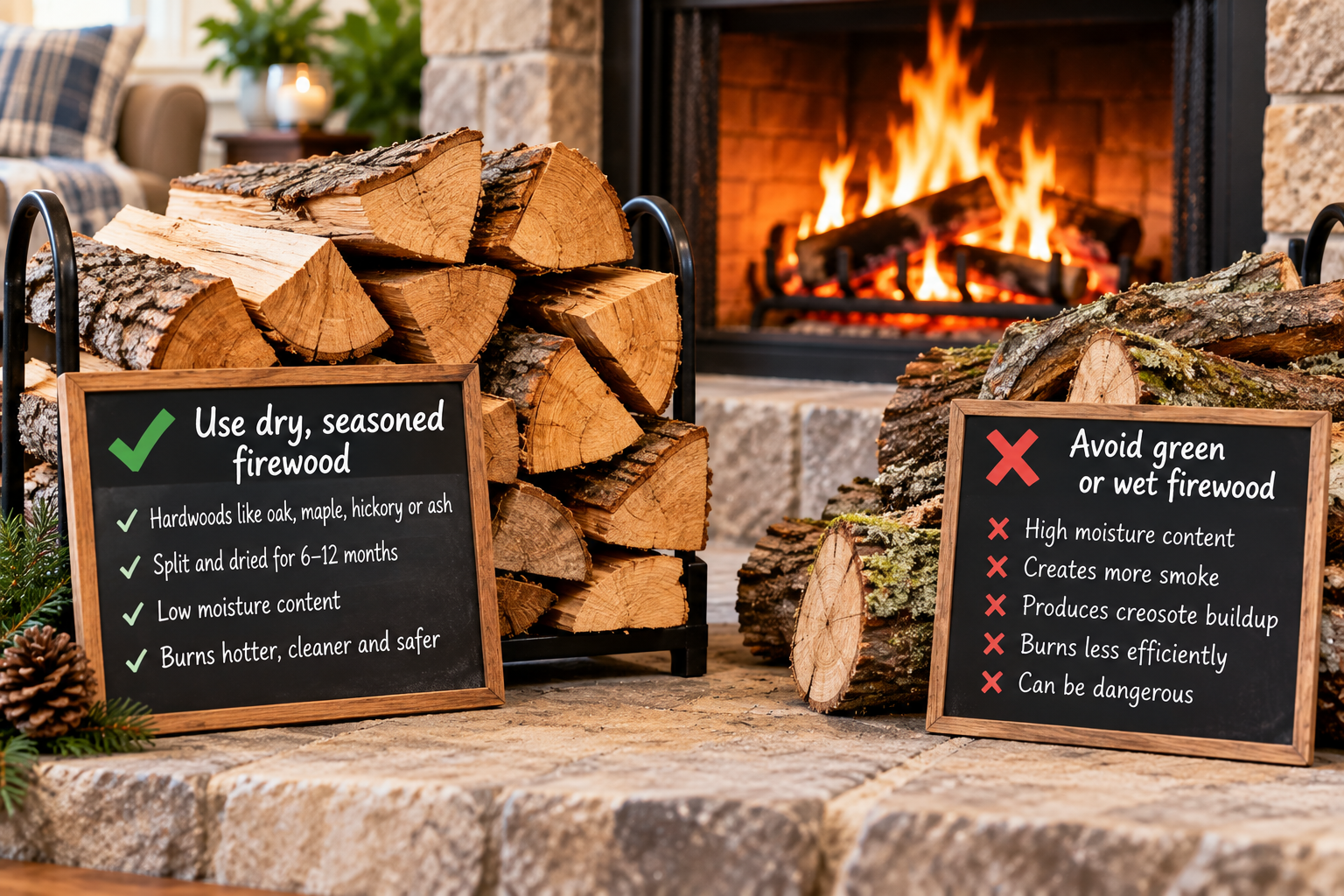
Wet or green wood smokes, sizzles, and leaves behind creosote, the sticky, flammable residue that causes chimney fires. Dry wood burns cleaner and hotter.
• Seasoned means dry: split, stacked and left to dry for at least six months. A moisture meter (about $25 at the hardware store) should read 20% or less.
• Signs it’s ready: the ends are dark and cracked, the wood feels light for its size, and two pieces knocked together make a hollow clunk instead of a thud.
• Store it outside, off the ground and covered on top, and well away from the house. Bring in only what you’ll burn that night. Firewood stacked against the house is a welcome mat for termites.
And you may have heard you should never burn pine because it causes creosote. It’s actually moisture, not the type of wood, that causes creosote. Dry pine is fine.
Using manufactured logs? Logs like Duraflame burn cleaner than natural wood, but they also burn hotter. Burn one at a time, follow the directions on the package, and don’t poke or break them up while they’re burning. Slow and easy does it.
2. Burn Only Simple Stuff
Don’t use the fireplace as a convenient disposal system. Never burn:
• Trash or plastic
• Painted or pressure-treated wood
• Glossy wrapping paper, shiny bows or foam peanuts (they release toxic fumes)
• Christmas trees, wreaths or evergreen boughs (they flare up fast and throw sparks)
• Big wads of newspaper or cardboard, which can flare up and get out of control quickly
Your fireplace is not a vertical garbage disposal. Give it wood. Give your trash can everything else. For what to do with the holiday greenery instead, see keeping holiday greenery fresh.
3. Open the Damper First, and Leave It Open
Open the damper before you light the fire, and keep it open until the fire is completely out and the ashes are cold. That can mean the next morning.
Closing the damper while embers are still smoldering can send smoke and carbon monoxide back into the room. Once the fireplace is truly cold, close it to keep warm air from escaping up the chimney.
Check that the damper moves freely before the season starts. Discovering a damper problem after the room begins filling with smoke is a less charming method of diagnosis.
4. Keep the Fire Small
A roaring fire looks great, but it’s less safe than a slower, steadier burn. A too-hot fire puts extra stress on the firebox and chimney and can crack the flue liner.
Burn two or three logs at a time. Set them toward the back of the firebox, on the grate, so sparks and ashes stay in the fireplace. You are trying to warm the room. You are not signaling passing aircraft.
5. Use a Screen, and Open the Glass Doors
A sturdy fireplace screen keeps sparks and embers where they belong. Use it whenever you have an open wood fire. One determined spark can travel considerably farther than seems reasonable.
Check that the screen is stable, undamaged, and big enough to cover the whole opening. And remember that it heats up too. Metal mesh is a great conductor of heat, which is exactly what you don’t want little (or big) fingers poking through.
If you have glass doors, keep them open while the fire is burning, with the screen in place. Glass doors are meant to keep drafts out when you’re not using the fireplace, and the glass can crack or shatter in high heat. Close them once the fire dies down to keep the warm air in.
6. Keep the Area Around the Fireplace Clear
Keep anything that can burn at least 3 feet from the fireplace. That includes:
• Newspapers and magazines
• Baskets and blankets
• Toys
• Firewood piled too close
• Furniture
• Holiday décor, including the Christmas tree
Don’t light a fire if garland is draped across the mantel or stockings and cards are hanging from it. Hang the stockings after the fire’s out.
A basket of blankets beside the fireplace may look wonderfully cozy in a photograph. Fire is less interested in your decorating concept. Give the fireplace breathing room.
7. Draw a Line Around the Fire (Literally)
Before you so much as pick up a poker, set a clear no-go zone of about 3 feet around the fireplace for kids and pets.
Some families mark it with a rug edge or a strip of painter’s tape on the floor, which gives small children a visible line and gives you something to point at when you say, “What did we say about the tape?” for the eleventh time that evening.
Here’s what catches people off guard: a fire doesn’t have to be roaring to be dangerous. Stone, brick and tile hearths soak up heat and release it for hours. That’s lovely for your living room and less lovely for the knees of a baby crawling across it.
8. Never Leave a Fire Unattended
For safety’s sake, never leave a fire burning when you leave the house. And yes, this means you shouldn’t go to bed with a fire blazing away. Let it burn down, spread out the embers so they cool, and make sure the screen is closed before you head upstairs.
9. Watch the Smoke

Smoke belongs up the chimney. This is one of the easier fireplace rules to remember.
If smoke puffs into the room when you first light the fire, the chimney may need warming up. Light a rolled-up sheet of newspaper and hold it up near the open damper for a minute to get the draft going. In a very tight, energy-efficient house, cracking a nearby window can also help the fire draw.
But if smoke keeps coming into the room, don’t simply open a window and decide your fireplace has personality. It can mean a blockage, a damper problem, or a chimney problem. Stop using the fireplace until you know what’s wrong. A fireplace shouldn’t require the living room to participate in the combustion process.
Part 2: Fireplace Cleaning and Maintenance
10. Clean Out Ashes Safely
A wood-burning fireplace naturally produces ash. You don’t have to remove every speck after every fire. In fact, a 1-inch bed of ash under the grate helps the next fire light and burn. But don’t let it pile up past the bottom of the grate.
Before cleaning, make sure everything is completely cold. Not mostly cold. Not “the fire went out last night.” Completely cold. Hot embers can hide under ash that looks cold and stay hot for days.
Fireplace ashes are very good at looking innocent. Don’t believe them too quickly.
How to get rid of fireplace ashes:
1. Scoop the cold ashes with a fireplace shovel into a metal can with a tight-fitting metal lid.
2. Take the can outside and set it on a non-flammable surface like concrete or dirt, at least 10 feet from the house, the deck and anything else that can burn.
3. Leave the ashes there for a few days before dumping them in the trash.
Never put fireplace ashes in paper bags, cardboard boxes, plastic trash cans, compostable bags, or the garage. Take your time. Ash has an extraordinary ability to become airborne the moment you become impatient.
11. Clean the Firebox Without Creating an Indoor Dust Storm
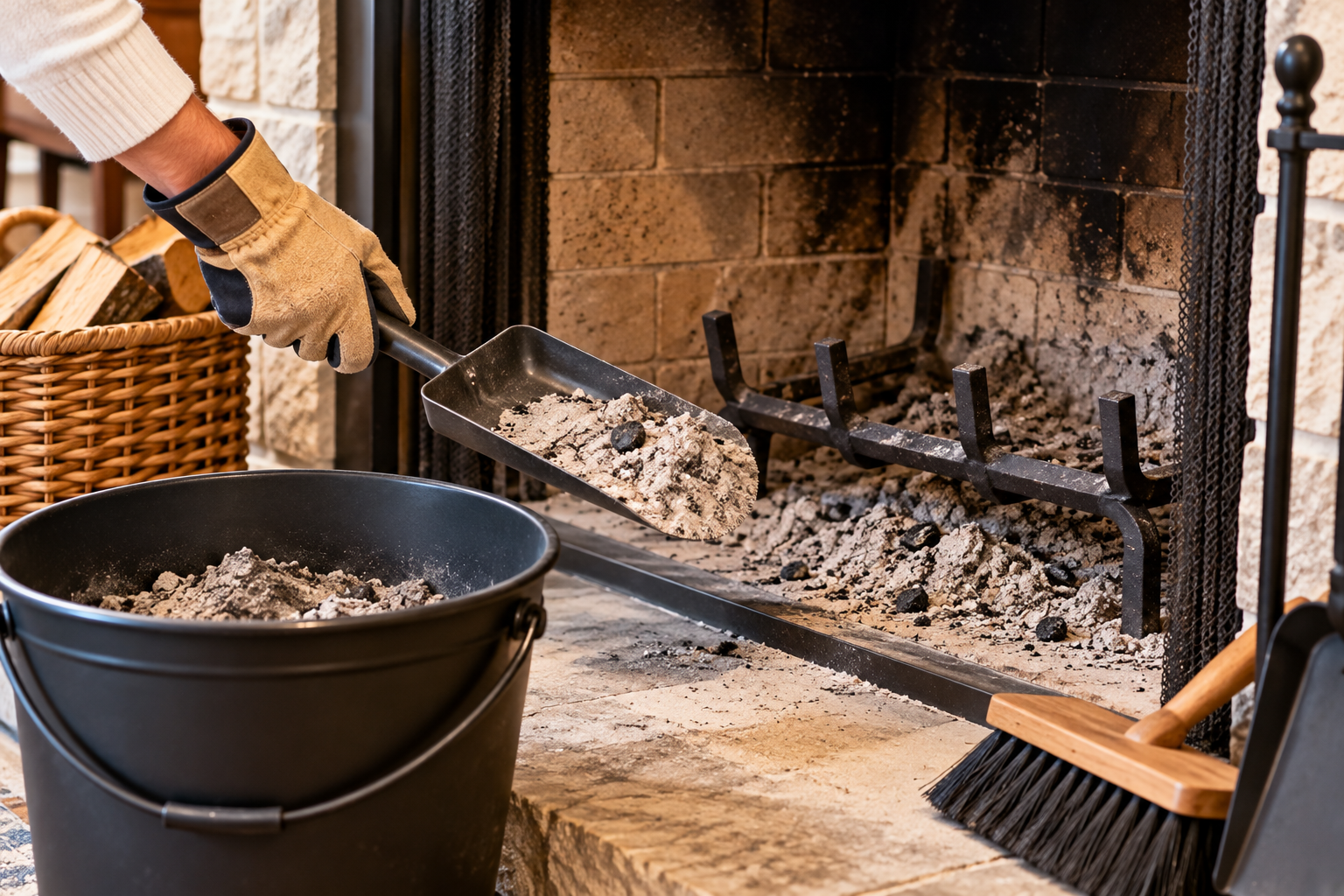
Once the ashes are out, sweep the loose debris from the firebox with a fireplace brush, or use an ash vacuum made for the job. Don’t use your regular household vacuum. Fine ash clogs the filter, blows right back out into the room, and any hidden ember can start a fire inside the canister.
Your goal was to clean the fireplace. Not distribute the fireplace throughout the living room.
For sooty brick or stone around the opening, scrub with a stiff brush and a solution of warm water and dish soap, then rinse. Wipe glass doors with a fireplace glass cleaner once they’re cool.
12. Have the Chimney Inspected Every Year
A fireplace can look perfectly fine from your living room while something entirely different is happening farther up the chimney. The National Fire Protection Association recommends having chimneys, fireplaces and vents inspected once a year by a qualified professional. Look for a sweep certified by the Chimney Safety Institute of America (CSIA).
An inspection can find:
• Creosote buildup
• Blockages and animal nests
• A damaged flue liner
• Deteriorating masonry
• A missing or broken chimney cap
• Water getting in
The chimney needs cleaning whenever creosote builds up to about 1/8 inch, which your sweep can check. For a fireplace you use a lot, that’s often every year. An inspection tells you what your chimney needs, which is considerably more useful than guessing.
If creosote builds up in the flue, it can ignite suddenly and cause a chimney fire. Signs of a chimney fire include a loud roaring or popping sound, dense smoke, and an intense hot smell. Get everyone out and call 911.
13. Don’t Turn Chimney Maintenance Into a Ladder Adventure
You can handle plenty of fireplace maintenance from the ground. Climbing onto the roof is another matter. Leave anything that needs roof access, special equipment or chimney know-how to a pro. A fireplace project should not end with:
“Well, the chimney looks fine, but now we need to discuss the ankle.”
Professional help is cheaper than many emergency-room visits. What you can do from the ground: look up at the chimney with binoculars for missing bricks, leaning, a missing cap, or loose flashing where the chimney meets the roof.
14. Watch for Water
Water and masonry do not have the healthiest long-term relationship. Look for:
• Damp spots or staining around the fireplace
• Water inside the firebox
• White, chalky stains on the brick
• Peeling paint or wallpaper nearby
• Musty smells
A chimney cap, sound flashing, and solid masonry keep water out. If you see signs of moisture, have the cause checked. A bucket in the fireplace is not a maintenance plan.
15. Check for Animals
Birds, squirrels and raccoons occasionally decide a chimney looks like excellent real estate. Before fireplace season, listen for scratching or chirping, and look for nesting material, debris or odd smells.
Don’t light a fire to encourage an animal to leave. Call a chimney sweep or a wildlife removal service, then have a chimney cap with mesh sides installed to keep the next tenant out. Nothing improves a family evening less than discovering you’ve accidentally involved wildlife.
16. Keep Smoke and Carbon Monoxide Alarms Working
Having a fireplace is one more excellent reason to get friendly with your smoke and carbon monoxide alarms. Smoke is the obvious risk. Carbon monoxide is the sneaky one. It’s colorless, odorless, and can build up from a blocked chimney or a poorly drafting fire without giving you a single clue. Your nose won’t catch it. Your alarm will.
• Test them once a month. Press the test button, wince at the noise, and move on with your life. It takes about ten seconds, which is a fantastic return on investment.
• Replace them on time. Smoke alarms need replacing about every 10 years. Carbon monoxide alarms usually last 5 to 7 years. The date is printed on the back.
• Have a CO alarm on every level of the house, and outside the sleeping areas.
Don’t disable an alarm because it keeps going off. We’ve all been there: the toast gets a little too toasty, the fireplace puffs a bit of smoke on startup, and suddenly you’re on a step stool yanking out the battery.
Resist the urge. The alarm is annoying you professionally. That’s its job. Let it do it.
17. Keep a Fire Extinguisher Handy
Stash a fire extinguisher near the fireplace, just in case. Get an easy-to-handle 2- to 5-pound multipurpose model labeled “ABC,” which works on most household fires, like this one from First Alert. Check the gauge once a month; the needle should be in the green.
What About Gas Fireplaces?
Gas fireplaces don’t produce ash or much creosote, but that doesn’t make them maintenance-free.
• Have them serviced once a year by a qualified gas fireplace technician, ideally before the season starts.
• Clean the glass with a gas fireplace glass cleaner once it’s completely cool.
• Keep kids away from the glass. It can get hot enough to cause serious burns and stays hot long after the flame is off. A safety screen in front helps.
Call a technician if you notice trouble lighting, a gas smell, soot where it shouldn’t be, a yellow or lazy flame instead of a crisp blue one, damaged glass, unusual sounds, or a pilot light that won’t stay lit. If you smell gas, leave the house and call the gas company from outside.
Don’t take apart gas components or attempt repairs yourself. Gas and improvisation are not a good household pairing.
What About Electric Fireplaces?
Electric fireplaces are the simplest to maintain. Vacuum the vents and air intakes now and then, check the cord and plug for damage, and plug the unit directly into a wall outlet, not an extension cord or power strip. Keep anything that can burn away from the heat vents.
And don’t assume that because there isn’t a real flame, you can drape the family laundry over it. A heater is still a heater.
Your Fireplace Season Checklist
WhenBefore the first fire Every fire During the season After the last fire |
What to doGet the chimney inspected (and cleaned if needed); check the damper, screen and doors; test smoke and CO alarms; check for animals; clear the hearth; stock seasoned wood Open the damper; screen in place; 3 feet clear; a few logs at a time; never leave it unattended Remove cold ashes to a metal can outside; watch for smoke, odors and water; test alarms monthly Remove the last cold ashes; clean the hearth, firebox and tools; close the damper; write down any repairs and schedule them |
Book the chimney sweep before the first cold night. Fireplace professionals tend to become considerably more popular once everyone suddenly remembers winter exists.
And at the end of the season, don’t wait until next December to rediscover the problem you noticed in March. Write it down. Better yet, deal with it. Future You has enough going on.
When to Stop Using the Fireplace and Call a Pro
Stop using the fireplace and have it checked if you notice:
• Smoke coming into the room again and again
• Cracked, loose or crumbling masonry
• Strong or unusual odors
• Water getting in
• Signs of a blockage or animals
• A damper that doesn’t work
• Heavy soot or creosote
• Any trouble with a gas fireplace
You don’t need to figure out the exact technical problem before calling someone. “I don’t think this is working correctly” is enough.
There is no homeowner merit badge for personally repairing everything attached to your house. Sometimes good maintenance means knowing who to call.
Fireplace Safety and Maintenance FAQ
How often should a chimney be cleaned?
Have it inspected once a year, and cleaned whenever creosote builds up to about 1/8 inch. For a fireplace you use regularly, that usually means a cleaning every year.
How do I safely dispose of fireplace ashes?
Wait until they’re completely cold, scoop them into a metal can with a tight metal lid, and set it outside on concrete or dirt at least 10 feet from the house. Leave them a few days before throwing them away. Ashes can hold hot embers for days.
Should the damper be open or closed?
Open before you light the fire and the whole time it’s burning, until the fire is completely out and the ashes are cold. Then close it to keep warm air from escaping.
Should fireplace glass doors be open or closed during a fire?
Open, with the mesh screen in place, while the fire is burning. Close them as the fire dies down to keep heat in and drafts out. For gas fireplaces and inserts, follow the manual.
What should you never burn in a fireplace?
Trash, plastic, painted or treated wood, glossy wrapping paper, bows, foam packing peanuts, Christmas trees and wreaths, and large amounts of paper or cardboard.
Can I leave a fire burning overnight?
No. Let it burn down completely before bed, spread out the embers, and make sure the screen is closed. Never leave a fire unattended.
Is it safe to burn pine?
Yes, if it’s well seasoned. Creosote comes from burning wet wood of any kind, not from pine itself.
Keep Going
Get the house ready for cold weather with these related guides:
• Preventative Home Maintenance Checklist: Monthly-to-yearly checks that keep the whole house safe.
• How to Winterize Your Home: Keep the cold out and the heating bill down.
• Household Cleaning Schedule: When to clean the fireplace, and everything else.
• Easy Fall Cleaning Checklist: Get the house ready for cooler weather.
• 10 Fall Organizing Tips: Organize the house for the indoor season.
• November Cleaning Checklist: Holiday prep, plus the fall jobs that can’t wait.
• Easy Christmas Organizing Ideas: Holiday décor without the chaos.
• Safe at Home: More ways to keep your family safe at home.
For more, visit our Home Maintenance Guide.
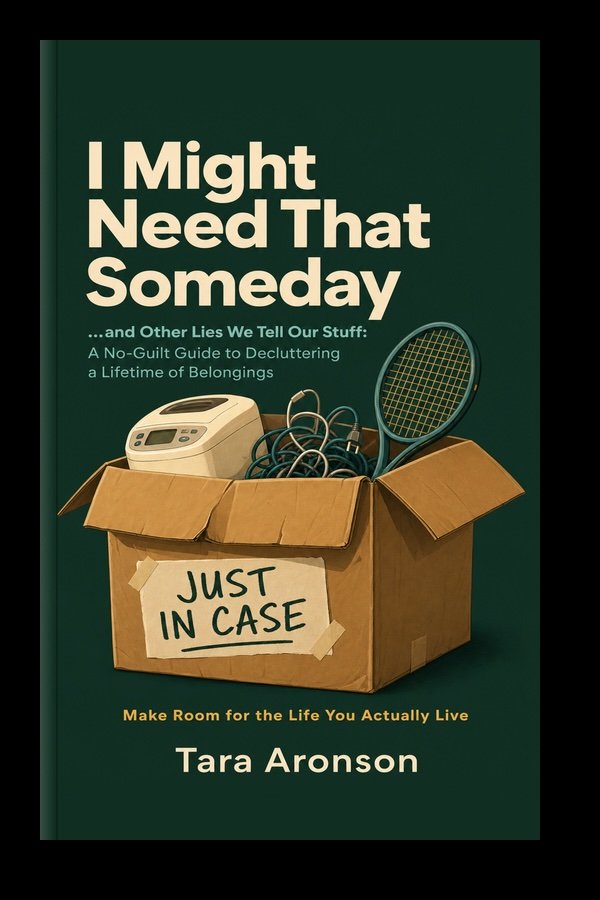
Too Much Stuff? Not Enough Space? Clear the clutter, let go of the guilt, and reclaim your home, one room at a time. Discover I Might Need That Someday by Tara Aronson.
As an Amazon Associate, I earn from qualifying purchases.
- Clean Home
- Safe at Home
- Fireplace Maintenance Tips
Free 15-Minute Daily Reset Checklist
Get Notes on Keeping House
Fifteen minutes a day. No weekend cleaning marathons. No guilt. Sign up for my newsletter and I'll send you the printable checklist that makes it happen.
Send My ChecklistNo spam, ever. Unsubscribe anytime.
Free Printable
Notes on Keeping House
Sign up and get my 15-Minute Daily Reset Checklist. One timer, five zones, and a house that stays under control.
Send My ChecklistNo spam, ever. Just smart, funny tips for keeping house from Tara Aronson.