How to Keep Holiday Greenery Fresh (Wreaths, Centerpieces and Branches)

A fresh wreath on the door. Cedar and pinecones down the dining table. A big jug of fir branches in the entry that makes the whole house smell like a ski lodge. Fresh greenery is the best part of holiday decorating.
It's also on a deadline. Cut greenery starts drying out the minute it's cut, and a warm house speeds that up. Here's how to keep wreaths, centerpieces and branches green through the holidays. And how to keep them away from the dog, the candles and the mashed potatoes.
Hanging garland on the mantel, stair rail or front porch? That has its own guide: How to Keep Christmas Garland Fresh.
Buy It Fresh, Buy It Late, Keep It Cold
Everything on this page works better if you start with greenery that was cut recently.
• Bend a needle. Fresh needles bend. Dry ones snap.
• Give it a gentle shake. A few needles drop. A shower means no.
• Check the cut ends of loose branches. They should look pale and moist, not gray and dried out.
• Buy it the first week of December for decorations you want to last through Christmas.
Get it home and park it somewhere cold and shady (the garage, a covered porch) until you're ready to use it. Loose branches go straight into a bucket of water.
Pick Greenery That Lasts
Some greenery is a marathon runner. Some is a sprinter.
• Long-lasting: noble fir, Fraser fir, boxwood, magnolia leaves, juniper, holly
• Medium: cedar and cypress. They smell wonderful and dry out sooner indoors.
• Short-lived indoors: spruce and white pine. Use them outside.
• Dries beautifully: eucalyptus and magnolia still look good after they dry, which is the next best thing to staying fresh.
Before you choose anything, read the pet section below. A few of the prettiest choices are on the ASPCA's toxic list.
How to Keep a Fresh Wreath Fresh
1. Soak it before you hang it. Lay a plain evergreen wreath face down in a tub of cool water for a few hours, or overnight, then let it drip dry. Skip this for wreaths with ribbon, dried flowers, glued-on decorations or built-in lights.
2. Spray an outdoor wreath with an anti-desiccant like Wilt-Pruf. Spray it outside, after the soak, and let it dry before you hang it.
3. Hang it outside if you can. A wreath on a cold front door can stay green for four to six weeks. A wreath in a heated living room gets about two to three weeks.
4. Watch out for the storm door. A wreath trapped between a glass storm door and a sunny front door is sitting in a little greenhouse, and it bakes. Hang it on the outside of the storm door, or skip fresh on that door.
5. Protect the paint. Use an over-the-door hanger with a felt pad, or a ribbon hung from a hook at the top. No nails.
6. Mist an outdoor wreath on dry, sunny days. Indoors, keep it away from heat vents, fireplaces and sunny windows.
How to Keep Evergreen Branches Fresh in a Vase
A tall vase of branches is the easiest fresh greenery there is, and the longest-lasting, because the stems can actually drink.
1. Recut the stems. Take an inch off each one at an angle with sharp pruners.
2. Split woody stems. Cut a slit an inch or two up from the bottom of each thick stem so it can take in more water.
3. Strip everything below the water line. Submerged needles rot and turn the water swampy.
4. Fill the vase with room-temperature water right away.
5. Top it up every day. Evergreen branches are thirsty the first few days, more than you'd think. Change the water completely every three or four days.
Done right, branches in water stay fresh for two to three weeks.
How to Keep a Holiday Centerpiece Fresh

The dining table is a hard place for greenery. You've got hot serving dishes, candles, and guests reaching across for the rolls.
• Give the stems water. Build the centerpiece in a low container with soaked floral foam or water, not on a bare runner. Greenery lying flat on the table dries out in about a week.
• Put something waterproof underneath. A plastic liner, a tray or a charger. Water rings on the dining table are forever.
• Keep it low. Under about 12 inches, so people can see each other across the table.
• Keep it away from food. More on that below.
• Use flameless candles in the arrangement. Keep real candles at least 12 inches from anything that can burn, and never inside the greenery.
• Swap out tired pieces. Pull the brown sprigs and tuck in fresh ones from the back of the garage bucket. Nobody needs to know that three branches were quietly dismissed on December 19.
How to Use Floral Foam (or Skip It)
Floral foam is the green block florists push stems into. It holds water and keeps stems in place. It works, if you soak it the right way.
• Float it, don't push it. Set the block on top of a sink full of water and let it sink on its own, about a minute. Pushing it under traps dry pockets in the middle, and stems in those spots die first.
• Add water to the container every day. Once foam dries out, it doesn't fully soak water back up.
• Cut stems at an angle and push them in once. If you pull a stem out and push it back in, it leaves an air pocket.
The greener option: floral foam is plastic, it doesn't break down, and it crumbles into microplastics. A ball of crumpled chicken wire in a bowl, a metal flower frog, or a vase of water works just as well for most arrangements. Plus you can reuse them next year.
Keep It Cool, Shady and Away From Flames
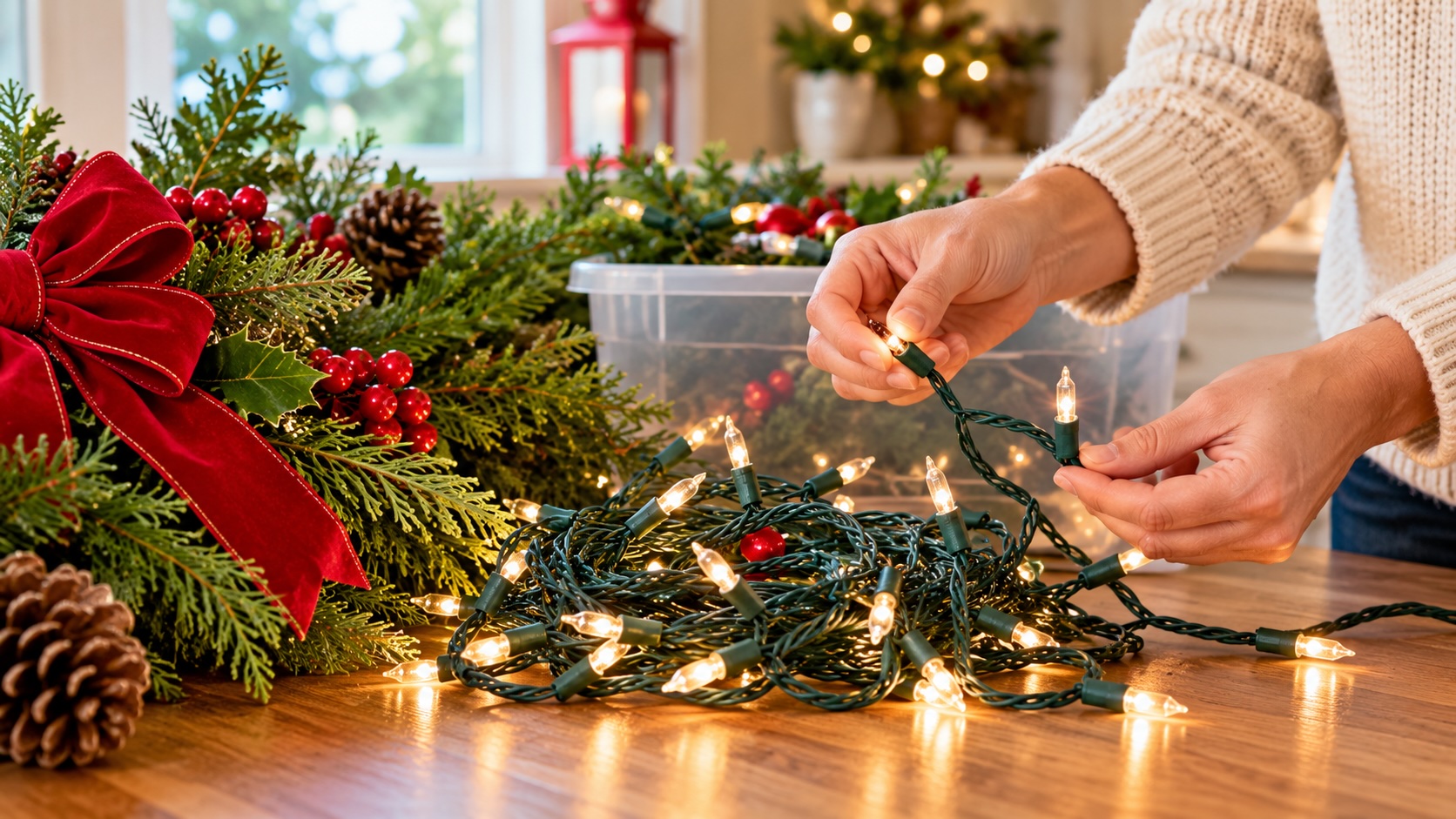
This applies to every piece of greenery in the house:
• At least 3 feet from heat sources. That's the National Fire Protection Association's guideline for fireplaces, radiators, space heaters, heat vents and candles.
• Out of direct sun. A sunny window dries greenery out fast.
• No real candles in or near greenery. December is the peak month for home candle fires. Flameless candles look just as good on the table.
• Lights: LEDs only, checked for frayed wires and cracked sockets before they go in. Don't mist anything with lights plugged in.
Keep Greenery Away From Pets and Small Children

Pretty doesn't mean safe. Several popular holiday greens are toxic to pets, according to the ASPCA:
• Holly (leaves and berries) and mistletoe: vomiting and diarrhea, and worse with mistletoe in large amounts
• Yew: toxic to pets and people. It sometimes turns up in mixed greenery. Leave it out.
• Boxwood and eucalyptus: toxic to dogs and cats
• Lilies, which often turn up in florist holiday arrangements: dangerous to cats. Even pollen or the vase water can cause kidney failure. If you have a cat, no lilies. Period.
• Amaryllis: toxic to pets
• Pine and fir: mildly toxic. The oils irritate the mouth and stomach, and the needles are sharp going down.
• Poinsettias have a scarier reputation than they deserve. They cause mild mouth and stomach irritation. Keep them out of reach anyway.
Toddlers are a choking risk as much as a poisoning one: berries, florist wire, little pinecones, glued-on decorations. Keep centerpieces toward the middle of the table and wreaths up high.
If a pet eats something, call the ASPCA Animal Poison Control Center at 888-426-4435. For a child, call Poison Control at 1-800-222-1222.
Keep Greenery Out of the Food
Your mashed potatoes don't need landscaping. Keep greenery off plates and platters, and out of the cheese board, unless you know exactly what it is and that it's food-safe. Florist greenery is often sprayed or treated, and berries, sap, glitter and artificial snow don't belong anywhere near the stuffing.
Want greenery on the plates? Use food-safe herbs: rosemary, sage and thyme look festive, smell great, and won't hurt anybody who nibbles them, dog included.
Can You Revive Dried-Out Greenery?
Sometimes. If the needles still bend, soak a wreath in cool water for several hours, or recut branch stems and put them in fresh water. Limp greenery often bounces back.
If the needles snap, it's done. Brittle greenery is a fire hazard, not a project. Take it down, especially if it's near lights, candles or a heat source. And don't burn it in the fireplace. Dry evergreens flare up fast and throw sparks. It goes in the yard-waste bin or the compost.
Frequently Asked Questions
How do you keep a fresh wreath from drying out?
Soak it face down in cool water for a few hours before hanging, spray an outdoor wreath with an anti-desiccant, and hang it somewhere cool and shady. That means outside, but not between a storm door and a sunny front door. Mist it on dry days.
Should you put evergreen branches in water?
Yes. Branches in a vase of water last longer than any other fresh greenery. Recut the stems, split the woody ones, strip off anything below the water line, and top up the water every day.
Is floral foam bad for the environment?
Yes. It's a plastic that doesn't break down and it sheds microplastics. Chicken wire, a flower frog or a plain vase of water does the job for most holiday arrangements, and you can reuse them.
What holiday greenery is toxic to cats and dogs?
Holly, mistletoe, yew, boxwood, eucalyptus and amaryllis are all toxic to pets, and lilies are dangerous to cats. Pine, fir and poinsettias are mildly irritating. Keep all of it out of reach, and call the ASPCA Animal Poison Control Center at 888-426-4435 if your pet eats any.
Can you use real greenery on a food platter?
Only herbs you'd eat: rosemary, sage and thyme. Keep florist greenery, berries and anything sprayed or glittered off plates and platters.
The Short Version
1. Buy it fresh, buy it late, keep it cold until you use it.
2. Give it water: soak wreaths, put branches in a vase, and keep centerpiece foam wet.
3. Keep it 3 feet from heat and away from real candles.
4. Know what's toxic if you have pets or toddlers. No lilies with cats.
5. Take it down when it's crispy. It had a good run. Let it go.
Keep Going
The greenery's handled. Keep the rest of December running smoothly with these related guides:
• How to Keep Christmas Garland Fresh: Mantel, stair rail, front door and porch garland that stays green, and how to hang it without wrecking the paint.
• Elegant Christmas Decorating Ideas: Pretty, put-together holiday decorating that doesn't take over your whole December.
• Holiday Safety Tips for Entertaining: Candles, cords, kitchen fires and guests on the stairs, handled before the party starts.
• Green Holiday Entertaining Tips: Eco-friendly hosting, from the centerpiece to the leftovers.
• Holiday Entertaining With Kids: How to host a holiday crowd when half the guests are under four feet tall.
• Easy Christmas Holiday Tips: Do less, enjoy more, and stop treating December like a competition.
• Holiday Home Cleaning Hacks: Fast fixes for a guest-ready house, needles on the floor included.
• After-Holiday Green Cleaning: Wreaths down, needles up, and the house back to normal without harsh chemicals.
- Clean Home
- Backyard & Garden
- Keep Holiday Greenery Fresh