After-Holiday Cleaning: Get Your House Back Without the Waste
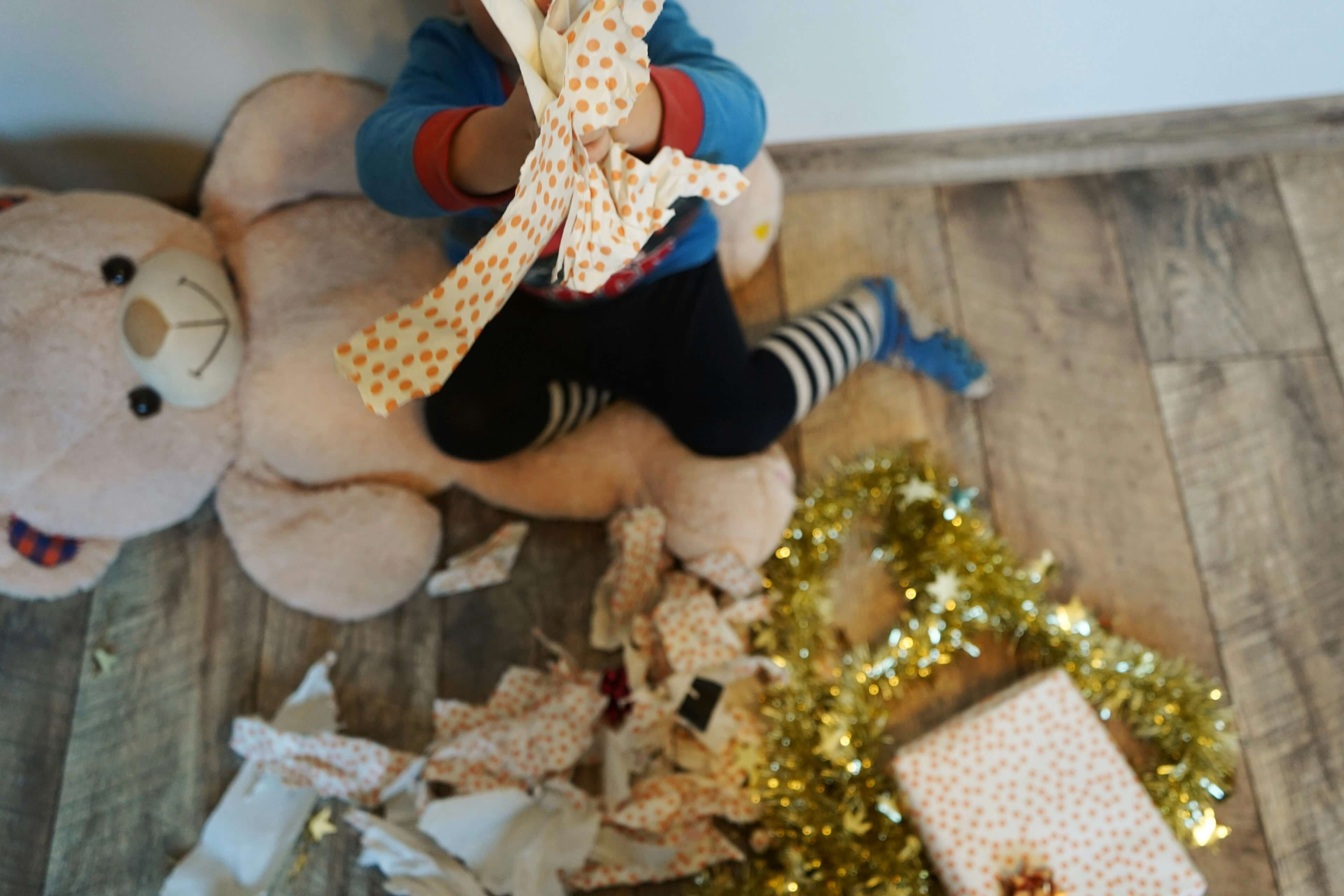
The holidays are over. The guests have gone home. The leftovers are becoming increasingly theoretical.
And your house looks as though it hosted a small but enthusiastic convention.
Welcome to the after-holiday cleanup.
This is not the moment for an elaborate deep clean. You've just survived the holidays.
We're going to get the house back to normal without using twelve cleaning products, throwing everything into garbage bags or deciding that January 2 is the perfect day to reorganize your entire life.
The goal is simpler:
Remove the holiday stuff. Deal with the mess. Waste less. Clean what actually needs cleaning. Get your house back.
Here's where to start.
1. Don't Start Cleaning Yet
First, remove the obvious holiday clutter.
Grab a few containers or bags and make quick categories:
Put away
Decorations and holiday items you want to keep.
Donate
Usable things you no longer want.
Recycle
Materials your local recycling program accepts.
Trash
Things that genuinely can't be reused, donated, or recycled.
Belongs somewhere else
The serving platter in the living room. The child's shoe under the dining table. The phone charger your guest left behind.
Don't stop to organize everything perfectly. You're clearing the field. It's much easier to vacuum the living room when the living room
2. Take Down Decorations With Next Year in Mind
After the holidays, the temptation is to take everything down as quickly as possible and throw it into boxes.
This works beautifully. Until next December. Instead, take a few extra minutes to sort as you go.
Discard decorations that are genuinely broken and can't be repaired. Donate usable decorations you no longer want.
Untangle lights before storing them. Group similar decorations together. Label containers clearly.
And don't save something solely because it is a Christmas decoration. Holiday clutter is still clutter. The plastic snowman does not receive diplomatic immunity.
3. Deal With the Tree

If you have an artificial tree, follow its instructions for disassembly and storage. Remove decorations first, of course. Yes, this needs saying.
Store the tree somewhere clean and dry, using its original container or another suitable storage solution.
For a real tree, check your local community's tree recycling or collection program. Most communities offer seasonal Christmas-tree recycling, composting, chipping, or designated pickup.
Remove:
- Ornaments
- Lights
- Tinsel
- Hooks
- Stands
- Other nonorganic decorations
before recycling the tree.
Don't assume a tree belongs in your ordinary recycling bin. Local programs differ.
And before carrying the tree through the house, consider putting down an old sheet or tree-removal bag to contain needles. Otherwise, you'll still be finding them in March.
4. Vacuum the Holiday Debris
Once you're done with decorations and the tree, vacuum. Concentrate on the places where holiday debris collects:
- Around the tree
- Beneath furniture
- Along baseboards
- Under the dining table
- Entryways
- Guest areas
- Sofa cushions
If you had a real tree, vacuum needles according to your vacuum manufacturer's recommendations. Larger quantities may be easier to sweep or gather first rather than asking your vacuum cleaner to consume an entire forest.
Also look for:
- Glitter
- Confetti
- Ribbon
- Ornament hooks
- Small decoration pieces
Glitter requires special mention. You will not remove all of it. Nobody has ever removed all of it. Accept this and continue.
5. Reset the Living Room
Holiday entertaining tends to rearrange living rooms. Chairs migrate. Tables move. Blankets multiply. Serving dishes appear. Decorations take over surfaces that once served another purpose.
Put the room back into its normal configuration. Then:
- Dust exposed surfaces
- Vacuum upholstery
- Fluff and replace cushions
- Fold blankets
- Clean obvious fingerprints
- Vacuum or mop the floor
Don't automatically deep-clean everything. If the sofa isn't dirty, it doesn't need a shampoo because December happened. Cleaning only what needs cleaning is also a form of green cleaning.
6. Rescue the Kitchen
Holiday kitchens work hard. Start with the refrigerator. Remove:
- Spoiled food
- Leftovers nobody is going to eat
- Empty containers
- Expired items you discovered during the festivities
But don't automatically throw out food merely because you're tired of looking at it. Freeze appropriate leftovers. Plan a leftover meal. Repurpose ingredients safely. Food waste is still waste.
Then wipe refrigerator spills and shelves as needed. Move on to:
- Counters
- Backsplash
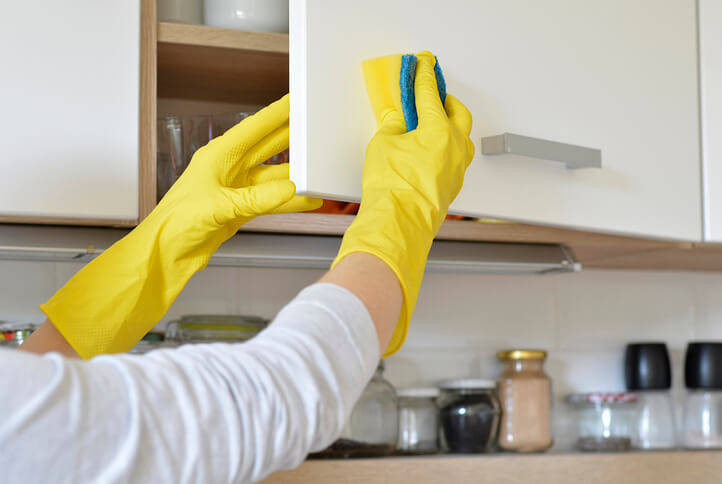
- Cabinet fronts
- Sink
- Stovetop
- Microwave
- Small appliances used during the holidays
Again, don't manufacture work. The toaster does not require a spiritual rebirth. It needs the crumbs removed.
7. Give the Oven an Honest Assessment
Open the oven door. Look inside. If it made it through the holidays reasonably clean, close the door and walk away. Congratulations, you win.
If something in there looks like it detonated, fine, it's time to clean. Start with your oven's manufacturer instructions.
They're dull, but they know things you don't, like whether your oven has a self-clean cycle or a coating that the wrong scrubber will wreck.
Two rules while you're at it:
Don't grab the strongest product on the shelf. Stronger isn't smarter. It's just a faster way to damage the oven, or your lungs.
Don't assume a homemade mixture is safe because the ingredients came from your pantry. "Natural" and "right for this surface" are not the same thing.
Use the gentlest method that works and that your oven's manufacturer approves. Save the heavy artillery for when gentle has actually failed.
8. Deal With Holiday Stains Now
The holidays leave evidence. Look around and you'll probably find it on your table linens, napkins, clothing, upholstery, rugs, and carpets.
The usual suspects:
- Wine
- Chocolate
- Grease
- Gravy
- Coffee
- Candle wax
- Makeup
- Food coloring
Before you treat anything, figure out two things: what the stain is and what it's on. A treatment that rescues cotton napkins can ruin a silk blouse, so check the care label first.
If the stain is still wet, blot it. Don't scrub. Rubbing pushes the stain deeper into the fibers and spreads it, turning a small problem into a big one.
And keep stained washables out of the dryer until you've confirmed the stain is gone. Dryer heat can set some stains for good, and you'll have baked the evidence into the fabric.
For more help, visit our Laundry & Stain Cleaning Guide.
9. Wash Holiday Linens Before Storing Them
Don't shove dirty holiday linens into a box for eleven months. Future You will open it next December and will not be amused.
Wash tablecloths, napkins, towels, and other washable seasonal textiles according to their care labels. That embroidered runner may not be machine-safe, no matter how confident you're feeling.
Deal with any stains now. Check that a stain is gone before anything goes near the dryer. Then make sure everything is completely dry. "Mostly dry" doesn't count.
Damp fabric sealed in a container is how you get mildew and that musty smell no holiday spirit can cover.
Store linens somewhere cool and dry, in breathable containers when you can. Sealed plastic traps moisture. Moisture still hasn't agreed to stop causing problems.
10. Clean the Guest Room
If you've had overnight guests, reset the guest room before it quietly becomes storage again. Wash used bedding and towels. Vacuum or clean the floor.
Dust surfaces if needed. Empty trash. Return displaced furniture. Check:
- Under the bed
- Behind doors
- Inside accessible drawers
- Bathroom counters
- Electrical outlets
for forgotten belongings.
If you find a phone charger, congratulations. You now have either a mailing task or a new phone charger. Ethics will guide you from here.
11. Reset the Guest Bathroom
Give the bathroom a straightforward cleaning:
- Sink
- Counter
- Mirror
- Toilet
- Shower or tub
- Floor
Remove empty toiletry containers and guest supplies that are no longer useful.
Wash towels. Refill ordinary household supplies. Then stop. The bathroom does not need to be returned to hotel-opening condition. It just needs to become your bathroom again.
12. Use Up Cleaning Products Before Buying More
“Green cleaning” doesn't require throwing away your existing cleaners and replacing them with an attractive collection of bottles labeled with leaves.
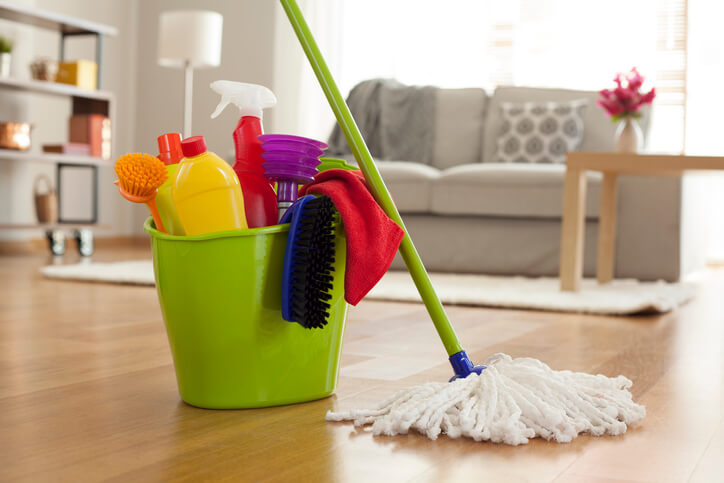
That creates waste. Use appropriate products you already own. Choose the right cleaner for the surface and job.
Measure concentrated products according to directions rather than assuming more cleaner means more clean. It usually doesn't.
In some cases, too much cleaning product leaves residue that creates another cleaning job. A surprisingly sustainable cleaning habit is: To use less stuff.
13. Don't Mix Cleaning Products
Never mix cleaning products unless the manufacturer specifically tells you to. Two combinations are especially bad:
- Chlorine bleach and ammonia
- Chlorine bleach and vinegar (or any other acidic cleaner)
Both can release dangerous gases.
If you're switching products on the same surface, rinse it as the directions call for, and don't apply the second product until the first is gone.
You don't need a homemade potion to clean a house. One product, used as directed, will do the job. The bubbles are not applause. They're a warning.
14. Use Reusable Cleaning Tools Where Practical
For ordinary cleaning, reusable tools can reduce waste. Consider using:
- Washable microfiber cloths
- Reusable rags
- Washable mop pads
- Reusable dusters
- Durable brushes
That doesn't mean disposable products are forbidden.
Disposable materials are useful or appropriate in some situations. The goal isn't environmental purity. It's reducing unnecessary waste when it's practical.
Old cotton T-shirts can also become cleaning rags. Not the sentimental concert shirt. Choose carefully.
15. Recycle Holiday Packaging
The recycling symbol is not a magical permission slip. Local recycling rules vary. Before tossing holiday packaging into the recycling bin, check your local program.
Depending on local rules, recyclable materials may include the following:
- Cardboard boxes
- Paper
- Paper gift bags
- Shipping materials
- Containers
But materials such as these may cause problems in some recycling systems:
- Plastic film
- Foil wrapping
- Glittered paper
- Laminated wrapping paper
- Ribbons
- Bows
- Certain padded envelopes
- Mixed-material packaging
Don't “wish-cycle”—putting something into recycling because you hope it's recyclable. When in doubt, check locally.
The recycling center does not award points for optimism.
16. Save What You'll Actually Reuse
You can save:
- Gift bags
- Tissue paper
- Boxes
- Ribbon
- Bows
- Shipping materials
If they're in good condition and you're genuinely likely to reuse them. The last part matters. Saving reusable items can reduce waste.
Saving forty-seven crushed bows in a grocery bag because throwing them away feels environmentally irresponsible is how clutter acquires moral authority.
Keep a reasonable amount. Give it a defined storage space. When that space is full, stop.
17. Break Down the Boxes
Online shopping has left behind its traditional holiday monument: The Cardboard Range.
Break down boxes you're recycling. Remove packing materials according to local recycling rules. Keep only boxes you have a specific, near-term reason to reuse.
Not: “This is a really good box.”
Every household contains someone who says this. Sometimes that person is us. A box without a purpose is still something you're storing.
18. Create a Post-Holiday Donation Box
The holidays bring new things into the house. That makes this a good time to let some old things leave.
You might donate usable:
- Clothing
- Toys
- Books
- Kitchenware
- Linens
- Decorations
- Small household items
This doesn't have to become a major decluttering project. Use a simple principle: New thing in, obvious old thing out.
Got a new coat? Do you still need all the old coats? New toys? Have the children outgrown any toys? New kitchen appliance? Is an older appliance now doing nothing except taking up space in a cabinet?
You don't need a perfect one-in-one-out system. Just use the moment.
19. Be Careful With Unwanted Gifts
You can appreciate the person without keeping the object forever. If a gift doesn't fit your life, consider:
- Returning it
- Exchanging it
- Donating it
- Regifting it appropriately
Don't put it in a closet solely because someone gave it to you. That turns generosity into storage.
Keep the gifts you genuinely want and use. Let the rest continue being useful somewhere else. No ceremonial guilt period required.
20. Take Care of the Floors Last
After you've removed decorations, broken down boxes, carried out recycling, moved furniture, and cleaned the kitchen, then do the floors.
Vacuum carpets and rugs. Sweep or vacuum hard floors. Mop using the appropriate method for the flooring material.
Don't assume one cleaning solution is safe for:
- Hardwood
- Laminate
- Vinyl
- Tile
- Natural stone
Check manufacturer recommendations where necessary. Cleaning from high to low and finishing with floors saves you from cleaning the same area repeatedly.
Which is greener in the most practical possible sense: You're not doing the job twice.
The 30-Minute After-Holiday Reset
If the house looks like December exploded and you don't know where to begin, don't tackle the entire list.
Set a timer.
First 10 minutes: Holiday stuff
Gather decorations, wrapping materials, and obvious holiday clutter.
Next 5 minutes: Trash and recycling
Collect what clearly needs to leave.
Next 5 minutes: Kitchen
Clear counters and deal with obvious leftovers.
Next 5 minutes: Living room
Return furniture, pillows, and everyday objects to their normal places.
Final 5 minutes: Floors
Vacuum the highest-traffic area.
Stop. You've broken the back of the mess. The rest can happen tomorrow.
The One-Hour Post-Holiday Cleanup
Have a little more time? Try this:
15 minutes: Remove and sort holiday decorations.
10 minutes: Deal with boxes, wrapping, and recycling.
15 minutes: Reset the kitchen and refrigerator.
10 minutes: Clean the living room and guest areas.
10 minutes: Vacuum and mop high-traffic floors.
One hour. No complete household overhaul. No January breakdown.
Your After-Holiday Cleaning Checklist
Here's the condensed version:
- Gather holiday decorations
- Donate unwanted usable decorations
- Store decorations by category
- Recycle or dispose of the tree appropriately
- Vacuum needles, glitter, and holiday debris
- Reset the living room
- Clean out holiday leftovers
- Wipe the refrigerator
- Clean kitchen surfaces
- Check the oven
- Treat holiday stains
- Wash holiday linens
- Reset guest bedrooms
- Clean guest bathrooms
- Use cleaning products you already have
- Never mix cleaning products
- Use reusable cleaning tools where practical
- Sort recycling according to local rules
- Save only wrapping materials you'll reuse
- Break down shipping boxes
- Start a donation box
- Return or donate unwanted gifts
- Vacuum carpets
- Clean hard floors
- Put ordinary household items back where they belong
What Makes This a Greener Cleanup?
You don't need a cabinet full of special “green” products. A lower-waste post-holiday cleanup is mostly about using less and wasting less.
That means:
Use what you already have.
Choose the least aggressive product that will safely do the job.
Use reusable cleaning tools when practical.
Don't waste usable food.
Donate usable belongings.
Reuse wrapping materials you'll genuinely use.
Recycle according to local rules.
Avoid buying storage containers for things you don't need.
And don't use six products when one appropriate product will do.
Green cleaning doesn't have to become another complicated household system.
Sometimes it's simply:
Buy less. Waste less. Use less. Clean smarter.
Start January With Less, Not More
There's something satisfying about taking down the holiday decorations. The house suddenly feels bigger. Quieter. Normal. You can see the furniture again.
Take advantage of that moment.
Don't immediately fill the cleared surfaces. Don't buy twelve organizing bins because it's January.
Don't turn the post-holiday cleanup into a punishment for everything your household did in December.
Put away what you're keeping. Let go of what you're not. Clean the areas that need it. Recycle what can actually be recycled.
Then enjoy the space. The holidays were supposed to leave you with memories.
They do not also need to leave you with six boxes of bows and a refrigerator full of unidentified dip.
Keep Going
Ready for a fresh start? Use the January Cleaning Checklist for the next stage of your household reset.
If the holidays left behind more stuff than dirt, move on to the Decluttering Guide.
For more ways to clean with fewer unnecessary products, visit Green Cleaning & Saving.
And for your regular cleaning system, start with the Cleaning Guide.
- Clean Home
- Green Clean & Save
- After Holiday Green Cleaning
- Clean Home
- Green Clean & Save
- After Holiday Green Cleaning