Have an Organized New Year: 7 Resolutions That Stick

Want to have an organized New Year without making another list of resolutions you’ll abandon by February?
These seven practical organizing resolutions can help you simplify your home, your schedule and your everyday life, one manageable step at a time. I can hear you now. More New Year’s resolutions? I never keep them! Why should I even bother? Fair question.
After the holidays, most of us are surrounded by new gifts, leftover decorations, overstuffed closets, and credit card statements we’d rather not open. Our homes, nerves and bank accounts have all been through the wringer.
But there’s something appealing about a fresh calendar. It’s a chance to look around, figure out what’s working (and what definitely isn’t), and make a few changes.
You don’t have to reinvent yourself. You don’t have to organize your entire house before January 31. And you certainly don’t need to buy a garage full of matching storage bins.
How do you get organized for the New Year? Start small and in this order: declutter before you organize, label what you keep (including holiday decorations), set a weekly cleaning schedule, simplify the family calendar, organize your spending, leave time for yourself, and do a quick monthly check-in instead of aiming for perfection.
These seven resolutions build on one another, helping you create a more organized home and a less frantic family life. Best of all, you can start whenever you’re ready. January is optional.
1. Downsize Before You Organize
The first step toward an organized New Year is getting rid of things you no longer need. I was reminded of this while looking at the mountain of Christmas gifts that had arrived at our house.
New bathrobes, slippers, gadgets and clothes were waiting to be put away. But where? The closets were already full. That’s when my old rule came in handy: when something new comes into the house, something else needs to go.
I’ve sometimes challenged my family to let go of three items for every new one. It’s an effective way to get everyone thinking about how much stuff we own. But don’t get hung up on the numbers.
A one-in, one-out rule may be more realistic for your household. The important thing is to make room for what you use and love. Start with these easy decluttering jobs:
- Holiday decorations: Go through them before you pack them away, and donate the usable ones you no longer want.
- Closets: Pull outgrown clothing, uncomfortable shoes and anything nobody wears.
- Bathroom drawers: Toss mascara older than three months, sunscreen past its expiration date (or more than three years old if it isn’t dated), and anything that has separated, changed color or smells off.
- Old medications: Take expired and unused medicines to a pharmacy drop-off kiosk or a National Prescription Drug Take Back Day event instead of throwing them in the trash.
- Kitchen: Clear out duplicate utensils and gadgets. Nobody needs four garlic presses.
- Kids’ stuff: Gather the books, games and toys your family has outgrown.
And about that collection of tiny hotel shampoo bottles you’ve been saving for the last decade? If they’re old or leaking, toss them. If they’re unopened, homeless and domestic violence shelters often take them. Call first to check.
You don’t have to empty every closet in one weekend. Start with one drawer, one shelf or one small trouble spot. For a more complete approach, see my guide on how to declutter your home.
2. Divide, Conquer, and Label Everything That Needs a Label
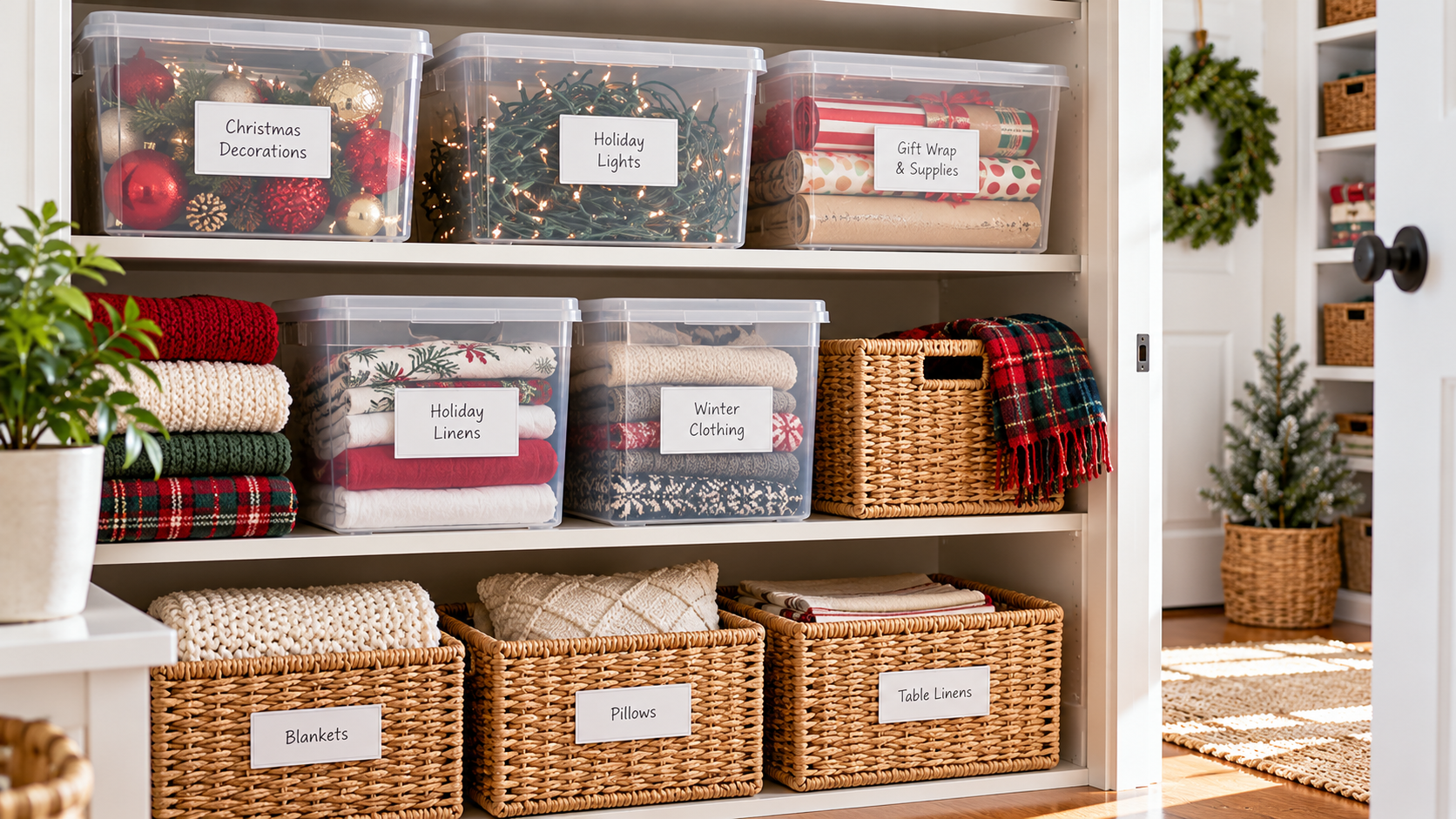
Once you’ve downsized, organizing gets much easier. Now you can find a home for the things you’ve decided to keep. Group similar items together and store them where you use them. Keep everyday cleaning supplies near the areas where you need them.
Store the hazardous ones (drain cleaner, oven cleaner, bleach) in their original containers, up high or behind a cabinet lock, out of reach of kids and pets. Give kitchen utensils designated spots in the drawers, so everyone knows where the spatula lives.
Make Holiday Storage Easier Next Year
As you take down the Christmas decorations, group them by category:
- Christmas ornaments
- Holiday lights
- Gift-wrapping supplies
- Seasonal table decorations
- Holiday clothing and accessories
Label each storage box with its contents. I like numbering boxes within a category. A label such as “Christmas Ornaments — Box 1 of 3” makes it easy to tell whether you’ve found everything the following year.
A few storage tips:
- Lights: Test them before packing and toss the strands that don’t work. Wrap the rest around a piece of cardboard so they don’t tangle.
- Fragile ornaments: Store them in egg cartons, sectioned ornament boxes, or wrapped in tissue paper.
- Candles, photos and delicate decorations: Keep them out of the attic and garage, where summer heat can melt and warp them. A closet shelf or the space under a bed works better.
For more ideas, see our easy Christmas organizing ideas. Then apply the same method to closets, drawers and other storage areas throughout your home. Remember: organize what you’ve decided to keep. Don’t buy more containers just to hide things you don’t need.
3. Create a Realistic House Cleaning Schedule
Want a neater, cleaner home in the new year? Put cleaning on the calendar.
Decluttering and organizing make cleaning easier because you can actually reach the surfaces that need attention. But without a plan, housecleaning can turn into a frustrating game of bouncing from one unfinished task to another.
I call this ricochet cleaning. You start with a broom and dustpan, ready to sweep the kitchen. Then you notice the cat dishes need washing. You take them to the sink and decide to put them in the dishwasher.
Except the dishwasher is full of clean dishes. So you start unloading it. An hour later, you’re still in the kitchen, and the broom is exactly where you left it.
Sound familiar? The solution is to give each chore a day in your weekly routine:
DayMonday Tuesday Wednesday Thursday Friday Saturday Sunday |
Main Household TaskLaundry Bathrooms Dusting and surfaces Kitchen cleaning Floors Catch-up or deeper cleaning Plan for the week ahead |
Adjust the schedule to fit your household, work hours, and energy level. Some families prefer doing a little each day. Others find it easier to handle several chores together. Either approach can work.
Clean One Room at a Time
When cleaning the living room, for example, begin by collecting items that don't belong there. Set them in a basket to return to their proper rooms. Then dust, vacuum, and clean the surfaces. Finish by putting the room back together.
That way, you aren't constantly wandering around the house putting away one stray item at a time. And you might actually finish cleaning the living room before dinner.
4. Simplify Your Family Schedule
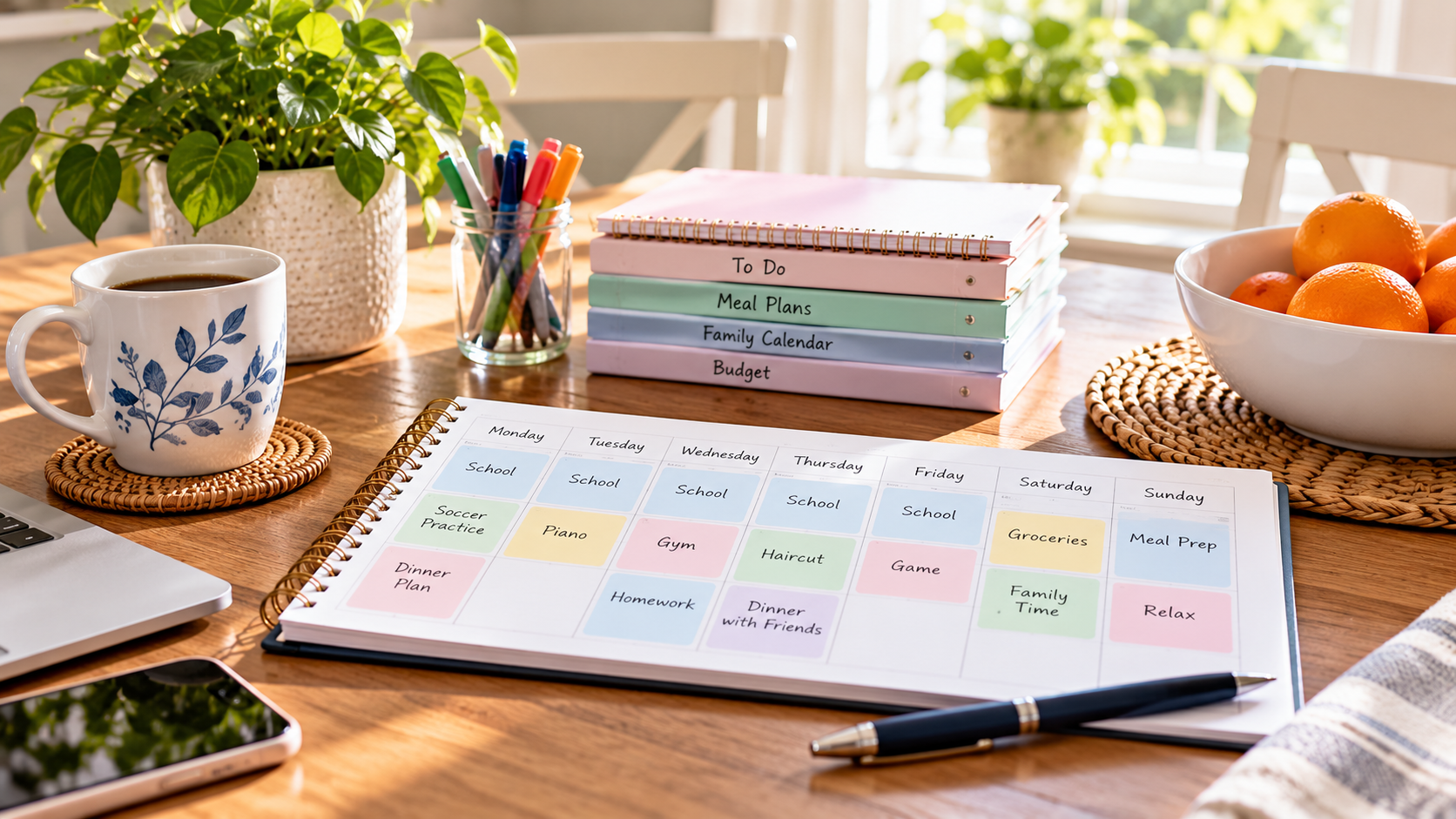
An organized New Year isn't just about closets and cupboards. It's also about time. Families can become so busy that every afternoon feels like a race between school, sports, appointments, activities, and errands. Breakfast is a mad dash.
Dinner becomes an endangered species. Homework stretches late into the evening. And somewhere in all that activity, everyone is supposed to find time to relax. If your family calendar looks like an airline departure board, it may be time to simplify.
Decide What Matters Most
Look at each family member's activities and commitments. Which ones are enjoyable and worthwhile? Which have become obligations nobody particularly wants?
And which are making the family schedule harder than it needs to be?
You may find that limiting extracurricular activities during especially busy seasons gives everyone more breathing room. There's no magic number that works for every family. The goal is to leave enough time for schoolwork, meals, sleep, household responsibilities, and simply being together.
Learn to Say No
This applies to parents, too. It's easy to agree to one more volunteer commitment, committee meeting, or neighborhood project. But your time is limited. Choose the commitments that matter most and give yourself permission to decline the rest. Practice saying, "I'd love to help, but I can't take that on right now."
No lengthy explanation required.
Make Errands More Efficient
Look at the trips your family makes regularly. Can you combine grocery shopping with an existing outing? Pick up a prescription while you're already near the pharmacy Handle a few errands on the way home from an appointment?
Grouping nearby errands can save time and unnecessary driving. Just be realistic about what you can accomplish without turning every outing into another exhausting checklist. Sometimes the most useful thing you can do during a child's practice is sit down with a book. Found time counts, too.
5. Organize Your Finances and Spending
Getting organized can also help you take control of household spending. Start by looking at what comes into your household and where the money goes.
Divide expenses into three broad categories:
|
Category Fixed expenses Variable necessities Discretionary spending |
Expenses Rent or mortgage, insurance, loan payments Groceries, utilities, gas and transportation Entertainment, restaurant meals, hobbies, subscriptions, nonessential purchases |
Some fixed expenses can be renegotiated or changed over time, so don’t assume every recurring bill is untouchable. Once a year, get a competing quote on car and home insurance, and call your phone and internet providers to ask about a cheaper plan.
Hunt down forgotten subscriptions. Go through your last two or three bank and credit card statements and highlight every recurring charge. Streaming services, apps and memberships you forgot about add up fast. Cancel what you don’t use, then set realistic spending targets for the rest.
Include the Kids
Older kids can learn a lot by helping plan part of the family entertainment budget. Explain that choosing one activity may mean postponing another. If your child gets an allowance, talk about saving for bigger purchases and deciding how much to spend now. These are skills that carry into adulthood.
And there’s something remarkable about how carefully children consider the price of a new game when they’re spending their own money. Go figure.
6. Make Time to Take Care of Yourself
Here's an organizing resolution that's easy to overlook: Leave some room in your schedule for yourself. A cleaner home and a better-managed calendar should make everyday life more manageable.
But the goal isn't to fill every newly available minute with another chore. Make time for the things that help you feel rested and refreshed. That might mean taking a walk, reading a book, spending time with friends, enjoying a hobby, or relaxing in a warm bath.
It doesn't have to be expensive or elaborate. And it shouldn't be the first thing you cancel whenever life gets busy.
If you're organizing your home and schedule so everyone else has what they need, remember that you're part of the household, too.
7. Keep Your New Year’s Organizing Resolutions Realistic
Here’s the most important resolution of all: don’t expect perfection.
You might have a beautifully organized kitchen in January and find yourself dealing with a cluttered counter again in March. That doesn’t mean your organizing efforts failed.
It means people live in your house. New belongings arrive. Schedules change. Children grow. Life happens.
The trick is to build systems that are easy to keep up and flexible enough to change with your family’s needs.
Try a Monthly Organizing Check-In
Once a month, spend a few minutes asking:
- What’s working well in our home?
- Where is clutter starting to collect again?
- Are our storage systems still practical?
- Is our family schedule manageable?
- What one small improvement would make life easier this month?
Choose one thing to work on. Maybe it’s the kitchen junk drawer. Maybe it’s the mountain of paperwork on your desk. Maybe it’s finally admitting that your family doesn’t need six different reusable water bottles per person. Whatever it is, start there.
For month-by-month ideas, start with our January Cleaning Checklist.
An organized home isn’t something you finish once and never think about again. It’s something you maintain through small, sensible habits.
Ready to Get Your Whole Home Organized?
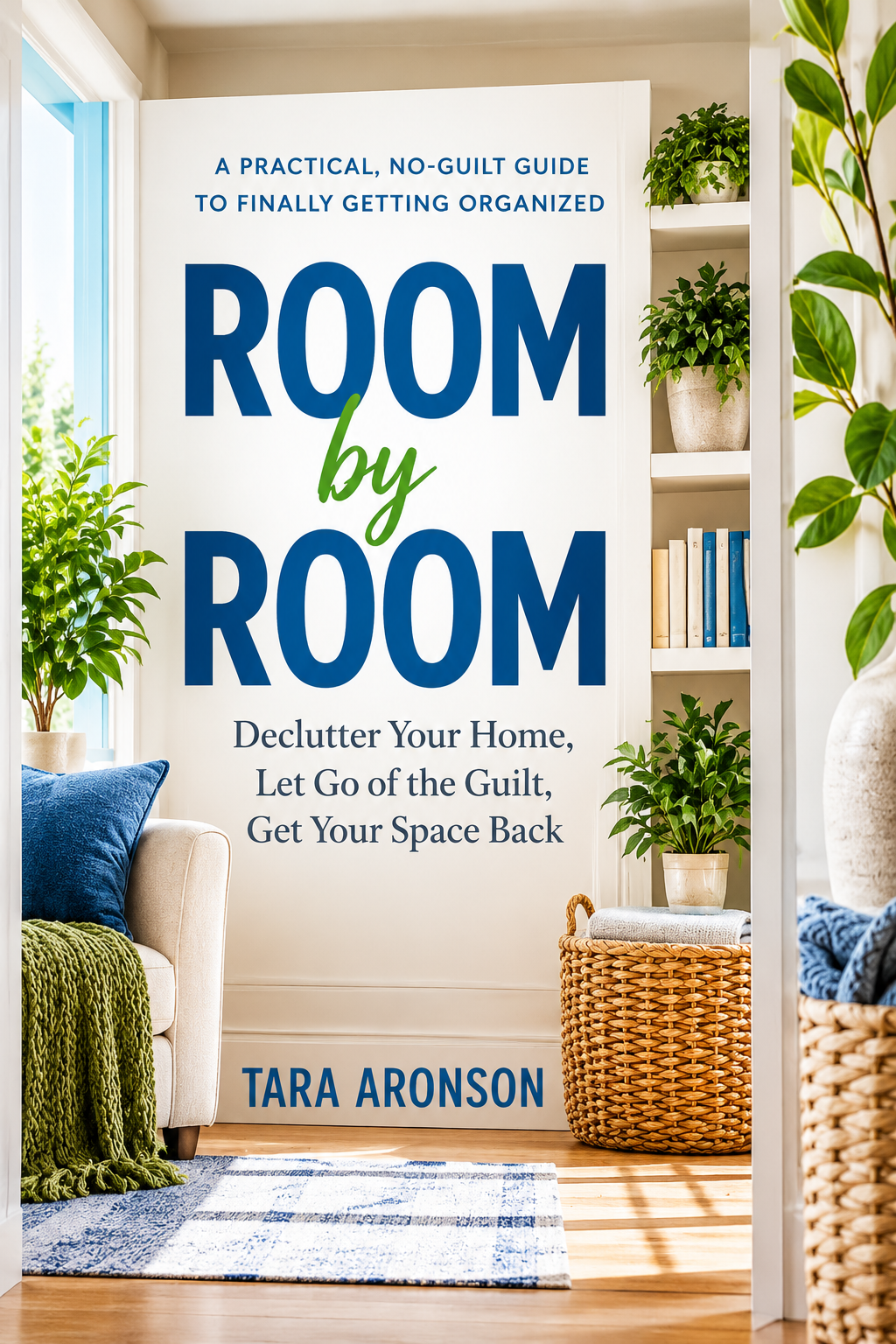
If one of your New Year’s goals is to finally tackle the clutter throughout your house, my book Room by Room: Declutter Your Home, Let Go of the Guilt, Get Your Space Back can help you get started. It takes a practical approach to decluttering one space at a time, without extreme minimalism or overwhelming weekend cleanouts.
Organized New Year FAQ
What are good organizing resolutions for the New Year?
Declutter before you organize, label what you keep, follow a weekly cleaning schedule, simplify the family calendar, track spending and cancel unused subscriptions, make time for yourself, and do a monthly check-in so the systems keep working.
Where should I start organizing after the holidays?
Start with the holiday decorations, since they’re already out. Declutter as you pack them, label each box, and store fragile items somewhere that doesn’t get hot. Then move on to the closet that has to fit all the new gifts.
How do I keep a New Year’s organizing resolution?
Keep it small and specific (one drawer, one closet, one schedule change), attach it to a day of the week, and check in once a month. Expect some backsliding. That’s normal, not failure.
What’s the best way to store Christmas decorations?
Sort by category, label and number each box, wrap lights around cardboard so they don’t tangle, protect fragile ornaments in egg cartons or sectioned boxes, and keep candles and photos out of the attic and garage.
How do I stop ricochet cleaning?
Clean one room at a time and give each chore its own day. Carry a basket for things that belong somewhere else and put them away at the end instead of running back and forth.
Keep Going
Keep your fresh-start momentum going with these related guides:
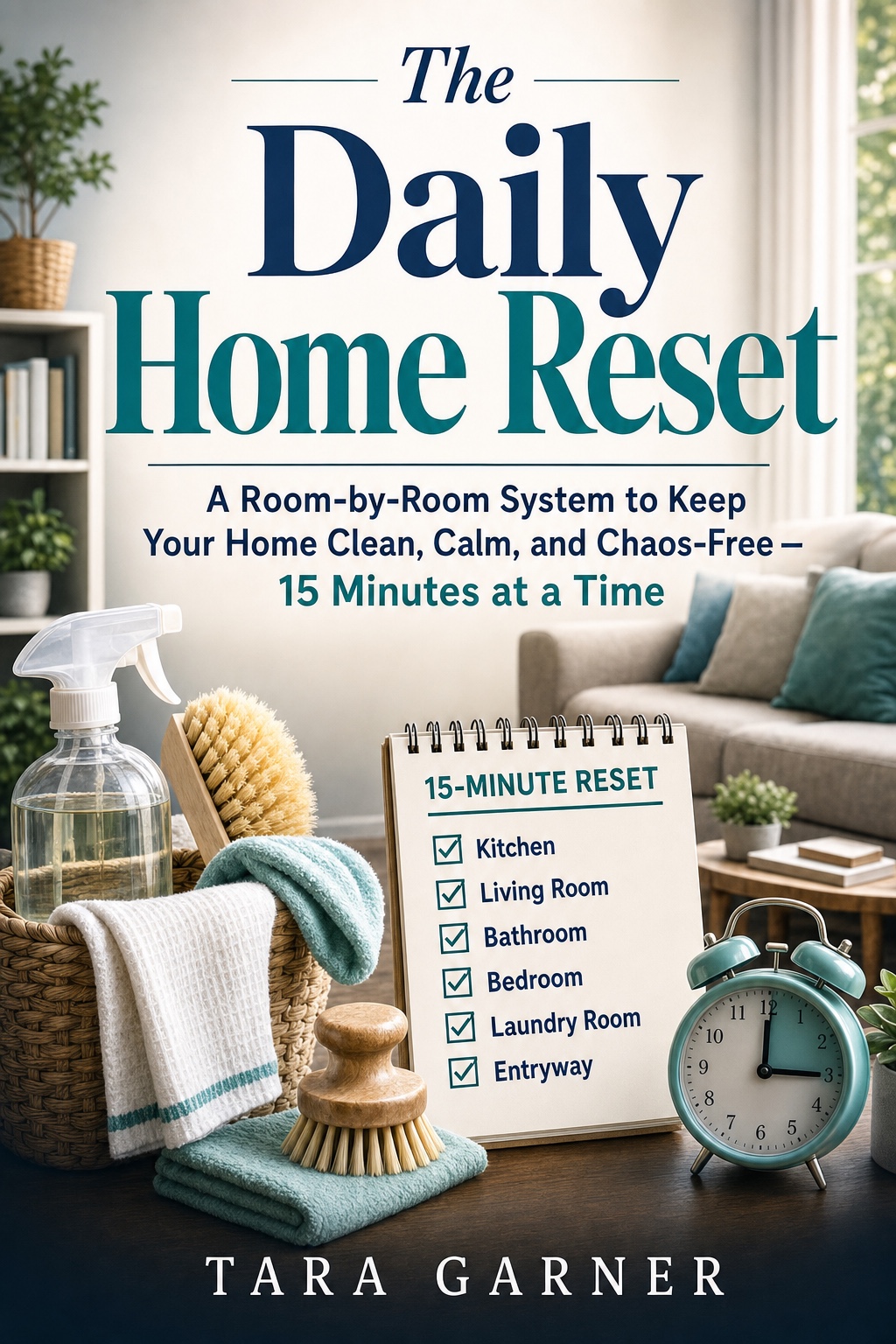
• 7 Resolutions for a Cleaner New Year: The other half of a fresh start: a daily-to-yearly cleaning schedule you can actually keep.
• Organize Your Home: Room-by-room organizing ideas for the whole house.
• How to Organize Clothes: Make room in the closet for everything you got for Christmas.
• Kitchen Sync: Kitchen cleaning and organizing, from drawers to the fridge.
• Garage Cleaning & Organizing: Where the holiday boxes go, and how to still park the car.
• Family Car Organizing: Start the year with a car that isn’t a rolling junk drawer.
• Kitchen Chores for Kids by Age: Share the work, so the new systems aren’t all on you.
• How to Winterize Your Home: January jobs that keep the cold out and the heating bill down.
Here’s to a more organized New Year, and a home that works a little better for everyone who lives in it. You don’t have to do everything. Just start somewhere.
Too Much Stuff? Not Enough Space? Clear the clutter, let go of the guilt, and reclaim your home, one room at a time. Discover Room by Room by Tara Aronson.
As an Amazon Associate, I earn from qualifying purchases.
- Clean Home
- Organize Your Home
- An Organized New Year