30 Easy Money-Saving Ideas
That Don't Make Life Miserable

Saving money sounds wonderful. Until somebody suggests giving up coffee, canceling every subscription, cooking everything from scratch, and spending your weekends comparing the price per ounce of canned tomatoes.
Suddenly, being financially responsible sounds like a second job. Fortunately, it doesn't have to be.
The best money-saving ideas are the ones that fit into your everyday life without requiring constant sacrifice or heroic levels of self-discipline.
A few smarter shopping habits, less household waste, and better organization can make a noticeable difference over time.
And you don't need to live in the dark, eat nothing but beans, or turn every family outing into a lesson in financial restraint.
Here are 30 practical ways to spend less while keeping your home—and your sanity—reasonably intact.
1. Start by Finding Out Where Your Money Goes
Before trying to save money, take a look at what you're actually spending. Review a month or two of bank and credit card transactions.
Look for categories such as:
- Groceries
- Restaurants and takeout
- Household supplies
- Subscriptions
- Utilities
- Transportation
- Clothing
- Entertainment
You may discover that your biggest opportunity isn't some dramatic lifestyle change.
It's the collection of small purchases that barely register individually. A few dollars here. A few dollars there. And suddenly your bank statement looks like a diary of decisions you don't remember making.
2. Plan Meals Before Grocery Shopping
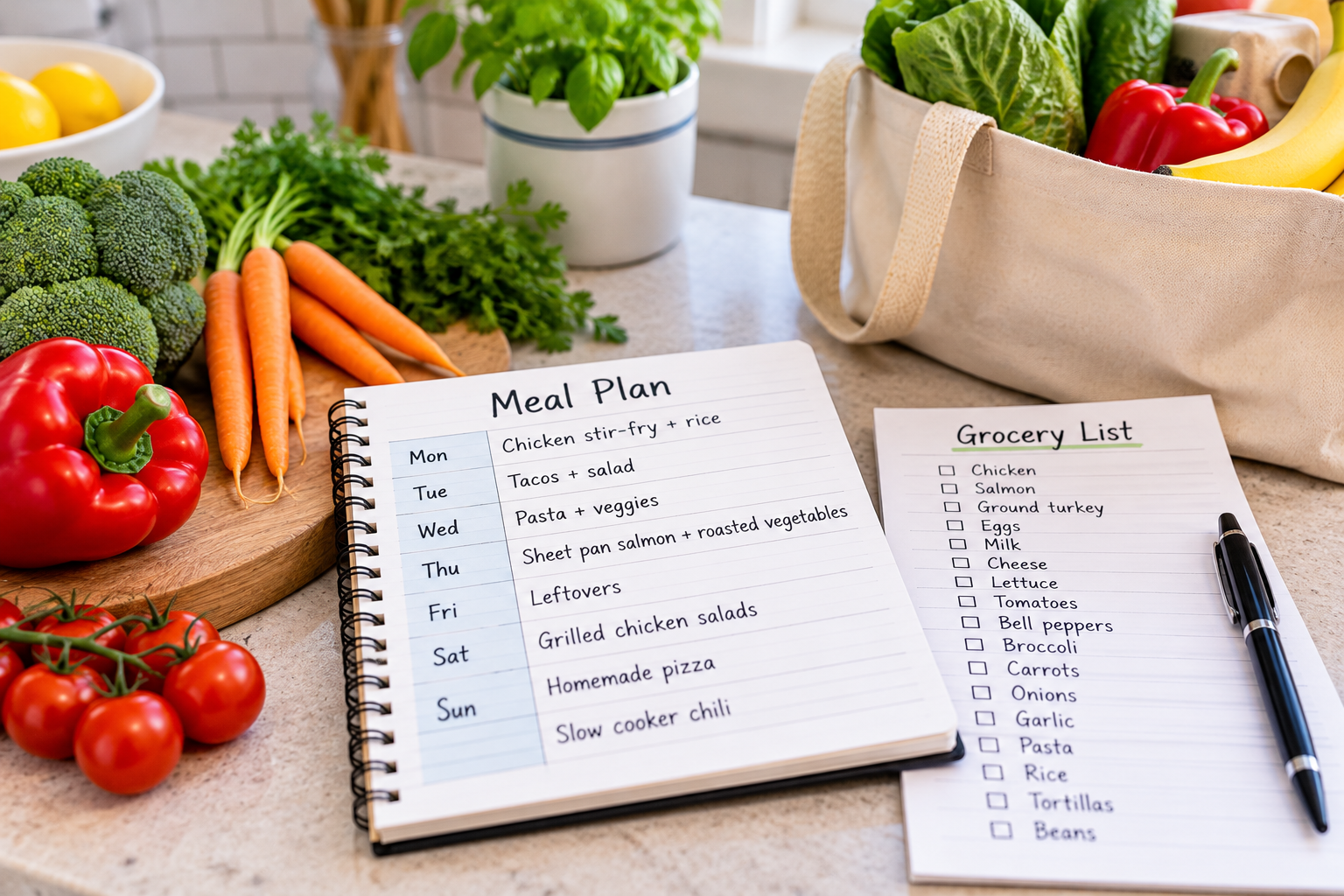
Meal planning doesn't have to involve elaborate charts or 14 identical containers of chicken and rice.
Just decide what your household is likely to eat over the next several days. Check your schedule. Plan simple meals for busy evenings. And make a grocery list based on those meals.
This reduces impulse purchases and the familiar problem of buying ingredients with excellent intentions, only to order pizza because nobody feels like cooking.
3. Shop Your Refrigerator and Pantry First
Before buying groceries, look at what you already have.
Check:
- Refrigerator shelves
- Freezer contents
- Pantry staples
- Leftovers
- Produce that needs to be used soon
Build a meal around those ingredients. That half bag of rice, frozen vegetables, and leftover chicken might already be dinner.
You don't need to purchase a completely new collection of groceries every time you want to cook. Your pantry would probably appreciate being consulted.
4. Make a Grocery List and Use It
A grocery list is one of the simplest ways to control food spending. Write down what you need before entering the store.
Organize the list by category if that helps. Then stick reasonably close to it. Of course, sometimes you find a genuinely useful sale.
But there's a difference between buying something you'll use and purchasing three bags of novelty-flavored chips because the packaging was persuasive.
5. Compare Unit Prices
The largest package isn't always the best bargain. Check the unit price—cost per ounce, pound, or other standard measure—when comparing similar products.
This is especially useful for:
- Rice and pasta
- Laundry detergent
- Paper products
- Cereal
- Cleaning supplies
- Pet food
Also consider whether you'll actually use the larger quantity. A bargain-sized container isn't a bargain if half of it expires in the pantry.
6. Stop Buying Food You Keep Throwing Away
Food waste is one of the easiest household expenses to overlook. Pay attention to what regularly ends up in the trash.
Is it bagged salad? Fresh herbs? Fruit nobody eats? Leftovers that get pushed to the back of the refrigerator?
Buy smaller quantities or change how you store and use those foods.
If your family never finishes a giant container of spinach, buying another giant container because it's on sale isn't optimism. It's a recurring expense.
7. Freeze Food Before It Goes Bad
Your freezer can help reduce food waste. Freeze suitable leftovers, bread, meat, and prepared meals before they spoil.
Label containers with the contents and date. Use freezer-safe packaging and follow appropriate food-safety guidance.
And keep a simple freezer inventory if yours tends to become a frozen mystery museum. The goal is to save food you'll actually eat later. Not preserve it indefinitely for future generations.
8. Cook Once, Eat Twice
When preparing a meal that freezes or reheats well, consider making an extra portion.
You might cook:
- A double batch of soup
- Extra pasta sauce
- Additional cooked rice
- A larger casserole
- Extra roasted vegetables
Use leftovers promptly and store them safely. Having a ready-made meal available can reduce the temptation to order takeout on a busy evening.
It's not glamorous. But neither is paying delivery fees because you're too tired to chop an onion.
9. Make Takeout an Occasional Convenience
You don't have to give up restaurant meals. Just be intentional about them.
If takeout is becoming a default dinner solution several times a week, choose a few evenings when you'll cook something simple instead.
Keep easy ingredients on hand for those nights. A sandwich, scrambled eggs, or a quick pasta dinner can be perfectly respectable. Not every Tuesday requires a culinary masterpiece.
10. Review Your Subscriptions
Streaming services, apps, memberships, and other recurring charges can quietly accumulate. Look through your statements for subscriptions you rarely use.
Ask:
- Do I still need this?
- Am I using it?
- Is there a less expensive plan?
- Am I paying for overlapping services?
- Can I cancel without losing something important?
Cancel what no longer earns its place in your budget. If you haven't opened an app in eight months, it probably doesn't need to remain on the payroll.
11. Lower Heating and Cooling Costs
Heating and cooling can account for a substantial part of household energy use. Simple habits may help reduce unnecessary costs.
Try:
- Adjusting thermostat settings when appropriate
- Using a programmable or smart thermostat if it fits your household
- Keeping doors and windows closed while heating or cooling
- Replacing or cleaning HVAC filters as directed
- Sealing obvious air leaks
- Using blinds or curtains to manage sunlight and heat
Avoid extreme temperature settings that make your home uncomfortable or unsafe. The point is to reduce waste. Not turn the living room into a walk-in refrigerator.
12. Use LED Light Bulbs
LED bulbs generally use less electricity and last longer than traditional incandescent bulbs. Replace suitable bulbs as needed rather than throwing away perfectly functional ones.
Choose bulbs compatible with the fixture and any dimmer controls. Check brightness, color temperature, and manufacturer recommendations.
And remember that turning lights off when they're not needed is still a perfectly good idea. Even energy-efficient bulbs don't need to illuminate an empty guest room all afternoon.
13. Reduce Unnecessary Water Use
Small changes in household water habits can help reduce waste.
Consider:
- Fixing dripping faucets
- Repairing running toilets
- Turning off taps when water isn't needed
- Running full dishwasher loads when appropriate
- Using suitable efficient showerheads
- Following local watering restrictions outdoors
A running toilet can waste a surprising amount of water. And unlike a teenager taking a 45-minute shower, it won't even apologize afterward.
14. Wash Laundry Efficiently
Laundry offers several opportunities to reduce unnecessary costs.
- Wash full but not overloaded loads.
- Use the appropriate amount of detergent.
- Choose cold water when suitable for the fabrics and cleaning needs.
- Follow garment care labels.
- Avoid unnecessary extra rinse cycles.
- Keep your washing machine maintained.
Using more detergent doesn't automatically make clothes cleaner. Sometimes it simply creates more residue and more rinsing. See our Laundry Guide for additional laundry guidance.
15. Don't Overdry Your Clothes
Overdrying wastes energy and can be hard on fabrics. Use an appropriate automatic dryness setting when available.
Clean the lint screen after each load, and maintain the dryer vent according to manufacturer guidance. Air-dry suitable garments when practical.
You don't need to hang every towel on a clothesline. But avoiding an extra 40 minutes of unnecessary drying is a reasonable start.
16. Use the Right Amount of Cleaning Product
More cleaner isn't necessarily better. Too much detergent, floor cleaner, or other household product may leave residue, waste money, or require additional rinsing.
Follow the label directions. Use measuring caps or dispensers. And resist the urge to add an extra generous splash because the floor looks particularly offensive.
Cleaning products are formulated to work at specific concentrations. They're not salad dressing.
17. Choose Reusable Cleaning Cloths
Disposable cleaning products can be convenient, but repeated purchases add up. Reusable microfiber cloths and washable cleaning rags can work well for many everyday jobs.
Use separate cloths for appropriate tasks and launder them according to their care instructions.
For certain contaminated messes, disposable materials may still be appropriate.
The goal isn't to eliminate every paper towel from your life. t's to stop using six of them for a job that one washable cloth could handle. Shop everyday cleaning cloths.
18. Maintain Appliances Before They Break
Routine maintenance can help appliances operate properly and may prevent avoidable problems. Follow manufacturer instructions for:
- Cleaning washing machines
- Maintaining dryer vents
- Replacing refrigerator water filters
- Cleaning dishwasher filters
- Checking HVAC filters
- Inspecting appliance hoses and connections
Don't attempt electrical, gas, or mechanical repairs beyond your skills. Sometimes professional maintenance costs less than replacing a neglected appliance.
And sometimes the most expensive household problem is the one you've been pretending not to notice.
19. Repair Small Problems Promptly
A dripping faucet, loose door handle, or minor leak may seem harmless. But ignoring small maintenance problems can allow them to become more expensive.
Keep an eye on:
- Plumbing leaks
- Damaged caulk
- Loose hardware
- Water stains
- Worn weatherstripping
- Appliance problems
Handle simple tasks you can safely perform. Call a qualified professional for electrical, gas, structural, or more complicated repairs.
The goal is to avoid letting a small repair become a dramatic household event involving three contractors and a bucket.
20. Declutter Before Buying More Storage
Here's a money-saving idea that also makes your home easier to manage:
Don't buy more storage containers until you've looked at what you're storing. Sometimes the problem isn't a lack of bins. It's too much stuff.
Sort through the area first. Keep what you use. Donate, sell, recycle, or dispose of what you no longer need. Then buy storage only if it will genuinely improve the space.
For a practical starting point, see tips to declutter your home.
A $40 organizing system is not a bargain if it's designed to hold $200 worth of things you should have gotten rid of.
21. Shop Secondhand for Suitable Items
Secondhand shopping can save money on furniture, household goods, books, and other useful items. Look for quality and condition rather than price alone.
Before buying:
- Inspect the item carefully.
- Check for damage.
- Compare prices.
- Measure your space.
- Consider transportation costs.
- Verify safety and recall information when relevant.
Avoid secondhand items with uncertain safety histories, particularly certain child-safety products.
A used bookcase can be a wonderful bargain. A suspiciously wobbly ladder is not.
22. Wait Before Making Nonessential Purchases
Impulse purchases can quietly drain a household budget. When you see something you want but don't need immediately, give yourself a waiting period.
It might be 24 hours. It might be a week. For expensive purchases, consider waiting longer.
Often, the urgency disappears. And if you still want the item later, you can make a more considered decision.
Retailers would prefer that you buy it before you have time to think. You don't have to cooperate.
23. Use What You Already Own
Before buying a new household item, ask whether something you already own can do the job.
Could you:
- Reuse an existing basket?
- Rearrange furniture?
- Repair a small item?
- Repurpose a storage container?
- Borrow a tool?
- Use supplies left over from another project?
This doesn't mean saving every empty jar in case it someday becomes useful.
It means checking your own cabinets before heading to the store. Sometimes the cheapest solution is already sitting on a shelf.
24. Borrow or Rent Things You'll Rarely Use
Some household tools and equipment are expensive but rarely needed. Depending on the item, borrowing or renting may be more economical.
Examples include:
- Specialty tools
- Carpet-cleaning equipment
- Party supplies
- Certain gardening tools
- Occasional-use equipment
Consider rental fees, transportation, deposits, and safety requirements before deciding.
And if you borrow something from a neighbor, return it promptly and in good condition. A borrowed ladder is cheaper than a purchased ladder.
Losing a neighbor's friendship over it is not.
25. Compare Prices Before Major Purchases
For larger household purchases, a little research can pay off.
Compare:
- Total price
- Delivery charges
- Installation costs
- Warranty terms
- Energy use
- Maintenance expenses
- Return policies
Don't focus only on the advertised discount. A bargain appliance with expensive installation and poor reliability may cost more over time.
And a sign that says "70% OFF" doesn't automatically mean you've found the best price. It means somebody printed a very enthusiastic sign.
26. Avoid Buying Things Just Because They're on Sale
Sales can save money when you're purchasing something you already need. But a discount on an unnecessary item is still an expense.
Before buying, ask:
- Was this already on my list?
- Will I actually use it?
- Do I have room for it?
- Is the price genuinely competitive?
- Would I buy it if it weren't on sale?
If the answer to the last question is no, you may have found your answer. You haven't saved $30 by buying a $70 item marked down from $100. You've spent $70.
27. Make Gifts More Thoughtful, Not More Expensive
Gift giving doesn't need to become a competitive spending event. Set a realistic budget. Choose gifts based on the recipient rather than the price tag.
Consider:
- Books
- Homemade treats when appropriate
- Experiences
- Useful household items
- Shared activities
- Thoughtful secondhand finds
- Consumable gifts
Avoid buying extra gifts simply because you feel the pile looks too small. The recipient probably isn't measuring your affection in cubic feet of wrapping paper.
28. Plan for Seasonal Expenses
Some expenses arrive every year, yet somehow still feel like surprises.
Think:
- Holiday gifts
- School supplies
- Birthdays
- Car registration
- Annual memberships
- Seasonal home maintenance
- Insurance renewals
Estimate the cost and set aside a little money regularly when possible. Even small amounts can make predictable expenses easier to manage.
December is considerably less stressful when you haven't pretended Christmas is an unexpected event.
29. Create a Small Household Emergency Fund
Unexpected expenses are part of owning or managing a home. Appliances fail. Cars need repairs. Plumbing develops opinions.
If your finances allow, start building a cash reserve for emergencies. You don't need to reach an enormous savings goal immediately.
Begin with an amount that's realistic for your situation, then build gradually. Keep emergency savings somewhere accessible and appropriate for short-term needs.
The goal is to make unexpected expenses less disruptive—not to feel guilty because you haven't saved an arbitrary amount.
30. Focus on Savings You Can Maintain
This is the most important money-saving idea on the list. Don't choose habits that make everyday life unnecessarily difficult.
If driving to four stores saves $3 but costs two hours and extra gas, it may not be worth it.
If preparing every meal from scratch leaves you exhausted, a few convenient grocery items may be a reasonable trade-off.
If a cheaper product wears out twice as fast, it may not save money. The best savings are the ones that work in your real life.
Not the imaginary life where you have unlimited time, perfect discipline, and children who enthusiastically eat leftover lentils.
Your Household Money-Saving Checklist
Use this checklist to identify easy opportunities.
Groceries and Food
- Check the pantry before shopping.
- Plan several meals.
- Make a grocery list.
- Compare unit prices.
- Freeze suitable leftovers.
- Reduce food waste.
Utilities and Maintenance
- Check thermostat settings.
- Turn off unnecessary lights.
- Look for water leaks.
- Maintain appliance filters.
- Use laundry equipment efficiently.
- Address small maintenance problems.
Shopping and Household Supplies
- Review subscriptions.
- Use cleaning products according to directions.
- Reuse suitable household supplies.
- Declutter before buying storage.
- Compare prices on larger purchases.
- Wait before nonessential purchases.
Planning Ahead
- Identify upcoming seasonal expenses.
- Set a realistic gift budget.
- Put aside emergency savings when possible.
- Choose two money-saving habits to maintain.
The Bottom Line: Spend Less Without Making Life Harder
Saving money doesn't have to involve dramatic sacrifices. Often, it's the ordinary household decisions that make the difference.
Using the food you already have. Buying fewer things you don't need. Maintaining appliances. Reducing waste.
Planning ahead. And resisting the urge to purchase another storage basket to organize the storage baskets.
Start with a few changes that fit your life. Keep the ones that work. Forget the ones that require more time and energy than they're worth.
Because the goal isn't to become the world's most dedicated penny-pincher. It's to have a little more money available for the things that actually matter.
And perhaps fewer mystery charges on your credit card statement.
Keep Going
Save money, reduce waste, and make your home easier to manage with these related guides:
- Decluttering Your Home: Stop spending money storing things you don't need.
- Green Cleaning and Money-Saving Tips: Practical ways to clean effectively while reducing unnecessary waste.
- Laundry and Stain Removal: Keep clothing in good condition and avoid unnecessary replacements.
- Home Maintenance Tips: Prevent small household problems from becoming expensive repairs.
- Home Organization Tips: Make better use of the storage and supplies you already own.
- Easy Home Decorating Ideas: Refresh your rooms without an expensive makeover.
- Clean Home
- Home Maintenance
- Easy Money Saving Ideas