How To Clean Silverware
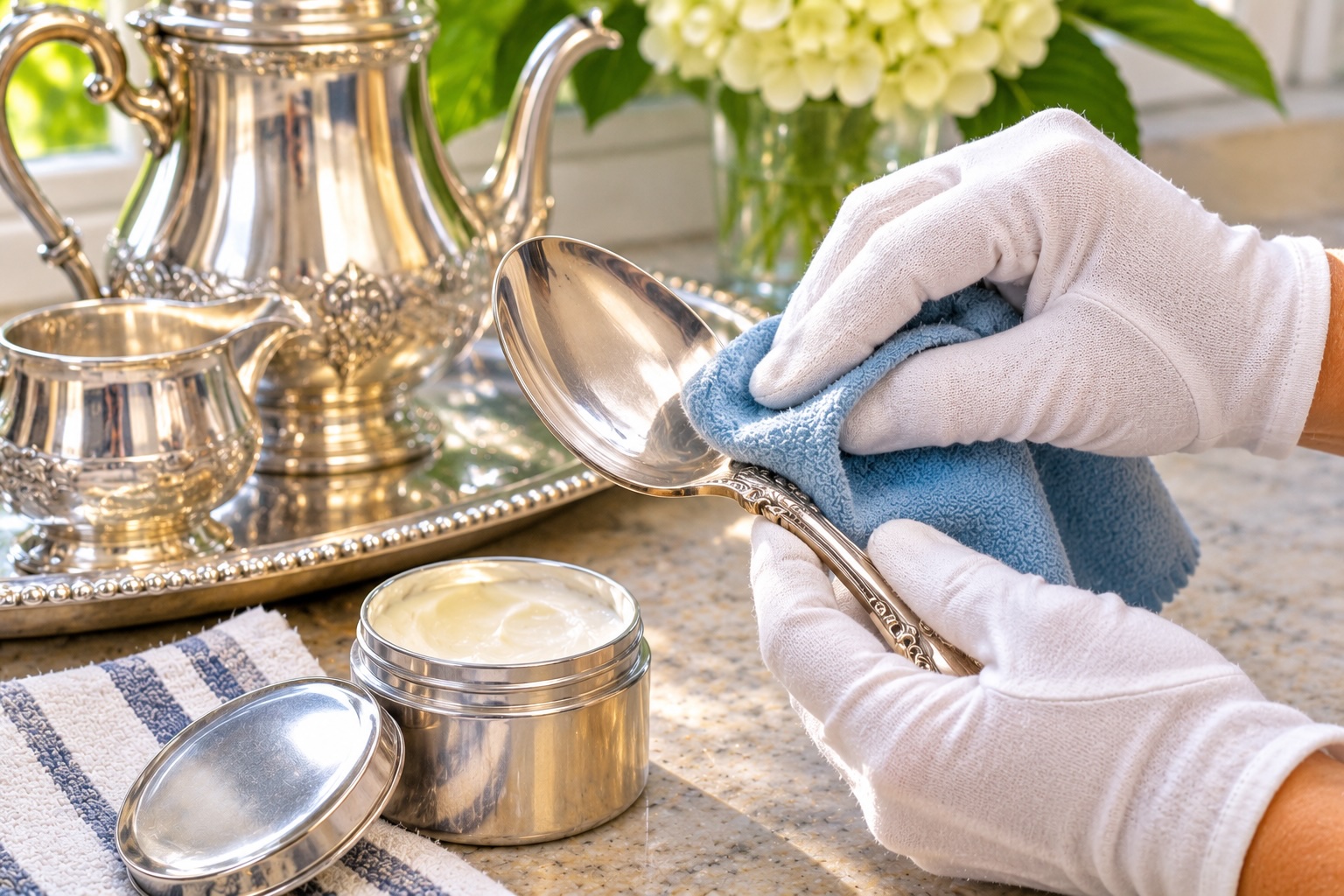
There's nothing like pulling out Grandma's silverware for a holiday dinner, only to discover it has turned the color of an old penny. Tarnish happens to the best of us. It's just silver reacting with sulfur in the air (and in eggs, mayonnaise and rubber bands, more on that later).
The good news: tarnish comes off. Here's how to clean silverware, whether it's sterling or silver plate, and how to keep it shiny long enough to actually enjoy it.
Before You Start
- Wash it first. Wash each piece in warm water with a little mild dish soap to remove food and grease, so you're only polishing tarnish.
- Lose the rubber gloves. Rubber and latex contain sulfur, which tarnishes silver. Wear cotton or nitrile gloves, or go bare-handed and wash up afterward.
- Go gently with silver plate. Plate is a thin layer of silver over another metal. Every polishing removes a little, so use the gentlest method that works, and don't polish more often than you need to.
Method 1: Silver Polish (Best for Heirlooms)
A good silver polish or silver cream is the safest choice for sterling and plate, because it removes tarnish and leaves a protective coating that slows it from coming back.
- Dab a little polish on a soft cotton cloth or microfiber cloth.
- Rub with straight, up-and-down strokes, not circles. Circles leave swirl marks.
- Switch to a clean part of the cloth as it turns black. (It will. That's the tarnish leaving.)
- Use a soft toothbrush for the patterns and between the tines.
- Rinse in warm water, then dry immediately with a soft cloth and buff to a shine.
Method 2: Baking Soda and Foil (Fastest for a Big Batch)
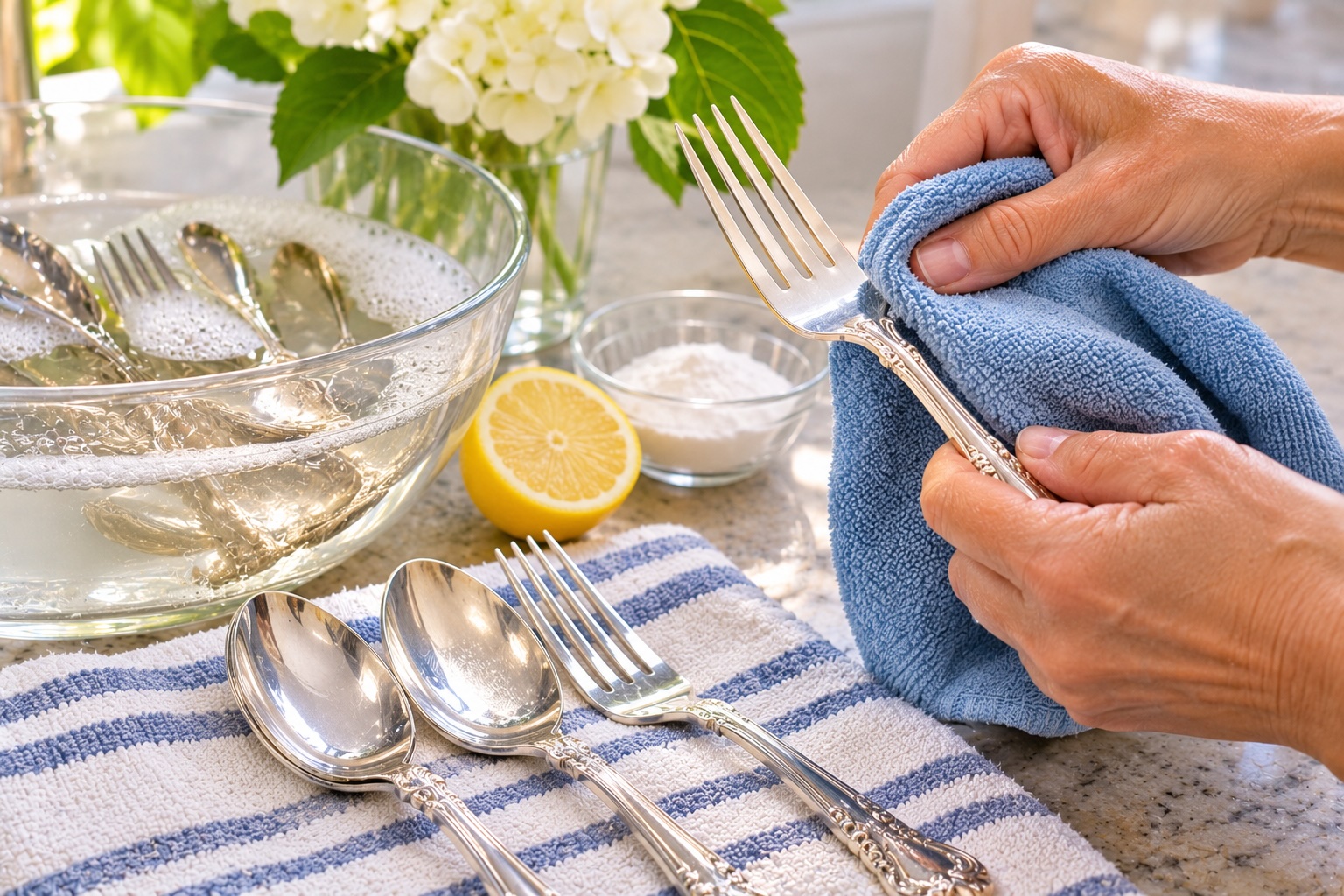
This one feels like a science-fair project, and it kind of is. The tarnish transfers from the silver to the foil, without any scrubbing.
- Line a glass baking dish or the sink with aluminum foil, shiny side up.
- Lay the silverware on the foil. Each piece needs to touch the foil.
- Sprinkle about 2 tablespoons of baking soda over the silverware.
- Carefully pour in enough boiling water to cover everything. It will fizz and smell a little like rotten eggs. That's the sulfur leaving.
- Wait 2 to 5 minutes. Turn heavily tarnished pieces with tongs and repeat if needed.
- Remove with tongs, rinse, dry thoroughly and buff with a soft cloth.
Two warnings: This method removes all the tarnish, including the dark accents in the grooves of patterned silver that make the design pop. And never use it on knives with hollow handles or pieces with wood, bone or glued handles. The hot water can loosen the filler and glue.
Method 3: Toothpaste (For a Quick Touch-Up)
Toothpaste is mildly abrasive, so save it for light tarnish on everyday silverware, not your heirloom sterling. Use plain white toothpaste, not gel, and not the kind with whitening additives or baking soda, which are too gritty.
- Put on a cotton sock. Slip a clean cotton sock over your polishing hand, dampen it under cool water and squeeze out the excess.
- Add the toothpaste. Squeeze a pea-sized drop onto the sock at your fingertips. Rub it onto the front and back of each piece with up-and-down strokes.
- Get between the tines. Pull the sock away from your fingertips and twist it tight, then work it into the tines and grooves.
- Rinse and buff. Rinse the silverware under running water. Then take off the sock, grab its mate and polish the silverware dry.
Can Silverware Go in the Dishwasher?
Your everyday stainless steel flatware, yes. Sterling and silver plate are better washed by hand. If you do put silver in the dishwasher.
- Keep it away from stainless steel. When the two touch in the wet heat, the silver can pit and develop black spots. Use a separate basket.
- Skip lemon-scented detergent, which can discolor silver.
- Never put hollow-handled knives, heirlooms or anything with wood, bone or glued handles in the dishwasher.
- Take it out and dry it right away, before water spots form.
The best way to wash silverware is by hand, right after the meal: warm water, mild dish soap and a soft cloth. Rinse, then dry immediately. Don't let silver soak overnight, and don't leave it wet in a drying rack.
What About Stainless Steel Flatware?
Stainless doesn't tarnish, but it does get water spots, cloudy film and the occasional rust spot.
- Water spots and cloudiness: Soak for 10 minutes in a sink of hot water with a cup of white vinegar, then rinse and dry.
- Rust spots: Rub with a paste of baking soda and water, or a little Bar Keepers Friend, then rinse and dry right away.
How to Keep Silverware From Tarnishing
- Use it. Seriously. Silver you use and wash regularly tarnishes much more slowly than silver hiding in a drawer for a year.
- Store it in tarnish-resistant flannel, a lined silverware chest or individual anti-tarnish bags. A zip-top plastic bag with the air pressed out works in a pinch.
- Add anti-tarnish strips to the drawer or chest. A few sticks of plain chalk help, too, by absorbing moisture.
- No rubber bands, and no plastic wrap or newspaper. Rubber bands leave marks you'll be polishing out forever.
- Watch what you serve. Eggs, mayonnaise, mustard and salt tarnish silver fast. Serving deviled eggs from a silver platter is a recipe for instant tarnish. Wash pieces promptly after they touch these foods.
- Store it completely dry.
Cleaning silver serving pieces, too? Here's how to clean silver, brass and pewter.
How to Clean Silverware: Quick Answers
What's the fastest way to clean tarnished silverware?
The baking soda and foil bath. Line a dish with foil, add the silverware and baking soda, cover with boiling water and wait a few minutes. Skip it for patterned silver and hollow-handled knives.
Does toothpaste really clean silver?
Yes, for light tarnish. Use plain white, non-gel toothpaste without whitening additives. It's mildly abrasive, so use silver polish on valuable pieces.
Can you put sterling silver in the dishwasher?
It's safer to hand wash it. If you use the dishwasher, keep silver away from stainless steel, skip lemon detergent, and never wash hollow-handled knives or heirlooms there.
How do you keep silver from tarnishing?
Use it often, store it dry in tarnish-resistant flannel or bags with anti-tarnish strips, and keep it away from rubber, eggs, mayonnaise and salt.
Keep Going
Get the whole table ready to shine with these related guides:
- How to Clean Silver, Brass and Pewter: Serving pieces, platters and candlesticks.
- How to Clean Crystal: Glasses, vases and chandeliers.
- How to Clean Cloudy Glass: And when it can't be fixed.
- How to Clean Copper: Pots, mugs and decor.
- Holiday House Cleaning Tips: Get ready for company.
- Party Decorating Ideas: Set a table people remember.
- Kitchen Cleaning Tips: Keep the kitchen clean every day.
- House Cleaning Guide: Room-by-room tips.
- Clean Home
- Clean
- How To Clean Silverware
Free Printable
Notes on Keeping House
Sign up and get my 15-Minute Daily Reset Checklist. One timer, five zones, and a house that stays under control.
Send My ChecklistNo spam, ever. Just smart, funny tips for keeping house from Tara Aronson.