How to Clean Copper
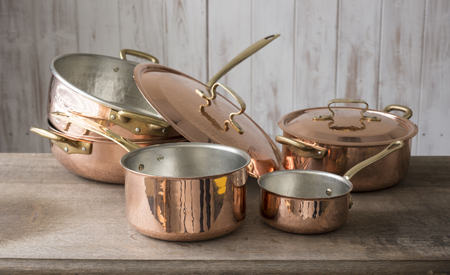
Copper pots hanging in the kitchen look like something out of a French country cookbook. Until about two weeks after you buy them, that is, when the gleaming rosy glow turns into a dull brown, with a few fingerprint-shaped smudges for good measure, and the bottoms look like they've been through a campfire.
Copper tarnishes. It's just what it does. The good news is that getting the shine back is easy, cheap and oddly satisfying, and you can probably do it with what's in your fridge right now. (Yes, including the ketchup.)
Here's how to clean copper pots, pans, mugs and more without scratching them, and how to keep them shiny longer.
Before You Start: Two Quick Checks
1. Is it lacquered? Many decorative copper pieces, like trays, vases, light fixtures and some mugs, are sealed with a clear lacquer to keep them from tarnishing. If yours is shiny and has never tarnished, or the tarnish is in spots and patches instead of all over, it's probably lacquered. Don't polish it. Polish and acids eat away the lacquer, and then the piece tarnishes unevenly. Just wipe it with warm, soapy water and dry it.
2. Is the inside lined? Most copper cookware is lined with tin or stainless steel, because unlined copper reacts with food. Polish only the copper outside. Clean the lining like any other pan: warm, soapy water and a soft sponge. Unlined copper bowls (the kind used for whipping egg whites) and jam pots get cleaned inside and out.
Everyday Cleaning
- Wash copper by hand in warm water with a squirt of dish soap and a soft sponge.
- Rinse well.
- Dry it immediately with a soft towel. Water spots and fingerprints are what start the tarnish.
Never put copper in the dishwasher. The harsh detergent and heat will dull and discolor it, and it can damage the lining.
How to Remove Tarnish From Copper
All of these work the same way: an acid (lemon, vinegar or tomato) dissolves the tarnish, and salt or flour adds a gentle scrub. Wear cotton gloves while you polish so you don't leave fingerprints behind. Cotton gloves are inexpensive and reusable.
Method 1: Lemon and Salt
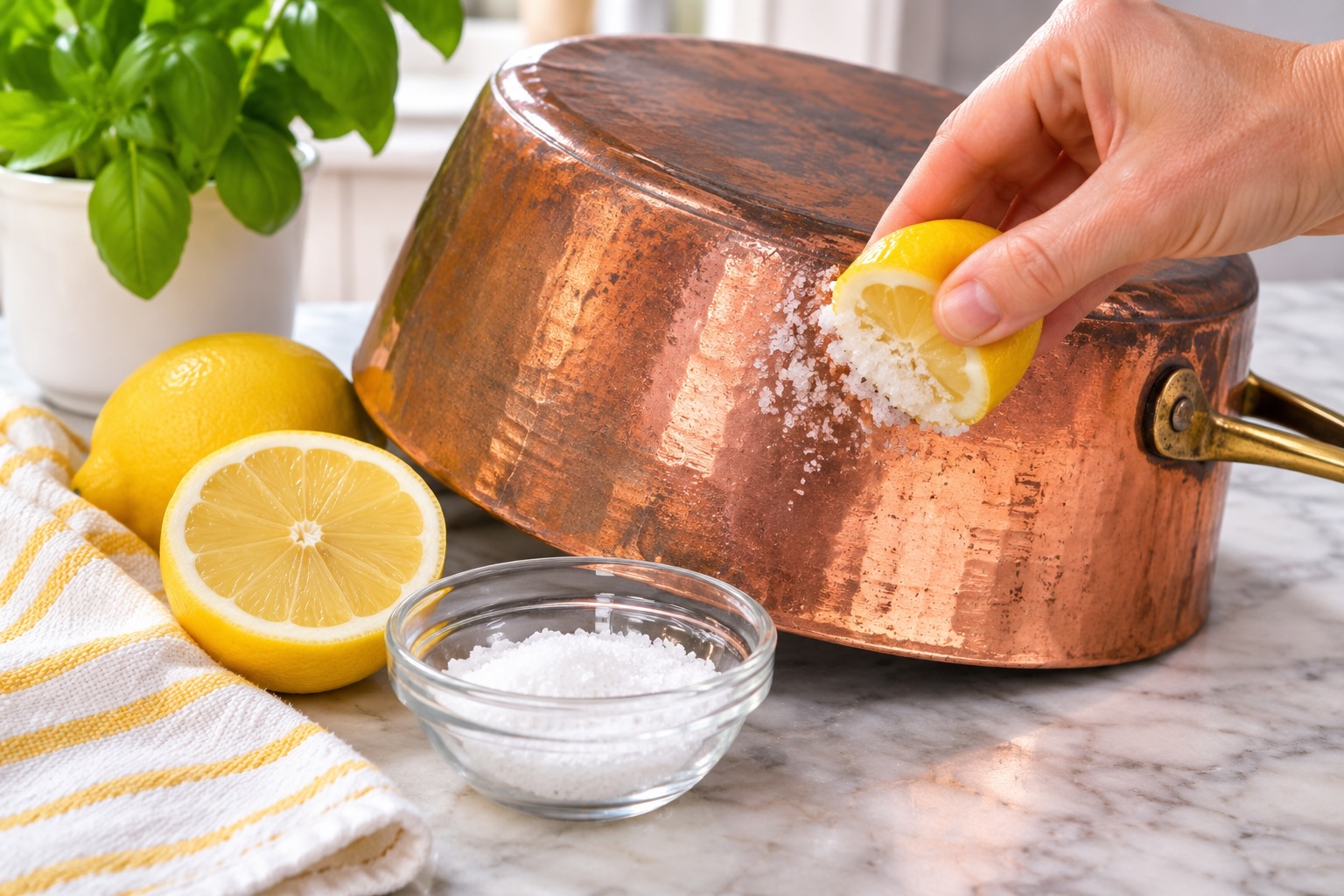
The classic, and it works beautifully on light to medium tarnish.
- Cut a lemon in half and dip the cut side in table salt.
- Rub it over the tarnished copper. You'll see the tarnish disappear as you go. It's very satisfying.
- Re-salt the lemon as needed, and squeeze it a little to release more juice.
- Rinse in warm water and dry immediately with a soft cloth, then buff to a shine.
Method 2: Vinegar, Salt and Flour Paste
Best for copper-bottomed pans and pieces with heavier tarnish. The flour turns it into a paste that stays put.
- Dissolve 1 tablespoon of salt in 1/2 cup of white vinegar.
- Stir in flour, a spoonful at a time, until it makes a thick paste.
- Spread it over the copper and let it sit 15 minutes to an hour, depending on how tarnished it is.
- Rub with a soft cloth or sponge, rinse in warm water and dry thoroughly.
Make a bigger batch and keep it in a labeled jar in the fridge for next time.
Method 3: Ketchup
Yes, really. Ketchup's tomatoes and vinegar make it a terrific tarnish remover, and it clings to curved surfaces.
- Squeeze a thin layer of ketchup over the tarnished copper.
- Let it sit for 5 to 15 minutes. For really dark tarnish, up to an hour.
- Rub with a soft cloth, rinse well in warm water and dry.
Tomato paste works too, and it's thicker. Plain tomato sauce in a pinch.
Method 4: Baking Soda and Lemon Juice
A gentle paste for light tarnish and for getting into the detailed parts of a decorative piece. Mix baking soda and lemon juice into a paste (it'll fizz), rub it on with a soft cloth or soft toothbrush, rinse and dry.
Method 5: Store-Bought Copper Cleaner
For heavily tarnished pieces, a copper cream like Wright's Copper Cream or a little Bar Keepers Friend made into a paste with water works fast. Rub gently with the grain, rinse very well and dry. Bar Keepers Friend is mildly abrasive, so use a light touch on highly polished pieces.
Burnt or Blackened Copper Bottoms
Copper-bottomed pans often get a blackened, crusty ring from years on the burner. Start with the vinegar, salt and flour paste, and leave it on for an hour. For stubborn spots, follow with Bar Keepers Friend and a non-scratch sponge. It may take a few rounds. Skip steel wool, which scratches the copper and makes it tarnish faster.
Green Spots (Verdigris)
That green or blue-green crust is verdigris, a form of corrosion that forms on copper exposed to moisture. Rub it with a paste of baking soda and lemon juice or the vinegar, salt and flour paste, let it sit a few minutes and wipe it off with a soft cloth. Rinse and dry well. On cookware, clean it off before you cook with the pan.
How to Clean Copper Mugs
Moscow Mule mugs need a little extra care:
- Hand-wash only, in warm, soapy water, and dry right away, inside and out.
- Check the inside. Most mugs are lined with stainless steel or nickel. If yours is unlined copper, it shouldn't be used for acidic drinks (a Moscow Mule is lime juice and ginger beer, so check before you pour).
- Polish the outside with the lemon and salt method when it starts to look dull.
- If the mug is lacquered, skip the polishing and just wash it.
How to Clean a Copper Sink
Copper sinks have what manufacturers call a "living finish." They naturally darken into a warm patina, and that's part of their charm. Clean them gently with mild dish soap and water, then dry.
Avoid harsh cleaners, bleach, abrasive powders and steel wool, and don't let acidic food or cleaners sit in the sink. A bright spot means the patina was stripped. Leave it alone, and it will darken to match within a few weeks.
Shine or Patina?
Not everyone wants their copper mirror-bright. Some people love the warm, darker patina copper develops over time. Both are fine. Patina doesn't affect how a pan cooks, so polish as often or as rarely as you like. (It's your copper. Nobody's grading.)
Is It Safe to Cook in Copper?
Lined copper pans, with tin or stainless steel on the inside, are safe for all cooking, including tomato sauce and wine. Unlined copper reacts with acidic foods like tomatoes, citrus, vinegar and wine, and can leach copper into food, which can make you sick. Use unlined copper only for jobs like whipping egg whites and making sugar syrup and jam, and never store food in it.
Tin linings wear thin over time. If you can see copper showing through the inside of a tin-lined pan, it's time to have it re-tinned by a professional.
How to Keep Copper From Tarnishing
- Dry it immediately after washing. Water is tarnish's best friend.
- Handle polished pieces with cotton gloves or a soft cloth. The oils in fingerprints leave tarnished marks.
- Seal decorative pieces with a thin coat of paste wax or a clear lacquer made for metal, buffed off once dry. (Never on cookware.)
- Store copper somewhere dry, away from the steamy spot right over the stove if you can.
- Polish a little, often. Light tarnish takes a minute with a lemon. Months of tarnish takes an afternoon.
What Not to Do
- Don't put copper in the dishwasher.
- Don't use steel wool, scouring pads or harsh abrasive powders.
- Don't use bleach. It can discolor and damage copper.
- Don't polish lacquered copper.
- Don't polish or scrub tin linings.
- Don't store food in unlined copper.
How to Clean Copper: Quick Answers
What's the best homemade copper cleaner?
Half a lemon dipped in salt. Rub it over the copper, rinse and dry. For heavier tarnish, use a paste of vinegar, salt and flour and let it sit 15 minutes to an hour.
Does ketchup really clean copper?
Yes. The acid in the tomatoes and vinegar dissolves tarnish. Spread a thin layer on the copper, wait 5 to 15 minutes, then rub with a soft cloth, rinse and dry.
How do you get black stains off the bottom of copper pans?
Cover them with a vinegar, salt and flour paste for an hour, then rub with a soft sponge. Follow up with Bar Keepers Friend for stubborn spots. Don't use steel wool.
Can copper go in the dishwasher?
No. Dishwasher detergent and heat dull and discolor copper and can damage the lining. Wash copper by hand and dry it right away.
How do you know if copper is lacquered?
Lacquered copper stays shiny without tarnishing, or tarnishes in patches where the lacquer has worn off. Don't polish it. Wash it with warm, soapy water and dry it.
Keep Going
Keep the rest of your kitchen gleaming with these related guides:
- How to Clean Stainless Steel Pans: Even burnt ones.
- How to Clean Crystal: Glasses, vases and decanters, without clouding them.
- How to Clean Cloudy Glasses: Hard water film vs. etching, and how to fix it.
- How to Clean a Kitchen: Seven steps and the germiest spots.
- Marble Cleaning Tips: How to clean marble without ruining it.
- Cleaning Small Kitchen Appliances: The toaster, coffee maker and blender.
- Green Home Cleaning Tips: Clean your house without the harsh chemicals.
- Making Your Home Party Friendly: How to host a party people remember.
- Clean Home
- Clean
- How To Clean Copper

Free Printable
Notes on Keeping House
Sign up and get my 15-Minute Daily Reset Checklist. One timer, five zones, and a house that stays under control.
Send My ChecklistNo spam, ever. Just smart, funny tips for keeping house from Tara Aronson.