A Realistic House Cleaning Schedule You Can Actually Keep

A house cleaning schedule is supposed to make life easier.
Unfortunately, many of them seem to assume you have no job, no family, no hobbies and a deep personal commitment to polishing baseboards every Thursday.
You don't need that kind of schedule.
You need one that tells you:
- What actually needs attention every day.
- What can wait until once a week.
- What only needs doing monthly.
- What you can safely ignore until the season changes or it starts looking suspicious.
The point is not to keep your house in a permanent state of readiness for a magazine photographer.
It's to keep ordinary mess from turning into a much bigger job.
Here's a realistic way to do it.
The Basic House Cleaning Schedule
At its simplest, divide cleaning into four levels:
Daily: Small jobs that prevent mess from building.
Weekly: The regular cleaning that keeps the house reasonably clean.
Monthly: Jobs that don't need constant attention but shouldn't be forgotten forever.
Seasonal or occasional: Deeper tasks that come up a few times a year.
That's it. Not every surface needs cleaning every day. Not every room needs the same amount of attention.
And you don't need to spend an entire day each week "cleaning the house."
Daily Cleaning Tasks
Daily cleaning should be short. You're maintaining the house, not deep-cleaning it.
Focus on things that get messy quickly or create more work if you ignore them.
Kitchen
Each day:
- Wash dishes or load the dishwasher.
- Wipe obvious spills from counters.
- Clean the sink if needed.
- Put food away.
- Sweep or spot-clean obvious crumbs when necessary.
- Take out trash when full.
You don't need to scrub every cabinet door after dinner. You just want the kitchen ready for the next meal.
Bathroom
Daily bathroom cleaning can be minimal.
- Wipe obvious toothpaste or water messes.
- Hang towels.
- Put toiletries away.
- Check the toilet if the bathroom gets heavy use.
- Clear dirty clothing from the floor.
A thirty-second wipe now can save you a much uglier job later.
Bedrooms
- Make the bed if you like a made bed.
- Put dirty clothes in the hamper.
- Return obvious clutter to its place.
- Clear the floor enough that tomorrow doesn't begin with an obstacle course.
That's plenty.
Living Areas
- Return cups and dishes to the kitchen.
- Put away obvious clutter.
- Straighten cushions or throws if needed.
- Reset items that tend to spread.
Again, this isn't "clean the living room."
It's "stop today's mess from becoming part of the furniture."
The 10- to 15-Minute Daily Reset
If you do nothing else, try a short whole-house reset once a day.
Set a timer for 10-15 minutes.
Move quickly through the main living areas and:
- Put stray items away.
- Gather trash.
- Deal with dishes.
- Clear counters.
- Put clothes in hampers.
- Return shoes, bags, and other daily-use items to their homes.
Don't start deep-cleaning anything. The reset has one job:
Make tomorrow easier.
If the timer ends, stop. You are maintaining the house, not entering a cleaning endurance event.
Weekly Cleaning Tasks
Once a week, handle the jobs that need more than a quick reset.
Your exact schedule depends on your household, but a basic weekly cleaning list usually includes:
- Clean bathrooms.
- Change bed linens as appropriate for your household.
- Dust commonly used areas.
- Vacuum carpets and rugs.
- Mop hard floors as needed.
- Clean kitchen surfaces more thoroughly.
- Wipe the stovetop.
- Empty trash and recycling.
- Replace towels.
- Clean mirrors where needed.
- Deal with accumulated clutter.
You can do these jobs in one block if that works for you. Or divide them across the week.
The house does not care.
A Simple Weekly Cleaning Schedule
If you prefer to spread cleaning out, try something like this:
Monday: Bathrooms
Clean:
- Toilets.
- Sinks.
- Counters.
- Mirrors.
- Tub or shower as needed.
- Bathroom floors.
Tuesday: Bedrooms
- Change linens.
- Dust.
- Vacuum or clean floors.
- Clear accumulated clutter.
Wednesday: Living Areas
- Dust.
- Vacuum upholstery if needed.
- Vacuum or mop floors.
- Reset surfaces.
Thursday: Kitchen
- Clean counters thoroughly.
- Wipe appliance exteriors.
- Clean stovetop.
- Clean sink.
- Check refrigerator for old food.
- Mop the floor.
Friday: Floors and Catch-Up
- Vacuum.
- Mop.
- Finish anything that was skipped earlier in the week.
Weekend: Optional
Do nothing. Or tackle one occasional task if you feel like it.
Saturday doesn't have to be Cleaning Day just because generations of households were apparently issued buckets at sunrise.
Prefer to Clean Everything at Once?
That works too. Some people would rather spend an hour or two cleaning once a week and forget about it the rest of the time.
If that's you, use a consistent order.
1. Declutter First
Pick up anything that doesn't belong in the room.
Cleaning around clutter wastes time.
2. Start High
Dust higher surfaces before cleaning floors.
Otherwise, you're knocking dirt onto a floor you already cleaned.
3. Clean Bathrooms and Kitchen
These usually need the most attention.
4. Dust Living Areas and Bedrooms
Work through the house systematically.
5. Vacuum and Mop Last
Finish with the floors.
This keeps you from repeatedly cleaning the same area.
Daily vs. Weekly Cleaning
One of the easiest ways to make cleaning take too long is to do weekly work every day.
You probably do not need to:
- Scrub the shower daily.
- Mop every floor daily.
- Dust the whole house daily.
- Vacuum every room daily.
- Disinfect every surface every day.
Some high-use areas may need more attention depending on pets, children, allergies, spills or household conditions.
But cleaning frequency should reflect actual need. A house cleaning schedule is a guide.
It is not a court order.
Monthly Cleaning Tasks
Monthly jobs are the ones that are easy to forget because nothing terrible happens when you skip them once.
Eventually, however, they make their presence known.
Consider rotating through tasks such as:
- Dust ceiling fans.
- Clean light fixtures where needed.
- Wipe doors and door frames.
- Clean baseboards in high-use areas.
- Vacuum under accessible furniture.
- Clean inside frequently used appliances as needed.
- Wipe cabinet fronts.
- Clean window sills.
- Dust blinds.
- Wash trash cans.
- Vacuum upholstered furniture.
- Clean areas behind or beneath small appliances.
- Check for cobwebs.
You don't need to do all of these on the first Saturday of every month.
Choose a few each week. Or rotate them.
The Monthly Rotation Method
Instead of one giant monthly cleaning day, assign one additional task to each week.
For example:
Week 1: Ceiling fans and light fixtures.
Week 2: Baseboards and doors.
Week 3: Appliance interiors.
Week 4: Blinds and window sills.
Next month, rotate different tasks.
The house eventually gets deeper attention without creating another cleaning marathon.
This is much more pleasant than waking up one morning and announcing:
"Today I shall clean everything I've ignored since February."
Seasonal Cleaning Tasks

Some jobs only need attention a few times a year.
Depending on your home, those might include:
- Wash windows.
- Clean window screens.
- Deep-clean carpets or rugs as needed.
- Wash curtains or other washable window treatments as appropriate.
- Clean under large furniture.
- Clean behind major appliances when safely accessible.
- Wash walls in high-traffic areas.
- Clean patio or outdoor furniture.
- Review closets.
- Wash or rotate seasonal bedding.
- Clean out pantry shelves.
- Deep-clean the refrigerator and freezer.
- Declutter storage areas.
Seasonal cleaning is also a good time to notice maintenance issues.
Cleaning sometimes reveals:
- Leaks.
- Mold or moisture.
- Damaged grout.
- Pest activity.
- Cracks.
- Loose fixtures.
Those aren't really cleaning problems.
They're maintenance problems. Handle them accordingly.
What Should You Deep-Clean?
"Deep cleaning" sounds as though every inch of the house needs an annual ceremonial scrubbing.
It doesn't.
Deep-clean things that ordinary maintenance doesn't fully address.
That might include:
- Greasy kitchen buildup.
- Soap scum.
- Heavily soiled grout.
- Upholstery.
- Carpets.
- Inside cabinets.
- Behind appliances.
- Areas under furniture.
- Neglected storage areas.
If an area is already clean, you do not earn extra points for cleaning it again.
Spend the time where it matters.
Room-by-Room Cleaning Frequency
Not every room gets dirty at the same rate.
Kitchen
Needs frequent attention because of:
- Food.
- Grease.
- Spills.
- Crumbs.
- Heavy traffic.
Do a little daily and a more thorough cleaning weekly.
Bathrooms
Usually need weekly cleaning, with small touch-ups between cleanings.
A heavily used family bathroom may need more frequent attention than a guest bath.
Bedrooms
Weekly dusting and floor care may be sufficient for many bedrooms.
Change linens weekly.
Living Room
Usually needs weekly dusting and floor cleaning, plus daily clutter control.
Dining Room
Frequency depends on use.
If you eat there every night, clean it regularly.
If it hosts Thanksgiving and your unopened mail, the bigger problem may be clutter.
Entryway
High traffic means dirt accumulates quickly.
Sweep or vacuum as needed and control shoes, coats, and bags regularly.
Home Office
Most home offices need more organizational maintenance than aggressive cleaning.
Dust electronics appropriately, clean floors, and keep paper under control.
House Cleaning Schedule for Homes With Kids

Kids change the schedule. Mostly by generating more things to clean.
Crumbs. Clothes. Shoes. Toys. Unidentified sticky substances.
Focus on containment rather than perfection.
Daily:
- Toys back in their zones.
- Dirty clothes in hampers.
- Dishes returned.
- Spills handled.
- High-traffic areas reset.
Weekly:
- Floors.
- Bedding as appropriate.
- Bathroom.
- Dusting.
- Toy and bedroom reset.
Children who are old enough should help.
The person creating the mess need not be exempt from civilization's cleanup phase.
House Cleaning Schedule With Pets
Homes with pets may require some tasks to be done more frequently.
Depending on the pet:
- Vacuum high-use areas more often.
- Clean pet bedding.
- Wash food and water bowls appropriately.
- Sweep fur or litter.
- Clean around feeding areas.
- Address accidents promptly.
A household with two shedding dogs will not have the same vacuum schedule as a household with one goldfish.
Adapt accordingly.
Cleaning Schedule for Allergy Concerns
If someone in your household has allergies or asthma, cleaning needs may differ.
You may need to focus more often on:
- Dust.
- Pet dander.
- Bedding.
- Carpets and rugs.
- Upholstery.
- Air filters.
Follow health guidance appropriate to your household rather than assuming a general cleaning schedule is sufficient.
Don't Disinfect Everything
Cleaning and disinfecting are not the same thing.
Routine cleaning removes dirt and debris from surfaces.
Disinfecting is useful in certain circumstances, but not every surface in an ordinary home needs daily disinfecting.
When you do use a disinfectant, follow the product label’s use instructions. Using more product or wiping it away instantly often defeats the purpose.
If you’re taking the time to do it – take the time to do it right.
Adjust the Schedule to the Room
If a room isn't dirty, don't clean it just because Tuesday arrived.
If something is dirty, clean it even though the schedule says Friday.
This sounds obvious, but rigid schedules create unnecessary work.
The schedule exists to help you remember tasks. It does not outrank your eyes.
Use "As Needed" Without Guilt
Some cleaning tasks simply don't belong on a fixed calendar.
Clean them when they need it.
Examples:
- Oven.
- Walls.
- Upholstery.
- Interior windows.
- Grout.
- Guest rooms.
- Spare bathrooms.
"As needed" is a perfectly legitimate cleaning frequency.
It does not mean you've abandoned standards.
It means you're not scrubbing a clean oven to satisfy a spreadsheet.
What If You've Fallen Behind?
Don't try to catch up on everything at once.
Start with what affects daily life most.
Usually:
- Dishes.
- Trash.
- Laundry.
- Bathroom.
- Kitchen surfaces.
- Floors.
- Clutter.
Get the house functional first. Then resume the normal schedule.
You don't need to complete six missed weeks of baseboard cleaning before you can move forward.
The Minimum-Viable Cleaning Week

Some weeks are chaos.
When that happens, do the essentials.
Daily
- Dishes.
- Trash.
- Clear kitchen counters.
- Quick clutter pickup.
Once During the Week
- Clean toilets and sinks.
- Vacuum or sweep the dirtiest floors.
- Change essential linens.
- Deal with laundry.
Done.
You can return to the fuller routine next week.
A reduced cleaning schedule is much better than abandoning it altogether because you can't do everything.
How Long Should Weekly Cleaning Take?
There is no universal answer. The answer depends on:
- Size of the home.
- Number of people.
- Pets.
- Amount of clutter.
- Flooring.
- Number of bathrooms.
- How much daily maintenance you do.
But one pattern holds fairly consistently:
Cleaning takes longer when you have to organize before you can clean.
If you have to clear every surface before you can wipe it, much of your "cleaning time" is actually clutter management.
That's why decluttering and organization matter. Less stuff in the way means less time cleaning.
Cleaning and Decluttering Are Different Jobs
Cleaning removes:
- Dust.
- Dirt.
- Grease.
- Soap scum.
- Spills.
Decluttering removes:
- Things you don't need.
- Things you don't use.
- Things that don't belong in the room.
If a room still looks chaotic immediately after you've cleaned it, you may not have a cleaning problem.
You may have a clutter problem. Deal with the clutter separately.
Then cleaning becomes much faster.
Cleaning and Tidying Are Different Too
Tidying means putting things back where they belong.
Cleaning means removing dirt.
For example:
Picking toys up off the floor is tidying.
Vacuuming the floor is cleaning.
You usually need to tidy first.
Otherwise, you're cleaning around belongings, which is both inefficient and deeply annoying.
Make the Schedule Fit Your Life
You might prefer:
- One cleaning day.
- One room per day.
- Fifteen minutes every evening.
- A combination.
The best schedule is the one you will keep using.
If Wednesday is impossible, move the task.
If you travel on weekends, don't build the schedule around Saturday cleaning.
If Tuesday is consistently busy, leave Tuesday alone.
Your house will adjust.
Don't Schedule Every Minute of Housework
Leave room for daily life.
A schedule that assigns specific cleaning jobs seven days a week can start feeling like another job.
Keep daily maintenance short.
Schedule the important weekly work.
Rotate monthly tasks.
Let the rest wait until necessary.
The goal isn't to get better at spending time cleaning. It's to need less cleaning time overall.
Get Everyone Involved
If several people live in the home, they can share the work.
Divide tasks according to:
- Age.
- Ability.
- Availability.
Examples:
Children might:
- Put away toys.
- Carry laundry.
- Wipe simple surfaces with appropriate guidance.
- Help set or clear the table.
- Put belongings away.
Adults can divide larger jobs.
The schedule works better when one person is not appointed Household Cleaning Department for everyone else.
A Sample House Cleaning Schedule at a Glance
Every Day
- Dishes.
- Kitchen reset.
- Quick surface cleanup.
- Put away obvious clutter.
- Deal with spills.
- Manage trash as needed.
- 10- to 15-minute reset.
Every Week
- Clean bathrooms.
- Dust.
- Vacuum.
- Mop as needed.
- Change appropriate linens and towels.
- Clean kitchen more thoroughly.
- Empty trash and recycling.
- Reset clutter hotspots.
Every Month
Rotate:
- Baseboards.
- Doors.
- Ceiling fans.
- Light fixtures.
- Window sills.
- Blinds.
- Cabinet fronts.
- Appliance interiors.
- Upholstery.
- Under furniture.
Seasonally or As Needed
- Windows and screens.
- Carpets or rugs.
- Walls.
- Behind appliances.
- Curtains or washable window treatments.
- Storage areas.
- Pantry.
- Refrigerator/freezer.
- Closets.
- Outdoor areas.
That's a schedule.
Not a lifestyle.
If You Only Remember Three Things
Do a little every day.
This prevents mess from becoming a rescue project.
Handle the main cleaning once a week.
Bathrooms, floors, dust, and the kitchen don't need to consume your entire weekend.
Rotate the deeper stuff.
You do not need to deep-clean the entire house at once.
That's how you keep the house reasonably clean without feeling as though you're always cleaning it.
The Goal of a House Cleaning Schedule
A good cleaning schedule should become less noticeable over time.
You stop waiting until the bathroom is horrifying.
You stop losing Saturday to the floors.
You stop looking around the house thinking:
Where do I even start?
You know what needs attention now.
You know what can wait.
And you know that skipping something this week doesn't mean the entire system has failed.
Your home does not need to be perfectly clean every day.
It needs a routine that prevents ordinary life from turning into an enormous cleanup job.
That's enough.
Keep Cleaning
House Cleaning Guide: Room-by-Room Tips & Routines →
Weekly Cleaning Checklist: What to Clean Every Week →
A Weekly Home Cleaning Routine for Busy People →
Bathroom Cleaning & Organizing →
Kitchen Cleaning & Organizing →
How to Declutter Your Home Without Getting Overwhelmed →
Want an Even Simpler Daily Routine?
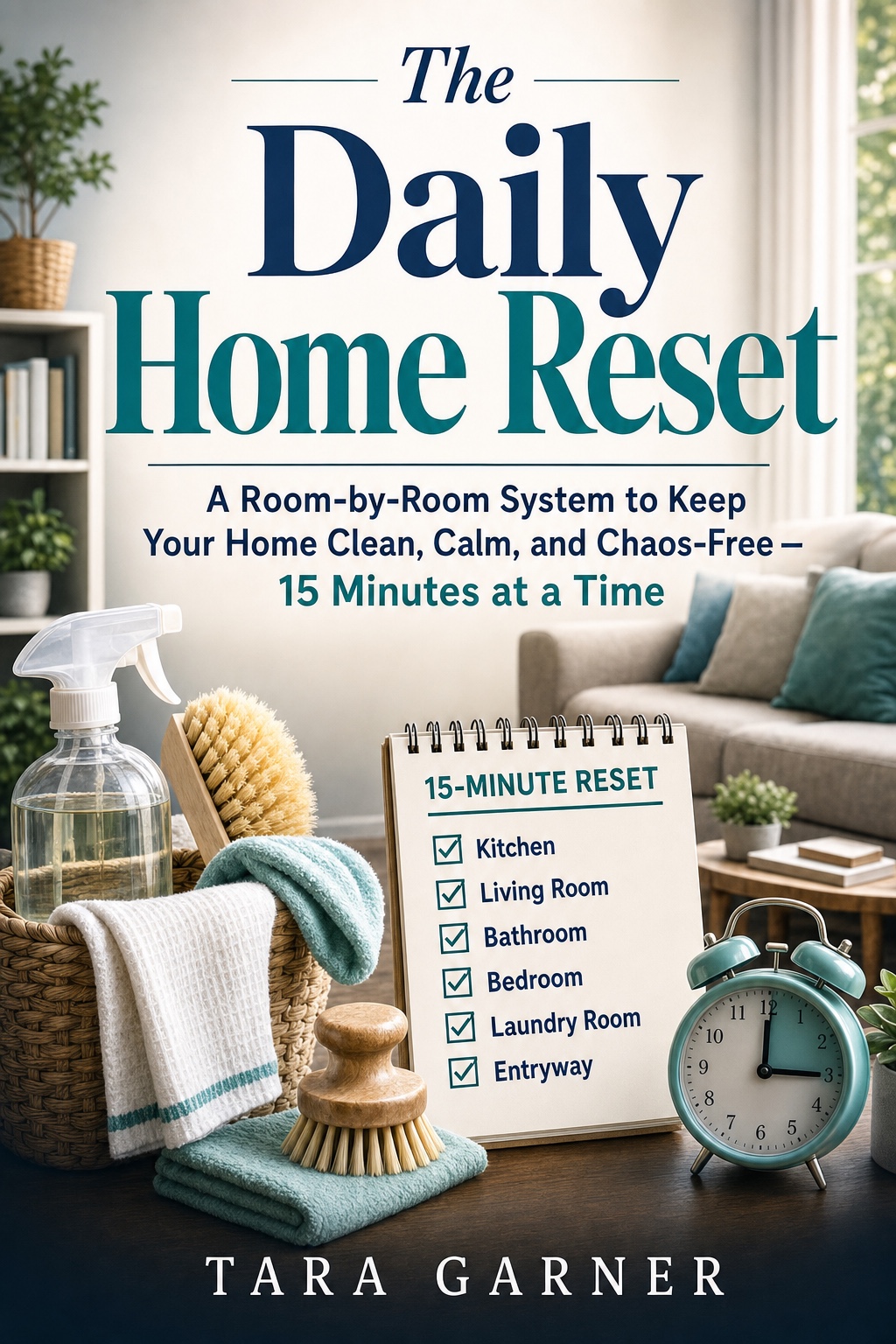
The Daily Home Reset by Tara Aronson is built around short, manageable daily routines that help keep your home under control without sacrificing your weekends to cleaning.
Learn more about The Daily Home Reset →
- Clean Home
- Clean
- A House Cleaning Schedule That Works