How to Clean a Hairbrush
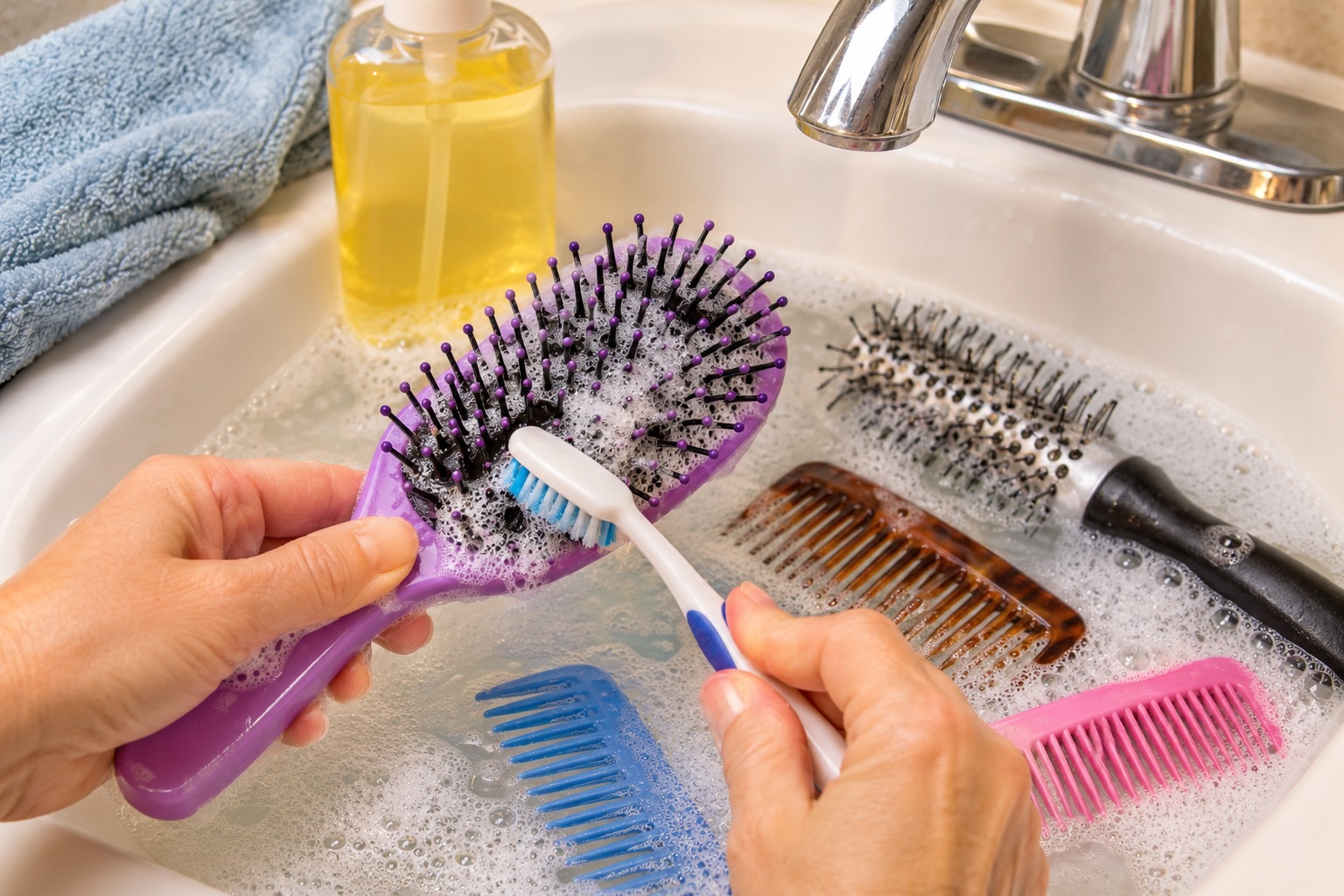
Take a good look at your hairbrush. Go ahead, I'll wait. See that nest of hair wound around the bristles? And underneath it, that mysterious gray fuzz? That's a mix of lint, dead skin, hair oil, dry shampoo and styling products. And every time you brush your freshly washed hair, you're brushing some of it right back in.
A clean hairbrush keeps your hair cleaner longer, and it works better, too. The good news: all you need is shampoo, warm water and a toothpick (for that really settled-in hairbrush hair). Here's how to clean a hairbrush of any type.
How Often Should You Clean Your Hairbrush?
- Pull the hair out every week, or every few days if you have long or thick hair.
- Give it a full wash every few weeks. Wash it every week or two if you use a lot of styling products, dry shampoo or oils.
Step 1: Remove the Hair
Pull out as much hair as you can with your fingers. For hair wound tightly around the bristles, use a toothpick, the tail of a rat-tail comb or a pen to lift it out. Or slide scissors along the base of the bristles, between the rows, to cut through the hair, then pull it out. A wide-tooth comb dragged through the bristles works, too.
Step 2: Wash It (Plastic Brushes and Combs)
- Fill a sink or bowl with warm water and a squirt of shampoo.
- Soak plastic brushes and combs for 15 to 30 minutes, to loosen oil and styling products.
- Scrub the base and between the bristles with an old toothbrush to remove the gray gunk. For combs, run the toothbrush between the teeth.
- Rinse under warm running water.
- Shake out the water, and lay the brush bristles-down on a towel to dry.
Still feels greasy? Soak plastic brushes and combs for 15 minutes in equal parts warm water and white vinegar, or add a tablespoon of baking soda to the soapy water. Both break up stubborn, oily buildup. Rinse and dry bristles-down.
How to Clean Wood, Cushioned and Boar Bristle Brushes
Never submerge these brushes. Water gets into the vent hole on cushioned paddle brushes and rots the cushion, soaks and cracks wooden handles, and makes natural boar bristles twist and curl.
- Remove the hair.
- Dip an old toothbrush in warm water with a drop of shampoo, and scrub the bristles and the base, keeping the brush bristles-down.
- Rinse quickly under running water, still bristles-down, so water doesn't run into the cushion or wood.
- Pat it with a towel, and lay it bristles-down to dry completely, overnight.
Boar bristle brushes are made of natural hair, so treat them like your hair: a gentle shampoo, lukewarm water and no harsh cleaners.
How to Clean a Round Brush

Round brushes are hair-tangling champions. Cut the hair along the barrel with scissors, then pull it out. If the barrel is metal or ceramic (most styling brushes are), scrub with a toothbrush and soapy water instead of soaking, since the barrel and the glue don't like water. Dry bristles-down.
Disinfecting After Lice or Illness
After a bout of head lice, soak combs and plastic brushes in water hotter than 130°F for 5 to 10 minutes, or seal them in a plastic bag for two weeks. For a scalp infection or after sharing brushes, soak plastic brushes and combs in rubbing alcohol for 10 minutes, then rinse. Keep alcohol off wood and boar bristle brushes.
Clean Your Hot Tools, Too
While you're at it, unplug your flat iron and curling iron, let them cool completely and wipe the plates or barrel with a damp cloth. Use a little rubbing alcohol on a cotton pad for product buildup. Pull lint off the back vent of your hair dryer, too. A clogged vent makes it overheat.
When to Replace a Hairbrush
Replace your hairbrush if the bristles are bent, melted, broken or missing their little ball tips, if the cushion has torn or if the brush still smells after you wash it. Most brushes last six months to a year with regular use. Good boar bristle brushes can last for years.
How to Clean a Hairbrush: Quick Answers
What is the gray stuff in my hairbrush?
It's a mix of lint, dust, dead skin cells, hair oil and leftover styling products. A soak in warm, soapy water and a scrub with an old toothbrush gets it out.
How do you clean a hairbrush with vinegar?
Soak plastic brushes and combs for 15 minutes in equal parts warm water and white vinegar, then rinse and dry bristles-down. Don't soak wood, cushioned or boar bristle brushes.
Can you put a hairbrush in the dishwasher?
Some all-plastic combs can go on the top rack, but the heat can warp brushes and melt glue. Hand washing is safer.
How often should you wash your hairbrush?
Remove the hair weekly and wash it every few weeks, or every week or two if you use a lot of styling products.
Keep Going
Freshen up the rest of your bathroom routine with these related guides:
- How to Clean Makeup Brushes: And sponges, and how often.
- How Long Does Makeup Last?: A shelf life chart and when to toss.
- Bathroom Cleaning and Organizing: A complete guide.
- Clean Out Your Medicine Cabinet: What to toss and when.
- How to Clean Jewelry: Gold, silver, pearls and gemstones.
- How to Clean Cleaning Supplies: Mops, sponges and more.
- How to Wash Towels: So they stay soft and fluffy.
- How to Clean a Purse: Leather, suede, canvas and more.
- Clean Home
- Bathroom Cleaning and Organizing
- How to Clean a Hairbrush
Free 15-Minute Daily Reset Checklist
Get Notes on Keeping House
Fifteen minutes a day. No weekend cleaning marathons. No guilt. Sign up for my newsletter and I'll send you the printable checklist that makes it happen.
Send My ChecklistNo spam, ever. Unsubscribe anytime.

Free Printable
Notes on Keeping House
Sign up and get my 15-Minute Daily Reset Checklist. One timer, five zones, and a house that stays under control.
Send My ChecklistNo spam, ever. Just smart, funny tips for keeping house from Tara Aronson.