Tips For Sanitizing Your Home
Tips for sanitizing your home. Living through a pandemic has opened our collective eyes to a whole new world of germs out there - one that we're now seemingly called upon to conquer daily at home.
Properly sanitizing your home and the various items and surfaces inside has become the new mandate for healthy living. The pandemic may have you wanting to scrub down every surface in your home.
But before you empty your local store's entire bleach stock, it's essential to know all your options for cleaning and disinfecting, and how and where each works best.
You're about to get the scoop on sanitizing your home safely and effectively - copious quantities of bleach not required.
Tips For Sanitizing Your Home - The Disinfecting Difference
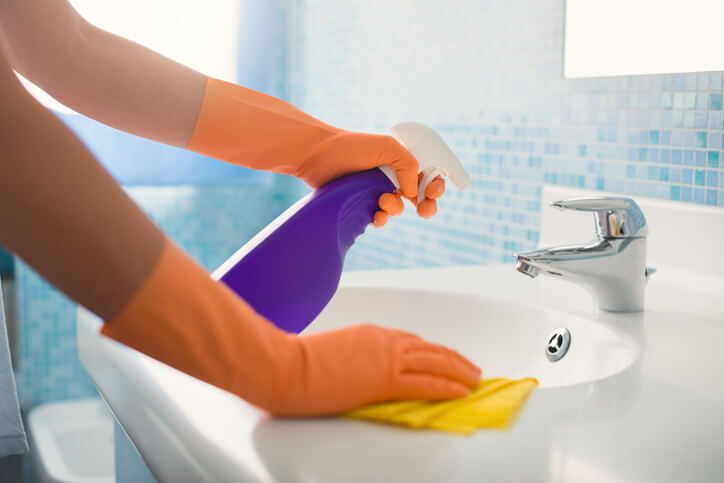
Cleaning and disinfecting - primarily focusing on the high-touch surfaces in our homes - can slow the spread of pathogenic germs and help keep us healthy.
While the two words are often used interchangeably, cleaning and disinfecting are two distinct steps. Together, they are the dream team against germs. What's the difference?
CLEANING removes dirt and some germs from surfaces. Simple soap and water are one of the most popular cleaning methods. The cleaning process, however, does not kill germs lurking on the surface. So why not skip right to disinfecting?
Cleaning is a smart start to the two-step process because it lowers germ numbers and the risk of spreading infection.
Removing surface gunk also gives a follow-up disinfectant the clean surface required to do its germ-killing job effectively.
Otherwise, dirt and oil could consume or trap the disinfectant before it ever reaches the germs.
All-Purpose Cleaning Spray
This homemade cleaning solution works well on hard surfaces. In a spray bottle, gently swirl 2 cups of water, 1/2 cup of distilled white vinegar, 1/4 cup of isopropyl (rubbing) alcohol, and 1/8 teaspoon of dishwashing liquid. To scent, add 5-10 drops of essential oil.
DISINFECTING with a household disinfectant is the essential second step that kills 99.9 percent of surface germs (when used according to directions) to lower the risk of spreading infection.
Disinfectants are antimicrobials regulated by the Environmental Protection Agency (EPA).
Disinfectants attack microscopic organisms (i.e., bacteria, viruses, and fungi) on surfaces. This process does not always make a dirty surface appear clean.
But killing surface germs after cleaning will make your home both look and truly be clean.
SANITIZING is the middle sister of cleaning and disinfecting. Although we use the word sanitize casually to mean clean, sanitizers are technically cleaning products that reduce the germ count to a safer level, per public health standards and requirements.
They come in especially handy on the go - when full disinfecting isn't always practical. Sanitizing products do not carry an EPA registration number.
Tips For Sanitizing Your Home
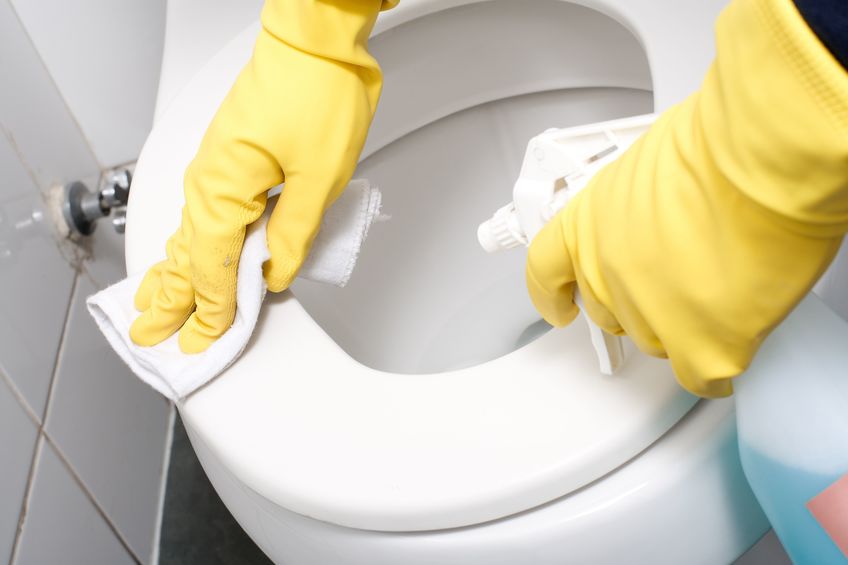
Clean surfaces are not necessarily disinfected, and disinfected surfaces are not necessarily clean.
The most effective way to mitigate the spread of bacteria and viruses is to clean an object or surface first and then disinfect it. This diligence is most critical in certain areas of your home.
The biggest threat to you and your family's health and safety are the frequently touched objects and surfaces.
Because the more you - and everyone around you - touch a surface, the more germs and bacteria collect on that surface and lie in wait to jump on your hands.
The most frequently touched surfaces in most homes are places like tables, chairs, telephones, keyboards, remote controls, countertops, and doorknobs.
Because these places see so much daily action, disinfect them daily to reduce the number of germs waiting there next time someone flips on a light switch or pulls out a chair for dinner.
- Clean Home
- Clean
- Tips For Sanitizing Your Home