Kitchen Study Room Ideas: How to Set Up a Homework Station

Many moms, including me, like the kids to do their homework in the kitchen, so we can answer questions while we cook. ("What's 7 times 8?" "Stir the sauce and I'll tell you.")
The kitchen table is warm, it's well lit and it's where the snacks are. The only problem? Kids spend half of homework time jumping up and down (and prolonging the whole process) to hunt for an eraser, a ruler or the glue stick.
The fix is a homework station: everything your kids need, in one spot, within arm's reach.
Here's how to set one up, in the kitchen or anywhere in the house. Here are my homework tips for the routine itself.
Pick the Spot

Wherever kids work, they need a big, flat surface and good light. Good spots include:
- The kitchen table or counter: Best for younger kids and anyone who needs a little help or a nudge to stay on task.
- The dining room table: Quieter, but still close by. One friend's daughter liked the kitchen counter while her mom cooked. Another child worked best at the dining room table.
- A desk in a quiet corner: Good for older kids who focus best away from the action, as long as it's not in a bedroom full of distractions.
Set Up a Supply Center
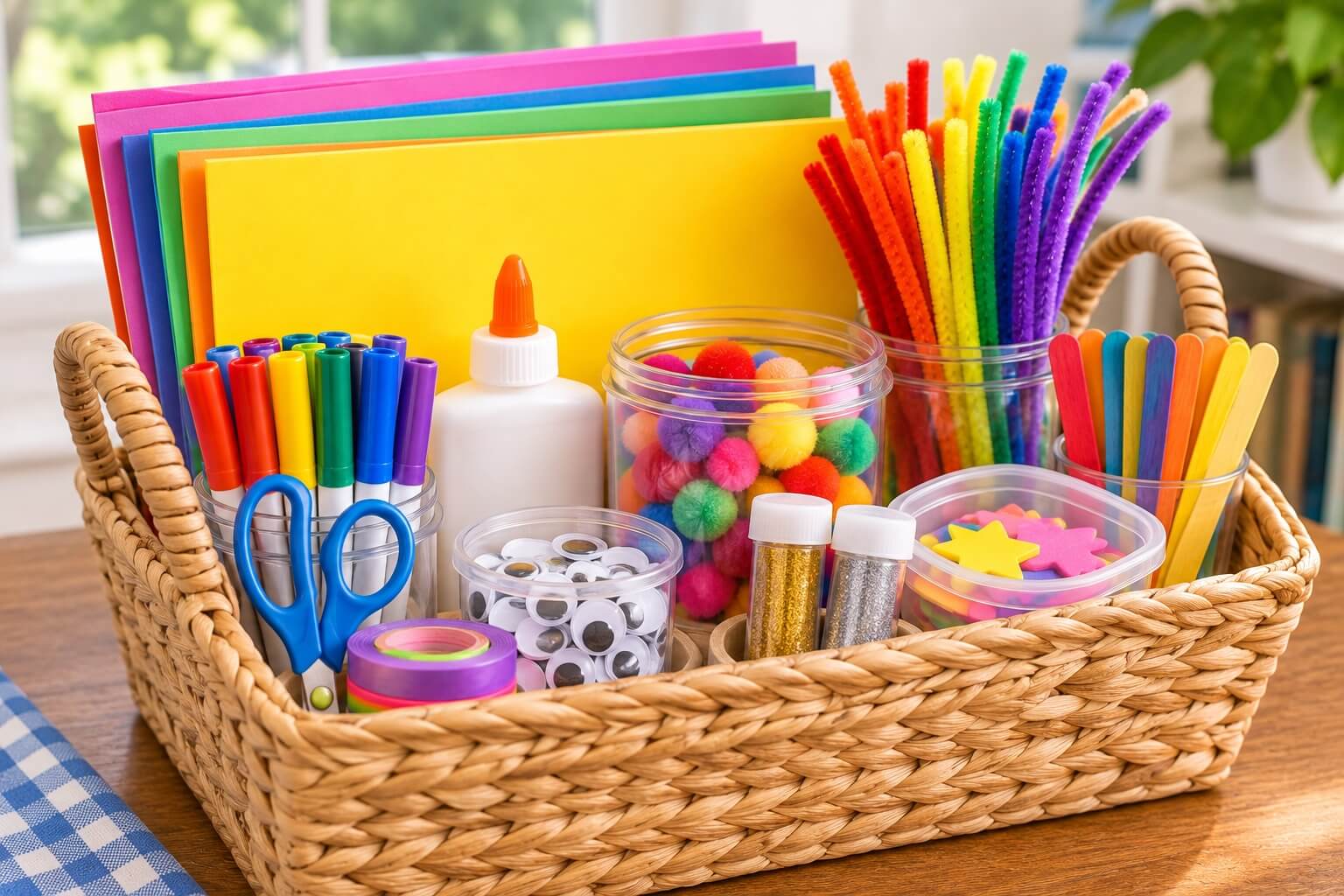
For a kitchen study hall, empty one kitchen cabinet or drawer and turn it into a mini office supply center. Stock it with:
- Pencils, pens, colored pencils and highlighters
- Erasers and a pencil sharpener
- Markers and crayons
- Notebook paper, graph paper and construction paper
- A ruler, a protractor and a compass
- A calculator
- Scissors, glue sticks and tape
- A stapler and a hole punch
- Index cards and folders
- Headphones (for online assignments and videos)
Adjust it for your kids' ages and this year's subjects. A second grader doesn't need a protractor. A seventh grader definitely does.
Make a Homework Caddy
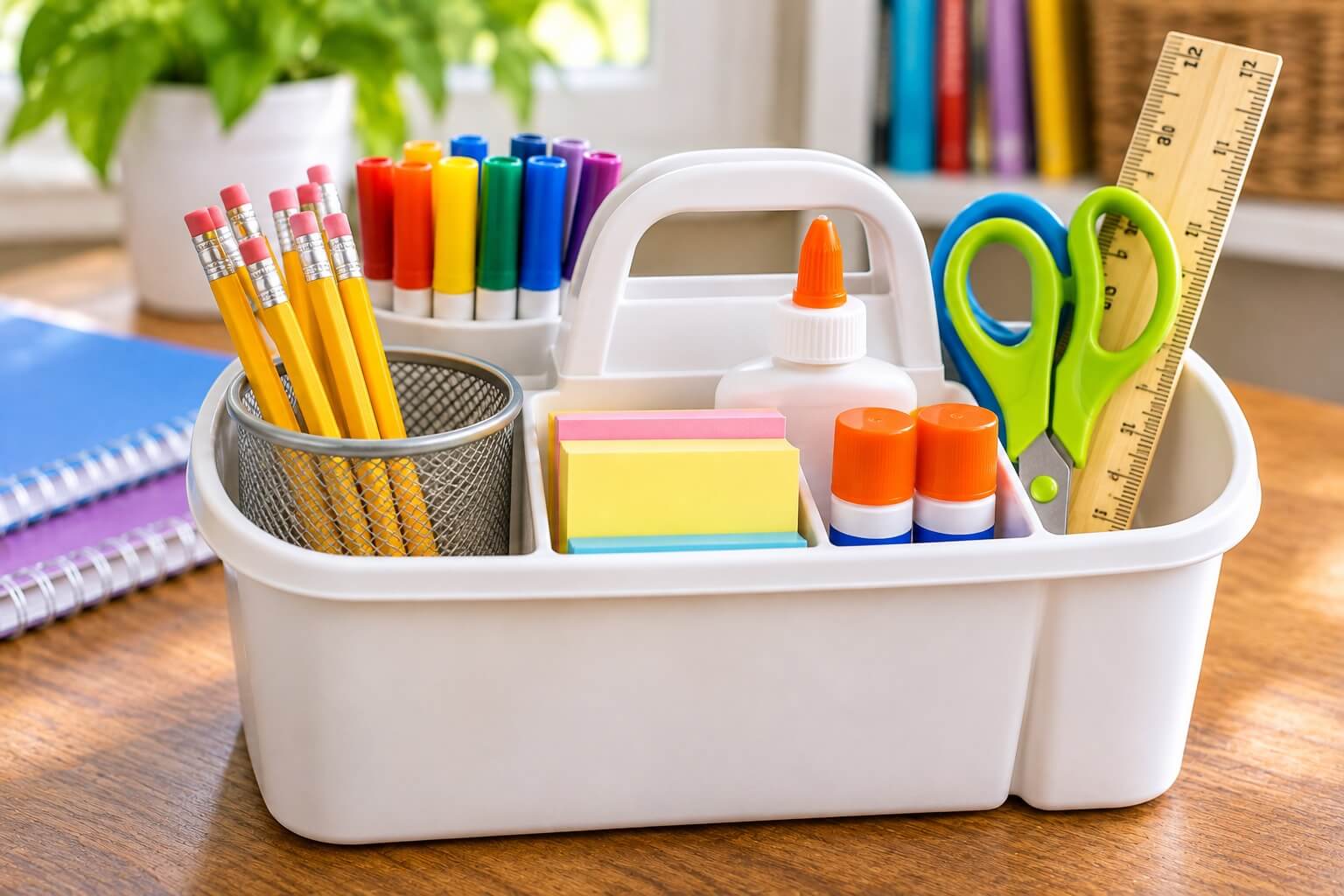
If your homework station is the kitchen table, here's the trick to clearing it for dinner in 30 seconds: a homework caddy. Fill a plastic caddy (the kind with a handle) with the everyday supplies. At homework time, it comes out. At dinnertime, it goes back on the shelf. If you share a desk or home office with your kids, those cute home-office portables from the decor magazines work, too. The rattan-lidded file box. The everything basket.
Give Each Child a File Box
Give each child a file box, a magazine holder or a bin for papers and ongoing projects, like book reports, science fair notes and note cards. Add a folder for each subject. Then add one more spot that might save your sanity: a basket for papers that need a parent's signature. Check it every night. Here's how to organize paperwork, including the flood of school papers.
Add a Charging Station
Most kids do at least some homework on a laptop or tablet now. Plug a charging station into an outlet near the homework spot, so the school laptop is charged and ready, and the phones can park there during homework time.
Mom's Magic Homework Project Basket
Here's the answer to "But Mom, it's due tomorrow!" It's a cleaning caddy (or basket) chock-full of everything I used to have to dash to the store for at 8 p.m.:
- Poster board and foam board
- Glue and a glue gun (for grown-ups or with a grown-up)
- Permanent markers in several colors
- Sequins, fabric scraps and yarn
- Pipe cleaners and craft sticks
- A zip-top bag of aquarium leftovers and other glueable figurines
I've also gotten out of the silly habit of tossing shoeboxes. They live under my bed now, waiting for new life as a diorama. And the odd-sized poster board? It's stashed behind the tall bookshelf in the living room.
Lighten the Backpack
Keep a shelf near the homework spot for current textbooks, a dictionary and any other reference books your kids use. And if your kids still haul heavy textbooks back and forth, ask whether the school has digital versions, or consider buying a second set for home at the start of the year.
Watching my two middle schoolers lug bulging backpacks they could barely lift convinced me it's a cost-effective alternative to corrective surgery. Pediatricians suggest a backpack weigh no more than about 10% to 20% of a child's body weight, worn on both shoulders.
Keep It Tidy
Make cleanup part of homework time: supplies back in the caddy, papers in the file box, finished homework in the backpack and the backpack by the door. Once a month, toss the dried-out markers and stubby pencils, and restock. Here are more kitchen organization ideas.
Homework Station Ideas: Quick Answers
What should be in a homework station?
Pencils, erasers, a sharpener, markers, paper, a ruler, a calculator, scissors, glue, tape, a stapler, folders and headphones, plus a charging spot.
Is the kitchen table a good place for homework?
Yes, especially for younger kids who need help. Keep supplies in a caddy, so you can clear the table for dinner quickly.
How do you organize school papers at home?
Give each child a file box with a folder for each subject, and keep one basket for papers that need a parent's signature.
How heavy should a kid's backpack be?
Pediatricians suggest no more than about 10% to 20% of a child's body weight, carried on both shoulders.
Keep Going
Make school days run smoother with these related guides:
- Homework Tips for Kids: End the nightly homework battle.
- School Morning Routine: Get out the door on time.
- Kids School Lunch Ideas: Healthy lunches they'll eat.
- How to Organize Paperwork: Without the piles.
- Kitchen Organization Ideas: That make cooking easier.
- How to Organize a Kid's Room: Simple storage ideas.
- Entryway Organization Ideas: Stop clutter at the front door.
- Kitchen Cleaning and Organizing: A complete guide.
- Clean Home
- Kitchen Cleaning & Organizing
- Homework Station Ideas

Free Printable
Notes on Keeping House
Sign up and get my 15-Minute Daily Reset Checklist. One timer, five zones, and a house that stays under control.
Send My ChecklistNo spam, ever. Just smart, funny tips for keeping house from Tara Aronson.