Easy Fireplace Maintenance Tips for a Safer, Cleaner Fireplace
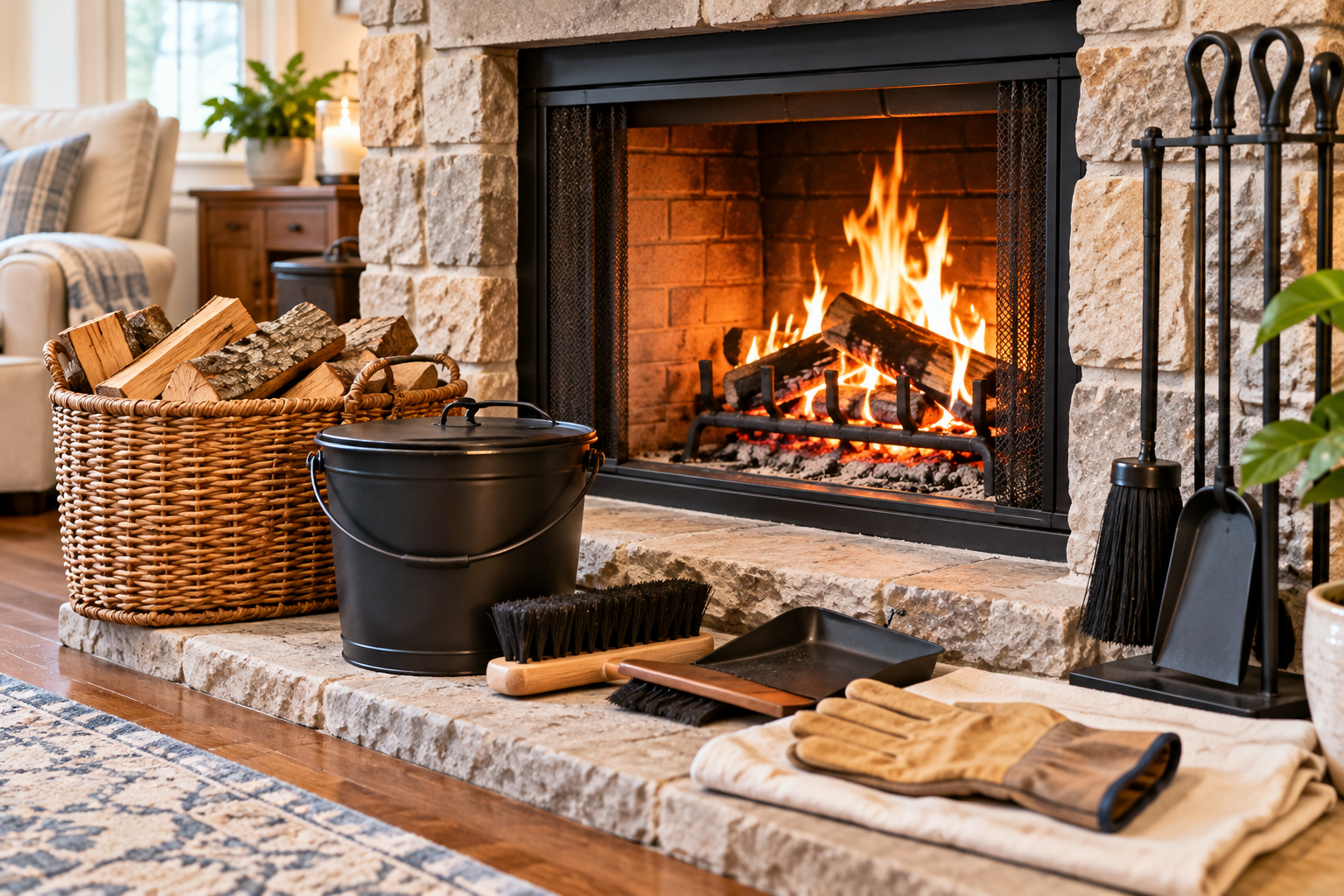
A fireplace is one of those home features that looks wonderfully low-maintenance. Put in wood. Light fire. Enjoy cozy evening. What could possibly be complicated?
Quite a bit, as it turns out. Ash builds up. Soot collects. Chimneys need attention. Dampers need to work.
And anything whose basic job description includes containing fire inside your house deserves a little respect.
The good news is that routine fireplace maintenance doesn't have to become another enormous home project.
A few simple habits can keep the area cleaner, help you spot problems early and tell you when it's time to bring in a chimney professional.
We'll cover the homeowner jobs you can reasonably handle yourself, the warning signs you shouldn't ignore and the maintenance that needs professional attention.
Because the goal is not to become a chimney expert. The goal is to enjoy the fireplace without wondering whether something alarming is happening somewhere above the mantel.
1. Start With an Annual Fireplace and Chimney Check
Before fireplace season begins, take a good look at the entire fireplace area. Check for anything obviously unusual:
- Cracked or damaged masonry
- Loose bricks
- Damaged fireplace doors
- Problems with the damper
- Heavy soot buildup
- Unusual odors
- Signs of water
- Debris inside the firebox
Also look outside from the ground for obvious chimney damage. You don't need to diagnose every problem. You're looking for changes.
A fireplace that suddenly looks different deserves attention before you light a fire and hope for the best.
2. Have the Chimney Professionally Inspected
A fireplace may look perfectly fine from your living room while something entirely different is happening farther up the chimney.
A qualified chimney professional can inspect areas you can't easily or safely evaluate yourself. The inspection can identify problems such as:
- Creosote buildup
- Blockages
- Flue damage
- Deteriorated masonry
- Chimney-cap problems
- Water intrusion
- Animal nests or debris
How often cleaning is needed depends on the fireplace, fuel, frequency of use and what the inspection finds.
An inspection tells you what your chimney needs. Which is considerably more useful than guessing.
3. Don't Turn Chimney Inspection Into a DIY Ladder Adventure
You can handle plenty of fireplace maintenance from the ground. Climbing onto the roof is another matter.
If properly checking or repairing something requires roof access, special equipment or chimney expertise, hire someone qualified. A fireplace-maintenance project should not end with:
"Well, the chimney looks fine, but now we need to discuss the ankle."
Professional help is cheaper than many emergency-room visits.
4. Clean Out Excess Ash
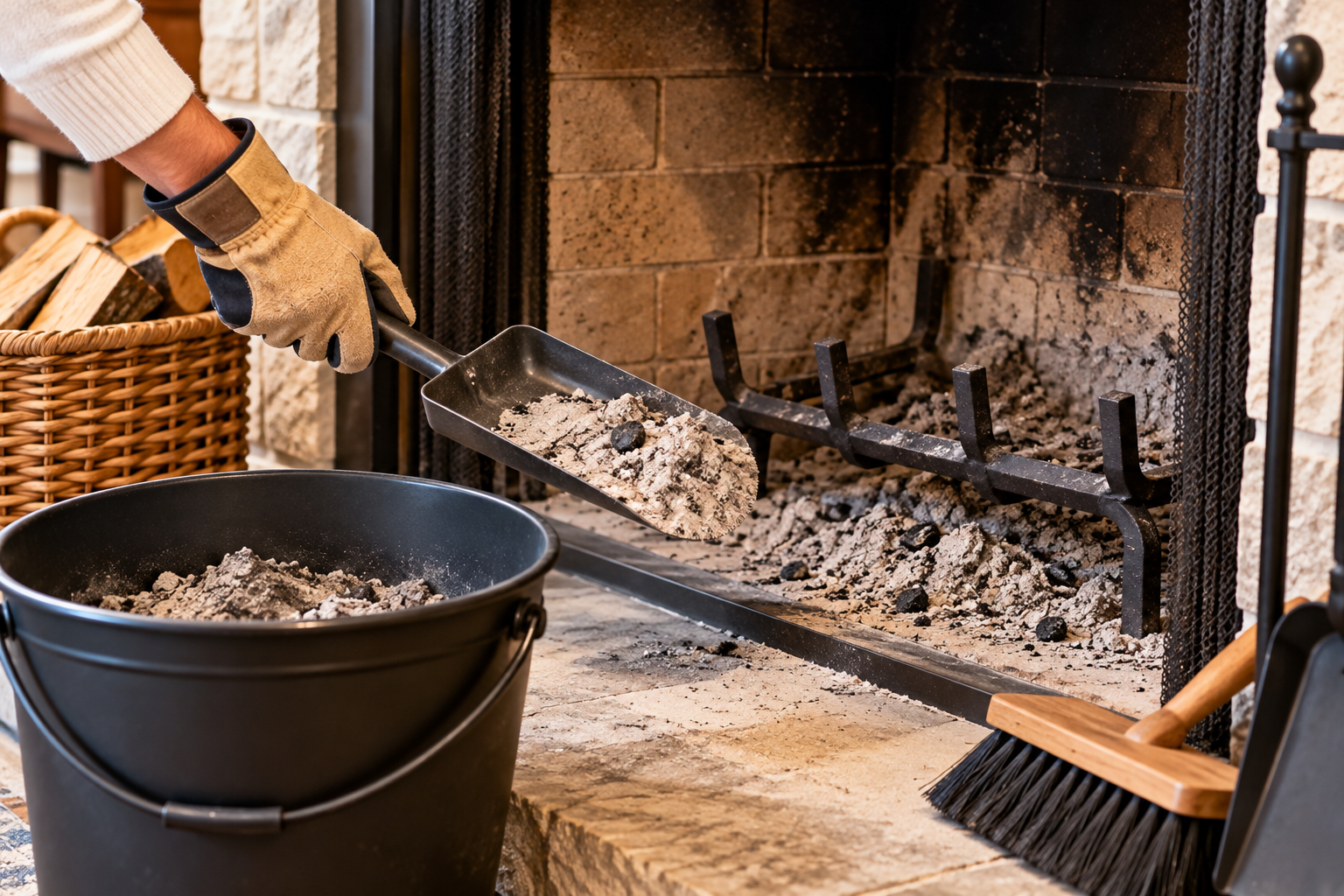
A wood-burning fireplace naturally produces ash. You don't have to remove every speck after every fire, but don't let ash accumulate excessively.
Before cleaning, make sure everything is completely cold. Not mostly cold. Not "the fire went out last night."
Completely cold.
Embers can remain hot longer than they appear. When you're certain the ashes are cold, use a fireplace shovel and suitable metal container for removal.
Take your time. Ash has an extraordinary ability to become airborne the moment you become impatient.
5. Treat Ashes as Though Embers May Still Be Hiding
Hearth materials hold heat for hours. Stone, brick, and tile soak up warmth and release it slowly, which is lovely for your living room and less lovely for the knees of a baby crawling across it.
Never put fireplace ashes directly into:
- Paper bags
- Cardboard boxes
- Plastic trash cans
- Compostable bags
- Anything else that can burn or melt
Use a metal container with a tight-fitting lid and keep it away from combustible materials.
Hot embers can hide beneath apparently cold ash. Fireplace ashes are very good at looking innocent. Don't believe them too quickly.
6. Clean the Firebox Without Creating an Indoor Dust Storm
Once everything is completely cold and excess ash has been safely removed, clean loose debris from the firebox as needed.
Work slowly. You can use appropriate fireplace-cleaning tools or a vacuum specifically designed to handle cold ash.
Don't use an ordinary household vacuum unless its manufacturer specifically says it's suitable for that purpose. Fine ash can be hard on regular vacuums and can create an impressive cloud of dust.
Your goal was to clean the fireplace. Not distribute the fireplace throughout the living room.
7. Keep the Hearth Clear
The area immediately around the fireplace should not become overflow storage. Keep combustible materials away from the fire. That includes things such as:
- Newspapers
- Magazines
- Baskets
- Blankets
- Toys
- Decorations
- Firewood piled too close
- Holiday décor
A basket of blankets beside the fireplace may look wonderfully cozy in a photograph. Fire is less interested in your decorating concept. Give the fireplace breathing room.
8. Check the Damper
For a traditional wood-burning fireplace, the damper needs to open properly before you light a fire. Check that it moves as intended and isn't obviously obstructed.
An open damper allows smoke and combustion gases to travel up the chimney. A damper that doesn't function properly deserves attention before you use the fireplace.
Discovering the damper problem after the room begins filling with smoke is a less charming method of diagnosis.
9. Watch for Smoke Entering the Room
Smoke belongs up the chimney. This is one of the easier fireplace rules to remember. If smoke repeatedly enters the room, don't simply open a window and decide your fireplace has personality.
Possible causes can include airflow problems, blockages, damper issues or chimney problems.
Stop using the fireplace until you know what's wrong. A fireplace shouldn't require the living room to participate in the combustion process.
10. Burn Appropriate, Dry Firewood
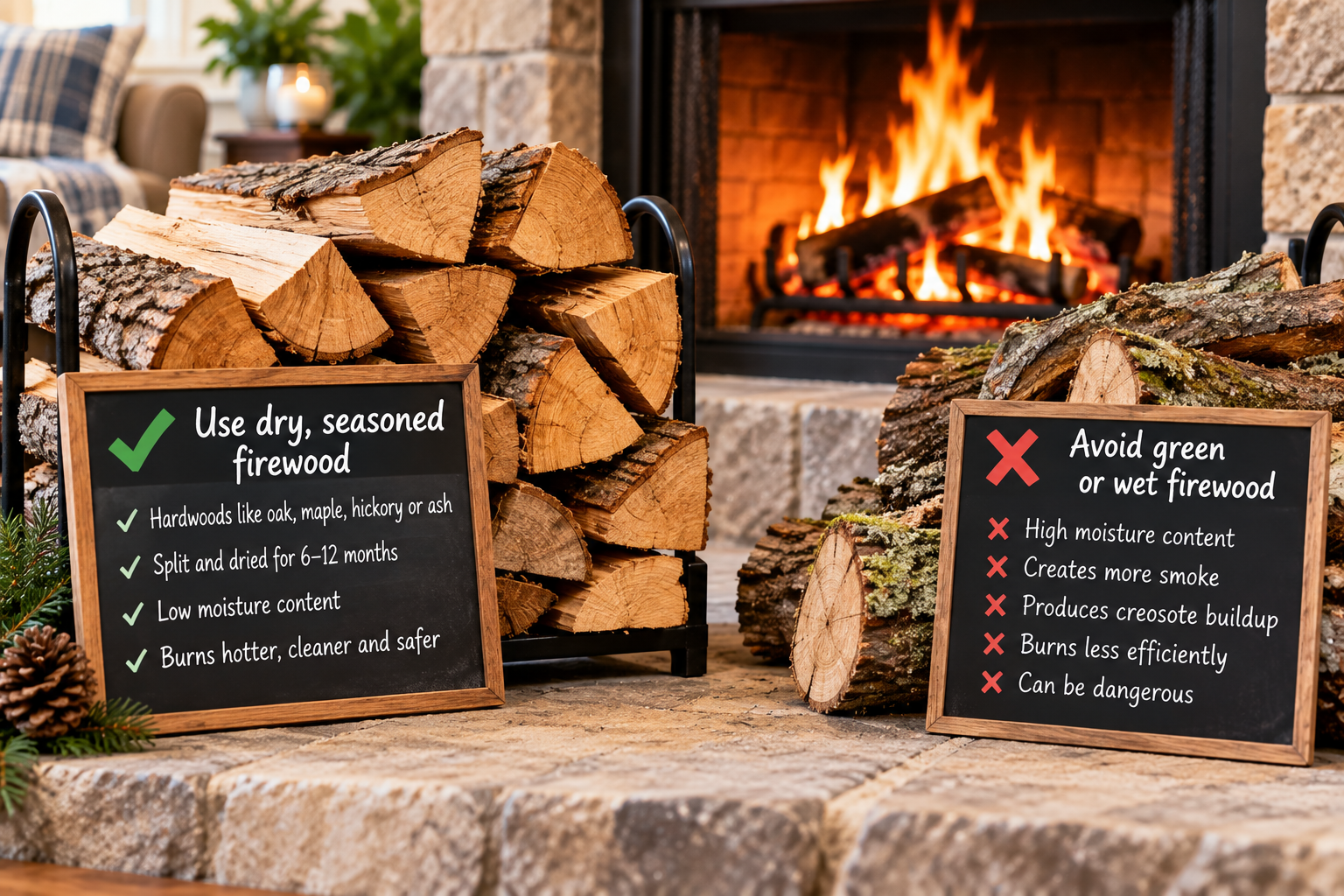
For a wood-burning fireplace, use properly seasoned firewood intended for burning. Wet or unseasoned wood tends to burn less efficiently and can create more smoke.
Don't use the fireplace as a convenient disposal system for household materials. Avoid burning:
- Trash
- Plastic
- Painted wood
- Treated lumber
- Glossy paper
- Household debris
Your fireplace is not a vertical garbage disposal. Give it wood. Give your trash can everything else.
11. Don't Overload the Fireplace
A bigger fire is not automatically a better fire. An enormous roaring fire may look impressive.
It also creates more heat and can increase the stress on the fireplace and chimney system. Use a manageable amount of wood and follow the recommendations for your fireplace.
You are trying to warm the room. You are not signaling passing aircraft.
12. Use a Fireplace Screen or Doors
A sturdy fireplace screen helps keep sparks and embers where they belong. Check that your screen or fireplace doors are:
- Stable
- Undamaged
- Properly positioned
- Large enough for the opening
Use the screen whenever you have an open wood fire. One determined spark can travel considerably farther than seems reasonable.
Remember that with a fire roaring, expect the screen to heat up too. Metal mesh is a great conductor of heat, which is exactly what you don’t want little - or big - fingers poking through.
13. Draw a Line Around the Fire (Literally)
Before you so much as pick up a poker, establish a clear no-go zone around the fireplace for kids and pets. A good rule of thumb is about three feet from the hearth.
Some families mark it with a rug edge or a strip of painter’s tape on the floor, which gives small children a visible line and gives you something to point at when you say, “What did we say about the tape?” for the eleventh time that evening.
Here’s the thing that catches people off guard: a fire doesn’t have to be roaring to be dangerous. Heat hangs around long after the show is over.
14. Make Sure Smoke and Carbon Monoxide Alarms Work
Having a fireplace is one more excellent reason to get friendly with your home’s smoke and carbon monoxide alarms. Smoke is the obvious risk, but carbon monoxide is the sneaky one.
It’s colorless, odorless, and can build up from a blocked chimney or a poorly drafting fire without giving you a single clue. Your nose won’t catch it. Your alarm will.
Test them regularly. Once a month is a good habit. Press the test button, wince at the noise, and move on with your life. It takes about ten seconds, which is a fantastic return on investment.
Replace batteries or whole units when it’s time. Alarms don’t last forever. Most smoke alarms need replacing about every ten years, and carbon monoxide alarms often have an even shorter lifespan.
Don’t disable an alarm because it keeps going off. We’ve all been there: the toast gets a little too toasty, the fireplace puffs a bit of smoke on startup, and suddenly you’re on a step stool yanking out the battery. Resist the urge.
The alarm is annoying you professionally. That’s its job. Let it do it.
15. Watch for Creosote Buildup
Burning wood can produce creosote, a combustible residue that can accumulate inside a chimney.
This is one of the important reasons wood-burning fireplaces and chimneys need proper inspection and cleaning.
Don't assume that because you can't see much buildup from the fireplace opening, the rest of the chimney is clean.
Most of the chimney is inconveniently located where you can't inspect it while standing in the living room. A professional inspection takes the guesswork out of this.
16. Watch for Water Around the Fireplace or Chimney
Water and masonry do not have the healthiest long-term relationship. Look for:
- Damp spots
- Staining
- Water inside the firebox
- Damaged masonry
- White staining on brick
- Peeling finishes nearby
- Musty odors
Outside, chimney caps, flashing and masonry can all play a role in keeping water where it belongs.
If you notice signs of moisture, have the cause checked. A bucket in the fireplace is not a maintenance plan.
17. Check for Animals and Nesting Debris
Birds and other animals occasionally decide a chimney looks like excellent real estate. Before fireplace season, pay attention to:
- Animal sounds
- Nesting material
- Debris
- Unusual odors
- Signs of activity around the chimney
Don't light a fire to encourage an animal to leave. Have the situation handled appropriately. Nothing improves a family evening less than discovering you've accidentally involved wildlife.
What About Gas Fireplaces?
Gas fireplaces have different maintenance requirements from traditional wood-burning fireplaces.
They don't produce wood ash or creosote in the same way, but that doesn't make them maintenance-free.
Follow the manufacturer's instructions for your specific unit and have appropriate professional service performed as recommended. Watch for:
- Trouble igniting
- Unusual odors
- Soot where it shouldn't be
- Changes in flame appearance
- Damaged glass
- Unusual sounds
- A pilot or ignition system that isn't behaving normally
Don't disassemble gas components or attempt repairs beyond what the manufacturer recommends for homeowners. Gas and improvisation are not a good household pairing.
What About Electric Fireplaces?
Electric fireplaces are generally simpler to maintain. Keep vents and air-intake areas free of dust according to the manufacturer's instructions.
Inspect the cord and plug where applicable. Keep combustible objects away from heat outlets.
And don't assume that because there isn't a real flame, you can drape the family laundry over it. A heater is still a heater.
Before the First Fire of the Season
Before you light the first wood fire of fall or winter:
- Make sure the fireplace and chimney are ready for use
- Check the damper
- Clear combustible clutter
- Inspect the screen or doors
- Confirm alarms are working
- Check for signs of animals or debris
- Have needed professional inspection or cleaning completed
Do this before the first cold night. Fireplace professionals tend to become considerably more popular once everyone suddenly remembers winter exists.
After the Last Fire of the Season
When fireplace season ends, give the area a final cleanup. Once all ashes are completely cold:
- Remove excess ash safely
- Clean the hearth
- Clean fireplace tools
- Put away unnecessary firewood accessories
- Note any repairs needed
- Schedule professional work before next season if necessary
Don't wait until next December to rediscover the problem you noticed in March. Write it down.
Better yet, deal with it. Future You has enough going on.
When to Stop Using the Fireplace
Stop using the fireplace and have it evaluated if you notice:
- Smoke entering the room
- Visible damage
- Loose or deteriorating masonry
- Strong unusual odors
- Water intrusion
- Signs of a chimney blockage
- Problems with the damper
- Excessive soot or suspected creosote
- Problems with gas-fireplace operation
- Anything else that makes you question whether the fireplace is safe
You don't need to identify the exact technical problem before calling someone.
"I don't think this is working correctly" is enough.
When to Call a Chimney Professional
Bring in a qualified professional for chimney inspection and cleaning, and whenever the work involves something you can't safely evaluate or repair yourself.
That includes problems involving:
- Chimney interiors
- Creosote buildup
- Flue damage
- Structural problems
- Chimney caps
- Significant masonry deterioration
- Water intrusion
- Persistent smoke problems
- Difficult blockages
- Gas components
There is no homeowner merit badge for personally repairing everything attached to your house. Sometimes good maintenance means knowing who to call.
Your Simple Fireplace Maintenance Routine
Fireplace maintenance becomes much easier when you stop thinking of it as one giant job.
During fireplace season:
Keep the hearth clear.
Use the screen.
Watch how the fireplace is operating.
Remove excess cold ash safely.
Before fireplace season:
Inspect.
Have professional chimney work done as needed.
Test alarms.
Check the damper and fireplace equipment.
After fireplace season:
Clean up.
Note problems. Schedule repairs. That's it. No ceremonial chimney-maintenance weekend required.
The Five Rules of Fireplace Maintenance
If you remember nothing else:
1. Treat ashes as hot until you're certain they're cold.
Hidden embers can remain dangerous.
2. Keep combustible clutter away from the fireplace.
The hearth is not storage.
3. Pay attention to smoke, odors, moisture and visible damage.
Changes can be warning signs.
4. Keep smoke and carbon monoxide alarms working.
They're part of fireplace safety too.
5. Leave chimney and complicated fireplace problems to qualified professionals.
Especially when the alternative involves climbing onto the roof.
The Bottom Line
Fireplace maintenance doesn't need to be difficult. Most of your job is paying attention.
- Keep the hearth clear.
- Remove cold ashes safely.
- Burn appropriate dry wood.
- Use a fireplace screen.
- Check the damper.
- Keep children and pets back.
- Maintain your smoke and carbon monoxide alarms.
And have the chimney properly inspected and cleaned when needed. Most importantly, notice when something changes.
Smoke coming into the room? Stop.
Strange odor? Investigate.
Water appearing where water has no business appearing? Get it checked.
Your fireplace should make the room feel warm and cozy. It should not provide suspense.
A little maintenance before and during fireplace season lets you enjoy the part you actually wanted in the first place:
A comfortable chair. A warm fire. And absolutely no reason to wonder what's happening inside the chimney.
Keep Going
Once the fireplace is ready for the season, continue with Home Maintenance for the other jobs that keep your house running smoothly.
For seasonal chores you don't want sneaking up on you, see the Monthly Home Maintenance Checklists.
And while you're getting the house ready for cooler weather, continue with Fall Cleaning and Fall Organizing.
- Clean Home
- Home Maintenance
- Fireplace Maintenance Tips