How to Remove Carpet Stains
Carpet is warm, soft and cozy. It's also a magnet. Food, drinks, mud, markers and the dog's breakfast all seem to land on the one spot of carpet everybody can see. Usually, the lightest-colored one. Usually, right before company comes.
Here's the good news: most carpet stains come out, as long as you use the right method and you don't panic and scrub. Here's the one method that works on most spills, plus an A-to-Z guide to getting out everything from blood to wine to gum, nail polish and slime.
The Method That Works on Most Carpet Stains
- Get the solids up first. Scrape up food, mud or gunk with a spoon or a dull knife.
- Blot. Never rub. Press a clean white cloth or plain white paper towel on the spill to soak up as much as you can. Rubbing spreads the stain and frays the carpet fibers into a fuzzy patch.
- Work from the outside in. Start at the edge of the stain and move toward the center, so you don't push it into a bigger ring.
- Treat it. Use the cleaner that matches the stain (see the guide below). Apply it to the cloth, not straight onto the carpet, and blot.
- Rinse. Blot the spot with a cloth dampened with plain water. Leftover cleaner is sticky, and sticky attracts dirt. Skip this step, and the stain comes back as a dirty spot.
- Dry it. Lay a stack of white paper towels or a folded towel on the spot and weigh it down with a few heavy books for a few hours. Then fluff the fibers with your fingers.
How To Remove Carpet Stains
The Three Rules
- Test first. Try every cleaner on a hidden spot, like inside a closet or under the couch, before you use it on the stain.
- Less liquid is more. Soaking the carpet pushes the stain into the pad underneath, where it can come back and cause mildew.
- Cold water first. Hot water sets protein stains like blood, milk and vomit.
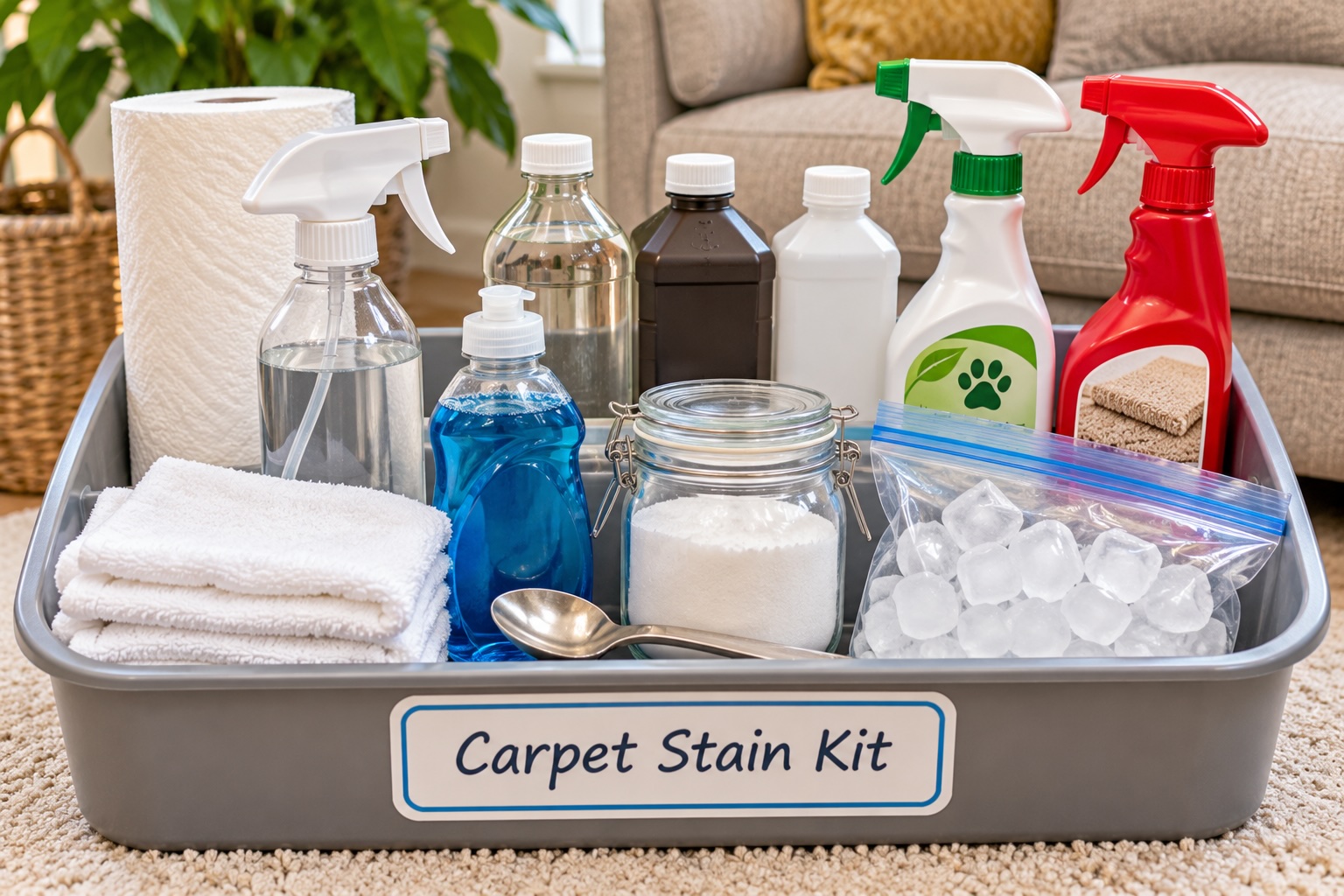
Your Carpet Stain Kit
- Clean white cloths and plain white paper towels (colored ones can transfer dye)
- A spoon or dull knife for scraping
- A spray bottle of plain water
- Clear dish soap
- White vinegar
- 3% hydrogen peroxide
- Rubbing alcohol
- Cornstarch or baking soda
- An enzyme cleaner, for pet accidents and protein stains
- A carpet stain remover
- A bag of ice cubes
Mix the two go-to solutions:
- Dish soap solution: a quarter teaspoon of clear dish soap in a cup of lukewarm water. More soap leaves a sticky spot.
- Vinegar solution: one part white vinegar to two parts water.
Carpet Stain Cheat Sheet
Type of stain
Water-based
Tannin
Grease and oil
Protein
Sticky and waxy
Dye
Example
Soda, juice, mud, food
Coffee, tea, wine
Butter, gravy, makeup
Blood, milk, vomit, urine
Gum, candle wax, crayon
Red drinks, ink, marker
What works
Dish soap solution
Dish soap, then vinegar solution
Cornstarch, then dish soap or rubbing alcohol
Cold water, then an enzyme cleaner
Freeze it, then scrape it
Rubbing alcohol or peroxide (light carpet only
The A-to-Z Carpet Stain Guide
Blood
Cold water only. Hot water cooks the protein right into the fibers. Blot with cold water, then the dish soap solution, then rinse. On light-colored synthetic carpet, dab any leftover pink with 3% hydrogen peroxide after testing a hidden spot. For dried blood, apply an enzyme cleaner and let it work as the label directs.
Burns
Not exactly a stain, but definitely a carpet blight. For a small burn, snip off the scorched tips with small, sharp scissors, then trim the surrounding fibers slightly so the dip doesn't show. A large burn needs a patch from a carpet pro.
Candle Wax
Freeze it with a bag of ice, break it up and vacuum the pieces. Then lay a brown paper bag over the rest and press it briefly with an iron on low, no steam, until the wax melts into the paper. Full instructions: how to remove candle wax from carpet.
Chocolate
Scrape up what you can. If it's melted, let it harden first, or speed things up with an ice cube. Blot with the dish soap solution, then rinse. Any brown left behind usually comes out with an enzyme cleaner. More here: how to remove chocolate stains.
Coffee and Tea
Blot up as much as you can, then blot with cold water. Follow with the dish soap solution, then the vinegar solution, which breaks down the tannins that give coffee and tea their color. Rinse with plain water. Coffee with cream? Finish with an enzyme cleaner for the dairy.
Crayon
Scrape off what you can with a dull knife. Then treat it like candle wax: lay a brown paper bag over it and press briefly with an iron on low. Blot any leftover color with rubbing alcohol on a white cloth.
Grease and Oil
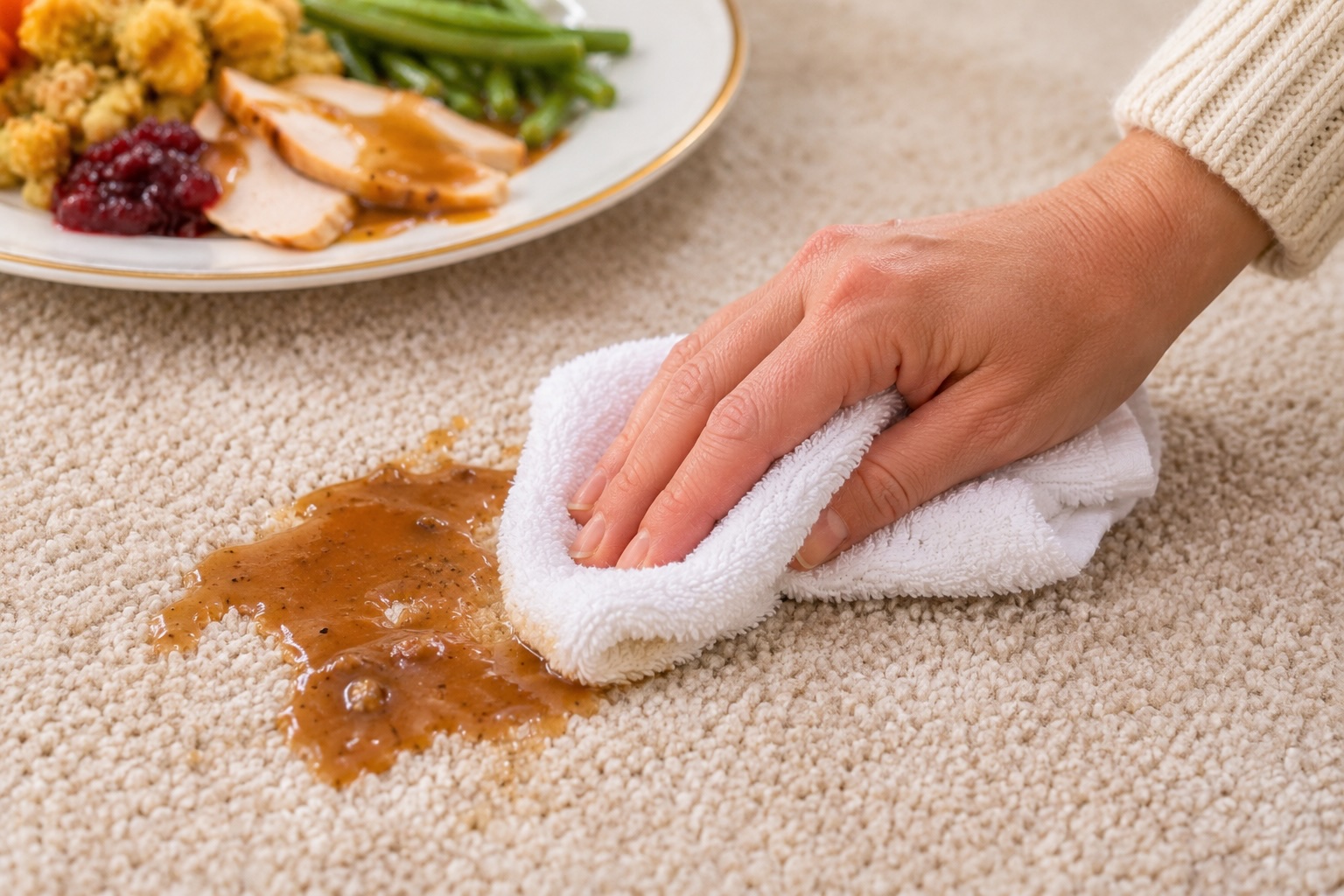
Butter, gravy, salad dressing and the potato chip that got stepped on. Sprinkle the spot with cornstarch or baking soda, let it sit for 20 minutes to soak up the grease, then vacuum. Blot with the dish soap solution and rinse. Still greasy? Dab with a little rubbing alcohol or a dry-cleaning solvent on a cloth, after testing.
Gum
Hold a bag of ice on it until it's rock hard, then pick and scrape it off in pieces. Dab any sticky residue with a little rubbing alcohol on a cloth, then rinse.
Ink and Marker
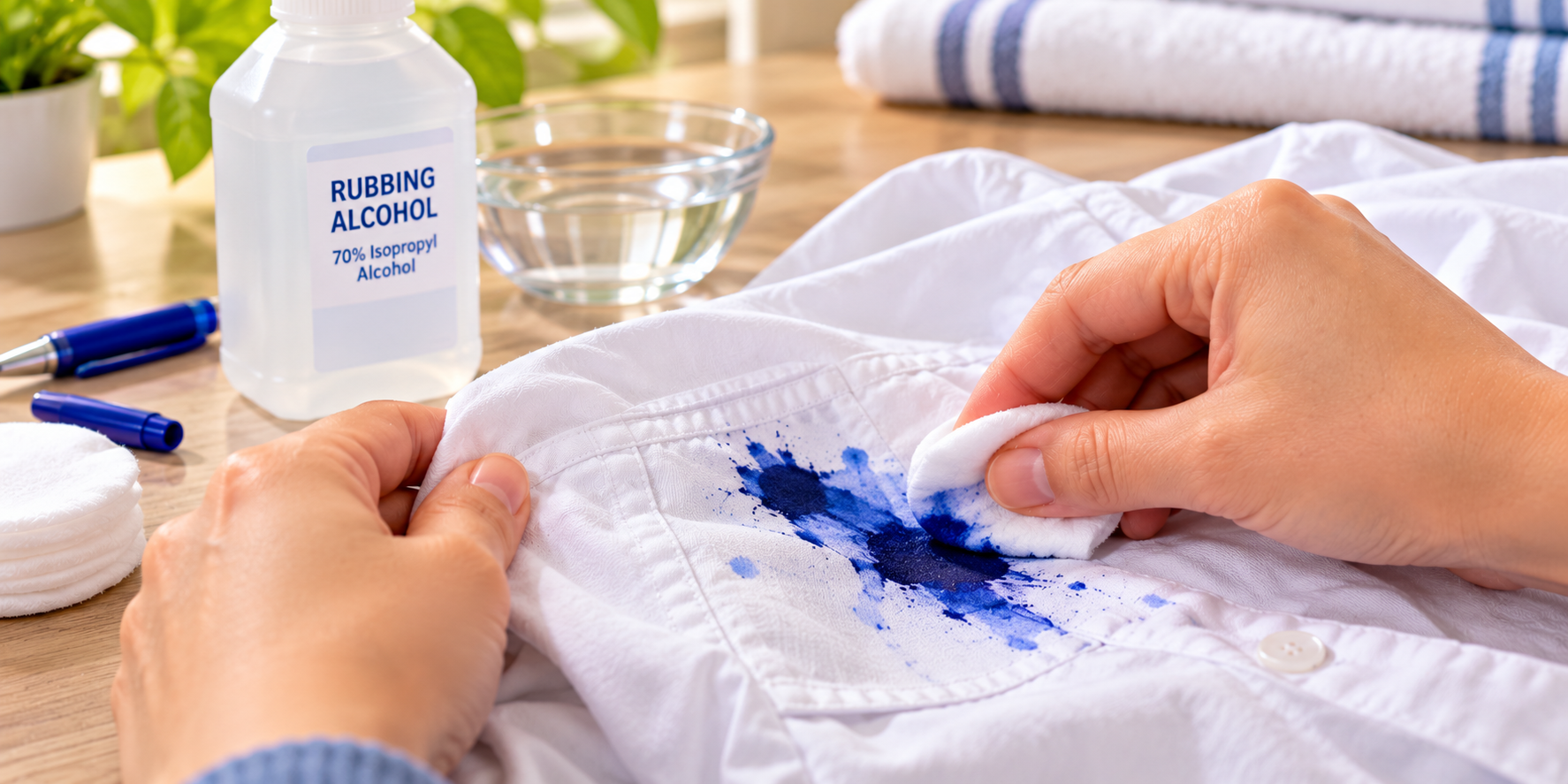
Dab rubbing alcohol onto a white cloth (never pour it on the carpet) and blot the ink. Switch to a clean part of the cloth as the ink transfers, so you don't put it back. Keep going until no more color comes up, then blot with the dish soap solution and rinse. Permanent marker may take several rounds.
Juice and Red Drinks
Fruit punch, red sports drinks and powdered drink mixes are some of the toughest stains there are, because they're basically dye. Act fast. Blot, then flush with cold water. Blot with the dish soap solution, then the vinegar solution. On light synthetic carpet, finish with 3% hydrogen peroxide after testing. If a red stain survives all that, call a pro. They have red dye removers that aren't sold in stores.
Makeup
Foundation and lipstick are oily, so treat them like grease. Scrape off any lipstick, sprinkle on cornstarch to absorb the oil, and vacuum. Then blot with rubbing alcohol on a white cloth, followed by the dish soap solution, and rinse.
Mud
Here's the one time you should wait: let mud dry completely. Then break it up and vacuum. Wet mud just smears deeper into the carpet. Treat whatever's left with the dish soap solution, and rinse.
Nail Polish

Blot up the wet polish without spreading it. Dab a non-acetone nail polish remover onto a white cloth, after testing a hidden spot, and blot from the edges toward the center. It may take several rounds. Then blot with the dish soap solution and rinse. Acetone can damage some carpet fibers and backing, so try the non-acetone kind first.
Pet Urine
Blot up as much as you can, then treat it with an enzyme cleaner, which breaks down the urine and the odor so your pet won't come back to the same spot. Never use ammonia, which smells like urine to pets. Full instructions: how to remove pet stains from carpet.
Red Wine
Blot, then flush with cold water. Blot with the dish soap solution. On light synthetic carpet, dab on 3% hydrogen peroxide after testing, wait 10 minutes and blot. Rinse with plain water. Wine that sat overnight? Here's the day-after stain rescue.
Slime and Play-Doh
Play-Doh: Let it dry completely, then scrape and vacuum. Blot any color left behind with the dish soap solution. Slime: Pick off as much as you can, then blot with the vinegar solution, which breaks down the glue. Rinse with plain water.
Soda
Blot, then rinse with cold water to get the sugar out, so the spot doesn't turn sticky and attract dirt. Blot with the dish soap solution and rinse again. Dark colas may need the vinegar solution, too.
Vomit
Scrape up the solids with a spoon or dustpan, wearing gloves. Sprinkle on a thick layer of baking soda to absorb the moisture and the smell, let it sit for 15 minutes, then vacuum. Treat the spot with an enzyme cleaner, and rinse. More here: pet stains and accidents.
Old, Set-In and Mystery Stains
- Set-in stains: Moisten the spot with lukewarm water to loosen it, then apply an enzyme cleaner or a carpet stain remover and give it time to work, as the label directs. Blot, rinse and repeat. Old stains often take a few rounds.
- Mystery stains: Start with the gentlest treatment and work up: cold water, then the dish soap solution, then the vinegar solution, then rubbing alcohol, testing each one first. Stop as soon as the stain lifts.
- Stains that came back: A spot that reappears after it dries is usually leftover soap or a stain wicking up from the pad. Rinse it again with plain water, and weigh down the towels longer to pull up more moisture.
Wool Carpet and Rugs Need Special Care
Wool is a protein fiber, so a few common stain fighters can damage it. Skip the enzyme cleaners, hydrogen peroxide, ammonia and bleach. Use cold water and a mild dish soap solution, blot gently, and call a professional for anything tougher. The same goes for antique and handmade rugs.
What Never to Use on Carpet
- Bleach, which leaves a permanent white spot.
- Too much soap, which leaves a sticky spot that turns into a dirty spot.
- Hot water on protein stains, which sets them.
- Colored cloths or printed paper towels, which can transfer dye.
- A scrub brush, which frays the fibers.
- Mixed cleaners. One product at a time, rinsing in between. Bleach mixed with ammonia or vinegar makes toxic fumes.
When to Call a Professional
Call in the pros for large stains, red dye that won't budge, pet urine that has soaked into the pad, wool and antique rugs, and any stain that survives two rounds of treatment. Here's how to choose a good one: hiring a carpet cleaning service.
Carpet Stains: Quick Answers
What is the best homemade carpet stain remover?
A quarter teaspoon of clear dish soap in a cup of lukewarm water works on most stains. For coffee, tea and wine, follow it with one part white vinegar to two parts water. Always rinse with plain water afterward.
How do you get old stains out of carpet?
Moisten the stain with lukewarm water, apply an enzyme cleaner or carpet stain remover, and let it sit as the label directs. Blot, rinse and repeat. Old stains often need a few rounds.
Does hydrogen peroxide remove carpet stains?
It works well on blood, wine and red drinks on light-colored synthetic carpet. It can lighten dark carpet and damage wool, so always test a hidden spot first.
Why do carpet stains come back after cleaning?
Usually because cleaner was left in the carpet, which attracts dirt, or because the stain soaked into the pad and wicked back up. Rinse the spot well with plain water and blot it as dry as you can.
Keep Going
Keep your carpets looking their best with these related guides:
- Carpet Care and Cleaning Tips: Keep carpets looking new.
- How to Clean Carpet at Home: Deep clean it yourself, without making things worse.
- Remove Carpet Pet Stains: For when Fido has an accident.
- How to Remove Candle Wax From Carpet: Without melting it.
- Hiring a Carpet Cleaning Service: How to find a good one.
- How to Remove Chocolate Stains: Clothes, carpet and couch.
- Deciphering Upholstery Cleaning Codes: Before you treat a stain on the couch.
- Laundry Stain Removal Guide: How to remove 16 common stains from clothes.
- Clean Home
- Clean
- How To Remove Carpet Stains
Free 15-Minute Daily Reset Checklist
Get Notes on Keeping House
Fifteen minutes a day. No weekend cleaning marathons. No guilt. Sign up for my newsletter and I'll send you the printable checklist that makes it happen.
Send My ChecklistNo spam, ever. Unsubscribe anytime.
Free Printable
Notes on Keeping House
Sign up and get my 15-Minute Daily Reset Checklist. One timer, five zones, and a house that stays under control.
Send My ChecklistNo spam, ever. Just smart, funny tips for keeping house from Tara Aronson.