The Holiday Kitchen Survival Guide: How to Cook, Host, and Keep Your Sanity
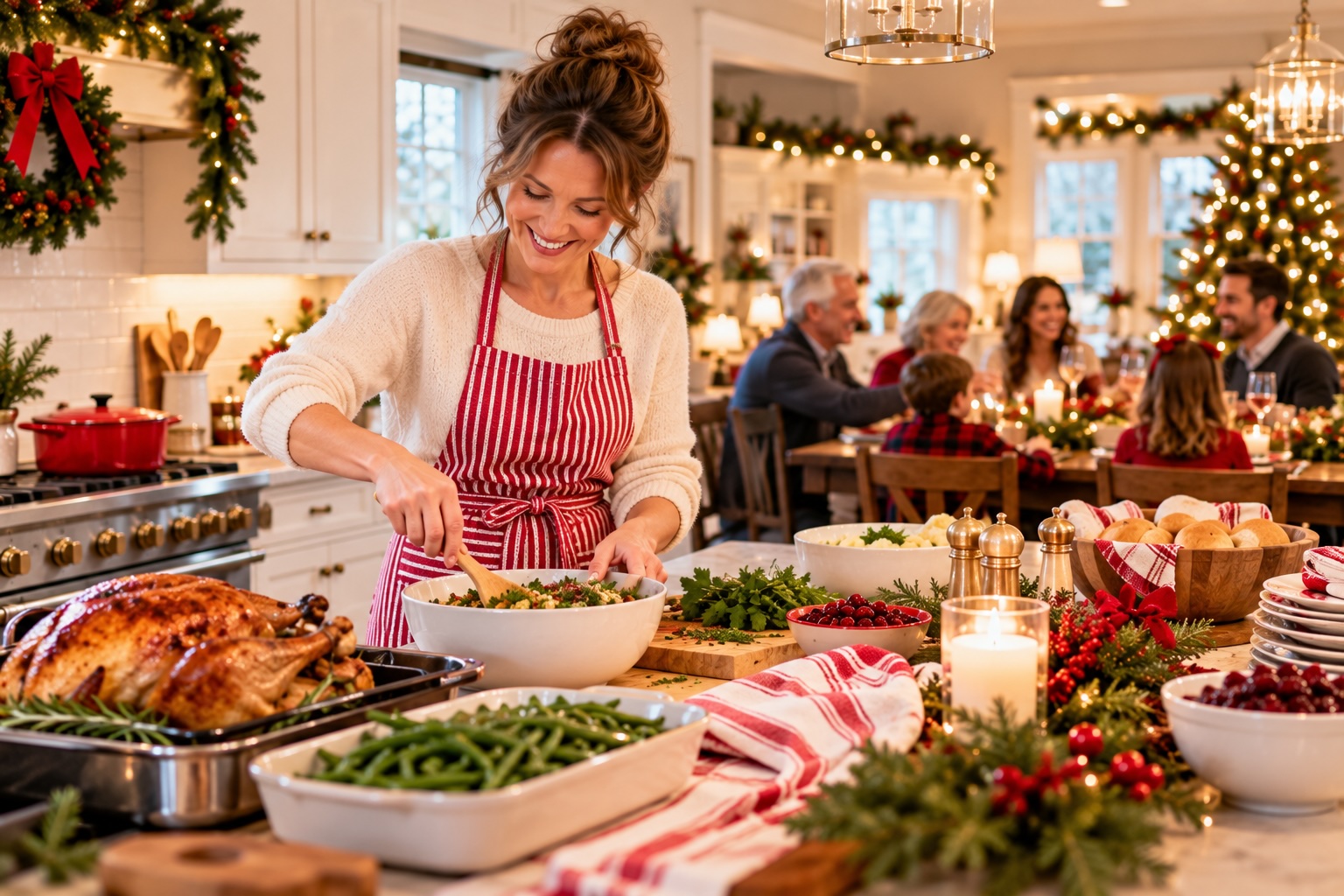
At some point during almost every big holiday meal, the kitchen stops working like a normal room.
Every counter is covered. The sink is full, and the dishwasher is already running. One pot is boiling, and another one should be but isn't.
Three people are standing right in front of the drawer you need. Someone wants ice. Someone else can't find the serving spoon.
Then a relative who hasn't cooked a thing all day wanders in and asks, "Need any help?" Yes. Move.
Holiday cooking asks a lot of a kitchen. Keeping it spotless while you cook isn't realistic, so don't try.
Your goal is to keep it working.
That means you need:
- Clear counter space
- Room in the refrigerator
- Clean tools when you reach for them
- Somewhere for the dirty dishes to go
You'd also like to sit down to dinner without feeling like you just finished a shift in a restaurant kitchen.
Here's how to make that happen.
1. Start With an Empty Kitchen
Before you start serious holiday cooking, reset the room. You want:
- Empty sink
- Mostly clear counters
- Empty or nearly empty dishwasher
- Empty trash can
- Clean stovetop
- Reasonably clean floor
- Space in the refrigerator
Do this before you start cooking. Beginning a large holiday meal with yesterday's dishes still in the sink is like beginning a road trip with half a tank of gas and a flat tire.
Technically possible. Unnecessarily difficult.
2. Clear the Counters
Counter space becomes extremely valuable during holiday cooking. Temporarily remove anything you won't need. Such as:
- Paperwork
- Decorative objects
- Unused small appliances
- Shopping bags
- Fruit bowl
- School projects
- Whatever else has established residency there
You don't have to reorganize the kitchen. Just create workspace. Your counters are about to have jobs.
3. Clean Out the Refrigerator Before Shopping
Do this before the big grocery run. Remove:
- Expired food
- Old leftovers
- Empty containers
- Questionable produce
- Condiments you're clearly not using
- Anything occupying a huge container despite containing two tablespoons of food
Wipe obvious spills. Consolidate where practical. Then make space for holiday ingredients. You'll need more refrigerator space than you think. A turkey alone has territorial ambitions.
4. Make a Cooking Plan Before You Buy Food
A holiday menu isn't just a list of things you're serving. It's a logistics problem.
Write down:
- What you're making
- What can be made ahead
- What needs the oven
- What needs the stovetop
- What needs refrigeration
- Approximate cooking times
- Serving time
Then look for conflicts. If six dishes all require the oven at different temperatures at 4:30 p.m., you've discovered the problem while you can still solve it.
This is much better than discovering it while holding an uncooked casserole and staring at a turkey.
5. Make Things Ahead
Holiday morning isn't the time to demonstrate your ability to perform 19 culinary tasks simultaneously.
Anything you can reasonably prepare ahead is one fewer thing competing for your attention later. Depending on your menu, you may be able to prepare:
- Desserts
- Sauces
- Chopped vegetables
- Casseroles
- Appetizer components
- Table settings
- Serving pieces
Follow safe food-storage practices for whatever you're preparing. Future-you will be extremely grateful. Future-you has enough going on.
6. Get the Serving Dishes Out Early
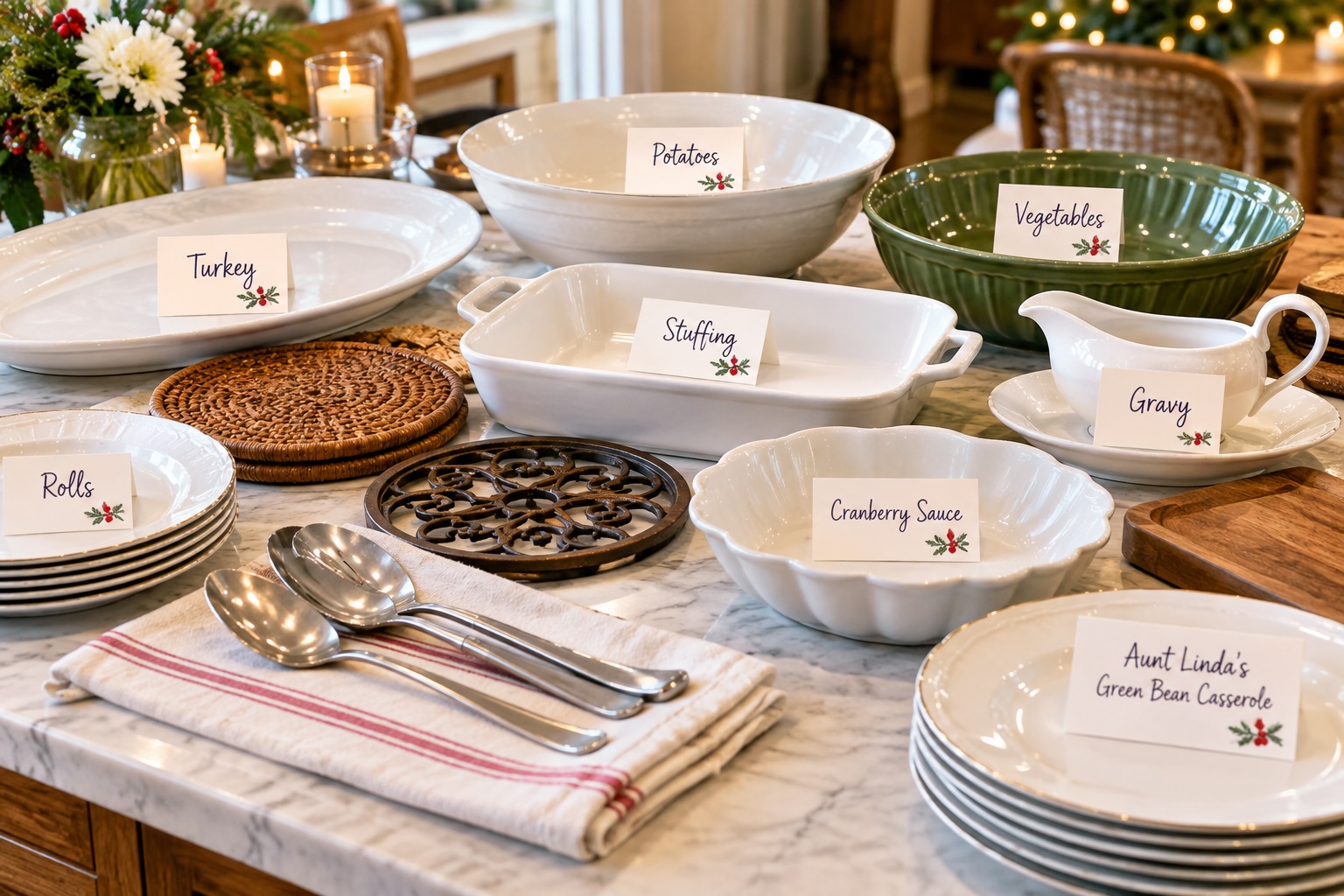
Before you start cooking, decide what you'll serve each dish in.
Put out:
- Platters
- Serving bowls
- Serving spoons
- Trivets
- Gravy boat
- Whatever else you actually use
You can even put a small note in each dish:
- Potatoes
- Vegetables
- Stuffing
Whatever Aunt Linda is bringing. Now you won't reach serving time and discover the platter you need is underneath six other platters on the highest shelf.
Holiday meals already contain enough suspense.
7. Locate the Tools Before You Need Them
Do you have:
- Meat thermometer
- Roasting pan
- Can opener
- Peeler
- Sharp knife
- Cutting board
- Mixer
- Potato masher
- Corkscrew
- Enough serving utensils
Find them now.
The time to discover that the thermometer battery is dead is not when everyone is asking when dinner will be ready.
8. Create a Prep Zone
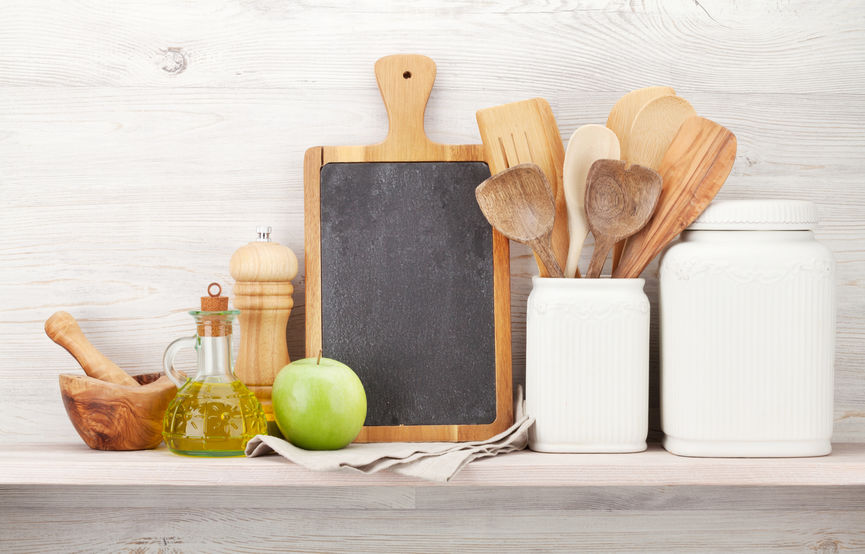
Designate one clear section of the counter for food preparation.
Protect it from:
- Drinks
- Phones
- Keys
- Handbags
- Random serving pieces
- Guests leaning against it
This is your working counter. Defend it. Politely, if possible.
9. Create a Drink Zone Somewhere Else
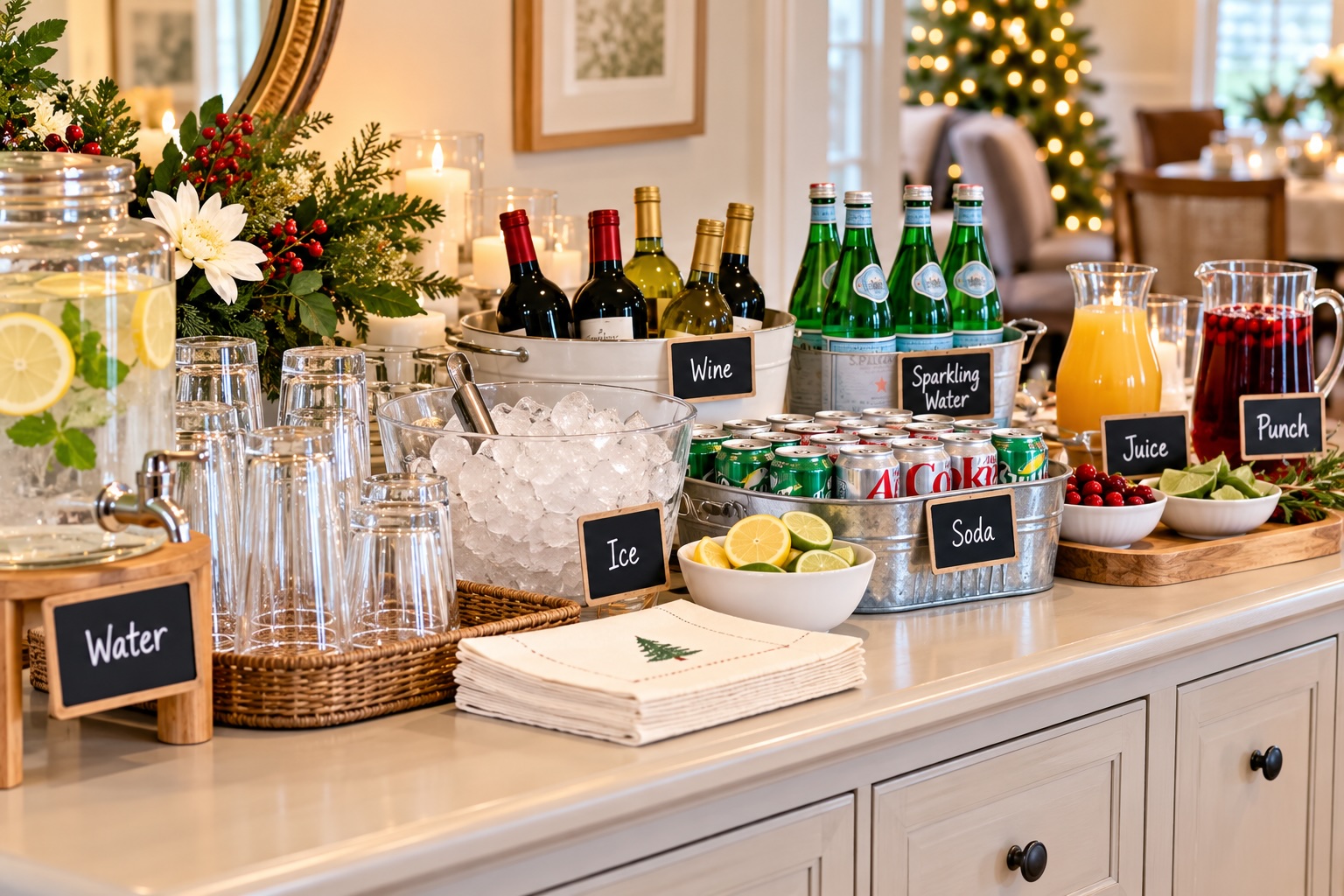
This is one of the best holiday kitchen strategies. Put drinks somewhere away from your main cooking area.
Set up:
- Glasses
- Water
- Ice
- Other beverages appropriate to your gathering
Now people can help themselves without entering the kitchen every six minutes.
If everyone needs you personally to provide ice, you've accidentally become a bartender while roasting dinner. Delegate the ice.
10. Move Appetizers Out of the Kitchen Too
Same principle. If possible, serve appetizers in the living or dining area instead of right beside your cutting board.
Food attracts people. People occupy space. Space is what you desperately need.
Move the cheese plate and watch half the kitchen population follow it. This is crowd control through dairy.
11. Keep the Sink Usable
Do not allow the sink to become a permanent storage facility for dirty cookware. As you cook:
- Load dishwasher-safe items
- Wash large tools you need again
- Move soaking pans out of the way where practical
- Keep at least part of the sink available
You will need water throughout the day.
A sink containing three pots, a roasting rack, seven utensils, and something soaking indefinitely is no longer a sink. It's a metal puzzle.
12. Run the Dishwasher Before Dinner
If you've generated enough prep dishes for a load, run it before the meal. Then unload it.
Yes, unloading it is important. The objective is to have an empty dishwasher when dinner ends. This gives the avalanche of dinner dishes somewhere to go.
Otherwise, you'll open the dishwasher after dinner, discover it full of clean dishes, and experience a very specific form of despair.
Avoid this.
13. Clean as You Go—Within Reason
“Clean as you go” is good advice until it becomes another impossible standard. You don't need to wash every spoon the instant it touches food.
Instead, clean strategically.
When something is cooking for 20 minutes:
- Load dishes
- Wipe the prep counter
- Put ingredients away
- Throw out packaging
- Wash a tool you'll need again
Use natural pauses. The goal is not a spotless kitchen throughout the day. The goal is preventing the kitchen from reaching complete system failure.
14. Keep A Trash Can Accessible
Holiday cooking creates a lot of:
- Packaging
- Peelings
- Paper
- Empty containers
Make sure the trash can is easy to reach. If you normally use local recycling or composting systems, make those easy to access too.
Empty full bins before the meal begins.
Nothing is more annoying than discovering the trash is full while you're holding something dripping.
15. Put Ingredients Away as You Finish With Them
Butter goes back. Milk goes back. Spices go back. Flour goes back.
You don't have to do this right away, but periodically clear out ingredients you no longer need.
This frees up counter space and keeps the kitchen from looking like a grocery store exploded.
It also reduces the number of things you have to deal with later.
16. Use Fewer Bowls
You don't need a fresh bowl for every step of every recipe. When food safety and the recipe allow it, reuse appropriate mixing bowls and measuring tools.
Obviously, don't reuse utensils or dishes in ways that could cause cross-contamination. But there's also no prize for creating 47 dirty bowls. Your dishwasher didn't ask for a challenge.
17. Keep Raw Foods Separate
During busy holiday cooking, basic food safety matters. Keep raw meat, poultry, seafood, and their juices away from foods that won't be cooked.
Use clean cutting boards, utensils, and surfaces as appropriate. Wash hands properly between tasks.
And don't judge doneness by appearance alone when a safe internal temperature is required—use a food thermometer.
Holiday chaos does not suspend microbiology. Unfortunately.
18. Don't Wash Raw Poultry
Washing raw poultry can spread contaminated droplets around the sink and surrounding kitchen rather than making the poultry safer.
Cook it properly instead. This also means one less unnecessary holiday task.
Occasionally, food safety delivers good news.
19. Keep Hot Food Hot and Cold Food Cold
A holiday buffet can linger. Keep perishable foods at safe temperatures instead of leaving them out indefinitely.
Put out smaller amounts and replenish them if that works for your meal. Refrigerate perishable leftovers promptly.
If you're unsure whether something has been sitting out too long to save safely, err on the side of food safety.
The goal is to enjoy the leftovers. Not remember them as the beginning of an unfortunate family event.
20. Let People Help—Specifically
When someone asks:
“Can I help?”
Don't say:
“No, I'm fine.”
You are holding a saucepan, opening the oven with your hip, and wondering where the butter went. You are not fine.
Give a specific assignment:
- Fill water glasses.
- Take this to the table.
- Slice the bread.
- Put ice in the bucket.
- Set out the appetizers.
- Empty the dishwasher.
- Take out the trash.
- Put these dishes on the table.
Specific jobs work.
“Help me in the kitchen” results in three people standing around asking questions.
21. Keep Unnecessary People Out of the Kitchen
There are people helping. And there are people being in the kitchen. These are different categories.
If you don't need someone, send them elsewhere. Give them appetizers. Ask them to check on the kids.
Have them take drinks into the living room. Invite them to sit down.
A crowded kitchen isn't festive when you're carrying a hot pan. It is simply crowded.
22. Don't Try a Brand-New Complicated Recipe
Holiday dinner for 14 isn't necessarily the ideal occasion to try something technically ambitious you've never made before.
If you love experimenting, wonderful. But balance new dishes with things you know how to make.
Every unfamiliar recipe introduces another variable. And holiday cooking already has plenty.
This is dinner. Not the season finale of a competitive cooking show.
23. Keep the Menu Under Control
Count your dishes.
Do you really need:
- Three potato dishes
- Four vegetables
- Two salads
- Five desserts
Maybe your family genuinely loves all of those. Fine.
But don't add food just because it seems like a holiday meal should have more.
Every additional dish requires:
- Shopping.
- Preparation.
- Cooking space.
- Serving space.
- Refrigerator space.
- Cleanup.
Sometimes the easiest holiday kitchen strategy is one fewer casserole.
24. Have Leftovers Containers Ready
Don't wait until after dinner to realize you have 11 pounds of food and only four tiny containers with which to get it out the door tonight.
Before the gathering, gather:
- Food-storage containers
- Bags or wraps appropriate for your food
- Containers guests can take home if that's your tradition
Make refrigerator space too. Then leftovers have somewhere to go immediately.
So you're not standing at 9:30 p.m. attempting to put mashed potatoes into an old yogurt container because it's the only thing with a lid.
25. Don't Clean the Whole Kitchen Before Dessert
After the main meal, do enough. Just enough to lighten the load ahead and keep food safe.
Put away perishable foods. Load some dishes. Clear the table. Make coffee. Serve dessert.
You do not have to disappear into the kitchen for 45 minutes while everyone else continues Christmas without you.
The pans will remain. They are extraordinarily loyal.
The Two-Day Holiday Kitchen Plan
If you're hosting a major meal, spread the work out.
Two Days Before
Two Days Before
- Finalize menu
- Grocery shop
- Clean out refrigerator
- Check serving dishes
- Check cooking equipment
- Prepare anything that keeps safely
- Make sure you have leftover containers
- Check dishwasher supplies
- Empty recycling and unnecessary kitchen clutter
The Day Before
- Prepare make-ahead dishes
- Chop ingredients where appropriate
- Prepare desserts
- Set the table
- Set out serving dishes
- Clear counters
- Reset kitchen
- Run dishwasher
- Take out trash
Then go to bed. Do not suddenly decide the pantry needs reorganizing. The pantry has made it this far.
Holiday Morning Kitchen Reset
Before serious cooking starts:
- Empty dishwasher
- Empty sink
- Clear counters
- Empty trash if necessary
- Put clean towels out
- Check menu and cooking timeline
- Get frequently used tools ready
- Create drink station
- Create appetizer area
Now you're starting from zero instead of starting from yesterday. That matters.
One Hour Before Dinner
This is when the kitchen can go off the rails.
Pause for five minutes.
Clear:
- Dirty prep dishes
- Food packaging
- Ingredients you're finished with
- Trash
- Unnecessary tools
Then check:
What's in the oven?
What's on the stovetop?
What still needs heating?
What needs serving dishes?
What can someone else do?
Don't keep going blindly just because you're busy. Five minutes of regrouping can save 20 minutes of chaos.
Ten Minutes Before Dinner
Stop cleaning. Now you're serving.
- Check food
- Put serving utensils out
- Fill water
- Move hot dishes safely
- Call people to the table
- Put away anything perishable that's no longer needed
And accept that the kitchen will look like food was prepared there.
Because food was prepared there. That's allowed.
After-Dinner Kitchen Cleanup
Don't begin by washing random objects. Use an order.
1. Food first
Refrigerate safe perishable leftovers promptly.
2. Clear the table
Bring dishes into the kitchen.
3. Trash and recycling
Remove obvious waste.
4. Load dishwasher
Start with plates, glasses, and utensils as appropriate.
5. Deal with cookware
Soak or wash what needs attention.
6. Wipe counters and table
Remove food residue and spills.
7. Sink
Finish with the sink.
8. Floor
Sweep or spot-clean if necessary.
You don't necessarily need to achieve full kitchen restoration tonight. You need to prevent tomorrow morning from looking frightening.
The 20-Minute After-Dinner Reset
If you're exhausted:
First 5 minutes
Put away perishable food.
Next 5 minutes
Load the dishwasher.
Next 5 minutes
Clear and wipe the counters.
Last 5 minutes
Take out trash and deal with obvious floor spills. Then stop.
Anything non-urgent can wait until morning. A roasting pan has never filed a complaint because it soaked overnight.
The Morning-After Kitchen
The next morning:
- Empty dishwasher
- Finish remaining dishes
- Wash lingering cookware
- Wipe stovetop
- Clean sink
- Wipe counters
- Sweep or vacuum
- Mop if needed
- Check refrigerator organization
Then you're done. Do not turn this into an unplanned deep cleaning of the entire kitchen.
Christmas dinner happened. The kitchen survived. Declare victory.
Holiday Kitchen Safety Reminders
A busy kitchen deserves a few extra precautions.
Keep:
- Pot handles positioned safely
- Hot cookware away from counter edges
- Knives out of children's reach
- Electrical cords safely positioned
- Towels and other combustibles away from burners
- Children and pets away from active cooking areas when necessary
Clean spills promptly when they create a slipping hazard.
And don't mix household cleaning products to speed-clean the kitchen. In particular, never mix chlorine bleach with ammonia, vinegar, acidic cleaners, or other household cleaning products.
Dinner does not improve when the fire department arrives.
Holiday Kitchen Survival Checklist
Before Shopping
- Finalize menu
- Check pantry
- Clean refrigerator
- Make shopping list
- Check cooking equipment
- Find serving dishes
- Gather leftover containers
Before Cooking
- Empty sink
- Empty dishwasher
- Clear counters
- Empty trash
- Clean stovetop
- Set up prep area
- Set up drink area
- Check cooking timeline
While Cooking
- Put ingredients away
- Load dishes as you go
- Keep sink usable
- Keep raw foods separate
- Use a food thermometer where appropriate
- Delegate specific jobs
- Keep unnecessary traffic out
- Take trash out when needed
Before Dinner
- Run/unload dishwasher
- Clear prep mess
- Put serving utensils out
- Check hot and cold foods
- Stop cleaning
- Sit down and eat
After Dinner
- Refrigerate safe leftovers promptly
- Clear table
- Load dishwasher
- Deal with cookware
- Wipe counters
- Empty trash if needed
- Clean spills
- Leave non-urgent work for tomorrow.
The Bottom Line
The secret to surviving a holiday kitchen isn't being extraordinarily organized.
It's keeping the room functional. Start with empty counters, an empty sink, and refrigerator space.
Make a cooking plan. Prepare what you can ahead. Move drinks and appetizers out of your work zone. Run the dishwasher before dinner.
Give people specific jobs.
Put food away before you tackle the mountain of dishes. And don't attempt to maintain a spotless kitchen while cooking a major holiday meal.
That's not a reasonable goal. The kitchen will get messy.
Let it.
You're cooking. The goal is simply to keep the mess from getting so big that the room stops working.
And when someone wanders into the kitchen while you're carrying a hot roasting pan and cheerfully asks:
“Anything I can do?”
There is. Move three feet to the left. Then take out the trash.
Keep Going
To get the rest of the house ready, use Holiday House Cleaning Tips.
Short on time? Holiday Home Cleaning Hacks gives you the emergency version.
For simplifying the entire season, see Easy Christmas Holiday Tips.
And once the celebration is over, use After-Holiday Cleaning to get the kitchen—and the rest of the house—back to normal.
- Clean Home
- Kitchen Cleaning & Organizing
- Holiday Kitchen Survival Guide