Eco-Friendly Gift Wrap Ideas That Still Look Beautiful
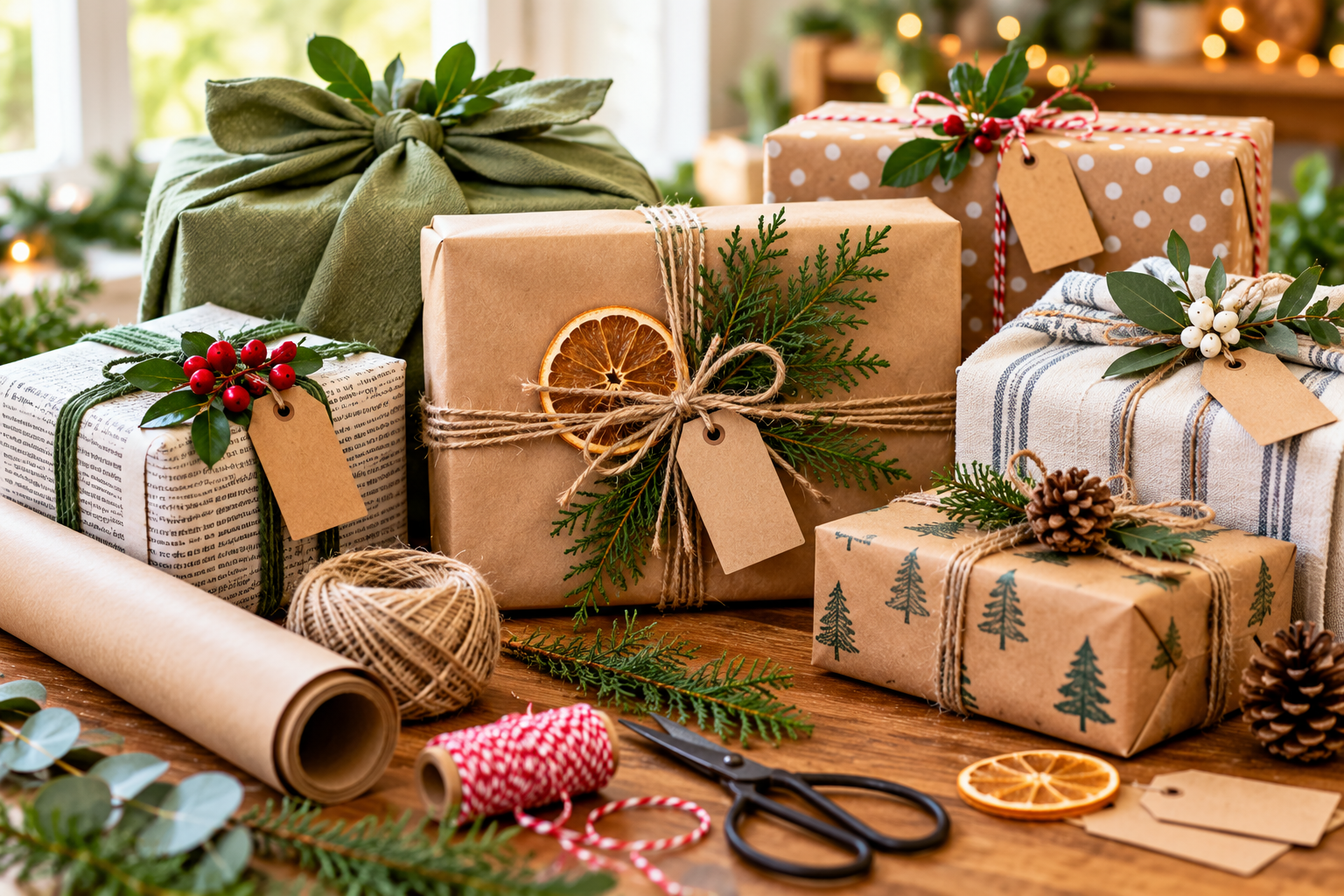
Gift wrapping has a very short career. We buy it. Cut it. Tape it. Admire it. Then somebody tears through it in approximately nine seconds. And into the trash it goes.
This is especially impressive at Christmas, when a perfectly normal living room can produce enough discarded paper, ribbon, boxes and bows to suggest a small department store exploded near the tree.
Fortunately, eco-friendly gift wrap doesn't mean handing someone a present wrapped in yesterday's newspaper and announcing that you've saved the planet.
Although newspaper can look surprisingly good. You can wrap gifts beautifully while buying less, reusing more and throwing away considerably less afterward.
And you probably already have plenty of wrapping material hiding in your house. Let's start there.
1. Use What You Already Have
The greenest wrapping paper is generally the wrapping paper you already own. Before buying anything new, check:
- Closets
- Craft supplies
- Holiday storage
- Desk drawers
- Gift bags
- Shipping supplies
You may discover enough paper, ribbon and bags to wrap Christmas until 2032. Use those first.
Throwing away perfectly good wrapping supplies so you can replace them with environmentally responsible wrapping supplies rather defeats the exercise.
2. Reuse Gift Bags, Tissue Paper and Boxes
Gift bags were practically designed for reuse. After opening a gift, remove the old tag, fold the tissue paper if it's still usable and save the bag.
Do the same with sturdy gift boxes. A good gift bag can circulate through a family for years.
Eventually nobody remembers who originally bought it. At that point, it belongs to Christmas.
Just be selective. If the tissue paper looks as though it survived an altercation with a terrier, let it go. Eco-friendly does not mean storing trash.
3. Choose Simpler Wrapping Paper

If you need new wrapping paper, look for simple paper-based wrap without unnecessary coatings.
Some decorative papers contain:
- Foil
- Glitter
- Plastic coatings
- Metallic finishes
- Laminated surfaces
These additions can make wrapping paper difficult or impossible to recycle, depending on your local program.
Check local recycling rules before assuming paper belongs in the recycling bin. And consider skipping glitter.
Glitter is remarkably committed to remaining in your home. Use it at Christmas and you'll still be finding evidence under the sofa in March.
4. Use Kraft Paper

Plain brown kraft paper is inexpensive, versatile and surprisingly attractive. Dress it up with:
- Twine
- Reused ribbon
- Greenery
- Pinecones
- Stamps
- Children's drawings
- Homemade tags
It also works for birthdays, weddings and other gifts. Change the ribbon or decoration and you've changed the occasion.
You don't need six rolls of paper devoted to six separate holidays.
5. Repurpose Paper You Already Have
Before buying wrapping paper, look around. You may be able to use:
- Newspaper
- Old maps
- Paper grocery bags
- Clean shipping paper
- Children's artwork
Old maps can make especially attractive packages. Children's artwork is perfect for gifts to grandparents.
And brown packing paper from online orders can look remarkably good with twine and a sprig of greenery. A few wrinkles are fine.
Call it rustic. Rustic covers a multitude of wrapping imperfections.
6. Let Kids Make the Wrapping Paper
Give children plain kraft paper, paper grocery bags or other suitable paper and let them decorate it. Use:
- Crayons
- Markers
- Stamps
- Paint
- Stickers you already own
Now wrapping presents becomes a holiday activity too. And nobody expects artistic restraint from a six-year-old with a red marker. Nor should they.
7. Wrap Gifts in Fabric
Fabric is one of the easiest reusable alternatives to wrapping paper. Try:
- Fabric squares
- Scarves
- Tea towels
- Cloth napkins
- Bandanas
Fold or tie the fabric around the present. You can also use Japanese-inspired furoshiki wrapping, which works especially well for awkward shapes.
Best of all, the wrapping itself can become part of the gift. A cookbook wrapped in a tea towel? Useful. Attractive.
No paper required.
8. Use Reusable Cloth Gift Bags
If you want a system you can use year after year, cloth gift bags are hard to beat. Buy them once or make them from fabric you already have. Keep several sizes.
After Christmas, fold them and store them with your holiday decorations.
Next year: Insert present. Tie bag. Done.
After wrapping approximately 14 awkwardly shaped gifts with paper, this begins to feel like advanced technology.
9. Make the Container Part of the Gift
Sometimes you don't need wrapping at all. Put the present inside something useful. Try:
- Basket
- Tin
- Jar
- Decorative box
- Tote bag
- Storage container
- Mixing bowl
- Flowerpot
Match the container to the gift. Kitchen tools can go in a mixing bowl. Garden supplies can go in a flowerpot. Beach items can go in a tote.
The packaging gets a second life instead of heading directly for the trash.
10. Reuse Ribbon and Choose Simple Ties
Ribbon can last for years. After gifts are opened, save the good pieces. Roll or fold them loosely and use them again.
For new packages, simple cotton or jute twine works beautifully with kraft paper.
But don't save every tiny ribbon fragment because technically it might have a future purpose. That's how clutter introduces itself.
Save pieces you'll realistically reuse. Let the scraps go.
11. Decorate With Natural Materials
Instead of disposable plastic bows, add a simple natural decoration. Try:
- Rosemary
- Evergreen
- Cedar
- Eucalyptus
- Pinecones
- Dried orange slices
Use materials that are safe and readily available to you. You don't need much.
A little greenery tucked under twine can make plain brown paper look beautifully festive.
The goal is attractive gift wrap. Not a botanical installation requiring structural support.
12. Make Gift Tags From Things You Already Have
Before recycling old Christmas cards, cut attractive sections from the fronts. Turn them into gift tags. You can also use:
- Kraft-paper scraps
- Cardstock scraps
- Paper grocery bags
- Leftover wrapping paper
- Children's artwork
Cut a simple shape. Punch a hole if you want. Write the recipient's name. Done.
A gift tag's primary responsibility is identifying whose present it is. Everything after that is decorative ambition.
13. Use Less Tape
Some presents are wrapped as though they're being prepared for ocean transport.
- Tape across every edge.
- Tape over the tape.
- Possibly reinforcement tape.
You usually don't need that much. Use enough to hold the paper securely.
Less tape makes wrapping materials easier to separate afterward and potentially easier to recycle.
It also allows the recipient to open the gift without requesting tools.
14. Build a Reusable Gift-Wrap Collection
Instead of starting over every December, create a small collection you use year after year. Keep:
- Cloth bags
- Gift bags
- Good ribbon
- Gift boxes
- Fabric wraps
- Reusable tags
Store everything together. Before buying wrapping supplies, check your collection.
This follows one of the most useful rules in an organized home:
Know what you own before buying another one. Especially tape. There is always more tape somewhere.
15. Don't Buy Eco-Friendly Supplies You Don't Need
This may be the most important rule. Sustainable products are still products.
Don't throw away perfectly good wrapping paper because you've decided to become greener. Use it.
Then, when it runs out, replace it thoughtfully.
The goal isn't to own an impressive collection of products labeled ECO. It's to consume less unnecessarily.
16. Don't Turn Reuse Into Clutter
Saving things for reuse sounds responsible. Until you open a closet and discover 63 gift bags, 41 boxes and enough tissue paper to open a small boutique.
Keep things you will realistically use. Don't save:
- Torn paper
- Crushed bows
- Tiny ribbon scraps
- Damaged boxes
- Unusable tissue paper
- Every shopping bag you've received since 2014
Reusable means you'll actually reuse it. Your home is not a municipal materials-recovery facility.
17. Store Reusable Gift Wrap in One Place
Your reusable wrapping system only works if you can find everything next year. Choose one storage area for:
- Gift bags
- Tissue paper
- Ribbon
- Tags
- Fabric wraps
- Cloth bags
- Boxes
Use a bin, drawer, closet shelf or wrapping station. Don't scatter supplies through six different rooms.
That's how you end up buying another roll of tape while already owning nine.
18. Sort Gift Wrap Right After the Holiday
When gifts are opened, deal with the aftermath while you're already there.
Make three quick categories:
Reuse
Gift bags, boxes, ribbon, cloth wrap and usable tissue.
Recycle
Paper and cardboard accepted by your local recycling program.
Trash
Materials that can't be reused or recycled.
Then put the reusable supplies away. Don't leave the wrapping-paper aftermath sitting in the corner until February.
Christmas is over. Release the living room.
Eco-Friendly Gift Wrap for Kids
Children's gifts are particularly easy to wrap creatively. Try:
- Children's artwork
- Kraft paper they decorate
- Reusable cloth bags
- Comics
- Paper grocery bags
- Reused gift bags
For large toys, consider reusable fabric sacks.
They're much easier than attempting to wrap a box approximately the size of a refrigerator.
Children aren't evaluating your ribbon technique anyway. There's a toy in there. They have priorities.
Eco-Friendly Gift Wrap for Awkwardly Shaped Gifts
Some objects simply refuse to cooperate with wrapping paper. Don't fight them. Use:
- Cloth bags
- Fabric wrapping
- Tote bags
- Baskets
- Reusable containers
If wrapping an object requires three sheets of paper, 27 pieces of tape and language inappropriate for Christmas morning, choose another method.
What Should You Buy When You Need New Gift Wrap?
Eventually, you'll need something. When you do, look for wrapping materials that are:
- Reusable
- Recyclable where you live
- Made with recycled content
- Minimally coated
- Free of unnecessary glitter
- Useful for more than one occasion
Neutral wrapping materials are particularly useful.
Kraft paper can handle Christmas, birthdays, weddings and just about anything else.
Change the ribbon. Nobody will report you to the Gift Wrap Authority.
The Five Rules of Eco-Friendly Gift Wrap
If you remember nothing else:
1. Use what you already have.
Buying nothing new is often the simplest green choice.
2. Reuse what is genuinely reusable.
Gift bags, ribbon, boxes and fabric can last for years.
3. Keep materials simple.
Plain paper is generally more practical than heavily coated, glittered or laminated wrap.
4. Make the wrapping useful when possible.
Fabric, towels, baskets and containers can become part of the gift.
5. Don't save garbage in the name of sustainability.
If you won't realistically reuse it, let it go.
The Bottom Line
Eco-friendly gift wrapping doesn't require perfection.
And it certainly doesn't require replacing everything you own with a coordinated collection of sustainable wrapping products.
Start with what you have. Reuse the bags. Save the good ribbon. Wrap something in kraft paper. Turn last year's cards into tags. Use a tea towel around a cookbook.
Let the kids decorate paper. Skip the glitter. And when you genuinely need something new, choose something you can reuse or recycle.
The goal isn't to produce the world's most environmentally virtuous Christmas present.
It's simply to be more thoughtful about something we traditionally buy for the express purpose of tearing apart nine seconds later.
Your gifts can still look beautiful. Christmas can still sparkle.
And on December 26, perhaps your living room won't look quite so much like the wrapping-paper department lost a fight.
That's progress.
Keep Going
Want more ways to make gifts look beautiful without going overboard? See Creative Gift Wrapping Ideas.
For greener ideas about what goes inside the wrapping, see Eco-Friendly Gifts.
And for keeping the rest of the season manageable, see Easy Christmas Holiday Tips and Easy Christmas Organizing Ideas.
- Clean Home
- Green Clean & Save
- Eco Friendly Gift Wrap