Holiday Safety Tips for Entertaining: 20 Things to Check Before Guests Arrive
Holiday entertaining changes your house. Normally, you know where everything is. You know that the third stair creaks. You know the rug by the front door slides.
You know the kitchen gets crowded when two people stand beside the island. Your guests don't.
Then add: Children. Grandparents. Pets. Candles. Cooking. Extension cords.Hot drinks. Coats. Alcohol.
A Christmas tree. And 14 people trying to move through a house designed for four.
Suddenly, ordinary household quirks become holiday hazards. This doesn't mean you need to greet guests wearing a reflective safety vest.
A quick pre-party check can eliminate many of the obvious problems without turning Christmas into a risk-management seminar.
Here are 20 places to start.
1. Walk Through Your House Like a Guest
Before people arrive, walk the route they'll use. Start outside. Come through the entrance. Walk to the living room.
Go to the bathroom. Go to the kitchen and dining area. If people are staying overnight, walk to the guest room, too.
Look for:
- Cluttered walkways
- Loose rugs
- Cords
- Toys
- Shoes
- Poor lighting
- Slippery areas
- Furniture sticking into traffic paths
You're used to navigating these things. Your guests aren't. Especially the one carrying a plate, talking to somebody, and looking backward.
2. Clear the Entryway
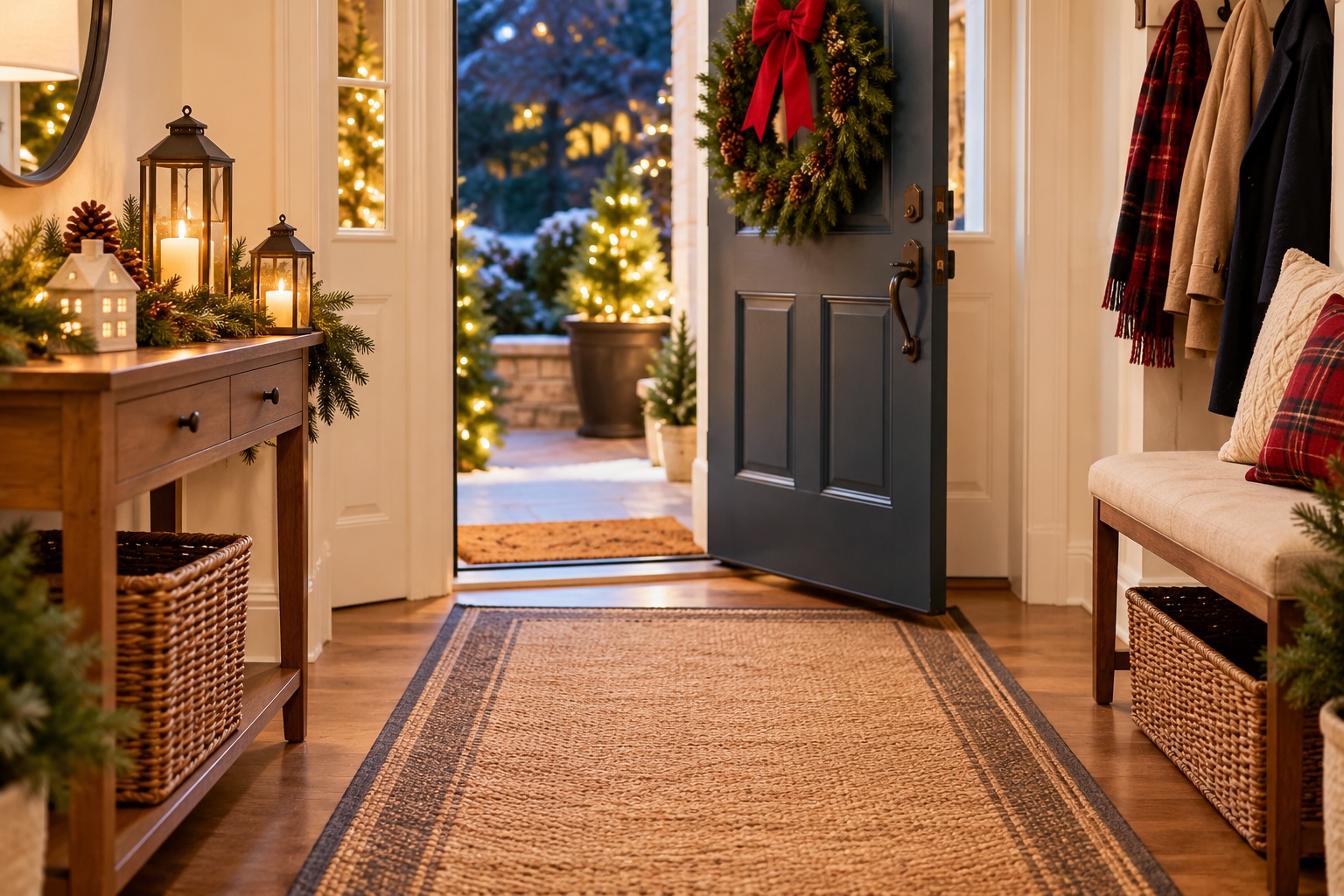
Holiday guests arrive carrying things. Coats. Bags. Gifts. Food. Children. Sometimes all five simultaneously.
Give them somewhere to put everything. Clear the entrance of unnecessary shoes and household clutter. Make room for coats. Keep the walking path open.
If the weather is wet, deal with tracked-in water promptly so the entrance doesn't become an ice rink without the ice. Festive skating belongs elsewhere.
3. Check Outdoor Walkways
If guests are arriving after dark, make sure the route to your door is well lit. Clear obvious obstacles.
Depending on your climate, address:
- Wet leaves
- Ice
- Snow
- Uneven obstacles
- Garden hoses
- Toys
- Packages
Check steps and railings too. The party shouldn't begin with an unscheduled trip down the front stairs.
4. Test Smoke Alarms
Before hosting a large gathering or overnight guests, make sure your smoke alarms are working.
NFPA specifically recommends testing smoke alarms before holiday entertaining and making guests aware of the home's fire escape plan.
If people are staying overnight, make sure they know how to get out of the house.
You don't need to conduct a fire drill between appetizers and dinner. Just make sure exits aren't a mystery.
5. Keep Exits Clear
Holiday decorating can gradually consume every available space. Don't let decorations, packages, furniture, or party supplies obstruct exits.
Keep doors and normal escape routes usable. The giant inflatable snowman doesn't take priority over the doorway. He'll understand.
6. Be Careful With Candles
Candles and Christmas look beautiful together. Candles and Christmas decorations can also be an unfortunate combination.
Keep burning candles:
- In sight
- Away from combustible decorations and other things that can burn
- Away from children and pets
- Where they can't easily be knocked over
Extinguish them before you leave the room or go to bed. Flameless candles are an easy alternative in busy entertaining areas.
This is particularly useful when children, pets and flowing holiday sleeves are involved.
Nothing says “perhaps we should have used the battery candle” quite like somebody's sweater passing six inches above a flame.
7. Check Your Holiday Lights
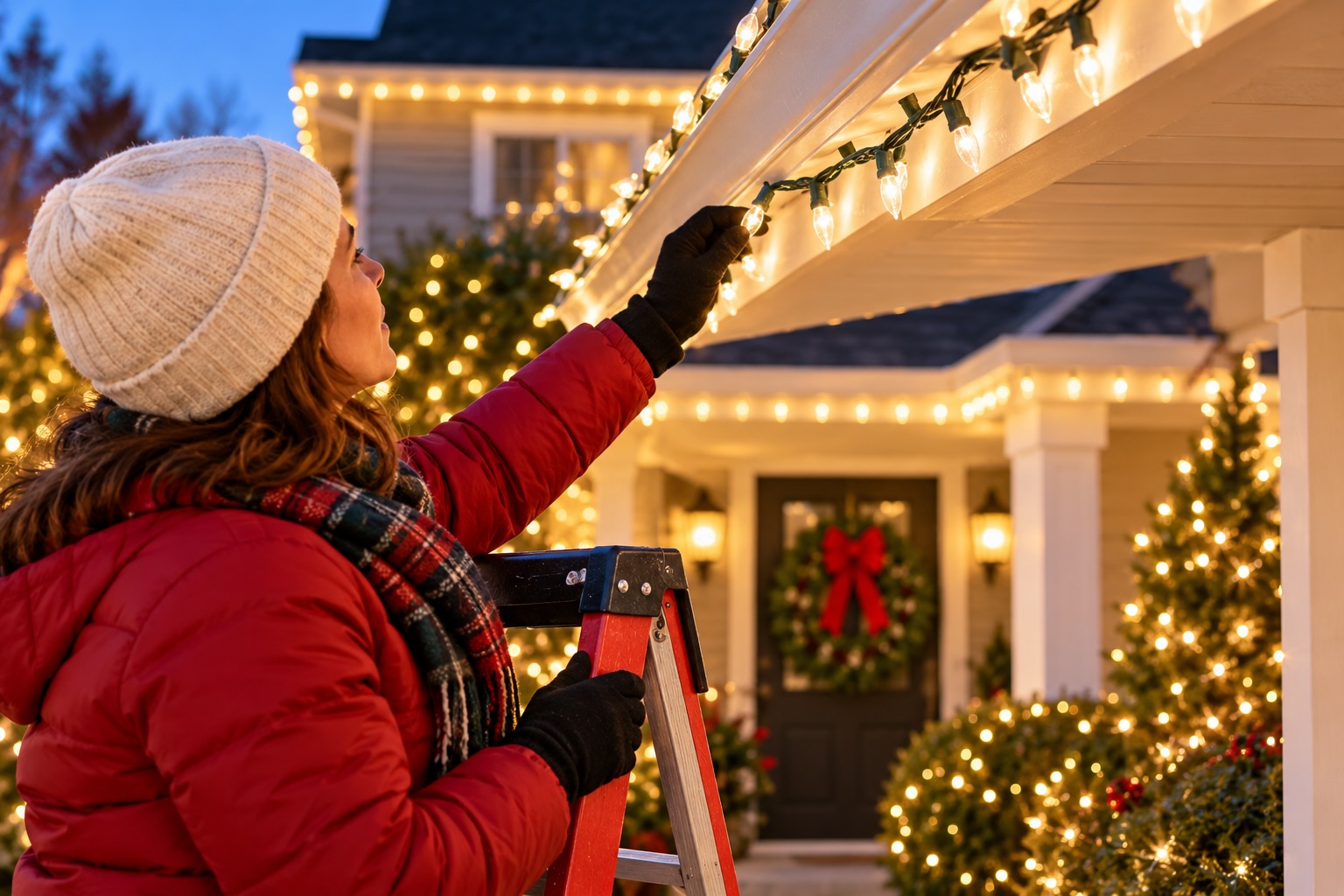
Look over light strings before using them.
Don't use sets with damaged cords or loose connections, and follow the manufacturer's instructions about how many strands can safely be connected.
Don't overload electrical outlets. Use lights only for their intended indoor or outdoor application, and turn holiday lights and decorations off before leaving home or going to bed.
More plugs do not necessarily equal more Christmas. At some point, they equal an electrical problem wearing tinsel.
8. Be Careful With Extension Cords
Extension cords can create both electrical and trip hazards. Use cords rated for their intended use and position them so guests aren't repeatedly walking across them.
Don't run a cord through the middle of the party because the Christmas village apparently requires its own power grid.
Move the decoration. The village will survive.
9. Keep the Christmas Tree Watered
If you have a live Christmas tree, keep it adequately watered and away from heat sources and open flames.
If you have an artificial tree, follow the manufacturer's instructions and look for appropriate fire-resistance labeling when purchasing one.
And regardless of tree type:
Don't put burning candles on it. There are traditions worth preserving. That isn't one of them.
10. Keep the Kitchen From Becoming a Crowd Scene
Holiday kitchens attract people. Unfortunately, they also contain:
- Hot pans
- Knives
- Boiling liquids
- Open ovens
- Stovetop burners
- Electrical appliances
Keep unnecessary traffic out of the active cooking zone. Children and pets, especially, should be somewhere else when cooking is intense.
Your kitchen can be social later. While you're carrying a roasting pan, it needs to be a workplace.
11. Turn Pot Handles Inward
Position pot and pan handles so they can't easily be bumped or grabbed.
Keep hot foods and drinks away from counter and table edges that young children can reach.
Also consider the route between the kitchen and dining table. If carrying the turkey requires navigating:
Grandma. Two toddlers. The dog. Three chairs and Uncle Steve holding a drink— clear the route first. The turkey has been through enough.
12. Don't Leave Cooking Unattended
Stay attentive when using the stovetop, and follow appropriate cooking safety practices for ovens and other appliances.
If something requires supervision, supervise it. Holiday distractions are everywhere.
Doorbell. Phone. Guests. Children. Conversation. Someone asking where you keep the extra forks. The food doesn't know it's Christmas. It can still burn.
13. Be Careful With Turkey Fryers
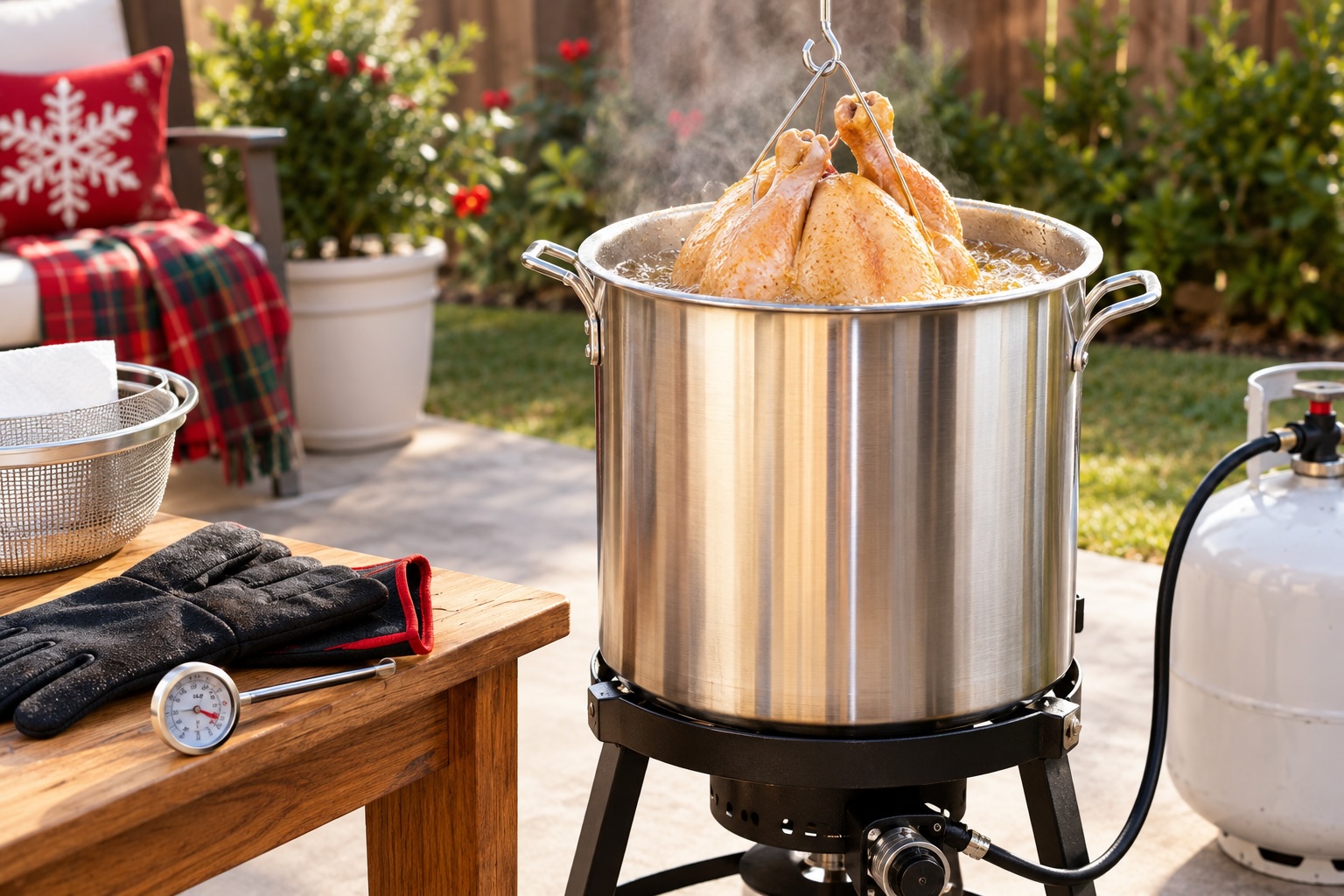
Deep-fried turkey has a loyal following. But turkey fryers also start a lot of holiday fires, and they cause serious burns.
If a fryer is part of your plans, read the manufacturer's instructions before the big day, not while guests are arriving, and follow them exactly.
If all of that sounds like more than you want to take on during a busy holiday, consider oil-free infrared "fryers," a spatchcocked turkey roasted at high heat, or a fried turkey ordered from a local restaurant for crisp skin with far less risk.
Plenty of holiday cooking welcomes creativity, like a new side dish, a twist on Grandma's stuffing, or a pie nobody's tried before. Hot oil isn't one of those places.
14. Keep Food Safety in the Plan
A buffet can sit around for hours while everyone talks. The bacteria are not socializing. They're being fruitful and multiplying. In your festive holiday dishes on display.
Plan to refrigerate perishable leftovers within two hours—one hour when the temperature is above 90°F—and store leftovers in shallow containers for faster cooling.
Refrigerated leftovers generally should be used within three to four days or frozen. Plan for leftovers before the party. Have containers. Have refrigerator space.
15. Ask About Food Allergies
If you're serving guests, especially children, ask about food allergies or other important dietary restrictions ahead of time.
Keep ingredient information available. Take cross-contact concerns seriously.
And don't assure someone that a food is safe if you don't actually know.
“I think there's no peanut in it” is not useful allergy information. When uncertain, say so.
16. Childproof the Party Zone as Needed
If young children are coming and your home normally doesn't have them, look at the space from their level.
Pay attention to:
- Small objects
- Breakable ornaments
- Sharp decorations
- Candles
- Matches and lighters
- Alcohol
- Medications
- Cleaning products
- Hot drinks
- Cords
- Stairs
Keep decorations with small removable parts away from young children, and dispose of plastic toy packaging promptly after opening gifts.
Your home doesn't need permanent childproofing for a four-hour visit. Just some pre-party planning and damage control.
17. Give Pets a Safe Retreat
Holiday parties can overwhelm pets. Doors open repeatedly. Food appears everywhere. Children want to interact. Noise increases.
Give pets a quiet, secure place to retreat.
Also keep holiday foods, candy, and unsafe decorations out of reach. Pay special attention to the front door if you have a cat or dog inclined to bolt.
Your pet doesn't understand that the open door is just accommodating Aunt Carol. He sees opportunity.
18. Prepare For Older Guests
If grandparents or other older adults are attending, check:
- Walkways
- Stairs
- Lighting
- Rugs
- Bathroom access
- Seating
Remove unnecessary obstacles. Make seating readily available.
If they're staying overnight, consider nighttime lighting. This doesn't mean treating older guests as fragile.
It means recognizing that the decorative basket sitting in the hallway isn't important enough to become a navigation challenge.
19. Don't Burn Wrapping Paper
After opening gifts, you may have an impressive mountain of wrapping paper.
No matter how tempting, resist the urge to toss the festive paper into the fireplace. Some wrapping paper can ignite suddenly, creating a flash-fire hazard.
Instead, gather it. Sort reusable materials and locally accepted recyclables. Trash the rest. The fireplace is not an approved holiday paper recycling program.
20. Do a Five-Minute Safety Reset During the Party
Safety isn't something to be checked only before guests arrive. Halfway through the gathering, take five minutes.
Look for:
- Spills
- Bags in walkways
- Toys on stairs
- Candles left burning
- Overfilled trash
- Hot drinks near children
- Food that's been sitting out
- Doors left unsecured
- Pet issues
- New clutter around exits
Parties evolve. The beautifully clear hallway at 4 p.m. may contain seven handbags, three coats, wrapping paper, and a plastic dinosaur by 7.
Reset it.
The 10-Minute Pre-Party Safety Check
Guests imminent? Walk through these five areas.
Minutes 1–2: Entrance
Clear the walkway.
Check lighting.
Make room for coats.
Minutes 3–4: Living Area
Check cords, candles, rugs, and traffic paths.
Minutes 5–6: Kitchen
Clear traffic around cooking areas.
Move dangerous items away from children.
Minutes 7–8: Bathroom
Check floor, lighting and access.
Minutes 9–10: Whole House
Check exits, smoke alarms, pets and anything obviously unsafe.
Done. Don't start reorganizing the medicine cabinet now. We had a mission.
If Children Are Coming
Pay attention to:
- Candles
- Hot food and drinks
- Small decorations
- Batteries and small toy parts
- Matches and lighters
- Medications
- Cleaning products
- Stairs
- Doors
- Pools and water hazards
- Pets
- Gift packaging
Once presents are opened, deal with plastic wrapping and other packaging promptly rather than letting it become part of the children's play area.
Also remember that the safest children's area is usually one where adults can reasonably supervise what's happening.
If Guests Are Staying Overnight
Your safety check extends beyond the party.
Make sure guests know:
- How doors lock
- Where the bathroom is
- How to turn on necessary lights
- How to exit the house
- Where the stairs are
- Anything unusual about your home
Clear the route from bed to bathroom. Provide a night light.
And make sure guests can charge phones without constructing an extension-cord network across the bedroom.
Fireplace Safety
If you're using a fireplace during the gathering:
- Keep combustible decorations away
- Use an appropriate screen
- Keep children and pets at a safe distance
- Don't burn wrapping paper
- Don't leave the fire unattended
Remove greenery, paper, and other decorations from the fireplace area before lighting a fire.
The fireplace already provides atmosphere. It doesn't need accessories hanging close enough to join in.
Holiday Safety Checklist
Outside and Entry
- Walkways clear
- Steps clear
- Adequate lighting
- Entry clutter removed
- Room for coats and bags
Fire and Electrical
- Smoke alarms working
- Exits clear
- Candles safely positioned
- Holiday light cords checked
- Outlets not overloaded
- Extension cords appropriately used
- Live tree watered
- Fireplace area clear
Kitchen
- Cooking area clear
- Children and pets away from active cooking
- Pot handles safely positioned
- Knives safely stored
- Hot drinks away from edges
- Food thermometer available when needed
- Leftover containers ready
- Refrigerator space available
Children and Pets
- Small hazardous objects inaccessible
- Matches and lighters inaccessible
- Medications secured
- Cleaning products secured
- Gift packaging removed promptly
- Pet retreat available
- Exterior doors monitored
- Walkways clear
- Bathroom route clear
- Night lighting available if useful
- Guests know exits
- Stairs adequately lit
- Luggage not blocking paths
What You Don't Need to Do
Holiday safety does not require turning your home into a padded bunker.
You don't need to:
Remove every decoration.
Ban candles entirely if you can use them safely.
Spend the entire party anticipating catastrophe.
The goal is to remove obvious, preventable hazards so everyone can relax.
Safety works best when most people don't even notice you've thought about it.
The walkway is clear.
The candles are in sensible places.
The kitchen isn't overcrowded.
The toddler can't reach the hot coffee.
Grandpa can see the stairs.
The dog isn't escaping through the front door.
That's success.
The Bottom Line
Holiday entertaining adds people and activity to a home that normally operates very differently. So before the doorbell rings, take ten minutes and look around.
Clear the walkways.
Check the lights.
Test the smoke alarms.
Watch the candles.
Keep the cooking area under control.
Make allowances for children, pets, and older guests.
Put food away safely.
Keep exits clear.
Then stop looking for danger and enjoy your party. You are not the evening's safety inspector. You're the host.
A little preparation means you can spend more time doing the important things:
Eating.
Talking.
Laughing.
Opening gifts.
And wondering how 17 people managed to use 43 drinking glasses.
Keep Going
If children are attending, Holiday Entertaining With Kids has more on setting up a kid-friendly gathering.
For keeping the busiest room in the house under control, see the Holiday Kitchen Survival Guide.
Hosting grandparents or older relatives? Use the Holiday Grandparents Visit Guide.
To get your home ready for overnighting holiday guests, see Easy Guest Bedroom Ideas and tips for outfitting a Guest Bathroom.
And for year-round household safety, visit Home Safety.
- Clean Home
- Safe at Home
- Holiday Safety Tips For Entertaining