Pet Chores for Kids by Age:
Raising Responsible Pet Owners
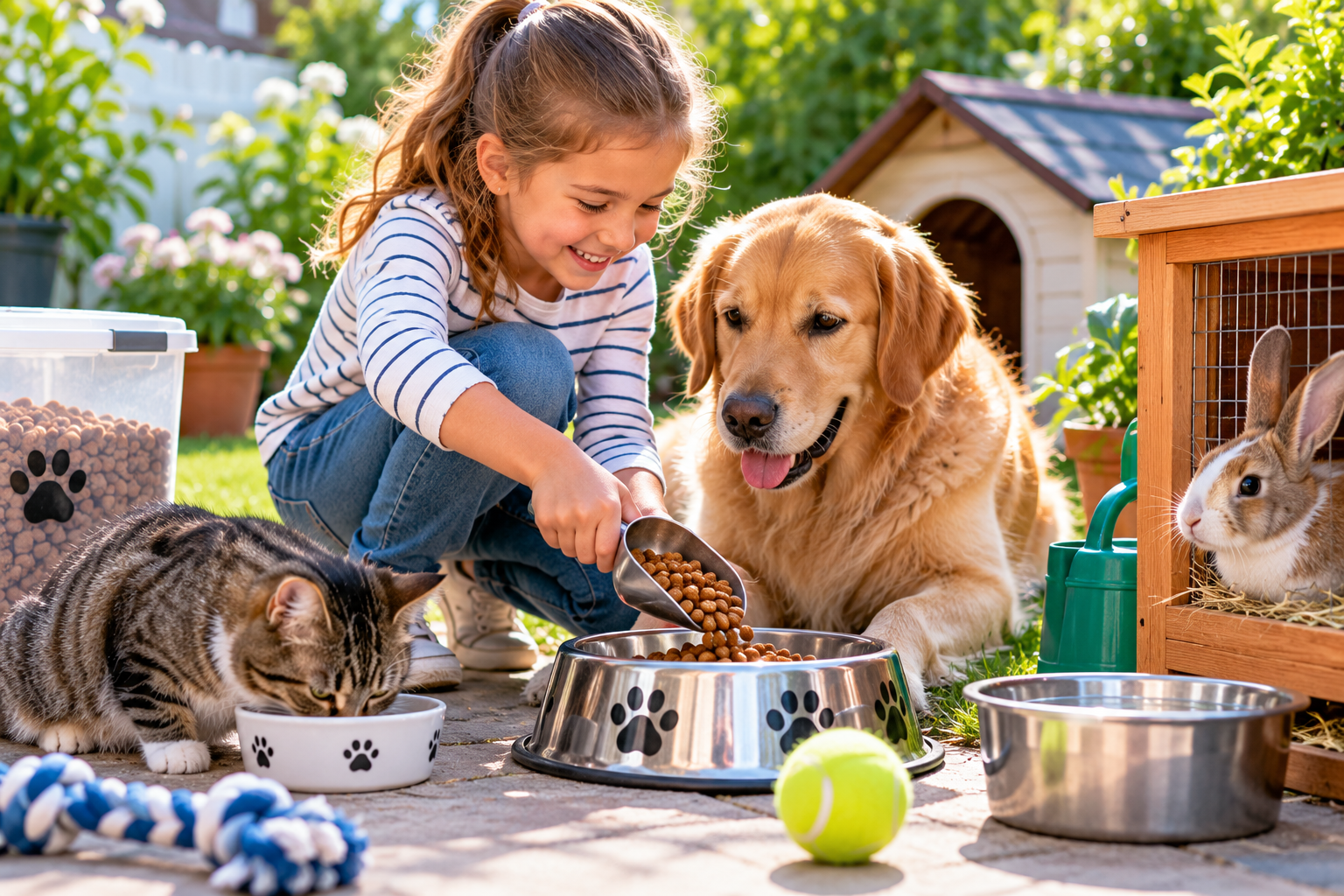
Remember when your child promised to take care of the family pet?
Every single day. Without reminders. Forever. It was a beautiful moment.
Then the puppy came home, the novelty wore off, and somehow you're the one standing outside in your pajamas at 6 a.m. holding a leash.
Welcome to pet ownership with children.
The good news? Pet chores for kids can teach responsibility, consistency, and compassion, provided the assignments match your child's age and abilities.
The trick is to start small, supervise appropriately, and remember that the family pet isn't supposed to be the guinea pig in your child's responsibility experiment.
Why Give Kids Pet Chores?
Taking care of an animal teaches lessons that ordinary household chores sometimes don't.
The dog needs fresh water whether your child feels motivated or not. The cat's litter box doesn't magically clean itself because someone has soccer practice.
Pet chores help children learn to:
- Follow a daily routine
- Notice when another living creature needs something
- Complete tasks without constant reminders
- Develop empathy and patience
- Contribute to family responsibilities
- Understand that pets require ongoing care
Of course, none of this happens overnight.
Responsibility develops gradually, usually with a few reminders and an occasional parental sigh.
Pet Chores for Kids Ages 3–5
Preschoolers love helping with pets. Unfortunately, their enthusiasm often exceeds their coordination.
That's fine. At this age, the goal is participation, not independence.
Good Pet Chores for Preschoolers
- Help put pet toys into a basket
- Assist an adult with measuring pet food
- Help refill a water bowl
- Gently brush a calm, friendly pet with supervision
- Help gather clean pet blankets
- Watch an adult prepare the pet's sleeping area
Keep tasks short and simple. A three-year-old who helps put away dog toys has accomplished something worthwhile, even if the dog immediately removes every toy from the basket.
Parent tip: Always supervise young children around animals. Even gentle pets can react unpredictably when startled or handled roughly.
Pet Chores for Kids Ages 6–8
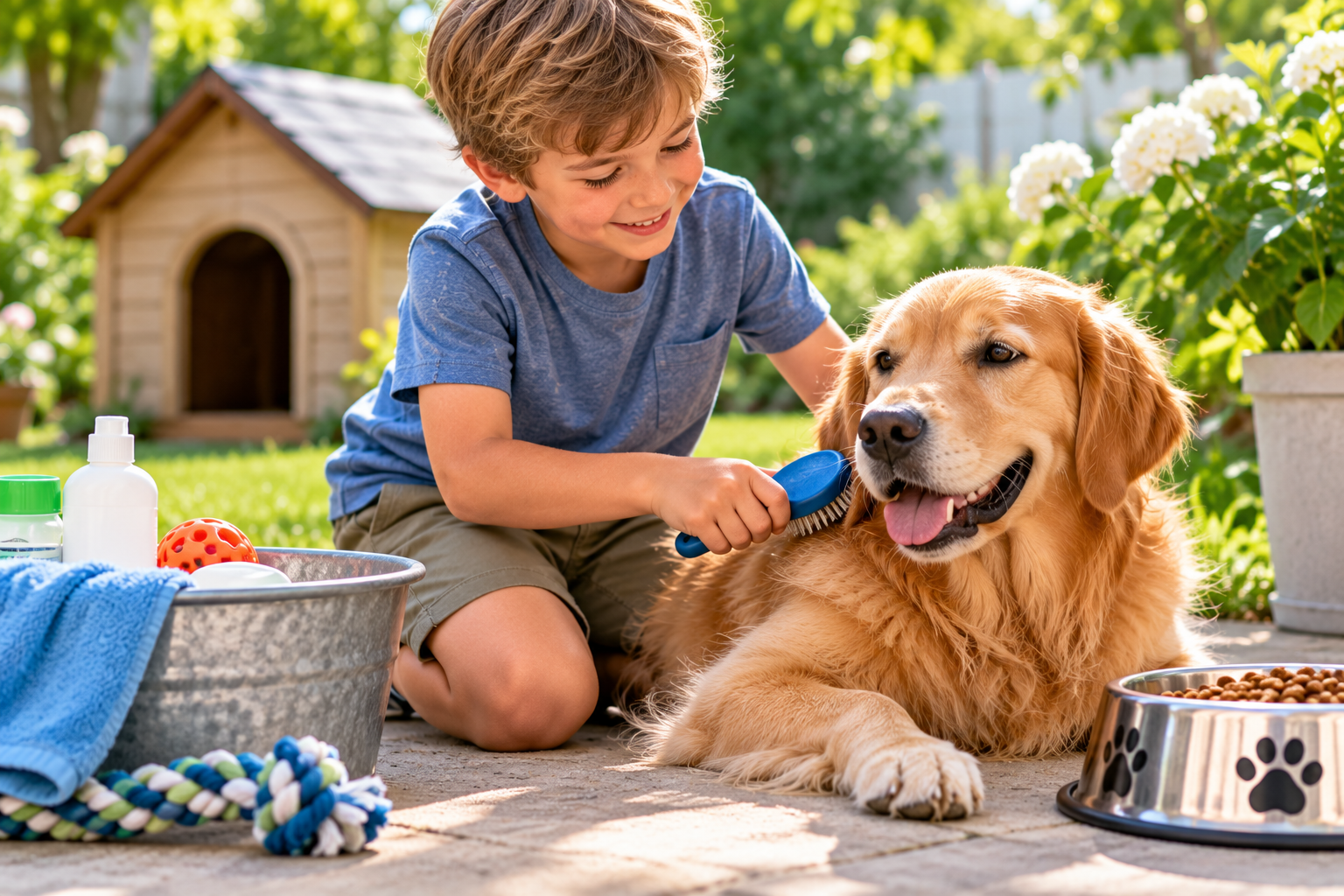
Elementary school children can begin taking responsibility for a few predictable tasks. They still need reminders and adult oversight, but they can start developing a routine.
Good Pet Chores for Ages 6–8
- Help provide fresh water
- Measure food with adult supervision
- Brush a cooperative pet using an appropriate brush
- Put away pet toys and supplies
- Help wash food bowls
- Assist with cleaning a pet's sleeping area
- Participate in supervised playtime
Choose one or two daily responsibilities rather than handing your child an entire pet-care schedule.
A child who remembers to refill the water bowl consistently is making progress. A child assigned twelve chores may suddenly develop a mysterious inability to hear you.
Pet Chores for Kids Ages 9–12
By this age, many children can manage more involved pet-care routines. They may be able to complete assigned tasks with fewer reminders, although adults should continue checking that everything gets done correctly.
Good Pet Chores for Ages 9–12
- Feed pets according to a written schedule
- Check and refill water bowls
- Brush and groom cooperative animals
- Clean food and water bowls
- Help change pet bedding
- Assist with cleaning cages or enclosures
- Help clean litter boxes or pet waste areas with appropriate supervision and hygiene precautions
- Participate in supervised dog walks
- Keep pet supplies organized
Children should wash their hands after handling pet food, waste, bedding, or cleaning supplies.
And remember that walking a dog isn't automatically a safe independent chore. A small, calm dog and a large, excitable dog are two entirely different assignments.
Pet Chores for Teens Ages 13–17
Teenagers can often handle substantial pet-care responsibilities, depending on their maturity and experience.
Some may be ready to manage much of a pet's daily routine. Others still need the occasional reminder that the dog cannot operate the can opener.
Good Pet Chores for Teens
- Follow regular feeding schedules
- Provide fresh water daily
- Walk dogs when safe and appropriate
- Clean litter boxes and pet enclosures
- Groom pets using suitable tools
- Wash pet bedding
- Keep feeding areas clean
- Track pet-food and supply needs
- Help maintain a pet-care calendar
- Assist with veterinary appointments
Teens can also learn to recognize changes in a pet's appetite, energy, or behavior and report concerns to an adult.
However, parents should remain responsible for veterinary decisions, medication administration, and ensuring that the pet's needs are met.
Quick Pet Chore Chart by Age
Age Chores
3–5 Put away toys, help with food and water, supervised brushing.
6–8 Refill water with supervision, measure food, tidy pet areas.
9–12 Follow feeding schedules, clean bowls, assist with grooming.
13–17 Manage daily feeding, walks, cleaning, grooming, and supplies
Every child and every pet is different. Use this chart as a starting point, not a rigid set of rules.
How to Make Pet Chores Part of the Daily Routine
Assigning chores is easy. Getting them done consistently is where things become interesting. A few simple strategies can help.
1. Connect Pet Care to Existing Habits
Have your child check the water bowl after breakfast or put away pet toys before bedtime. Linking a new responsibility to an established routine makes it easier to remember.
2. Use a Simple Pet Chore Chart
A checklist on the refrigerator can work wonders. Keep it straightforward:
- Morning feeding
- Fresh water
- Exercise or playtime
- Evening feeding
- Cleanup
For younger children, use pictures instead of written instructions. The goal is to make the routine visible, not create paperwork worthy of a corporate office.
3. Demonstrate Each Chore First
Don't assume your child knows how much food to give the dog or how to brush the cat properly. Show them. Then let them practice while you supervise. A few minutes of instruction now can prevent an entire bag of kibble from ending up on the kitchen floor later.
4. Start With One Responsibility
Give your child one regular chore and let them master it. Once that becomes a habit, add another.
Gradual responsibility works better than announcing that your eight-year-old is now the household's Director of Animal Care.
5. Check the Work Without Taking Over
Children need accountability, but they also need opportunities to learn. Inspect the water bowl.
Confirm that feeding was completed. Make sure the enclosure is clean.
If something was missed, help your child correct it while ensuring the pet receives immediate care. You can supervise without doing every job yourself.
Pet Chores That Require Extra Caution
Not every pet-care task is appropriate for every child. Use particular care with:
Dog walking: Children should never walk a dog they cannot safely control. Traffic, unfamiliar dogs, and sudden pulling can create dangerous situations.
Cleaning animal waste: Pet feces and litter boxes can expose people to germs and parasites. Young children shouldn't handle these tasks independently, and anyone cleaning waste should use appropriate hygiene precautions.
Bathing pets: Wet animals can become frightened or difficult to control. Adult supervision is important.
Administering medication: Medication doses and schedules should be managed by a responsible adult.
Handling small or fragile animals: Rabbits, guinea pigs, birds, and other small pets can be injured by improper handling. Teach children safe interaction before assigning hands-on chores.
And never make a child responsible for caring for an animal that frightens them or behaves aggressively.
What If Your Child Stops Doing Pet Chores?
Eventually, even the most enthusiastic young pet owner may lose interest. The novelty fades. Homework piles up. Friends become more interesting than scooping litter.
This is normal. Rather than turning every missed chore into a family showdown, review the routine.
Is the task age-appropriate? Does your child understand exactly what's expected? Would a reminder or different schedule help?
If responsibilities continue to be neglected, use reasonable, consistent consequences.
For more guidance, see Pet Care Consequences for Kids, where we look at what to do when children forget or refuse their assigned pet-care jobs.
Most importantly, never allow a pet to go without food, water, exercise, or necessary care to teach a child a lesson. The animal didn't sign up for that arrangement.
Remember: The Pet Is Still a Parent's Responsibility
Children can be wonderful helpers and increasingly capable caretakers. But even when a pet was purchased specifically for a child, the adults in the household remain responsible for its well-being.
That means checking that chores are completed, arranging veterinary care, providing proper nutrition, and stepping in whenever necessary.
The objective isn't to hand off every pet-related job. It's to raise a child who understands what responsible animal care looks like.
Preferably before they move out and acquire three dogs of their own.
Keep Going
Pet chores for kids work best when they're simple, age-appropriate, and part of an everyday routine.
Start with one manageable responsibility, demonstrate how to do it, and gradually add more as your child becomes capable and consistent.
For more family-friendly help, explore:
- Pet Care Consequences for Kids: What to do when children forget their pet-care responsibilities.
- Easy Pets for Kids: Choosing a pet that fits your family's lifestyle.
- Getting Kids to Clean: Practical ways to encourage children to help around the house.
- Laundry Chores for Kids by Age: More opportunities to build independence.
The real reward isn't a perfectly completed chore chart.
It's watching your child notice that the dog's water bowl is empty—and fill it without being asked. Now that's progress.
You Might Like These:
Car Chores for Kids by Age
Car chores for kids are a natural. They do help muck up the family ride, after all. So why shouldn't they help clean it?
Kids Chores Seasonally by Age
Kids chores seasonally by age. How many chores can you reasonably expect kids to help out with at home? Here's a simple guide to age appropriate kids chores seasonally.
Living Room Chores for Kids by Age
Living room chores for kids. Here's a guide to which living room chores kids can do at what ages. Once a child reaches a certain skill or age level he do chores for the age groups below.
Patio Chores for Kids by Age
Patio chores for kids. This patio chores list for kids details age-appropriate chores little ones can help with on the patio or in the backyard.
Bedroom Cleaning with Kids
Why not just give up and close the door? Because bedroom cleaning with kids now will teach them the essentials they need to know as they go on in life.
How to Teach Kids to Do Chores Without Constant Reminders
Learn how to teach kids household chores step by step, set realistic expectations, avoid common mistakes and help children become more responsible at home.
Kitchen Chores for Kids by Age
Kitchen chores for kids by age. At what age can a child set and clear the kitchen table? When can a kid take out the garbage? Here is a guide to age appropriate kitchen chores for kids.
Car Cleaning With Kids
Each week, or at least once a month, clean your car's dashboard and doors. But plan to do your car cleaning with kids! They did help muck it up, after all.
Yearly Kids Chores by Age
Yearly kids chores by age. Which yearly kids chores can you reasonably expect kids to help with? Here's a simple guide to age appropriate annual chores.
Weekly Kids Chores by Age
Weekly kids chores by age. A list of weekly kids chores and the age at which a child can reasonably be expected to complete them.
Kitchen Cleaning With Kids
At what age can a child set and clear the table? This quick guide for chores by age will help make kitchen cleaning with kids a snap.
Spring Cleaning With Kids
Spring cleaning with kids? Excited about cleaning? Yes, it really is possible that your kids will not only get excited, but moving, too with these tips.
Party Clean Up With Kids
Party clean up with kids. The party is over - and the mess remains. It's time for party clean up. Kids can help with these post-party jobs so everyone can call it a night.
Doing Laundry With Kids: 20 Tips That Actually Help
Make doing laundry with kids easier with 20 practical tips for teaching sorting, washing, folding and putting clothes away safely at every age.
Monthly House Chores for Kids by Age
Monthly house chores for kids. This is the monthly house chores schedule that works best for me. Your list will differ depending on how many kids you have and how old they are,
Garage Kids Chores by Age
Here's a guide to garage kids chores kids by age. Once a child reaches an individual skill or age level, he can generally do the chores for his age group and those for the age groups below.


- Clean Home
- Pets
- Pet Chores for Kids