15 Trick-or-Treating Safety Tips
for a Fun and Safe Halloween
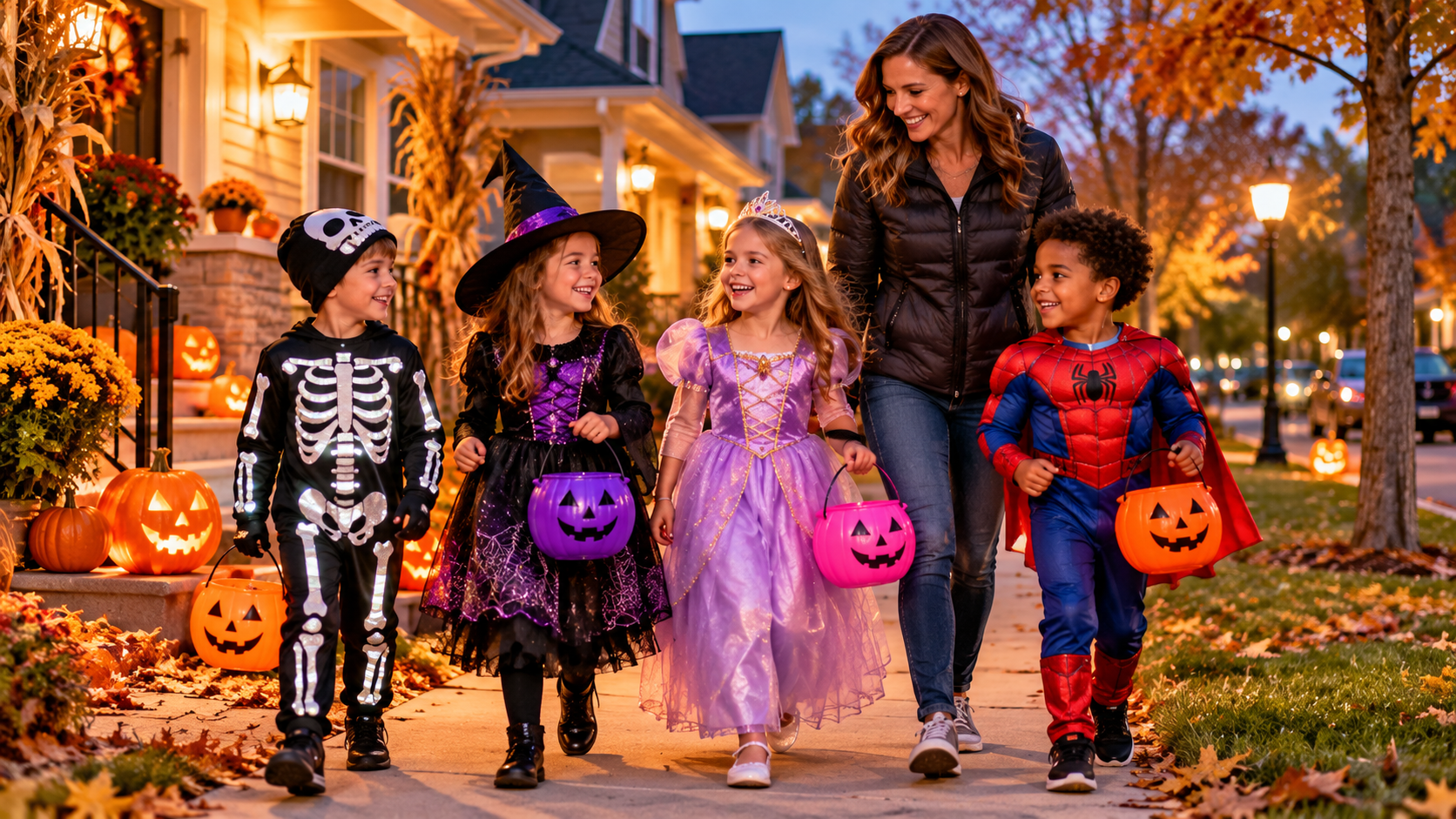
Halloween is one of those holidays kids look forward to for weeks. There's the costume planning, the pumpkin carving, the neighborhood decorations, and, of course, the promise of a pillowcase full of candy.
For parents, there's also a little worrying involved. Will drivers see the kids after dark? Will that elaborate costume survive three blocks? And how much candy can one small person possibly eat?
Fortunately, a few simple trick-or-treating safety tips can make Halloween safer without taking away the fun.
The biggest priorities are visibility, pedestrian safety, comfortable costumes, adult supervision, and checking treats before children dig in.
Here's how to prepare for a Halloween night that's memorable for all the right reasons.
1. Plan Your Trick-or-Treating Route Before Leaving Home
Before everyone heads out the door, decide where you're going. Choose familiar neighborhoods with sidewalks, good lighting, and manageable street crossings. Plan a route that avoids busy intersections whenever possible.
If you're taking younger children, consider a shorter loop close to home. You can always extend the evening if everyone still has energy.
Make sure children know where the group is going and where they'll meet if someone becomes separated. And remember: little legs get tired long before little candy bags get full.
2. Make Costumes Easy for Drivers to See
Halloween costumes are often dark, especially when your child wants to dress as a vampire, witch, or mysterious creature of the night.
Unfortunately, dark clothing can make children difficult for drivers to spot. Add reflective tape or reflective accessories to costumes, shoes, and treat bags.Choose bright colors when possible.
Give children glow sticks or flashlights to help them see and be seen. A flashlight is especially useful on poorly lit sidewalks and when navigating steps.
Remember: Reflective materials improve visibility, but they don't replace careful street-crossing habits.
3. Choose Costumes That Fit Properly
A costume that drags along the ground may look dramatic, but it also creates a tripping hazard. Before Halloween night, have your child try on the complete outfit.
Check that:
- Pants and hems don't drag.
- Capes aren't too long.
- Shoes fit comfortably.
- Accessories don't interfere with walking.
- Children can move freely.
- Costume pieces won't easily catch on steps or decorations.
Avoid oversized shoes and flimsy costume footwear. Comfortable sneakers are often the best choice, even if they aren't exactly what a fairy princess had in mind. She'll appreciate them by the fourth block.
4. Use Face Paint Instead of Vision-Blocking Masks
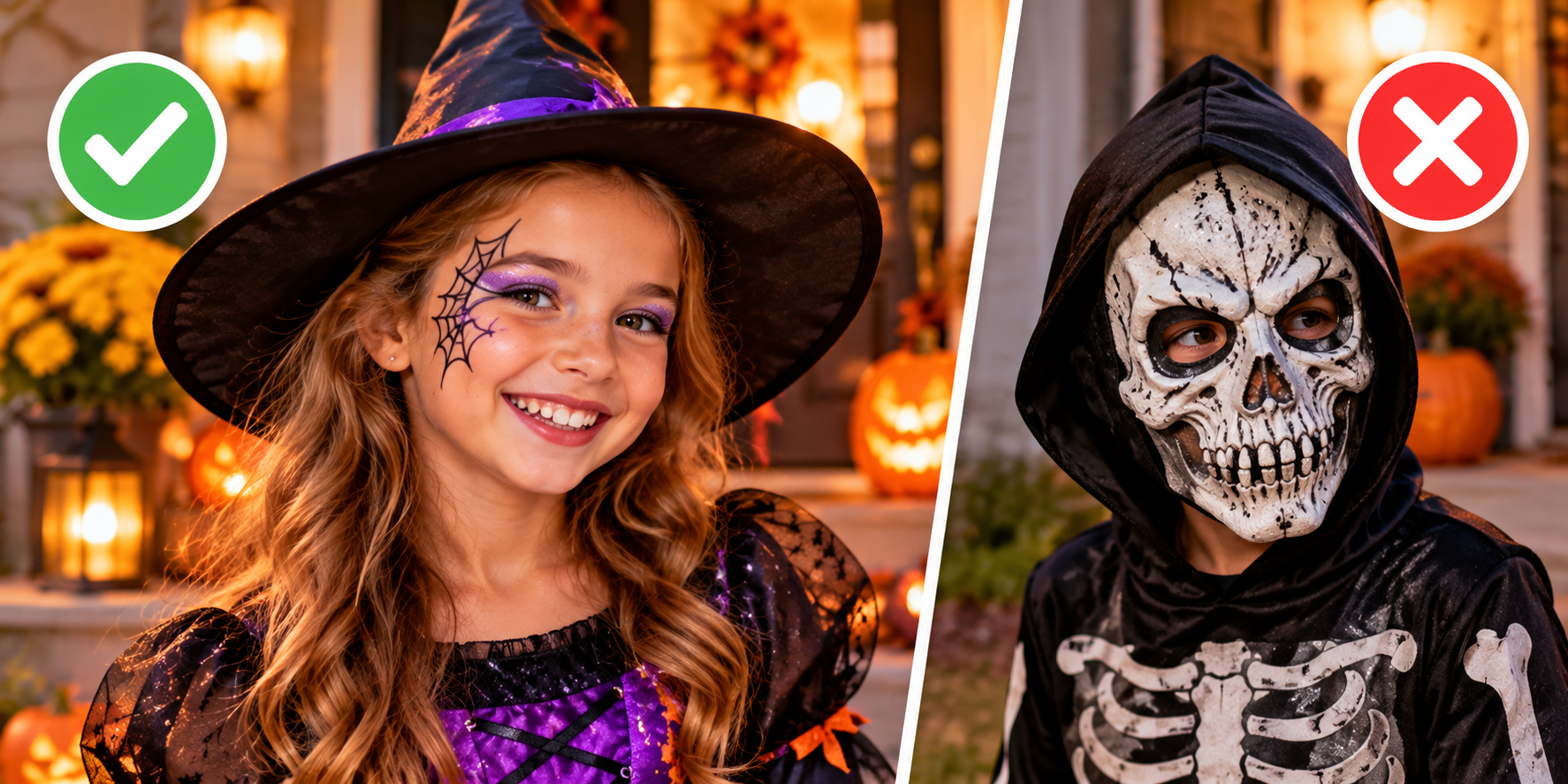
Masks can make it harder for children to see cars, bicycles, uneven sidewalks, and other trick-or-treaters.Consider using face paint or makeup instead.
Choose products intended for use on skin, follow age recommendations, and test for sensitivity beforehand. Keep makeup away from eyes unless it's specifically labeled for that use.
If your child insists on wearing a mask, make sure it fits properly and provides clear peripheral vision. And don't let children wear decorative contact lenses unless they've been prescribed and fitted by an eye-care professional.
Those spooky eyes aren't worth an eye injury.
5. Keep Costume Props Soft and Flexible
Swords, wands, staffs, and superhero accessories can complete a costume. But hard or sharp props can cause injuries when children run, trip, or bump into one another.
Choose props made from soft, lightweight materials. Avoid anything pointed, rigid, or difficult to carry. A foam sword is a much better choice than a hard plastic one.
And remind your little superhero that the neighborhood doesn't actually need saving tonight. It just needs candy collected.
6. Have Young Children Trick-or-Treat With an Adult
Young children should always be accompanied by a responsible adult. For older children, readiness matters more than reaching a particular birthday.
Before allowing tweens or teens to go without an adult, consider their judgment, familiarity with the neighborhood, ability to follow traffic rules, and willingness to stay with their group.
If older children are going independently, agree on:
- The route they'll follow
- Who they'll be with
- A return time
- How they'll contact you
- What to do if plans change
- Where to go if they need help
Encourage them to stay together rather than splitting up. A group of friends is fun, but it isn't a substitute for good judgment.
7. Cross Streets Carefully—Every Single Time
Traffic is one of the most important Halloween safety concerns. Children are excited, distracted, and often focused on the next porch light rather than the next intersection.
Remind everyone to:
- Cross at marked crosswalks or intersections whenever possible.
- Obey traffic signals.
- Look left, right, and left again before crossing.
- Keep looking for turning vehicles while crossing.
- Make eye contact with drivers when possible, without assuming they've seen you.
- Walk rather than run.
- Avoid crossing between parked cars.
Don't assume a vehicle will stop simply because you're in a crosswalk. And remind children that one more piece of candy is never worth darting into the street.
8. Stay on Sidewalks and Walkways
Use sidewalks whenever they're available. If there isn't a sidewalk, walk facing oncoming traffic, as far from moving vehicles as safely possible.
Keep children close and avoid walking in the roadway. Use driveways and designated paths rather than cutting across landscaping.
Watch for uneven pavement, wet leaves, garden hoses, and decorations that could cause trips. Halloween can be spooky enough without an unexpected tumble into someone's flower bed.
9. Visit Homes That Are Welcoming Trick-or-Treaters
A lighted porch is a common sign that a household is participating in Halloween, although neighborhood customs vary. Stick to homes that clearly appear to be welcoming trick-or-treaters.
Teach children to remain outside unless a parent or trusted adult has specifically approved entering. They should never enter a stranger's home or vehicle to collect treats.
Remind children that it's perfectly acceptable to decline an invitation or leave a situation that feels uncomfortable. If something seems wrong, they should return to their adult or contact a trusted person immediately.
10. Keep Phones Available, but Eyes on the Road
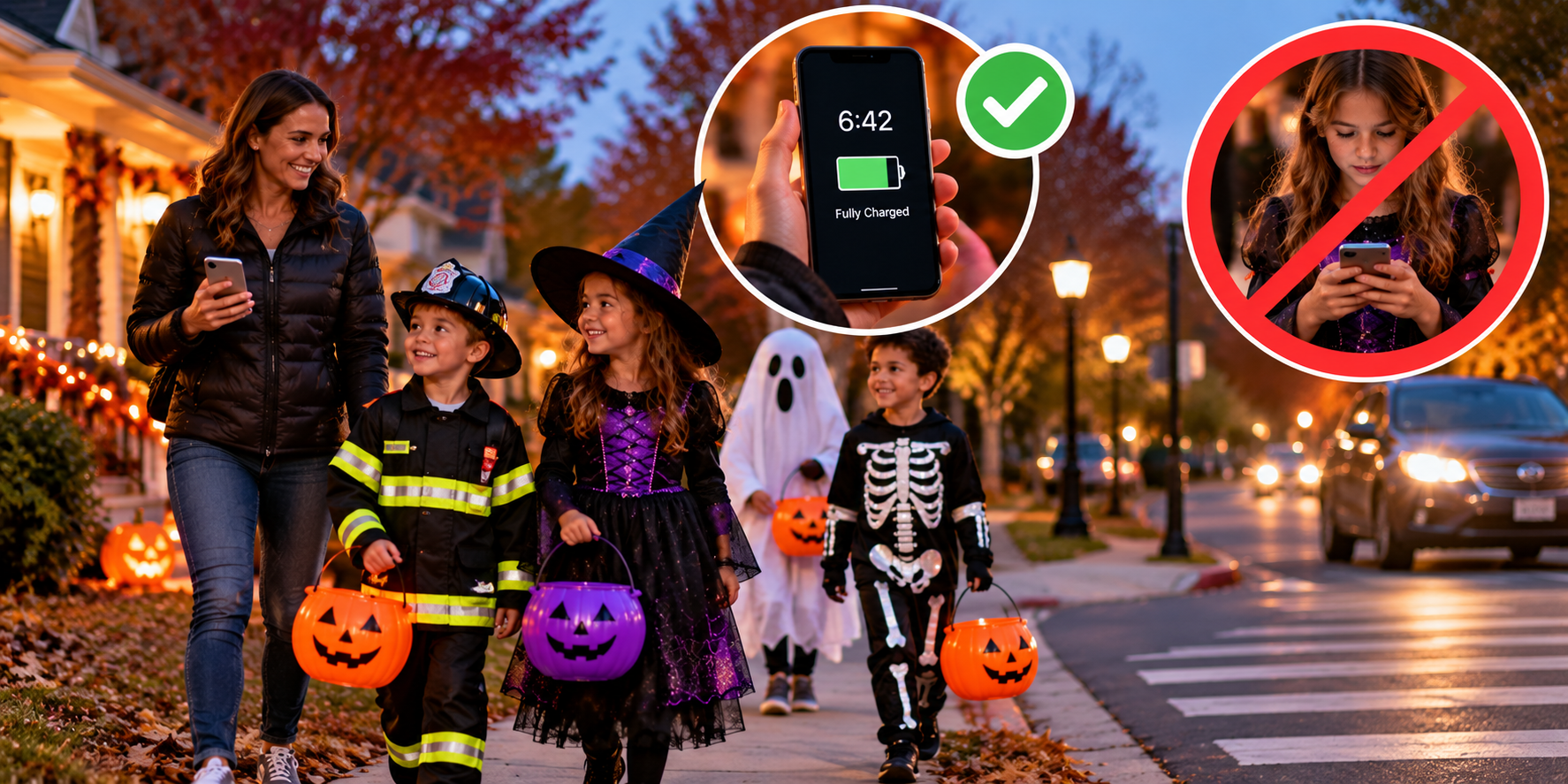
A phone can be useful for older children who are trick-or-treating independently. Make sure it's charged before they leave.
However, walking while texting, filming, or scrolling can be dangerous—especially near streets. Encourage children to stop in a safe place before using their phones.
And if you're accompanying younger children, try to keep your own attention on the surroundings rather than your screen. The Halloween photos can wait until everyone is safely on the sidewalk.
11. Inspect Halloween Candy Before Eating
Once the trick-or-treating adventure ends, the candy inspection begins. Have children wait until they're home before opening their treats.
Check for:
- Torn or opened wrappers
- Unsealed packaging
- Candy that appears damaged or contaminated
- Treats that aren't appropriate for the child's age
- Ingredients that could trigger allergies
Discard anything questionable. For children with food allergies, read ingredient labels carefully. Candy assortments and seasonal products may contain unexpected allergens.
A helpful perspective: Intentional candy tampering is uncommon. The more routine concerns are food allergies, choking hazards, and treats that aren't suitable for young children.
If a child has eaten something suspicious and develops symptoms, seek medical advice promptly.
12. Watch for Choking Hazards in Younger Children
Not every Halloween treat is suitable for every age. Hard candy, gum, small round candies, and certain chewy treats can be choking hazards for young children.
Sort candy according to each child's age and developmental abilities. Young children should eat while seated and supervised rather than walking, running, or playing.
You can set aside unsuitable treats for older family members or replace them with safer alternatives. And if you have a toddler, remember that the candy bucket itself is probably half the excitement.
13. Be Careful Around Candles and Halloween Decorations
Jack-o'-lanterns look wonderful with a flickering glow. But open flames and flowing costumes aren't a good combination. Use battery-operated candles or LED lights whenever possible.
Teach children to keep away from open flames, extension cords, and electrical decorations.
When buying costumes, look for appropriate flame-resistance labeling. Flame-resistant materials can still burn, so keep costumes away from ignition sources. Be especially careful with long capes, loose sleeves, and flowing fabric.
For homeowners welcoming trick-or-treaters, keep walkways clear and decorations safely secured. Nobody wants the evening's scariest moment to involve a tangled extension cord.
14. Prepare for the Weather
Halloween weather can be unpredictable. Depending on where you live, October 31 might bring warm sunshine, chilly winds, or an unexpected downpour. Check the forecast before leaving.
Dress children in comfortable layers that fit beneath their costumes. Choose footwear suitable for the conditions.
If rain is expected, bring a waterproof layer and watch for slippery leaves and steps. And if severe weather threatens, consider an indoor community event or another alternative. The candy will still be delicious indoors.
15. Set a Few Halloween Rules Before You Go
The best time to explain Halloween safety rules is before everyone gets excited. Keep the rules simple and easy to remember.
Tell children:
- Stay with your adult or assigned group.
- Walk, don't run.
- Cross streets carefully.
- Never enter a stranger's home or vehicle.
- Don't eat candy until it's been checked.
- Ask for help if you're lost or uncomfortable.
- Return home at the agreed time.
For younger children, review the rules while putting on costumes.
For older children, discuss what they should do if their phone dies, a friend wants to change the route, or someone gets separated. A little preparation now can prevent a lot of confusion later.
Halloween Safety Tips for Parents Driving at Night
Even families who aren't trick-or-treating can help keep Halloween safer. If you're driving on Halloween evening:
- Slow down in residential neighborhoods.
- Watch carefully for children near parked cars.
- Expect unexpected movements.
- Avoid phone use and other distractions.
- Be especially cautious at intersections and driveways.
- Allow extra time to reach your destination.
Children can be difficult to see after dark, even when they're wearing bright costumes.
Drive as though an excited trick-or-treater could appear near the next driveway. Because one just might.
Before You Leave: Halloween Safety Checklist
Here's a quick checklist to review before heading out.
- Costumes fit comfortably and don't drag.
- Shoes are safe for walking.
- Reflective accessories are attached.
- Flashlights or glow sticks are ready.
- Phones are charged, if needed.
- The trick-or-treating route is planned.
- Children know the street-crossing rules.
- Adults or group arrangements are confirmed.
- Everyone knows the return time.
- Children understand that candy will be checked at home.
- Weather-appropriate layers are ready.
- Emergency contact information is available.
A five-minute check before leaving can make the whole evening go more smoothly.
Frequently Asked Questions About Trick-or-Treating Safety
What are the most important Halloween safety rules?
The most important rules involve crossing streets safely, staying visible to drivers, supervising young children, wearing comfortable costumes, and checking treats for age suitability and allergens.
At what age can children trick-or-treat alone?
There's no single age that's appropriate for every child. Consider maturity, traffic conditions, neighborhood familiarity, communication skills, and whether the child can reliably follow safety rules.
Should children wear reflective tape on Halloween?
Yes. Reflective tape or accessories can help drivers see children in low light, especially when costumes are dark. Flashlights and glow sticks can also improve visibility.
Is it safe to eat Halloween candy while trick-or-treating?
It's better to wait until you're home so an adult can check packaging, ingredients, and choking hazards. This is especially important for younger children and those with food allergies.
Are Halloween masks safe for children?
Masks can limit vision or interfere with breathing if they don't fit properly. Face paint may be a better option when used safely, although some children may have skin sensitivities.
What should children do if they get separated from their group?
They should stop in a safe, well-lit public location, contact their parent or trusted adult, and avoid wandering farther away. Younger children should know how to identify a trusted helper if they need assistance.
How can I make trick-or-treating safer for toddlers?
Choose a short route, stay close to your child, use comfortable shoes, avoid small or hard candies, and consider going before it gets fully dark.
More Halloween and Family Safety Ideas
Once you've planned a safer trick-or-treating adventure, keep the holiday preparations simple.
Explore more ideas for:
- Halloween activities for kids
- Family-friendly Halloween parties
- Safe holiday decorating
- Household rules for young guests
- Planning family celebrations
The best Halloween traditions are the ones your family can enjoy without unnecessary stress.
The Bottom Line
Halloween should be full of costumes, laughter, neighborhood fun, and maybe a little too much chocolate.
It shouldn't be full of preventable accidents.
By choosing safe costumes, improving visibility, planning your route, supervising children appropriately, and paying attention to traffic, you can help make trick-or-treating a safer experience.
Review the rules before heading out, keep your expectations realistic, and remember to enjoy the evening.
After all, those little ghosts and superheroes won't be little forever.
Happy Halloween—and happy trick-or-treating!
Keep Going
Halloween may last only one night, but the fun of planning family activities, celebrations, and traditions can continue all year long.
Here are more ideas to help keep family celebrations organized, enjoyable, and a little less stressful.
Planning a celebration with children of different ages? Find practical ways to keep everyone entertained while making safety a priority.
Planning Tips for Family Parties
From preparing your home to planning kid-friendly activities, these ideas make entertaining the whole family easier.
Household Rules for Young Guests
Simple rules help children stay safe, respect boundaries, and have fun when visiting friends.
Make Halloween and other holidays more memorable with simple traditions your family can look forward to each year.
Planning a party after Halloween? These practical tips will help keep the excitement under control
.More Halloween Tips and Stories
Looking for a little more Halloween inspiration? Explore our seasonal stories for quick decorating ideas, family activities, and practical ways to make the holiday more enjoyable.
Whether you're getting the house ready for trick-or-treaters or planning a Halloween celebration, a few simple ideas can make the holiday feel special without creating extra work.
And remember: the best Halloween memories aren't necessarily about who collected the most candy. They're about the costumes, the laughter, and the fun of sharing the evening together.
Happy Halloween!
- Clean Home
- Safe at Home
- Trick Or Treating Safety Tips