7 Easy Tips for Decluttering Your Home Without the Overwhelm

Clutter has a remarkable ability to sneak into a house. It starts with a few papers on the kitchen counter. Then a jacket lands on the dining room chair. A shopping bag takes up residence in the hallway.
Before long, you've got a stack of magazines from three years ago, four water bottles nobody uses, and a kitchen drawer that requires both hands and a little prayer to open.
The good news? You don't need to empty every closet, buy matching storage containers, or devote an entire weekend to getting your home back under control. You just need a place to start.
These seven decluttering tips will help you clear everyday clutter, make better use of your space, and create a home that's easier to keep organized.
No extreme minimalism required. You can keep your favorite things. You just need to be able to find them.
7 Tips for Decluttering Your Home
1. Start with the clutter you can see.
2. Set a timer for 15 minutes.
3. Give everything a place to live.
4. Get rid of things you're not using.
5. Stop buying storage containers before you declutter.
6. Use the one-in, one-out rule.
7. Do a 10-minute reset every evening.
1. Start With the Clutter You Can See
When your house feels cluttered, it's tempting to tackle the biggest, most complicated storage area first. Don't. Start with something visible and manageable.
Good places include:
- The kitchen counter
- The coffee table
- The dining room table
- The bathroom counter
- The entryway
- The top of your dresser
Choose one surface and clear it. Put away things that belong elsewhere. Recycle unwanted papers. Throw away trash. Return everyday items to their places.
Then stop and enjoy the difference. A clear kitchen counter makes the entire room feel more organized, even if the pantry still contains three half-empty boxes of crackers.
Why this works: Visible progress gives you an immediate reward and makes the next task feel less overwhelming. You don't need to declutter the entire house to change how it feels.
Sometimes clearing one counter is enough to make you want to keep going.
2. Set a Timer for 15 Minutes
One of the biggest obstacles to decluttering is the belief that you need hours of uninterrupted time. You don't. Set a timer for 15 minutes. Choose one small area and work until the timer rings.
You might:
- Clear a kitchen drawer
- Sort a bathroom cabinet
- Tidy one bookshelf
- Remove clutter from a nightstand
- Organize a small section of your closet
The trick is choosing something you can finish. Don't start emptying the entire garage with 12 minutes left before dinner. That's how a simple organizing project turns into a household emergency.
When the timer rings, finish putting things away. If you feel like continuing, wonderful. If not, you've still accomplished something.
A finished 15-minute project beats a half-finished six-hour project every time.
3. Give Everything a Place to Live
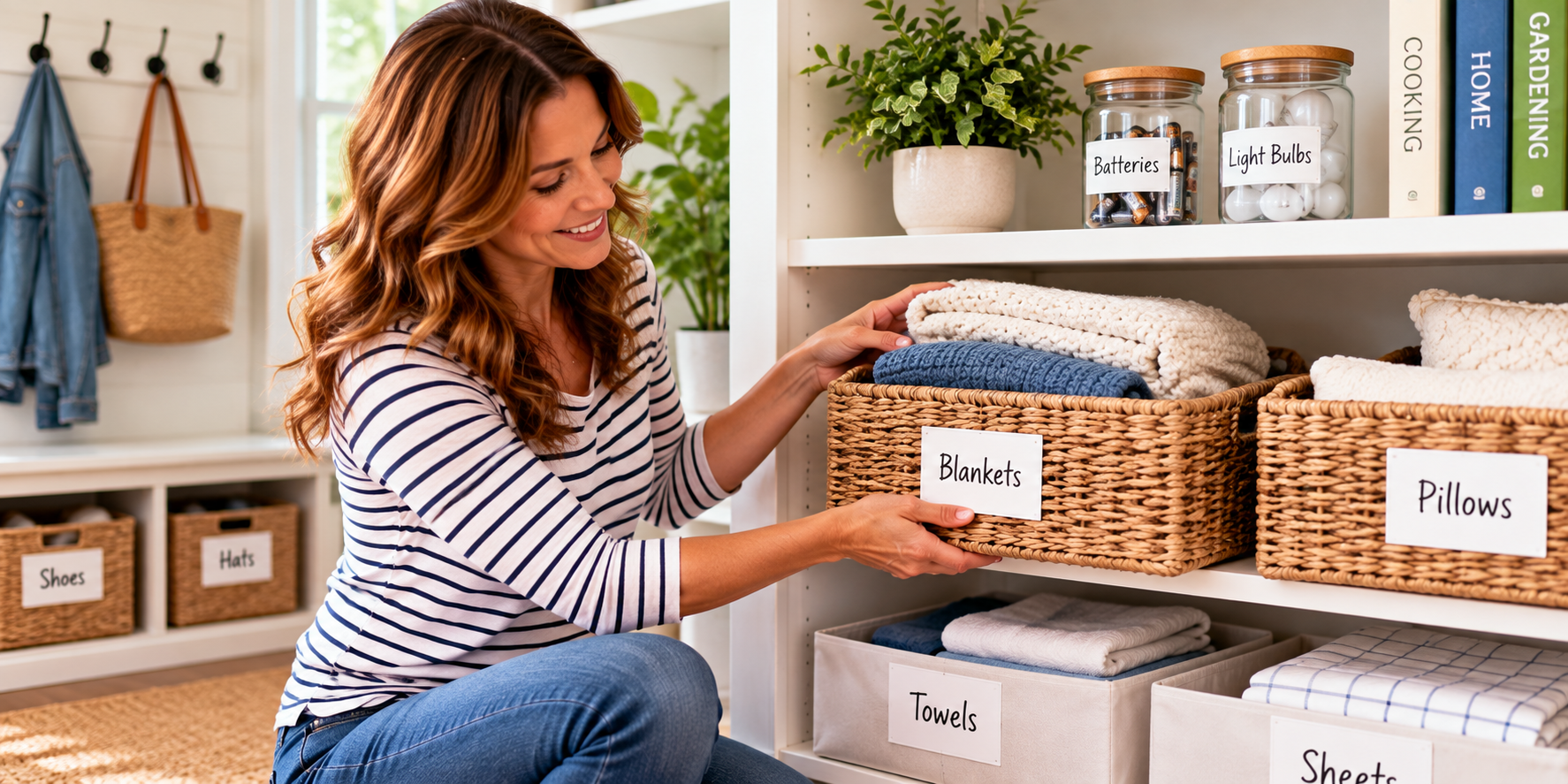
Clutter piles up when everyday things don't have homes. Mail lands on the counter because there's nowhere else to put it. Shoes pile up by the door because the closet is inconvenient.
Chargers migrate around the house because nobody knows where they belong. The solution is surprisingly simple. Give the things you use every day logical, easy-to-reach spots.
For example:
- Keys go on a hook near the door.
- Shoes go on a rack or in a basket.
- Mail goes in a tray.
- Remote controls go in a small container.
- Backpacks hang on hooks.
- Cleaning supplies live together in one cabinet.
Choose spots based on where you actually use things. If your family always drops shoes by the back door, put the shoe basket by the back door. It beats nagging everyone to carry them to a bedroom closet.
Organize around your habits, not the habits you wish your family had.
And remember: storage should make putting something away easier, not harder. If you need to move six things to reach a basket, the basket is in the wrong place.
Ready to Go Beyond Decluttering Tips?
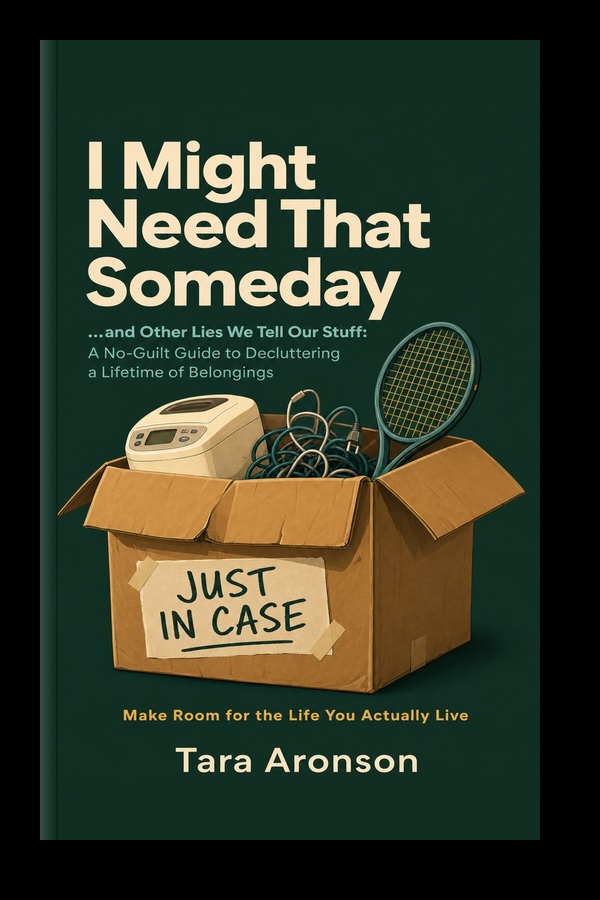
Seven tips can get you started. But what if you're dealing with years of accumulated belongings, overflowing closets, and things you've been meaning to sort through since approximately 2005?
My book I Might Need That Someday gives you a practical plan for clearing clutter without marathon cleanouts, extreme minimalism, or feeling guilty about what you let go.
4. Get Rid of Things You're Not Using
This is where decluttering gets interesting. Most homes don't become cluttered overnight. They accumulate things gradually.
Clothes that no longer fit. Kitchen gadgets used exactly once. Extra coffee mugs. Books you never finished. Decorations you no longer like.
And that mysterious collection of cords you're keeping because one of them might belong to something important. Maybe. Someday.
Go through one small category and ask yourself:
- Do I use this?
- Do I like it?
- Does it work?
- Do I have something else that does the same job?
- Would I buy it again today?
- Is it worth the space it takes up?
You don't need to throw away useful or meaningful things just to own less. The goal is to stop giving valuable space to things that no longer earn their place in your home.
Donate usable items. Recycle what your local program accepts. Sell things that are genuinely worth the time and effort.
Toss what's broken. Batteries, paint and dead electronics go to your local drop-off, not the trash can. And be realistic about what you're going to repair. If that broken blender has been sitting in the garage for four years, it may be time to acknowledge that its future is not especially promising.
5. Stop Buying Storage Containers Before You Declutter
This one is important. When a room feels disorganized, it's natural to think you need more storage. More bins. More baskets. More shelves. Possibly an entire wall of beautifully coordinated containers.
But buying storage before you declutter just gives you a prettier way to keep things you don't need.
Instead, follow this order:
1. Remove everything from one manageable area.
2. Sort through what you have.
3. Decide what to keep.
4. Group similar items together.
5. Measure the space.
6. Buy storage only if you actually need it.
Once they're not overcrowded, the shelves and drawers you already have usually work just fine. And if you do need containers, you'll know exactly what size and type to buy.
There's nothing wrong with a pretty basket. But it shouldn't cost $35 to store $12 worth of things you don't use.
6. Use the One-In, One-Out Rule
Clearing clutter is half the job. The other half is not letting it back in the front door.
The rule is simple: when something new comes in, something old goes out. New sweater in, old sweater into the donation bag. New coffee mug in, and one of the eleven you already own goes with it.
It works best on the stuff that multiplies when you're not looking:
- Clothes and shoes
- Kitchen gadgets and mugs
- Toys
- Books
- Water bottles and travel cups
- Throw pillows and blankets
Keep a donation bag in a closet so the "one out" has somewhere to go right away.
Why this works: It turns decluttering from a big event into a habit, so you never end up back at the kitchen drawer that needs both hands and a little prayer to open.
7. Do a 10-Minute Reset Every Evening
Once you've cleared some clutter, a short daily reset keeps it from coming back. Spend 10 minutes putting everyday things back where they belong. Focus on the spots that collect the most clutter.
You might:
- Clear the kitchen counter.
- Put away shoes and jackets.
- Return toys to their bins.
- Collect stray dishes.
- Straighten the living room.
- Put papers where they go.
Get everyone involved. Kids can put away their own shoes, toys and backpacks. And adults who live in the house can participate, too. A revolutionary concept, I know.
You don't have to make the house spotless. Just get the busiest spaces back in order. The goal is to wake up to a home that's ready for another day, not yesterday's unfinished mess.
Want the whole routine mapped out? My Daily Home Reset turns this into a 15-minute plan for every day of the week.
Where Should You Start Decluttering?
If you're still not sure where to begin, pick one small task that fits the time you have.
Area
Kitchen
Living room
Bedroom
Bathroom
Closet
Home office
Time
10 minutes
10 minutes
15 minutes
10 minutes
20 minutes
15 minutes
Your First Task
Clear one countertop. Put away what doesn't belong and toss the papers.
Clear the coffee table: old magazines, stray toys, cups and whatever else landed there.
Declutter one nightstand. Keep the essentials and clear the surface.
Sort one drawer. Toss expired products and empty containers.
Sort one shelf or one section of hanging clothes. Pull what you no longer wear.
Clear your desk. Recycle old papers and put supplies away.
These are suggested starting times, not deadlines. If an area takes longer, that's fine. The important thing is to choose a task you can finish.
Start Small
You don't have to declutter an entire room to make progress.
Just 10 to 20 minutes spent clearing one small area makes your home feel more organized.
Choose one task today. Tomorrow, tackle another. Before long, those small wins add up to a cleaner, calmer home.
The Three-Container Decluttering Method
For small decluttering projects, use three containers or sorting spots.
- Keep: Things you use, need or genuinely want.
- Donate or Sell: Usable things that no longer belong in your home.
- Trash or Recycle: Things that are broken, used up or headed for the trash, recycling or a drop-off.
Keep a separate small pile for things that belong in another room. Then put those away before calling the project finished. This last step matters.
Otherwise, you've simply relocated the clutter. Which is a very popular organizing technique, but not an especially effective one.
Decluttering the whole house, not just one drawer? Use the four-pile method (keep, donate, sell, toss) in my complete guide, How to Declutter Your Home Room by Room.
Five Decluttering Mistakes That Waste Your Time
Even a simple decluttering project can get off track.
1. Starting Too Big
Trying to organize an entire house in one day leaves you exhausted and surrounded by unfinished projects. Start smaller.
2. Buying Storage Too Soon
Decide what you're keeping before you buy a single container.
3. Keeping Things Out of Guilt
You don't have to keep every gift, outdated purchase or unused item just because someone spent money on it. Appreciating a gift doesn't require permanent storage.
4. Creating a Giant "Decide Later" Pile
A few maybes are fine. A mountain of maybes means you haven't decided anything. Give them a one-week deadline, then each one gets a yes or a no.
5. Forgetting to Remove the Discards
Donation bags and recycling piles shouldn't live in the hallway. Finish the job by getting unwanted things out of the house.
More mistakes, and how to dodge them, are in my complete decluttering guide.
Your Seven-Day Decluttering Challenge
Want a little momentum without taking over your entire weekend? Do one small task each day.
DayMonday Tuesday Wednesday Thursday Friday Saturday Sunday |
Decluttering taskClear the kitchen counter Declutter one bathroom drawer Sort one stack of papers Remove unused items from the refrigerator Declutter one clothing drawer Organize the entryway Take donations out and reset the living room |
Adjust any task to fit your schedule. If you miss a day, pick up where you left off. No guilt. No elaborate catch-up plan.
And absolutely no need to empty every closet because you suddenly feel inspired on Thursday afternoon.
Quick Decluttering Checklist
Use this checklist whenever you tackle a small space.
• Choose one manageable area.
• Set a realistic time limit.
• Remove obvious trash.
• Gather things that belong elsewhere.
• Group similar things together.
• Decide what to keep.
• Set aside donations or things to sell.
• Recycle what you can. Hazardous stuff goes to a drop-off.
• Give everything you're keeping a home.
• Return everything to its place.
• Get the donation and trash bags out of the house.
• Enjoy the newly cleared space.
Frequently Asked Questions
What Is the Easiest Way to Start Decluttering?
What Is the Easiest Way to Start Decluttering?
Start with one small, visible area, like a countertop or nightstand. Remove trash, put away misplaced things, and decide what belongs in that space. Finishing a small project builds confidence for bigger ones.
How Can I Declutter When I'm Overwhelmed?
How Can I Declutter When I'm Overwhelmed?
Choose a task that takes five to 15 minutes. Focus on one category or surface, not an entire room. Don't empty three closets at once.
Should I Organize or Declutter First?
Should I Organize or Declutter First?
Declutter first. Decide what you want to keep before buying storage or arranging anything. Organizing stuff you don't want just creates more work.
How Often Should I Declutter?
How Often Should I Declutter?
Do a 10-minute reset every day and one 15-minute session on a crowded spot each week. When a drawer won't close or the closet won't take one more hanger, that's your cue.
What if My Family Keeps Making Clutter?
What if My Family Keeps Making Clutter?
Give everyone's stuff a home they can reach, do a nightly reset together, and give each person a job they can actually do, like kids putting away their own shoes and backpacks. Aim for a house that works, not one that's perfect.
What Is the One-In, One-Out Rule?
What Is the One-In, One-Out Rule?
Every time something new comes into your home, something old goes out. Buy a new sweater, donate an old one. It stops clutter from building back up after you've cleared it.
The Bottom Line: Start Small and Keep Going
Decluttering your home doesn't have to be a dramatic event involving dozens of garbage bags and a complete personality transformation.
Start with one surface. Spend 15 minutes. Give your things sensible homes. Stop keeping what you don't need. And build a few habits that keep clutter from coming back.
Some days, you'll clear an entire closet. Other days, you'll finally deal with the stack of mail beside the toaster. Both count.
The goal isn't to own as little as possible or keep a house that looks permanently ready for a magazine photo shoot. It's to create a home where you can find what you need, use the spaces you have, and spend less time moving piles from one place to another.
And maybe open the junk drawer without something springing out. That would be nice.
Keep Going
Keep your momentum going and tackle the next spot with these related guides:
• How to Declutter Your Home Room by Room: The complete guide, with the four-pile method and every room in the house.
• Clutter-Free Living Room: Reclaim the room where everything ends up.
• Closet Organization Tips: Make room for the clothes you actually wear.
• How to Organize Clothes: Drawers and closets that are easy to put things away in.
• How to Organize Paperwork: Tame the paper pile with a simple filing system.
• How to Organize Storage: Make better use of closets, shelves and storage areas.
• How to Organize Your Home Room by Room: The next step once the clutter's gone.
• The Daily Home Reset: A 15-minute daily routine that keeps the piles from coming back.
Free 15-Minute Daily Reset Checklist
Get Notes on Keeping House
Fifteen minutes a day. No weekend cleaning marathons. No guilt. Sign up for my newsletter and I'll send you the printable checklist that makes it happen.
Send My ChecklistNo spam, ever. Unsubscribe anytime.
Free Printable
Notes on Keeping House
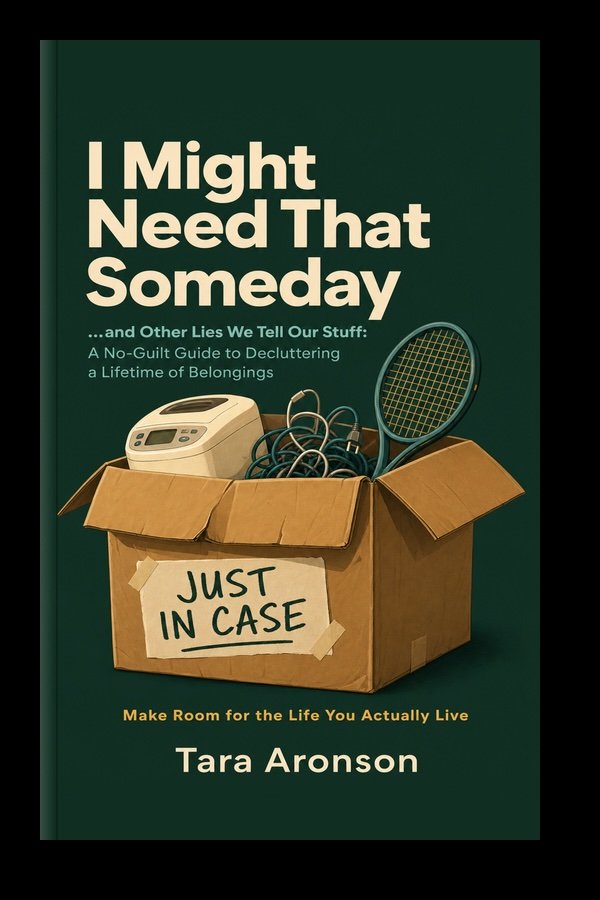
Sign up and get my 15-Minute Daily Reset Checklist. One timer, five zones, and a house that stays under control.
Send My ChecklistNo spam, ever. Just smart, funny tips for keeping house from Tara Aronson.