Furniture Shopping Ideas:
How to Buy Pieces You'll Actually Love

Furniture shopping starts out sounding fun. New sofa! New dining table! Finally replacing that chair nobody likes but everyone has somehow been sitting in for 14 years!
Then you enter a furniture store. There are 63 sofas. One is "oatmeal." Another is "natural flax." A third is apparently "warm fog."
They all look beige.
And suddenly you're expected to make a decision that costs several thousand dollars and may occupy your living room for the next decade.
The good news is that furniture shopping gets much easier when you stop asking, "What looks good here?" and start asking, "What will actually work in my house?"
These furniture shopping ideas will help you choose pieces that fit your rooms, your family's real life, your budget and the things you already own.
And hopefully prevent you from buying a 96-inch sofa for a 94-inch wall. Because enthusiasm is not a measuring system.
1. Measure Everything First
Before shopping, measure the room. Write down:
- Room length and width
- Doorways
- Windows
- Fireplace or built-ins
- Available wall space
Then measure the route the furniture must take into the room. Check doors, hallways, stairs, elevators and tight corners.
A sofa that fits beautifully in the living room is useless if it can't enter the living room. Few phrases bring a family together quite like: "It won't fit through the door."
2. Decide What You Actually Need
Make a list before you shop. Separate need from would be nice. If you need a sofa, shop for a sofa.
Don't come home with two accent chairs, a console table and an enormous decorative vase because they were on sale.
Furniture stores are extremely good at introducing needs you didn't know you had. Bring a list.
3. Buy for the Way Your Family Really Lives
Think about what actually happens in the room. Do you:
- Watch television?
- Entertain?
- Read?
- Work?
- Eat?
- Have children?
- Have pets?
- Routinely have five people piled onto one sofa?
Choose furniture for that life. Not the showroom life where nobody spills anything, owns a charging cable or apparently needs to put down a coffee cup. Beautiful furniture still has to do a job.
4. Make a Simple Floor Plan
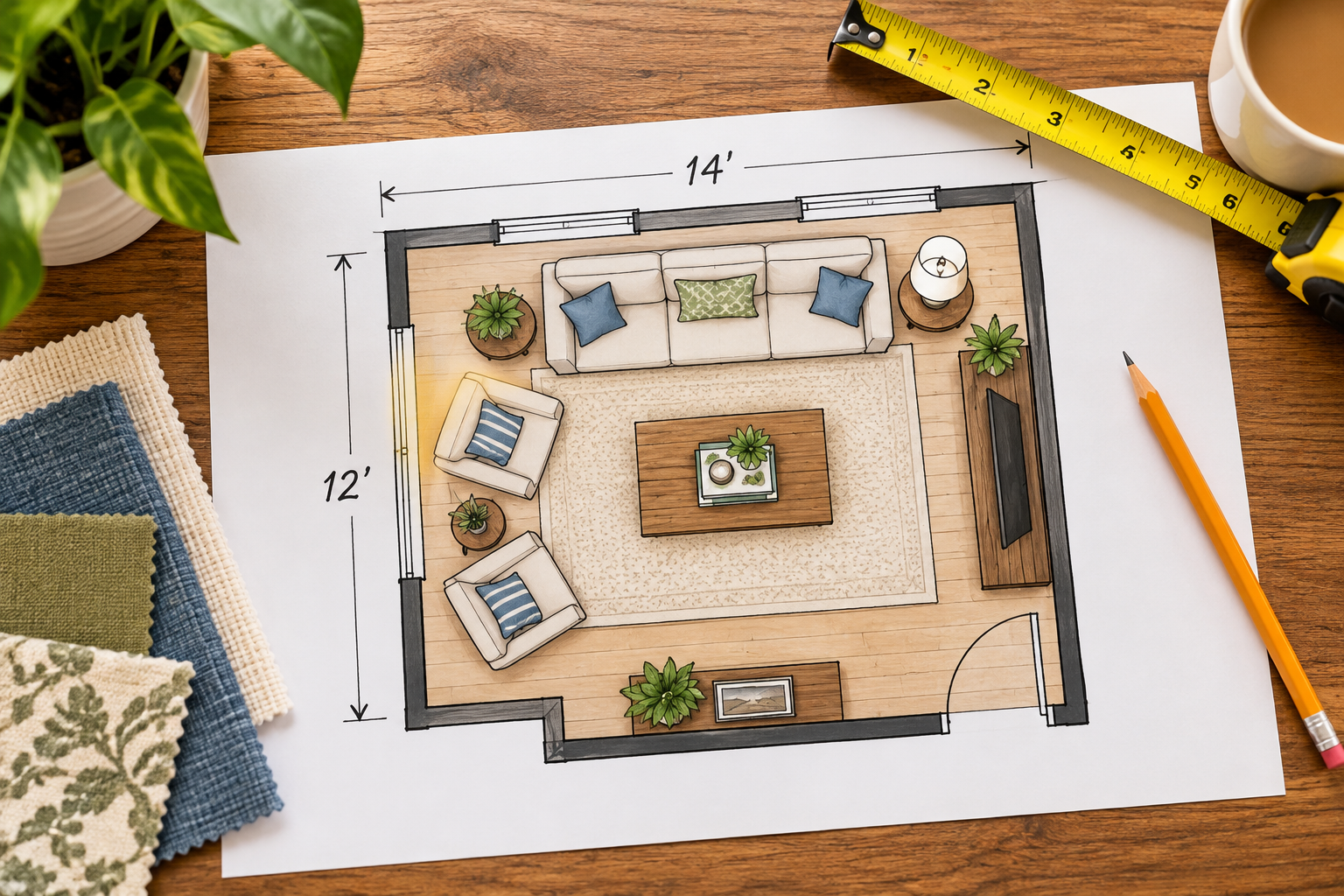
You don't need design software. Sketch the room on paper and mark doors, windows and major furniture.
For large pieces, use painter's tape on the floor to show the actual dimensions. This is particularly useful with sofas, beds and dining tables.
A 96-inch sofa sounds perfectly reasonable on a website. Tape 96 inches across your living-room floor and suddenly the sofa has become real estate.
5. Pay Attention to Scale and Traffic Flow
Furniture should fit both the room and the other furniture. An enormous sectional can overwhelm a small room. Tiny furniture can disappear in a large one.
Also make sure people can move comfortably around the room. Don't block:
- Doorways
- Closets
- Cabinets
- Major walking paths
- Fireplace access
If everyone has to turn sideways to get from the sofa to the kitchen, something is too big.
6. Start With the Most Important Piece
If you're furnishing a room from scratch, choose the major piece first. Usually that's the:
- Sofa
- Bed
- Dining table
Then build around it.
It's much easier to find lamps and side tables that work with your sofa than to find a sofa that coordinates with the lamp you bought six months ago because it was 40 percent off.
Start big. Finish small.
7. Spend More Where It Matters
Not every piece deserves the same portion of your budget. Spend more, when you can, on furniture that gets heavy daily use and needs to last.
That may include:
- Sofa
- Mattress
- Bed
- Dining table
- Desk chair
Save on smaller pieces when it makes sense. A side table should not require financial counseling.
8. Test Furniture Before You Buy
If you're shopping in person, actually use the furniture. Sit on the sofa. Lean back. Get up.
Sit the way you sit at home. Check:
- Seat depth
- Seat height
- Cushion firmness
- Back support
- Comfort
Open dresser drawers. Sit in dining chairs. Check whether tables wobble.
Don't perch politely on a sofa for eight seconds because a salesperson is watching. You may be sitting on this thing for ten years.
Give it a proper audition.
9. Look Beyond the Pretty Fabric
Check the actual construction and quality. Depending on the piece, look at:
- Frame stability
- Joinery
- Drawers
- Hardware
- Cushion construction
- Fabric durability
- Finish
- Warranty
And think about your household. That gorgeous cream sofa may be perfect. Or you may have three children, two pets and a longstanding relationship with tomato sauce. Choose accordingly.
10. Bring Samples Home
Showroom lighting lies. Or at least it has a very different opinion about color than your living room does.
When possible, bring fabric or finish samples home. Look at them:
- In daylight
- At night
- Against your walls
- Beside your flooring
- Near existing furniture
"Warm gray" can become surprisingly purple once it reaches home.
Better to discover this with a three-inch fabric sample than an eight-foot sofa.
11. Don't Try to Match Everything
Your furniture doesn't need to come from one matching collection. Rooms often look more interesting when pieces coordinate without being identical.
Repeat a few elements:
- Color
- Wood tone
- Shape
- Material
- Style
Then allow some variation. Your home should look collected over time. Not as though you ordered Living Room Package B.
12. Think Twice About Trends
Trendy furniture can be fun. Just be careful about using a short-lived trend for an expensive piece you hope to keep for ten years.
Ask:
Will I still like this after the internet moves on?
Use stronger trends in smaller, easier-to-change pieces when possible. You don't have to buy boring furniture.
13. Consider Storage—and What You Already Own
Furniture with built-in storage can work especially well in a busy family home. Think:
- Storage ottomans
- Beds with drawers
- Cabinets
- Bookcases
- Benches with storage
But before buying another storage piece, declutter. You may not need more storage. You may need less stuff.
Also look at furniture you already own. Could something be:
- Moved?
- Refinished?
- Painted?
- Reupholstered?
- Used in another room?
Sometimes the best furniture-shopping decision is not shopping. Conveniently, this option is also on sale for $0.
14. Consider Secondhand Furniture
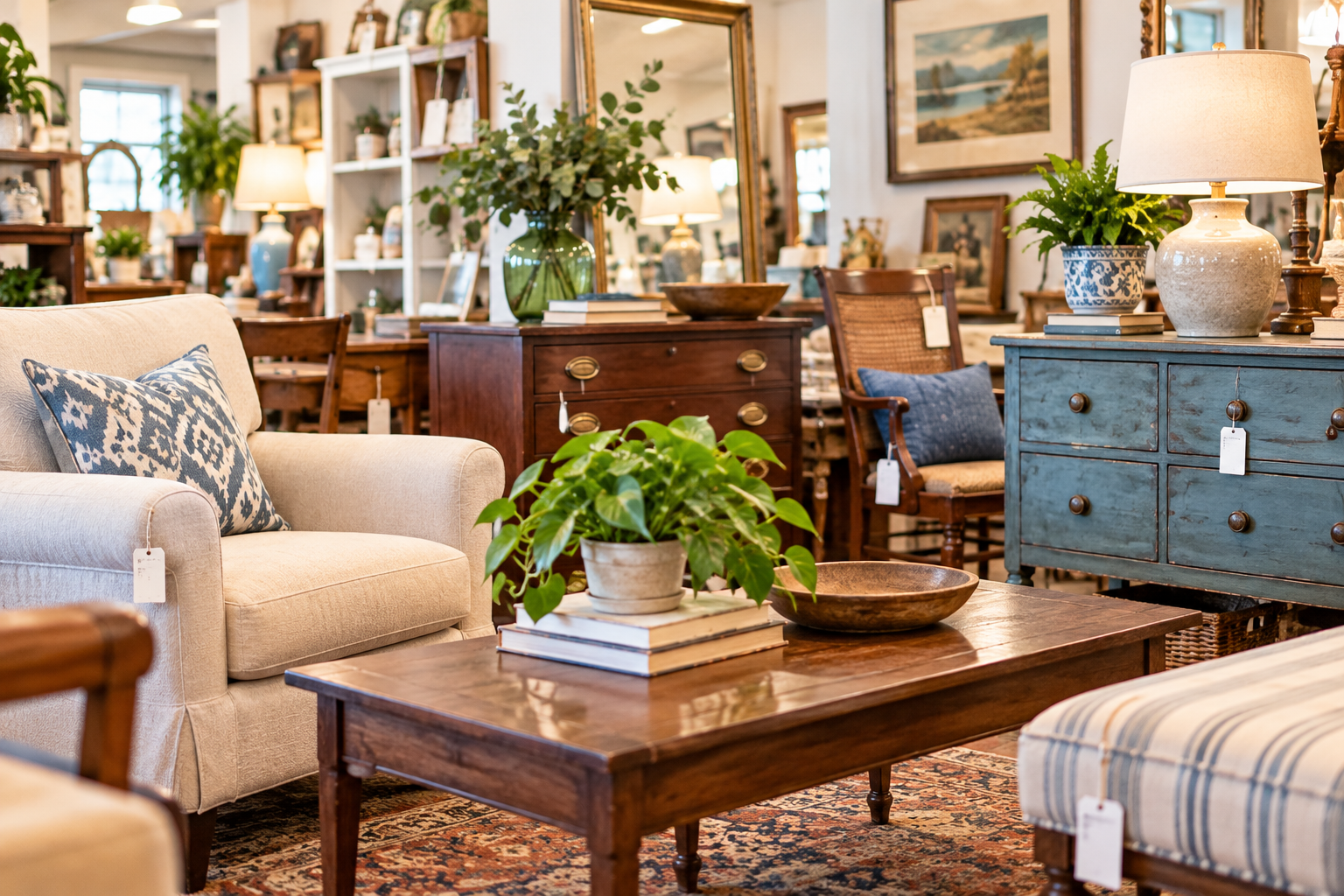
Not every piece needs to be new. Good secondhand furniture can offer excellent quality for much less money.
Tables, dressers, bookcases and other hard furniture can be especially good candidates.
Check carefully for:
- Damage
- Stability
- Odors
- Wear
- Signs of pests
A bargain is only a bargain if you're happy to bring the entire purchase home. Not its inhabitants.
15. Don't Let a Sale Make the Decision
This may be the most important shopping rule. A 50-percent-off mistake is still a mistake.
Before buying, ask:
Would I want this if it weren't on sale?
Also factor in the entire cost:
- Delivery
- Assembly
- Shipping
- Taxes
- Removal of old furniture
And if you're ordering online, read the return policy first. Returning a sweater is annoying. Returning a sectional is a logistical operation.
Don't Furnish the Whole House at Once
Give your rooms time. Buy the important pieces first. Live with them. Then notice what you actually need.
You may discover that the empty corner doesn't require anything. Empty space is allowed.
In fact, after years of decluttering houses, I'm rather fond of it.
A room doesn't improve automatically because you've managed to place furniture against every available wall.
Know When Old Furniture Should Go
Working with what you own is smart. Keeping furniture forever simply because you own it isn't.
Consider letting a piece go if it:
- Is broken
- Is uncomfortable
- Doesn't fit the room
- Creates traffic problems
- No longer serves a purpose
- Has been sitting unused for years
Furniture is supposed to serve your home. Your home is not a retirement community for chairs.
The Furniture Shopping Test
Before buying a major piece, ask:
- Does it fit the room?
- Can we get it through the door?
- Does it fit our real lifestyle?
- Is it comfortable?
- Is the quality appropriate for the price?
- Can we care for the material?
- Does it work with what we own?
- Do we actually need it?
- Can we afford it?
- Would I buy it if it weren't on sale?
And finally:
Where exactly is this going?
If the answer is:
"We'll figure that out when we get home,"
don't buy it.
The Five Rules of Furniture Shopping
If you remember nothing else:
1. Measure first.
The room, the furniture and the route between the two.
2. Buy for the way you really live.
Not the way the showroom suggests people live.
3. Spend more on pieces that work hardest.
Comfort and durability matter.
4. Don't buy everything at once.
Good rooms evolve.
5. Never let a sale make the decision.
A discounted mistake still takes up the same amount of space.
The Bottom Line
Good furniture shopping isn't about finding the most beautiful furniture. It's about finding furniture that works beautifully in your home.
Measure first. Think about how your family uses the room. Choose the important pieces before the extras.
Sit on the sofa. Open the drawers. Check the quality. Bring samples home.
Think about kids, pets and spills. And don't buy something simply because somebody put a giant red SALE tag on it.
You don't need to furnish an entire room in one weekend. Take your time. The goal isn't to create a showroom.
It's to create a home where people can sit comfortably, move through the room without bruising a hip and put their coffee somewhere sensible.
And if the sofa actually fits through the front door? Excellent. We're already ahead.
Keep Going
Before buying more furniture, head to Decluttering and clear out what your rooms no longer need.
Then visit Organizing to make the space you already have work better.
For more help creating comfortable rooms for real family life, continue with Easy Home Decorating.
And if you're working on the living room, see Clutter-Free Living Room and Living Area Organizing Tips before bringing home another piece.
- Clean Home
- Easy Home Decorating Tips
- Furniture Shopping Ideas
Free 15-Minute Daily Reset Checklist
Get Notes on Keeping House
Fifteen minutes a day. No weekend cleaning marathons. No guilt. Sign up for my newsletter and I'll send you the printable checklist that makes it happen.
Send My ChecklistNo spam, ever. Unsubscribe anytime.
Free Printable
Notes on Keeping House
Sign up and get my 15-Minute Daily Reset Checklist. One timer, five zones, and a house that stays under control.
Send My ChecklistNo spam, ever. Just smart, funny tips for keeping house from Tara Aronson.