How to Get Kids to Clean Up
Without Constant Nagging
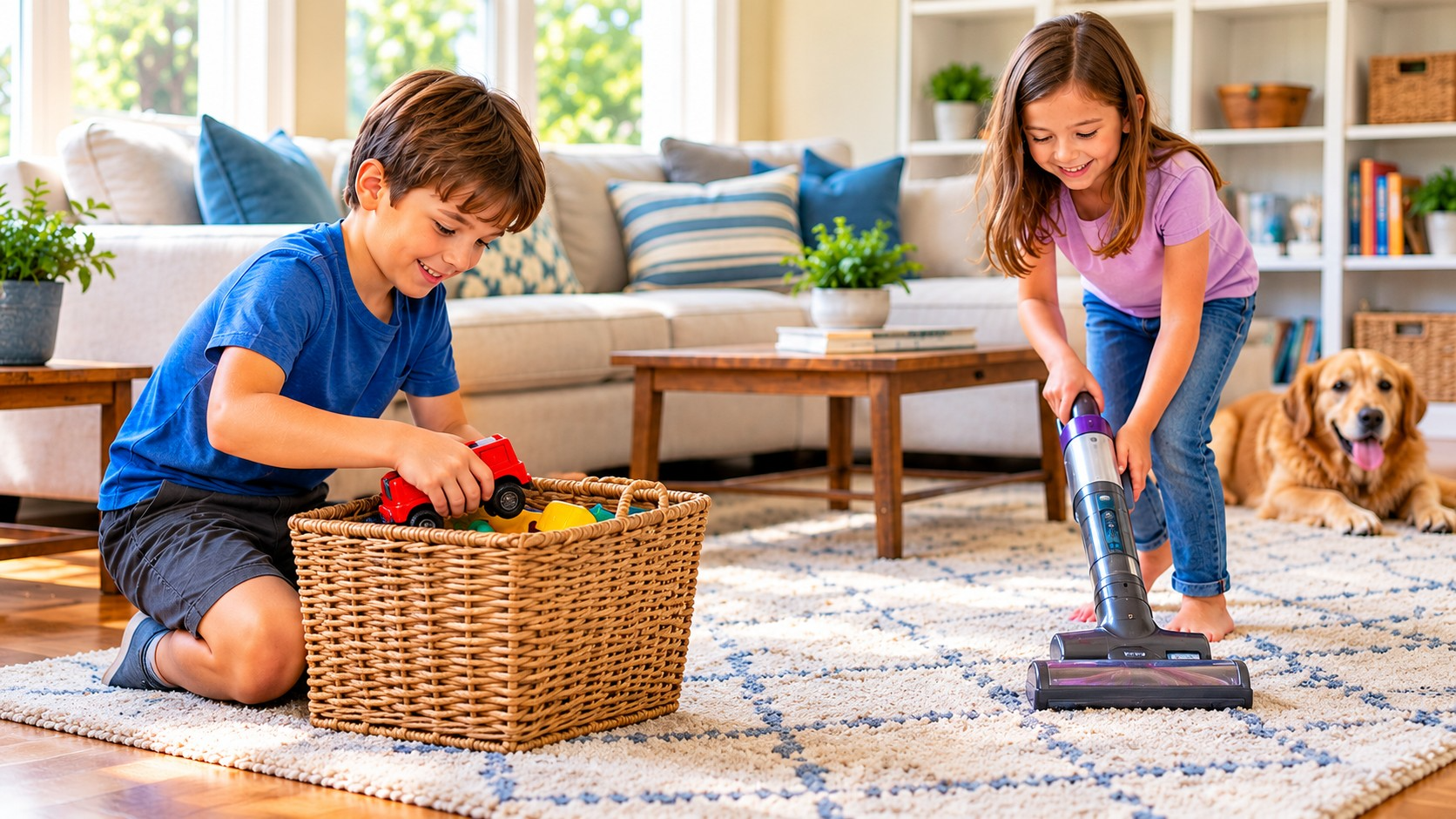
You ask your child to clean their room.
They say, "Okay."
Twenty minutes later, you check on their progress.
They're sitting on the floor, examining a toy they haven't touched in three years.
The room looks exactly the same. Possibly worse.
Welcome to one of parenting's great mysteries: How can a child spend 45 minutes looking for a missing video game but somehow be unable to locate the laundry basket three feet away?
Getting kids to clean up doesn't have to involve constant reminders, elaborate reward charts, or threats involving the disappearance of every toy they own.
The trick is to make cleaning manageable, predictable, and appropriate for your child's age.
These 20 tips can help turn household cleanup from a daily argument into something your children gradually learn to handle themselves.
Not perfectly. Not enthusiastically every time. But without you having to deliver the same speech six times a day.
1. Stop Saying "Clean Your Room"
To an adult, "clean your room" sounds like a straightforward instruction. To a young child, it may sound like "Please reorganize the entire universe."
The job is simply too big and vague. Instead, give one specific instruction at a time.
Try:
- Put the books on the shelf.
- Place the dirty clothes in the hamper.
- Put the stuffed animals in the basket.
- Throw away the trash.
- Return the shoes to the closet.
Once one task is finished, move to the next.
Small, clear instructions are easier to follow than one enormous assignment. And they're much harder to misunderstand creatively.
2. Start With Just Five Minutes
Children don't need to spend an hour cleaning their bedrooms. Start with a five-minute cleanup. Set a timer and choose a specific task.
For example:
"Let's see how many toys we can put away in five minutes."
Keep the focus on completing the task rather than racing so fast that somebody trips over the toy box.
Short sessions help children experience success without becoming overwhelmed. Five minutes of actual cleaning beats 45 minutes of arguing about cleaning. Every time.
3. Make Cleaning Part of the Daily Routine
Children respond better to routines when they know what to expect. Instead of announcing random cleanup sessions, connect chores to predictable parts of the day.
For example:
- Put toys away before dinner.
- Place dirty clothes in the hamper before bedtime.
- Clear dishes after meals.
- Put school supplies away after homework.
- Straighten the bedroom before weekend activities.
Consistency reduces the need for repeated negotiations. Cleaning becomes something that happens regularly. Like brushing teeth. Except with more dramatic sighing.
4. Give Every Item an Obvious Home
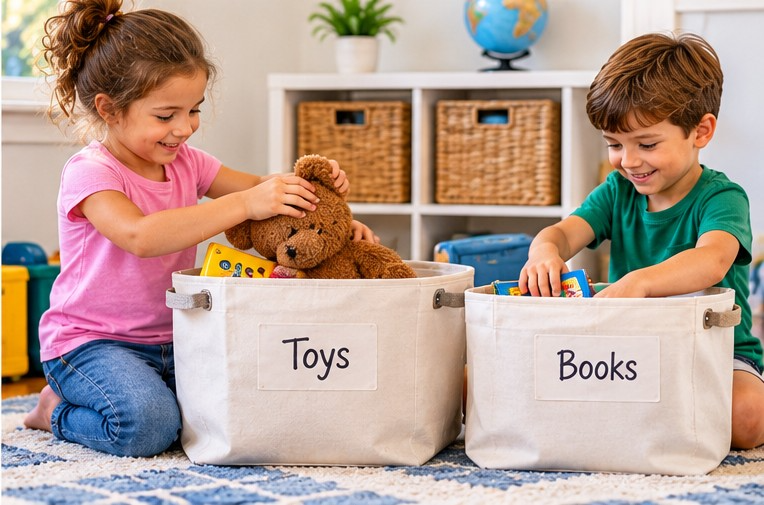
It's difficult for children to put things away when nobody knows where they belong. Create simple storage spaces for everyday items.
Use:
- Toy bins
- Bookshelves
- Laundry hampers
- Hooks for backpacks
- Drawers for clothing
- Baskets for stuffed animals
Keep frequently used storage within your child's reach. If putting away a toy requires climbing, moving furniture, or opening three complicated containers, the toy will probably remain on the floor.
Make the right thing easy to do.
5. Use Picture Labels for Younger Children
Children who aren't reading yet can still learn where things belong. Try picture labels on toy bins and storage containers.
Use images for:
- Blocks
- Dolls
- Cars
- Art supplies
- Stuffed animals
- Books
Older children may prefer simple written labels. The point is to eliminate the question, "Where does this go?"
Because you already have enough questions to answer before breakfast.
6. Let Kids Help Choose the Storage System
Children are more likely to use an organizing system they understand. Ask them where they'd like to keep their toys, books, and supplies. Offer reasonable choices.
"Would you rather keep the blocks in this basket or that bin?"
You still establish the boundaries. But giving children some input can increase their willingness to participate. Just don't offer unlimited options.
Otherwise, you'll spend the afternoon discussing the emotional significance of three different plastic containers.
7. Clean Together Before Expecting Independence
Young children often need an adult nearby to stay focused. Instead of sending them into a messy room alone, work alongside them.
You might say: "I'll pick up the books while you put the blocks away."
As children become more capable, gradually step back. This isn't about doing all the work for them. It's about providing enough support that they can succeed.
Think of it as training. Eventually, you're hoping to retire from the position of Chief Toy Retrieval Officer.
8. Make the First Task Ridiculously Easy
When a room is especially messy, start with something your child can finish quickly.
Try:
- Put five books away.
- Pick up all the socks.
- Throw away three pieces of trash.
- Put the pillows on the bed.
Finishing a small task creates momentum. Then give the next instruction. This works particularly well for children who become overwhelmed by clutter. Don't begin with the hardest part. Begin with the easiest win.
9. Turn Cleanup Into a Game
A little playfulness can make routine chores more appealing.
Try:
Color cleanup: Pick up everything red, then blue, then green.
Category cleanup: Find all the stuffed animals and return them to their basket.
Music cleanup: Put away toys during one favorite song.
Treasure hunt: Search for five things that belong on the bookshelf.
Team challenge: Work together to clear the floor before the timer rings.
Keep games lighthearted. The goal is participation, not competition that ends with one child crying because somebody else put away more socks.
10. Use Music to Keep Things Moving
Music can make cleanup feel less tedious. Choose a short playlist or a couple of favorite songs. When the music starts, everyone works on a specific task.
When the songs finish, check the progress.
This can be especially useful for family cleanup sessions. And if your child insists on dancing while putting away toys? Fine. As long as the toys actually get put away.
11. Give Children Real Responsibilities
Kids can often do more than we expect when tasks are appropriate for their development and abilities. Even young children can participate in simple household routines. Older children can take on more responsibility.
The key is to assign work they can safely complete. For age-specific ideas, see Household Chores for Kids by Age.
Avoid giving a child a task that requires unsafe equipment, cleaning chemicals, or more coordination than they're ready for.
A four-year-old can help put toys in a basket. They don't need to learn how to descale the coffee machine.
12. Show Them What "Done" Looks Like
Sometimes children think they've finished cleaning because they picked up the three most obvious items. Meanwhile, the floor still looks like a toy store after a small earthquake. Be clear about the result you expect.
For example:
"Your room is ready when the toys are in their bins, the clothes are in the hamper, and the floor is clear."
You can even take a photo of the room when it's reasonably tidy. Use it as a visual reminder. Not as evidence in a future courtroom proceeding.
13. Don't Expect Adult-Level Results
Children are learning. Their beds may not look perfect. Their folded towels may resemble unusually thick pancakes. And their idea of arranging books may not match yours.
That's okay. Focus on effort, progress, and developing skills. Correct important problems, especially anything involving safety or hygiene.
But don't redo every harmless imperfection in front of them. If children see that their work is never good enough, they may stop trying. A reasonably tidy room is a perfectly respectable achievement.
14. Notice the Effort
Children benefit from specific, sincere encouragement. Instead of automatically saying "Good job," point out what they accomplished.
Try: "You put all your books back without being reminded."
Or: "I noticed you cleared the table after dinner. That really helped."
This shows children that their contribution matters. You don't need to throw a celebration every time someone puts a sock in the hamper. Although, depending on the child, the occasion may feel historic.
15. Use Rewards Thoughtfully
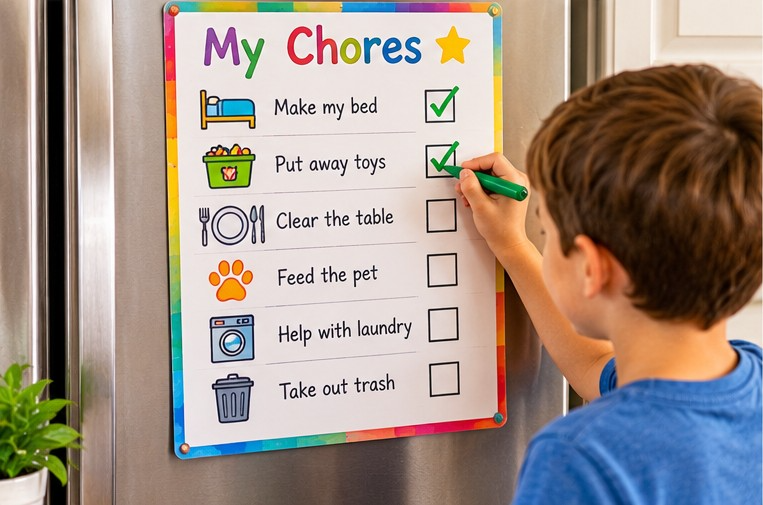
Rewards can sometimes help children build new habits. But you don't need to pay for every ordinary household responsibility.
Consider simple incentives such as:
- Choosing a family game
- Picking the music during cleanup
- Earning a special activity
- Tracking progress toward a shared goal
If you use a reward chart, keep it simple and temporary. The long-term goal is for children to understand that taking care of their belongings and contributing to the household are normal responsibilities.
Not services provided exclusively in exchange for cash.
16. Offer Limited Choices
Children often cooperate more when they have some control over how a task gets done. Instead of asking whether they want to clean, offer two acceptable options.
"Would you rather put away the books first or the toys?"
"Do you want to tidy your desk before dinner or right afterward?"
Both choices lead to the same outcome. The child gets some independence. And you avoid opening negotiations over whether the room needs cleaning at all. Because that meeting could last until Thursday.
17. Avoid Turning Every Cleanup Into a Battle
If cleaning has become a recurring argument, consider whether the task is too large, too confusing, or happening at a difficult time.
A tired, hungry child may struggle with a task they can easily handle earlier in the day. Try adjusting:
- The timing
- The size of the task
- The amount of adult help
- The storage system
- The number of instructions
Stay calm and consistent. You don't need to win a dramatic showdown over every misplaced sneaker. The goal is to build cooperation and responsibility over time. Not defeat your child in the Battle of the Bedroom Floor.
18. Connect Privileges to Responsibilities
It's reasonable to establish household expectations around cleanup.
For example:
"Once the toys are put away, we can start the movie."
Or:
"After the homework supplies are back in the drawer, you can go outside."
Keep expectations age-appropriate and achievable. Avoid withholding basic needs, affection, or essential activities.
The purpose is to create a predictable routine—not turn cleaning into punishment. When responsibilities are clear and consistent, children know what comes next.
19. Declutter When There's Simply Too Much Stuff
Sometimes the real problem isn't motivation. It's volume. If your child has more toys, clothes, books, and supplies than the room can comfortably hold, cleanup becomes difficult.
Even for adults. Work together to identify items that are:
- Broken
- Outgrown
- No longer used
- Missing important pieces
- Duplicates
- Taking up space needed for current favorites
Give children age-appropriate input about their belongings. Don't secretly throw away treasured possessions just because you're tired of stepping over them.
For more ideas, visit How To Declutter Your Home. Sometimes the easiest way to get kids to clean up is to give them less to clean up.
20. Be Consistent Without Expecting Perfection
Children won't remember every chore every day. Neither will adults. The important thing is to keep expectations predictable. Use reminders when needed.
Offer help when a task is genuinely difficult. Recognize improvement. And adjust responsibilities as children grow.
Some days, the room will look great. Other days, you'll wonder whether a small tornado has developed a personal interest in stuffed animals.
That's family life. The goal isn't perfect housekeeping. It's raising children who gradually learn to care for their belongings and contribute to the home they share.
A Simple 10-Minute Kids' Room Cleanup
When the bedroom looks particularly chaotic, use this quick routine.
Minutes 1–2 Pick up trash
Minutes 3–4 Put dirty clothes in the hamper
Minutes 5–6 Return books and toys
Minutes 7–8 Clear the desk or dresser
Minutes 9–10 Straighten the bed and check the floor
Adjust the timing for your child's age and abilities. Younger children may need help. Older children may finish more quickly.
The point is to provide a simple starting place instead of one enormous instruction.
How to Get Kids to Clean Without Yelling
If you find yourself repeating the same instruction louder and louder, try changing the approach.
- Get your child's attention before giving directions.
- Give one specific task.
- Ask them to repeat the instruction if needed.
- Make sure the supplies and storage are accessible.
- Provide help getting started when necessary.
- Follow through calmly and consistently.
- Recognize completed work.
Avoid giving five instructions while your child is absorbed in a game and then becoming frustrated when they remember none of them. A clear request is usually more useful than a lengthy lecture.
Even if the lecture is excellent.
Your Kids' Daily Cleanup Checklist
This simple checklist works as a starting point for school-age children. Adjust it for younger children or different abilities.
Morning
- Put pajamas in the hamper or designated spot.
- Straighten the bed.
- Put breakfast dishes where they belong.
- Return bathroom items after use.
After School
- Hang up backpack and jacket.
- Put shoes away.
- Put lunchbox in its designated place.
- Return school supplies after homework.
Evening
- Put toys and games away.
- Return books to the shelf.
- Place dirty clothes in the hamper.
- Clear the bedroom floor.
- Help with one age-appropriate household task.
You don't need to use every item on this list. Choose a few responsibilities your child can handle and build from there.
Five Mistakes That Make Kids Less Willing to Clean
1. Giving vague instructions. "Clean everything" isn't nearly as useful as "Put the books on the shelf."
2. Expecting too much at once. Large tasks can overwhelm children.
3. Doing the work for them every time. Children need opportunities to practice.
4. Criticizing every imperfect result. Progress matters more than perfectly folded towels.
5. Making cleaning a punishment. Household responsibilities are easier to accept when they're a normal part of family life.
The more predictable and manageable cleanup becomes, the less energy everyone spends arguing about it.
The Bottom Line: Less Nagging, More Helping
Getting kids to clean up isn't about finding the perfect reward chart or delivering the world's most persuasive speech about personal responsibility.
It's about making expectations clear. Giving children manageable jobs. Creating storage they can actually use. Building routines. And allowing them to develop skills through practice. You may still need to remind them.
There will still be days when a bedroom looks as though somebody emptied every drawer and invited the neighborhood over.
But over time, children can learn to take more responsibility for their belongings and their shared home.
And one day, you may walk past a bedroom and discover that the clothes are in the hamper, the books are on the shelf, and the floor is visible.
Without saying a word. Try not to faint.
Keep Going
Help your kids develop practical cleaning and organizing habits with these related guides:
- Household Chores for Kids by Age: Find realistic responsibilities for toddlers, school-age children, and teens.
- Teaching Kids Household Chores: Show children how to complete everyday tasks with confidence.
- Organizing Kids' Rooms: Create storage systems children can actually maintain.
- Decluttering Your Home: Reduce excess belongings and make everyday cleanup easier.
- Family Life Tips: Practical ideas for managing a busy household.
- Home Organization Tips: Find simple organizing solutions for every room.
- Clean Home
- Clean
- Getting Kids To Clean