Homemade Laundry Stain Removers That Actually Work

Somewhere between the first cup of coffee and the last load of laundry, somebody manages to spill something.
Coffee on a favorite shirt. Spaghetti sauce on a white blouse. Grease on the jeans you just washed yesterday. And naturally, you discover the stain after it's had plenty of time to settle in and make itself comfortable.
Before you buy another bottle of specialty stain remover, look at what you already have. Some of the best homemade laundry stain removers are surprisingly simple: dish soap, hydrogen peroxide, baking soda, a lemon, cold water.
The trick is matching the treatment to the stain, instead of attacking everything with the same mysterious kitchen concoction.
Which Homemade Stain Remover to Use
Stain
Grease, oil, salad dressing, butter
Sweat, wine, food and blood on whites
Fresh oily spills
Blood
Ballpoint ink
Coffee, tea, tomato sauce, dirt
Yellowed whites, fruit juice on white cotton
Homemade remover
Dish soap
Dish soap plus hydrogen peroxide
Baking soda
Cold water and salt, then detergent
Rubbing alcohol
Diluted liquid laundry detergent
Lemon juice and sunshine
Water
Hot
Cool
n/a, it's dry
Cold only
n/a
Cool
Cool
Before You Treat Any Laundry Stain

A few ground rules can save your clothes from becoming cleaning experiments:
• Check the care label. If it says dry clean only, skip the homemade solutions.
• Blot, don't scrub. Rubbing spreads stains and damages fibers.
• Test first on an inside seam. Even ordinary household products can discolor delicate fabrics.
• Work from the back. Rinse from the reverse side to push the stain out the way it came in.
• Keep stained clothes out of the dryer. Heat sets most stains for good.
And please don't mix cleaning chemicals in the hope of inventing a miracle stain remover. Your laundry room is not a chemistry laboratory.
1. Dish Soap for Grease and Oil
Grease stains are sneaky. You spill salad dressing on your shirt, wipe it off, and think you've escaped. Then the shirt comes out of the dryer sporting a permanent-looking dark spot.
Dish soap is made to break up grease, which makes it the best first step on washable fabrics.
1. Blot away the excess grease with a paper towel.
2. Apply a small drop of clear dish soap directly to the stain.
3. Work it in gently with your fingers.
4. Let it sit for 5 to 10 minutes.
5. Rinse well with the hottest water the fabric can take, then wash.
Use just a drop. Dish soap makes plenty of suds, so rinse it out before the garment goes in the washer.
Best for: cooking oil, salad dressing, butter and some makeup. For old or set-in grease, see Grease Stain Removal.
2. Dish Soap and Hydrogen Peroxide for Whites
This is the homemade stain remover that comes closest to a store-bought one, and it costs pennies.
The recipe: 1 part clear dish soap to 2 parts 3% hydrogen peroxide (the brown bottle from the drugstore). Mix only what you need, right before you use it.
1. Dab the mixture onto the stain.
2. Gently work it in with an old toothbrush.
3. Let it sit for 15 to 30 minutes.
4. Rinse with cool water and wash as usual.
Hydrogen peroxide is a mild bleach, so use this on whites and colorfast fabrics only, and test it first. Skip it on wool, silk and dark colors. Don't make a big batch: peroxide breaks down in light, and the mixture loses its punch.
Best for: yellow underarm stains, red wine, grass, food and blood on white cotton.
3. Baking Soda for Fresh Oily Spills
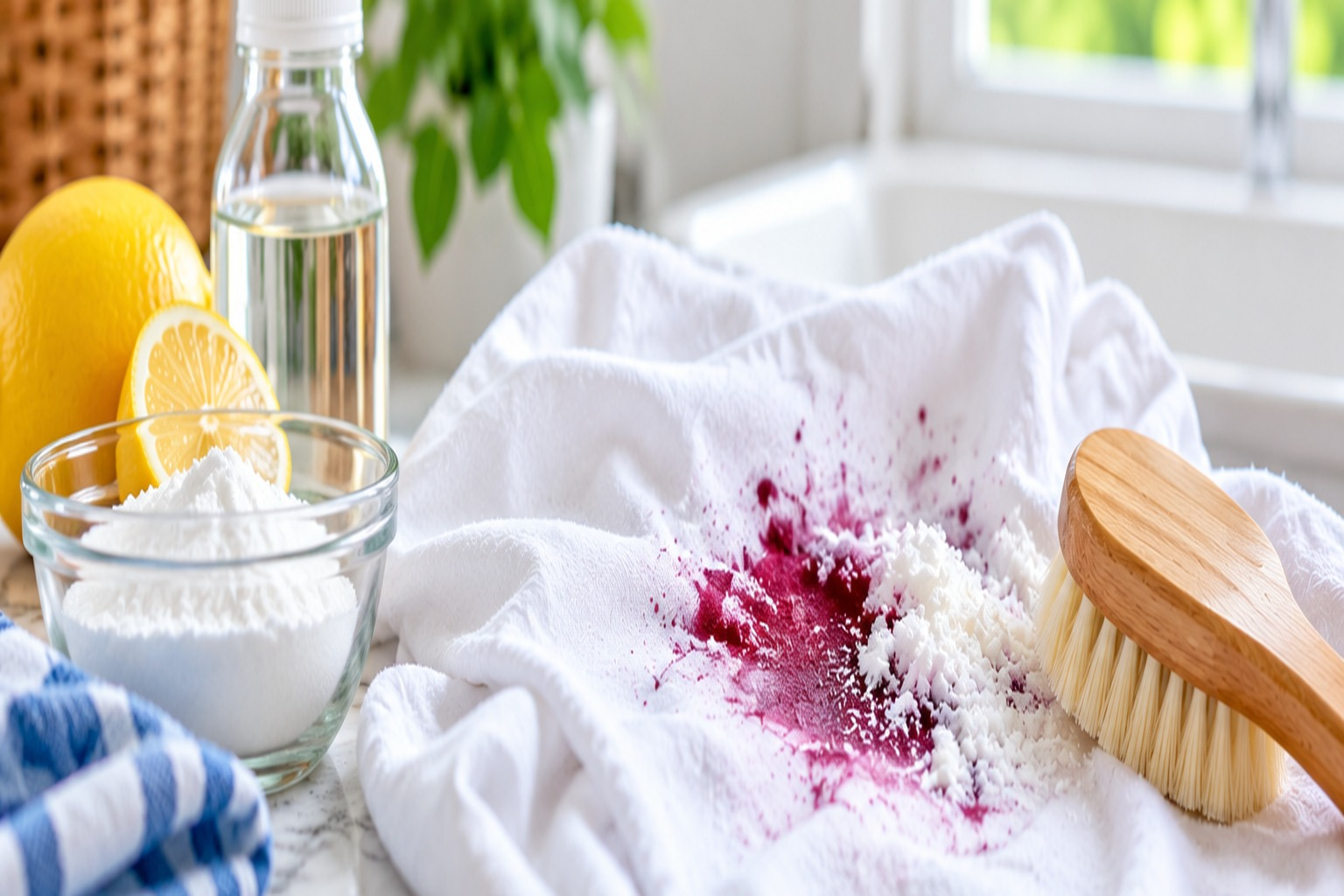
Baking soda isn't a stain-removing miracle, but it's good at soaking up fresh grease before you wash. And unlike that expensive specialty cleaner hiding behind the dryer, you already own a box.
1. Blot up the excess oil.
2. Sprinkle baking soda over the spot.
3. Let it sit for 15 to 30 minutes.
4. Gently brush off the powder.
5. Pretreat what's left with liquid laundry detergent, then wash.
For sweat odor, make a paste of 3 parts baking soda to 1 part water, rub it into the underarms of a washable shirt, let it sit for 30 minutes, and wash.
Best for: fresh oily spills that haven't soaked in yet, and sweat odor.
4. Cold Water and Salt for Blood
Blood stains need a different approach. Start with cold water, never hot. Heat cooks the protein in blood into the fibers.
1. Rinse the stain from the back under cold running water.
2. Rub a little table salt into the wet stain, and let it sit for 10 minutes.
3. Rinse, then work in a little liquid laundry detergent.
4. Let it sit for a few minutes, rinse, and repeat if needed.
5. Wash in cold water.
Still there? On white cotton, dab it with 3% hydrogen peroxide and watch it fizz. Or use an enzyme laundry detergent, which is made to break down protein.
Check before drying. A blood stain that goes through the dryer is a blood stain for life.
Best for: fresh blood on washable clothes and sheets.
5. Lemon Juice and Sunshine for Yellowed Whites
The original homemade bleach. The acid in lemon juice, with a little help from the sun, lightens stains on white cotton and linen.
1. Squeeze fresh lemon juice onto the stain, or soak the garment in a bowl of hot water with a sliced lemon or two for an hour.
2. Lay it in direct sun until it's dry.
3. Wash as usual.
Whites only. Lemon juice can lighten colors, and the acid can damage silk and wool.
Best for: yellowed whites, fruit juice and old stains on white cotton and linen. (More on keeping whites bright: How to Wash White Clothes.)
6. Rubbing Alcohol for Ink
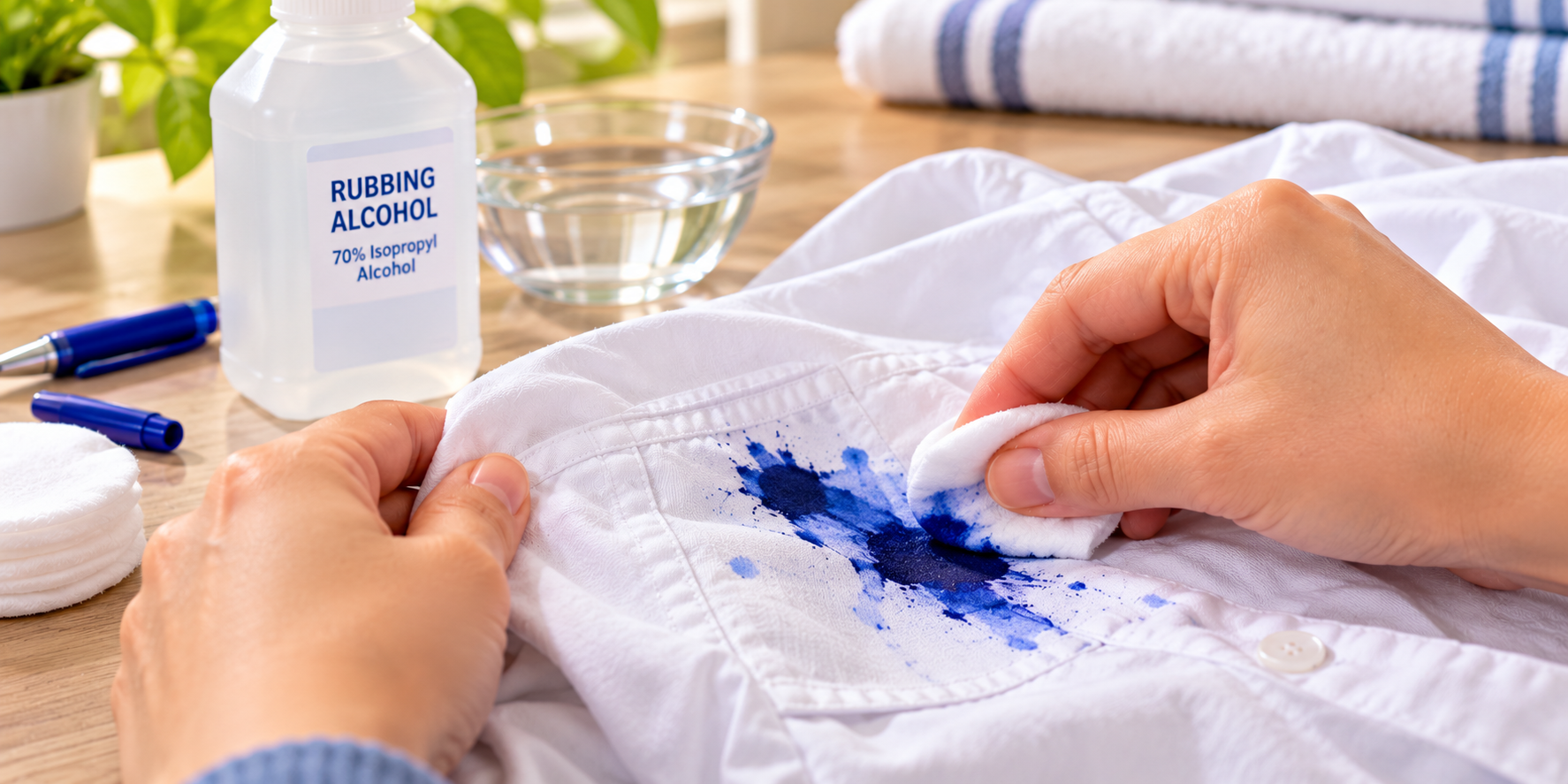
Ink is tricky, because different pens use different inks. Some ballpoint inks respond to rubbing alcohol. Others barely notice it. Test it on an inside seam first.
1. Put a clean white towel under the stain.
2. Dab the ink with rubbing alcohol on a white cloth.
3. Blot as the ink transfers to the towel, moving to a clean spot on the towel as you go.
4. Rinse well and wash.
Rubbing alcohol is flammable, so keep it away from flames and heat. Don't use it on fabrics whose care label says no solvents.
Best for: ballpoint ink on washable fabrics.
7. A Simple Everyday Pretreatment
For everyday stains on washable laundry, start with diluted liquid laundry detergent. No elaborate recipe required.
The recipe: 1 teaspoon of liquid laundry detergent in 1 cup of cool water.
1. Mix the detergent and water in a small bowl.
2. Dab a little onto the stain and work it in gently.
3. Let it sit for 5 to 10 minutes.
4. Rinse and wash.
Mix it fresh each time instead of storing it for weeks.
Use It on Coffee and Tea
Coffee stains are practically a morning tradition. Especially when you're wearing something light-colored and have somewhere important to be. Blot, rinse with cool water, then use the pretreatment. If the coffee had milk or cream in it, use an enzyme detergent.
Use It on Tomato Sauce
Spaghetti sauce has an extraordinary ability to travel from the plate to your clothes, usually without touching the napkin. Lift off the excess with a spoon, rinse from the back with cool water, and apply the pretreatment for 10 minutes. Still pink? On white or colorfast fabric, try the dish soap and peroxide recipe.
Homemade Stain Removers to Be Careful With
The internet has an endless supply of laundry advice. Some of it seems designed by people who don't particularly like their clothes.
• Vinegar isn't an all-purpose stain remover. It's good for loosening detergent buildup and some deodorant residue, but skip it on acid-sensitive fabrics. Don't add it to your washer routinely unless the manufacturer says it's OK, since it can damage rubber seals over time.
• Baking soda and vinegar together make an impressive fizz. But fizzing doesn't equal stain removal. They neutralize each other, leaving you with mostly salty water. Save the science-fair volcano for another day.
• Vinegar and hydrogen peroxide should never be mixed in the same container. Together they make peracetic acid, which irritates eyes, skin and lungs.
• Chlorine bleach isn't a homemade stain remover. Never mix it with vinegar, ammonia or any other cleaner, since that releases toxic gas. If you use it, follow the label and the garment's care instructions.
Your Homemade Stain Removal Kit
The best stain-removal strategy is surprisingly unglamorous: deal with spills before they dry. Keep these together near your laundry supplies:
• Liquid laundry detergent
• Clear dish soap
• 3% hydrogen peroxide
• Baking soda
• Table salt
• Rubbing alcohol
• Clean white cloths and an old toothbrush
Treat stains right away, wash in the right water temperature (here's how to choose), and check before you dry. If the stain's still there, repeat the treatment instead of reaching for the heat.
And remember that some stains, especially old ones or ones that have been through the dryer, won't come out completely. Sometimes the shirt wins.
Frequently Asked Questions
What is the best homemade stain remover?
For whites and colorfast fabrics, mix 1 part clear dish soap with 2 parts 3% hydrogen peroxide. For colors and everyday stains, use 1 teaspoon of liquid laundry detergent in 1 cup of cool water.
Does vinegar remove stains from clothes?
Not most stains. Vinegar helps with detergent buildup and some deodorant residue, but dish soap, detergent or hydrogen peroxide work better on food, grease and blood.
Is it safe to mix dish soap and hydrogen peroxide?
Yes. It's a common homemade stain remover. Mix it fresh, test it on an inside seam, and use it on whites and colorfast fabrics only. Never add vinegar or bleach to it.
Does baking soda remove stains?
It helps soak up fresh grease and neutralize sweat odor, but it isn't a strong stain remover on its own. Follow up with detergent or dish soap.
How do you get stains out of clothes that have been dried?
Re-treat with the right remover for the stain, then soak the garment overnight in cool water with an oxygen bleach and wash again. It can take a few rounds, and some stains won't come out completely.
Keep Going
Homemade laundry stain removers don't need to be complicated, expensive, or accompanied by an ingredient list that resembles a chemistry exam. Tackle the next stain with these related guides:
• Laundry and Stain Removal Guide: Everything about washing clothes and getting stains out.
• Laundry Stain Removal Guide: How to treat everyday spills and stains, from A to Z.
• Grease Stain Removal: Five ways to get oil out of clothes, including old stains.
• How to Remove Chocolate Stains: For clothes, carpet and the couch.
• Removing Unknown Stains: When nobody will admit what it is.
• How to Wash White Clothes: Keep whites bright, and fix the dingy ones.
• Doing Laundry With Kids: Because stain removal shouldn't always be your job.
• Getting Kids to Clean: Get everyone to help with the messes they make.
As an Amazon Associate, I earn from qualifying purchases.
- Clean Home
- Laundry Guide
- Homemade Laundry Stain Removers
Free 15-Minute Daily Reset Checklist
Get Notes on Keeping House
Fifteen minutes a day. No weekend cleaning marathons. No guilt. Sign up for my newsletter and I'll send you the printable checklist that makes it happen.
Send My ChecklistNo spam, ever. Unsubscribe anytime.

Free Printable
Notes on Keeping House
Sign up and get my 15-Minute Daily Reset Checklist. One timer, five zones, and a house that stays under control.
Send My ChecklistNo spam, ever. Just smart, funny tips for keeping house from Tara Aronson.