How to Organize a Garage: Declutter, Clean & Store It All
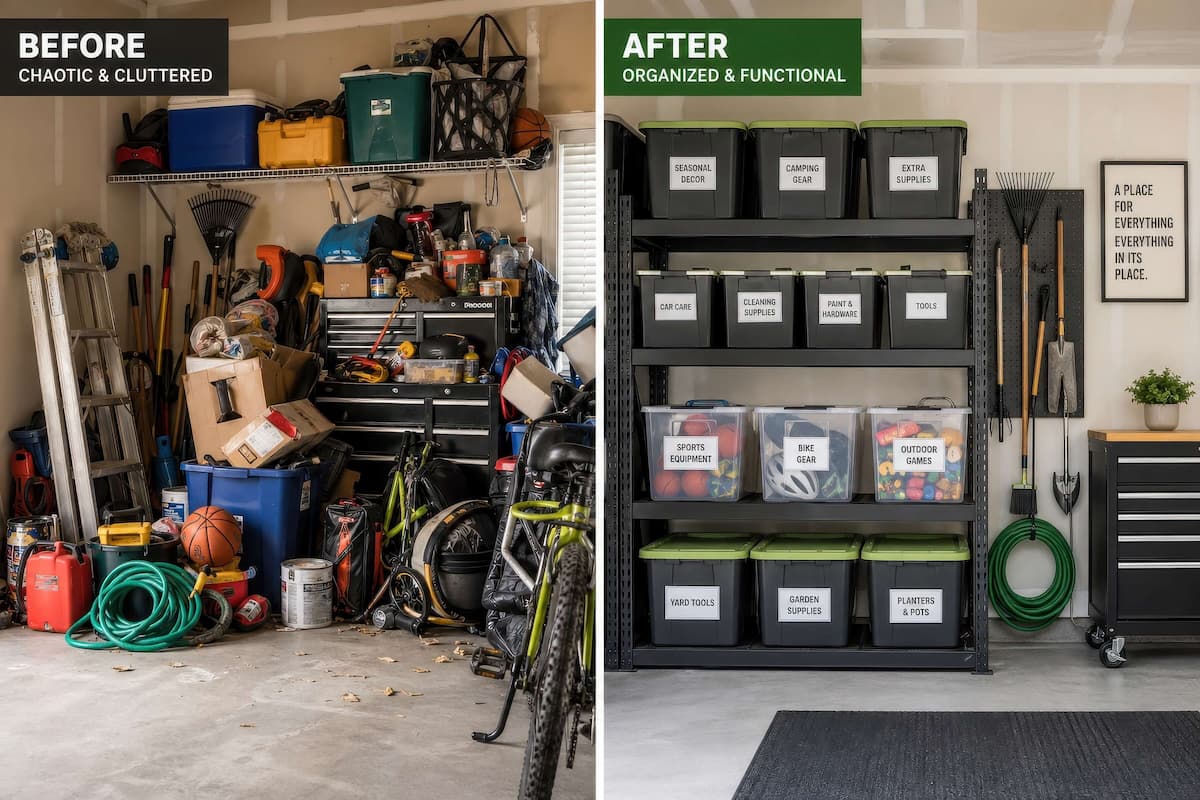
The garage has one major disadvantage compared with the rest of the house: you can close the door. Garages get cluttered because we ask them to do too many jobs. They're the parking spot, the toolshed, the sports locker, the holiday warehouse and the place where everything goes when nobody has decided where it goes.
The fix isn't more shelving. It's deciding what matters, getting rid of what doesn't, cleaning as you go and giving everything a zone. Best of all, you don't have to drag your whole garage onto the driveway to do it.
Jump to:
- Declutter Before You Organize
- What to Get Rid Of
- How to Clean a Garage (and the Floor)
- Garage Storage Zones
- Walls, Shelves and Bins
- Sports Gear and Bikes
- Tools and DIY Supplies
- Garage Chemicals and Safety
- What Not to Store in the Garage
- Holiday and Seasonal Storage
- Make Room for the Car
- All Garage Guides
Start by Deciding What Your Garage Is For
Before you buy a single bin, decide what your garage's main jobs are: parking, tools, bikes and sports gear, a workshop, gardening, household overflow.
Now rank them. Your priority list decides who gets the best real estate. A $30,000 car usually outranks a stack of boxes you haven't opened since the Bush administration. (Either one.) Floor space is limited, so decide up front what deserves it.
Declutter Before You Organize
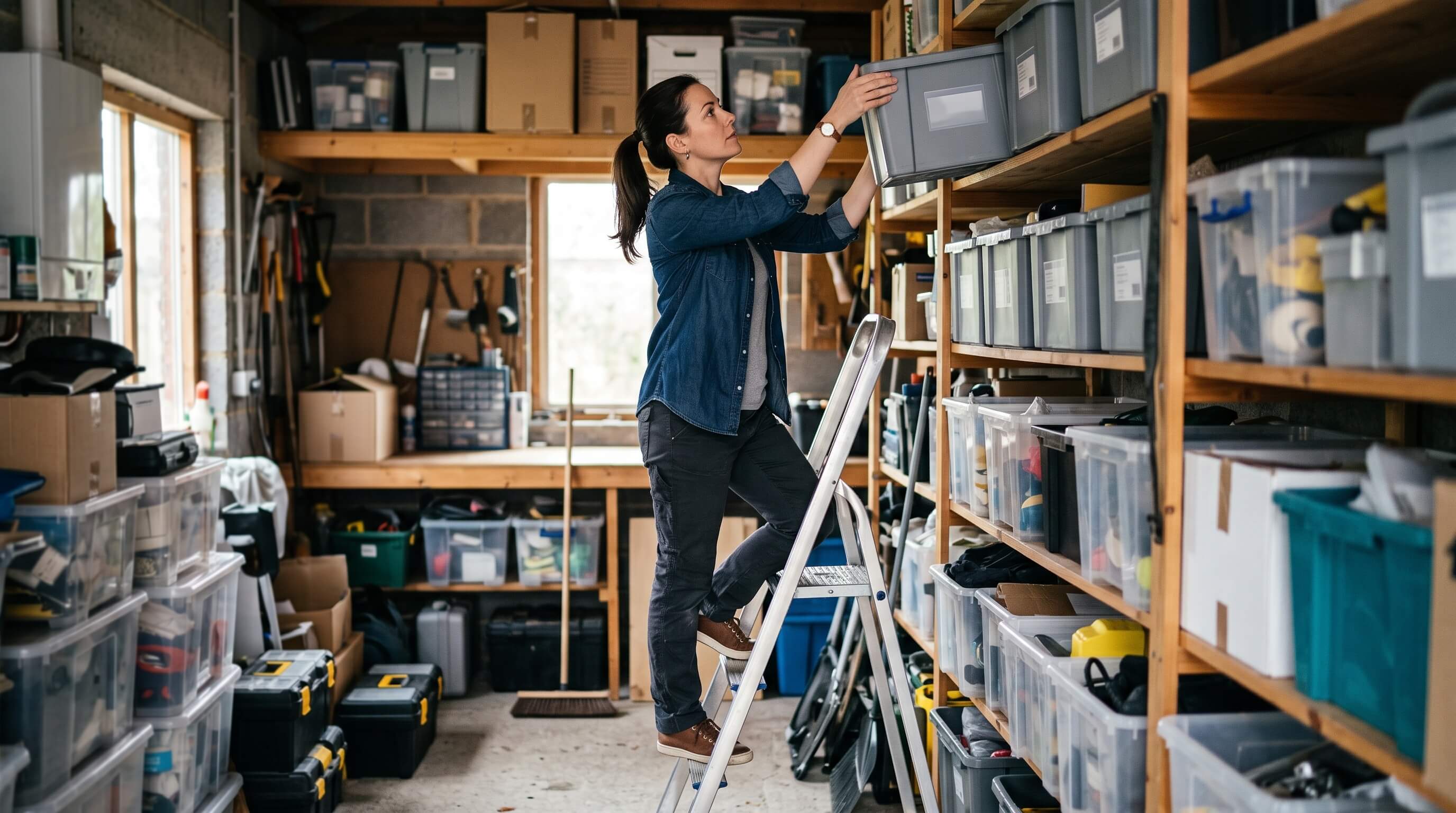
The fastest way to organize a garage is to have less in it. Declutter before you buy containers, or you'll just end up with neatly labeled junk.
Work one section at a time, and sort everything into four piles:
- Keep: what you use or truly want. Sitting in the garage for eight years doesn't prove you need something. If anything, it proves the opposite.
- Donate: bag it, box it and get it in your car right away. A donation pile that stays in the garage is just clutter with good intentions.
- Sell: give yourself a two-week deadline. If it hasn't sold, lower the price or donate it.
- Toss: anything broken or unsafe. Paint, chemicals, batteries and motor oil don't go in the household trash. Take them to your local hazardous-waste drop-off.
What Should You Get Rid of in a Garage?
Start with the easy stuff:
- Broken tools you're not going to repair
- Empty boxes
- Trash
- Unwanted furniture
- Outgrown sports equipment
- Duplicate tools
- Dried-up paint and unusable products
- Abandoned hobbies
- Things you've replaced
- Items that belong somewhere else
Then there's the "I might need this someday" pile. For each item, ask:
- When did I last use this?
- Could I easily borrow or replace it?
- How much space is it taking up?
- Would I buy it today if I didn't already own it?
You don't have to get rid of every backup. But "maybe someday" shouldn't get more room than the car. You're saving it for Future You, and Future You has other plans.
That pile is so universal I wrote a whole book about it. I Might Need That Someday… and Other Lies We Tell Our Stuff: A No-Guilt Guide To Decluttering a Lifetime of Belongings takes on the garage, the attic and everything in between.
Don't Empty the Entire Garage at Once
he dramatic garage cleanout usually goes like this:
- Remove everything.
- Cover the driveway.
- Become exhausted.
- Realize it's getting dark.
- Put everything back.
Instead, work in sections, and finish each one before you start the next: one shelving unit, one wall, the workbench, the sports gear, the gardening supplies, the area around the garage door. Then, finally, the one mysterious pile you've been pretending isn't there.
How to Clean a Garage
Once a section is decluttered, clean it from top to bottom:
- Knock down cobwebs
- Dust shelves and the tops of cabinets
- Vacuum corners, shelves and windowsills
- Wipe down storage bins
- Clean up spills
- Wipe doors, handles and the garage-door button
- Clean the windows, if you have them
- Finish with the floor
Your garage doesn't need to be spotless. It just needs to be clean enough that you're not tracking it into the house.
How to Clean a Garage Floor
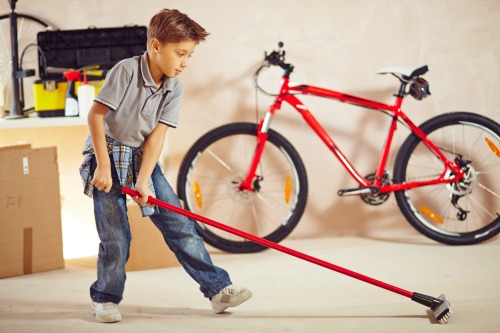
Sweep or vacuum first, before you bring out water or cleaners. Otherwise you're just making mud. Then match the cleaner to the floor. Bare concrete can take a degreaser and a stiff brush. Sealed concrete and epoxy need something milder, so check the coating's instructions before you scrub.
For oil stains, cover them with kitty litter, grind it in with your shoe, let it sit overnight and sweep it up. Then scrub what's left with a degreaser Don't hose oil, antifreeze or chemicals down the driveway. Storm drains go straight to streams and lakes, not to a treatment plant.
Create Garage Storage Zones
Group like with like, and give each group its own zone.
Tools Hand tools, power tools, hardware and project supplies, ideally near a work surface.
Gardening Shovels, rakes, hoses, pots and fertilizer, close to the door to the yard.
Sports Balls, bats, rackets and gear bags, low and easy for kids to reach.
Bikes Bikes, helmets and pumps in one spot near the garage door.
Automotive Wiper fluid, motor oil and car-care supplies near the parking space.
Seasonal Holiday decorations and off-season gear on high shelves or in the back.
Household overflow Paper towels, bulk buys and extra supplies, near the door into the house.
Garage Storage Ideas: Shelves, Walls, Ceilings and More →
Use Garage Walls Before Filling the Floor
Floor space is precious, especially if you want to park. Your walls aren't, so use them for tools, bikes, garden equipment, folding chairs, sports gear and ladders.
Pegboard, slatwall, hooks and rails hold a surprising amount and keep it all in sight. Make sure every hook, rack and shelf is rated for the weight you're hanging, and anchor it into studs.
A bike falling on your windshield is not the organizing win you were hoping for.
Shelving and Cabinets
Open shelves keep things visible. Cabinets hide the clutter you'd rather not look at. Most garages need both. Leave some empty space for growth, and don't overload the shelves. A full shelf is a shelf that's about to become a pile.
Use Clear Containers and Labels
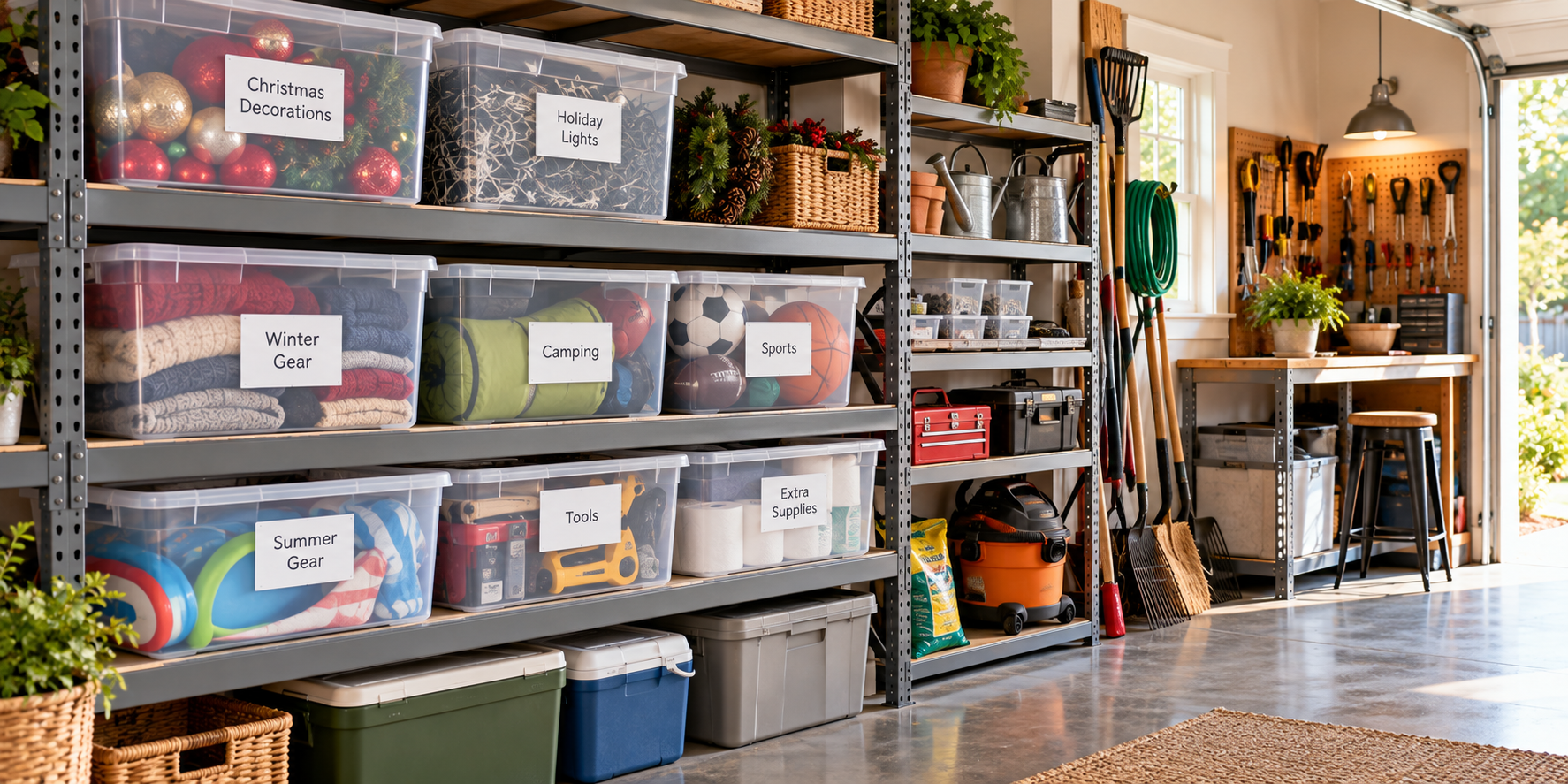
Label everything. You will not remember what's in the third gray bin from the left. Nobody does.
Be specific. "Camping Stove & Lantern" beats "Outdoor Stuff." And skip "Misc." entirely. "Miscellaneous" isn't really a category. It's where decisions go to hide.
Choose containers for the job they're doing, not for how they'll look on Instagram. Lidded bins keep out dust and pests; clear ones let you skip the label-reading.
Store Everyday Things Where You Can Reach Them
The things you grab every week go at waist-to-shoulder height near the door. Holiday decorations and the camping gear you use once a summer go up high or in the back.
Shop Baskets & Bins: Storage That Works →
Organize Sports Equipment and Bikes
Group gear by sport or by family member, in bins, baskets, racks or hooks. Keep the system simple enough that your kids can put things away themselves. If it takes an adult and a step stool, it isn't going to happen.
Every bike needs a designated spot that its rider can manage: a floor rack for kids, a wall rack for adults, a ceiling hoist for the bikes that don't get ridden often. Keep helmets, pumps and locks right next to the bikes, so nobody's searching the house for a helmet while their friends wait at the curb.
Organize Tools and DIY Supplies
You don't need a full workshop to keep tools under control. Group them: hand tools, power tools, hardware, electrical supplies, painting supplies and project materials.
Get rid of the duplicates and the broken ones, and label small hardware drawers clearly. Nothing makes a ten-minute household repair more exciting than spending forty minutes searching for the correct screw. And if the tools have gone rusty from garage humidity, they're probably salvageable.
- Building a Home Toolkit: Essential Tools Every Home Needs →
- How to Remove Rust From Metal →
- Bare Minimum Garden Tools →
Be Careful With Garage Chemicals
The garage is where most of us keep the most dangerous products in the house: paint, solvents, automotive fluids, pesticides, fertilizers, pool chemicals, cleaners and fuel.
The rules:
- Keep hazardous products on high shelves or in a locked cabinet, away from kids and pets, in their original labeled containers.
- Store gasoline only in approved containers, in small amounts, away from the water heater, furnace or anything with a pilot light.
- Never store propane tanks in the garage. Keep them outside, upright, away from the house.
- Never run a car in the garage, even with the door open. Put a carbon monoxide alarm near the door into the house.
- Take old chemicals to a hazardous-waste drop-off. Earth911 can find the nearest one.
- Home Fire Safety Tips →
- Home Safety Guide →
What Shouldn't Be Stored in the Garage?
Heat, cold, humidity and pests are tough on belongings. Keep these inside the house:
- Important documents and photographs
- Clothing, bedding and delicate fabrics
- Electronics
- Food, pet food and birdseed (pests can smell them through the bag)
- Latex paint, which ruins if it freezes
- Propane tanks (outside, not in the garage)
- Anything that's damaged by moisture
The garage is a fine place for a lawnmower. It is a terrible place for Grandma's wedding album.
What Not to Store in the Garage: 15 Garage Storage No-Nos →
Holiday and Seasonal Storage
Group items by holiday or season, label the bins clearly, and keep related things together so the lights are in the same bin as the extension cords. And declutter as you pack up each year. If you didn't put it out this season, you probably won't next season either.
- Christmas Organizing Ideas: Gifts, Wrapping and Decorations →
- How to Organize Storage So You Can Find Everything →
Create a Garage Drop Zone
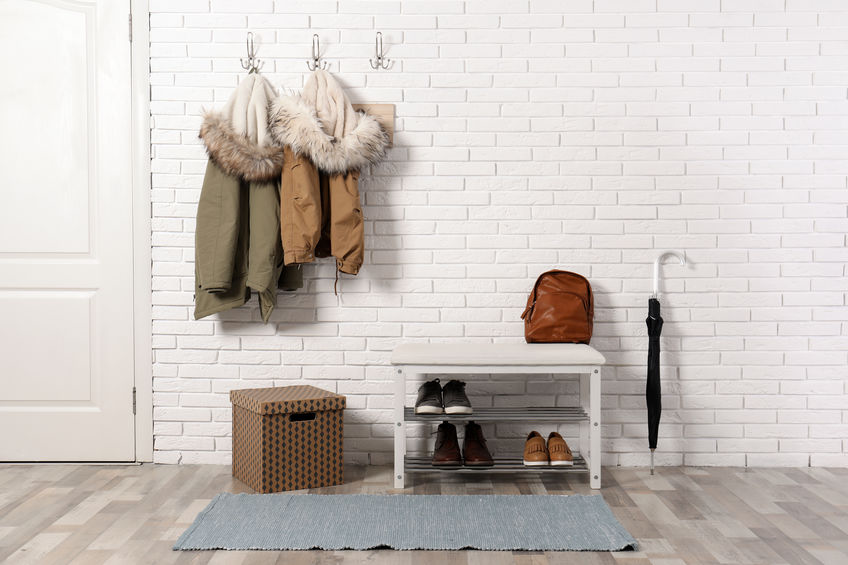
If you come into the house through the garage, that's where your entryway clutter starts. Set up a small drop zone for backpacks, shoes, sports bags, umbrellas, jackets and reusable shopping bags, with hooks, a shoe rack and a basket or two.
Keep it small and give it firm boundaries, or it'll quietly take over the whole wall.
Entryway Organization Ideas: Stop Clutter at the Front Door →
Garage Chores for Kids
Kids can help, and they should. Give them jobs that match their age: putting sports equipment and outdoor toys away, sweeping clear areas of the floor, carrying safe items to where they belong and keeping their own gear organized.
Safety comes first. Keep kids away from power tools, chemicals, sharp tools and anything stacked high, and stay close by while they work.
Make Room for the Car
Measure your car, then mark off the space it needs plus about 3 feet on each side to open the doors. A strip of painter's tape on the floor makes it official. That zone is the car's. Nothing gets stored there permanently. Not the recycling, not the bikes, not "just for now."
Your garage should support your life, not test your obstacle-course skills.
How to Clean and Organize Your Car: A Family Guide →
Common Garage Organizing Mistakes
Buying storage before decluttering
You'll buy bins for things you're about to get rid of.
Moving everything onto the driveway
See: Become exhausted. Realize it's getting dark.
Keeping too much "just in case"
The garage shouldn't become a fulfillment center for a business you're not actually running.
Creating complicated storage systems
If it takes more than one step to put something away, it won't get put away.
Ignoring vertical space
The walls are free real estate. Use them.
Filling every shelf
Leave room for the things your family hasn't bought yet. (They will.)
Storing things the garage may damage
Photos, papers and electronics belong inside the house.
Making a donation pile and leaving it there
It isn't donated until it leaves the property.
A Simple Garage Maintenance Routine
Weekly
• Take out the trash
• Put sports equipment away
• Return tools
• Bring household items inside
• Clear the parking area
Monthly
Check and tidy:
• Floors
• Work surfaces
• Recycling
• Donation items
• Supplies piling up where they shouldn't
Seasonally
Review:
• Seasonal equipment
• Sports gear
• Gardening supplies
• Holiday storage
• Unfinished projects
• Items to donate or sell
A few minutes a week is a lot easier than another all-day cleanout.
How to Keep the Garage Organized
Watch what comes in. Before anything goes into the garage, ask why it's going there. Is that where it belongs, or is that just where decisions get postponed? Make the decision now. Future You will thank you, even if Future You still has other plans.
Garage Organizing FAQ
How do I start organizing a garage that's packed? Pick one section, like one shelf, one wall or one corner. Declutter it, clean it, organize it and finish it before you move on. Don't empty the whole garage at once.
What's the best way to clean a garage floor? Sweep or vacuum first. Then use a cleaner made for your floor type, whether that's bare concrete, sealed concrete or epoxy. Soak up oil stains with kitty litter before you scrub, and keep fluids out of the storm drain.
What should you not store in a garage? Important papers, photos, delicate fabrics, electronics, food and anything that's damaged by heat, cold or moisture. Many paints and chemicals also need to stay above freezing.
How do I make room to park in my garage? Measure the car, mark off its space plus room to open the doors, and move storage onto the walls and shelves. Nothing lives in the car zone.
How often should I clean out the garage? Take a few minutes each week, do a quick tidy each month and do a bigger reset each season. Do that and you'll rarely need an all-day cleanout.
All Garage Guides
Garage Organizing and Storage
- Garage Storage Ideas: Shelves, Walls, Ceilings and More
- What Not to Store in the Garage: 15 No-Nos
- Easy Garage Organizing Ideas
- How to Organize Storage So You Can Find Everything
- Christmas Organizing Ideas (Decoration Storage)
- Entryway Organization Ideas
- Shop Baskets & Bins
Kids and the Garage
Tools and Outdoor Gear
- Building a Home Toolkit
- How to Remove Rust From Metal
- Bare Minimum Garden Tools
- How to Clean a Grill
- How to Clean Patio Furniture
- Easy DIY Home Repairs Anyone Can Do
Safety and Upkeep
Want Help With the Rest of the House?
TOO MUCH STUFF?

I Might Need That Someday …and Other Lies We Tell Our Stuff is a practical, no-guilt guide to decluttering a lifetime of belongings. No extreme minimalism. No weekend-long meltdowns. Just a realistic way to finally make room for the life you’re living now.
Get Your Copy on Amazon →Keep Going
Once the garage is under control, keep the momentum going with these related guides:
- How to Organize Your Home: Simple systems for every room, from the front door to the closets.
- How to Declutter Your Home: Let go of what you don't need, without the guilt.
- House Cleaning Guide: Faster, smarter ways to keep the whole house clean.
- How to Clean and Organize Your Car: Now that it fits in the garage, clean out the car itself.
- Backyard & Garden Guide: Make your outdoor space work for kids, pets and grown-ups.
- Home Maintenance Guide: Seasonal upkeep that saves money and headaches.
- Family Life Made Easier: Chores, routines and kid-friendly systems that make every day easier.
- Home Safety Guide: Practical safety tips for every room, garage included.
- Clean Home
- Garage Cleaning & Organizing
Free Printable
Notes on Keeping House
Sign up and get my 15-Minute Daily Reset Checklist. One timer, five zones, and a house that stays under control.
Send My ChecklistNo spam, ever. Just smart, funny tips for keeping house from Tara Aronson.