Halloween Safety Tips for Kids: 20 Ways to Keep Trick-or-Treating Fun
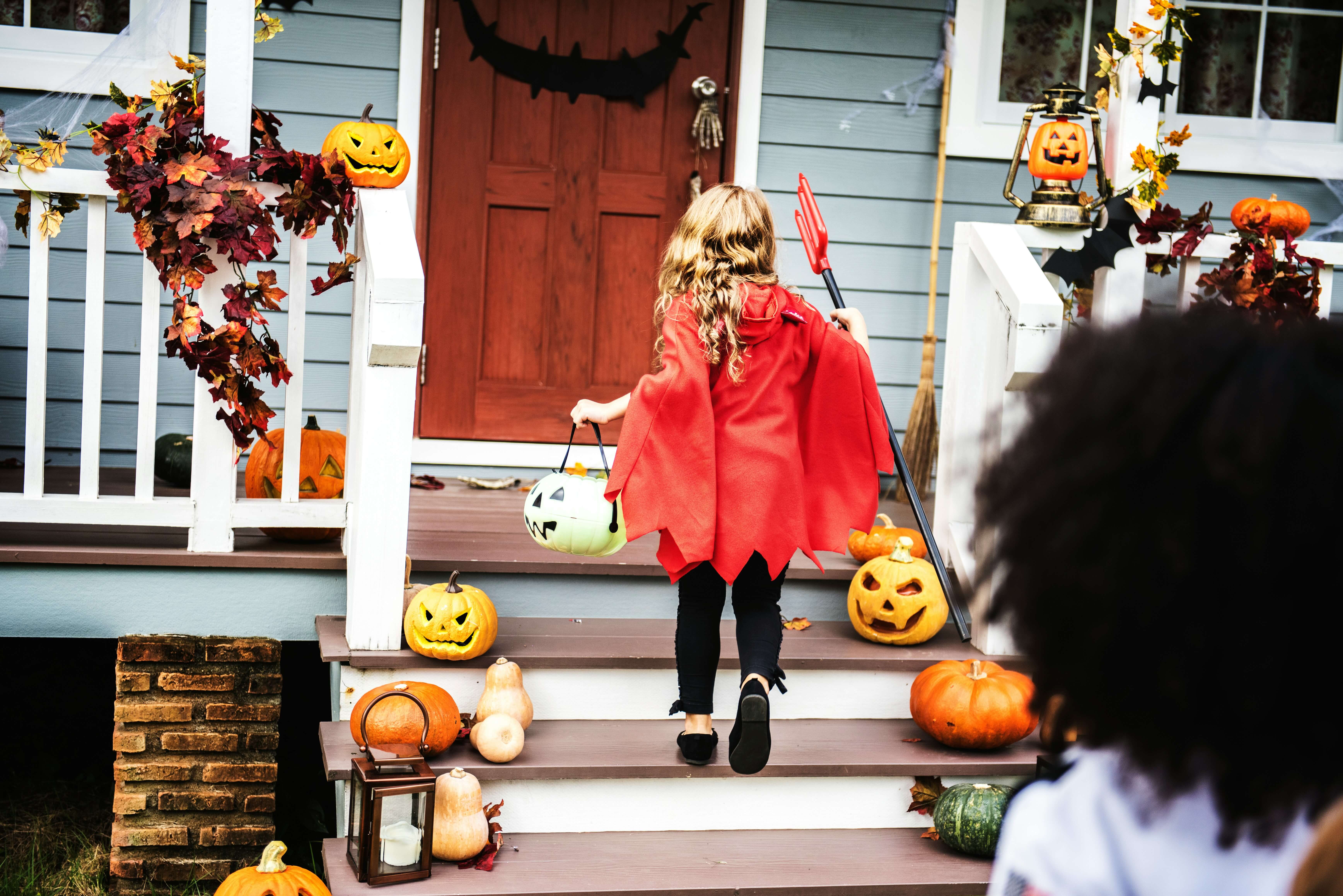
Halloween is a strange night for parents. We dress children in costumes that may reduce their ability to see. Send them outside after dark.
Encourage them to knock on strangers' doors. Then allow them to return home carrying six pounds of sugar.
Under virtually any other circumstances, this would be a difficult plan to defend.
Fortunately, Halloween doesn't have to be dangerous to be fun.
The most important precautions are remarkably simple: make children easy to see, make sure costumes fit properly, supervise younger trick-or-treaters, cross streets carefully, inspect treats, and set the rules before everyone is halfway down the block dressed as Spider-Man.
Here are 20 Halloween safety tips worth covering before the candy collection begins.
1. Make Kids Easy for Drivers to See
Visibility is one of the biggest Halloween safety priorities. Dark costumes may look fantastic on vampires, witches, and ninjas. Unfortunately, they're also dark.
Add reflective tape or another reflective element to costumes or treat bags, particularly if the costume itself is dark. Give children flashlights or other appropriate lights so they can see and be seen.
NHTSA recommends bright colors and reflective materials at night and emphasizes that pedestrians should make themselves visible to drivers.
You don't have to destroy the artistic integrity of the Grim Reaper costume. Just make Death visible in traffic.
2. Make Sure the Costume Actually Fits
Have your child put on the entire costume before Halloween night. Not just the exciting part.
Everything:
- Costume
- Shoes
- Cape
- Hat
- Mask
- Accessories
Then have the child walk around. Can they climb stairs? Can they see their feet? Does the costume drag? Does the cape catch under their shoes? Can they move their arms normally?
CPSC and FDA guidance recommends costumes that are short enough to prevent tripping and shoes that fit properly.
A costume that works beautifully in front of a mirror may reveal major engineering problems halfway down the driveway.
Test first.
3. Choose Costumes With Fire Safety in Mind
Look for costumes, wigs, and accessories labeled flame-resistant. That does not mean they cannot burn. It means the materials are designed to resist ignition or slow burning.
FDA and CPSC also recommend avoiding costumes with excessively loose or flowing material that can more easily come into contact with an ignition source.
Keep children away from:
- Candles
- Fire pits
- Outdoor heaters
- Open flames
- Candle-lit decorations
A billowing wizard robe and an open flame should never be introduced.
4. Don't Let a Mask Block Your Child's Vision
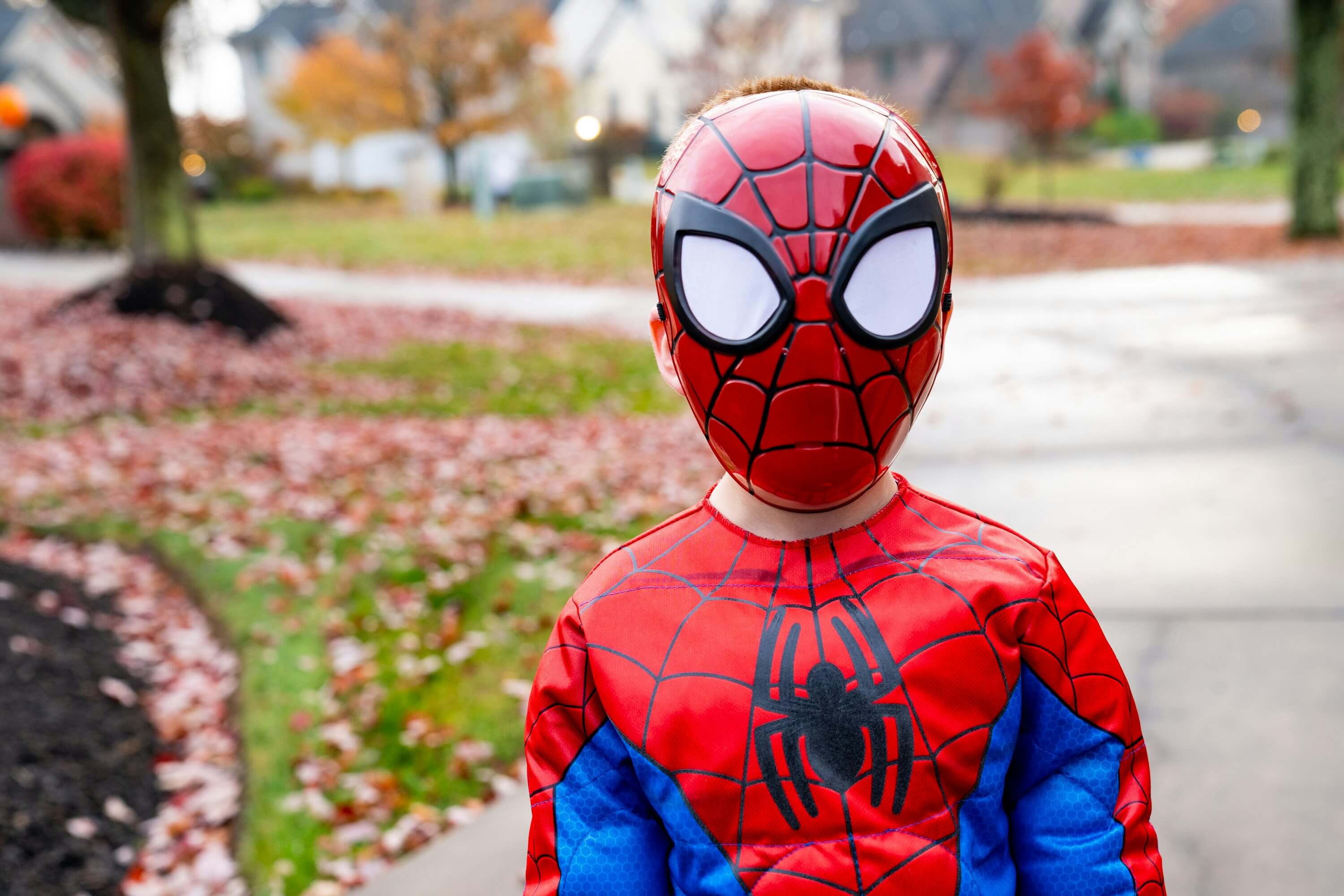
Masks can make it harder to see cars, curbs, stairs, and other people. If your child wears one, make sure:
- It fits securely
- Eye openings provide adequate vision
- It doesn't slide around
- Breathing isn't obstructed
FDA suggests makeup and hats as alternatives to masks that obscure vision. If your child has to lift the mask every thirty seconds to see where they're going, the costume has failed its road test.
5. Test Halloween Makeup Before the Big Night
Costume makeup can irritate skin or cause allergic reactions. The FDA recommends testing makeup on a small area of the arm 24 to 48 hours before using it.
If redness, swelling, a rash, or other irritation develops, don't use the product. Also use products only for their intended purpose, particularly around the eyes.
And remove makeup before bed according to the product directions. Yes, your child will say they're too tired. The zombie makeup still comes off.
6. Skip Unprescribed Decorative Contact Lenses
Those dramatic vampire, cat, or zombie eyes may complete the costume. They're also medical devices.
The FDA warns against buying or wearing decorative contact lenses without an eye-care professional's prescription and proper fitting. Improper lenses can injure the eye.
A Halloween costume does not require risking a corneal injury. Use makeup. Use glasses. Use your child's existing eyes. They're already paid for.
7. Make Costume Weapons Obviously Fake—and Flexible
Swords, knives, staffs, and other costume accessories should be soft or flexible enough that a fall doesn't turn the prop into an injury hazard.
Also consider whether the accessory is really necessary.
Your seven-year-old may insist the pirate costume is historically inaccurate without a sword. History will recover.
8. Feed Kids Before Trick-or-Treating

Give children dinner or a substantial snack before they leave. The FDA recommends this because hungry children are more tempted to eat candy before an adult has inspected it.
It also reduces the likelihood that a child will attempt to consume half the neighborhood between houses six and seven.
Probably. We make no guarantees.
9. Set the Rules Before You Leave
Do this while everyone can still hear you. Before trick-or-treating begins, establish rules such as:
- Stay with the group.
- Stop at every street.
- Ask before eating candy.
- Don't enter houses.
- Don't run between parked cars.
- Wait for the adult before crossing.
- Stay on the agreed route.
Trying to establish a new safety policy after three pieces of candy and twelve doorbells is unnecessarily ambitious.
10. Younger Children Need an Adult
Young children should trick-or-treat with a responsible adult.
For older children ready for more independence, parents should consider maturity, neighborhood conditions, the route, and local circumstances rather than relying on a magic universal age.
If children are going without you, establish:
- Who they're with
- Where they're going
- When they'll return
- How they'll contact you
- What to do if the group separates
- Which areas are off-limits
A charged phone can be useful for children old enough to carry one responsibly. But it isn't a substitute for a plan.
11. Use Sidewalks
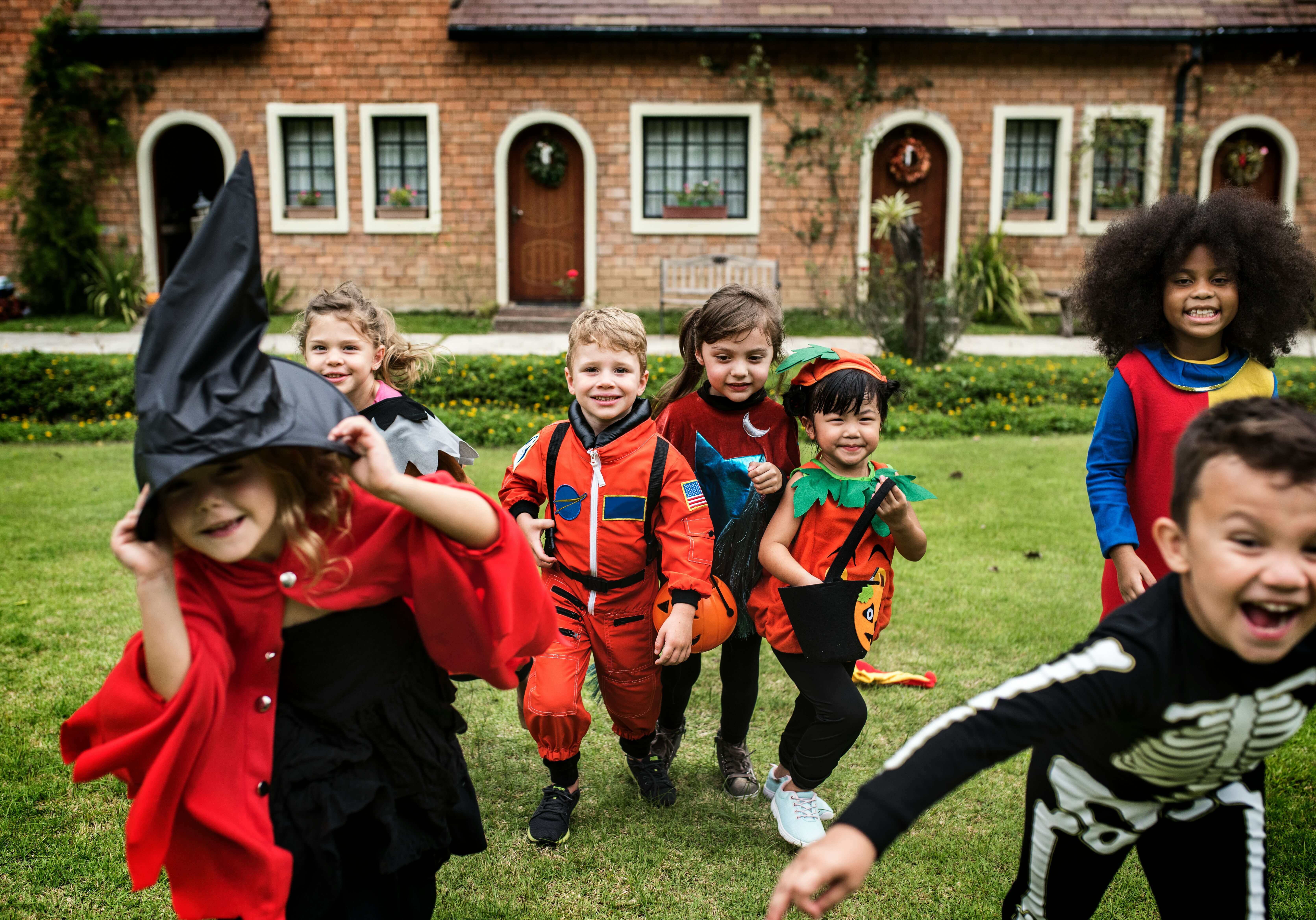
Use sidewalks whenever they're available. Avoid walking in the roadway simply because it's crowded or the next house appears tantalizingly close.
Where sidewalks aren't available, walk facing traffic and as far away from traffic as possible. Also discourage children from cutting through unfamiliar yards.
Dark yards can contain:
- Steps
- Hoses
- Decorations
- Landscaping
- Furniture
- Uneven ground
The shortest route to a miniature Snickers is not necessarily the safest.
12. Cross at Intersections or Crosswalks
Cross at intersections or crosswalks whenever possible. Look for vehicles in all directions, including vehicles turning through the intersection.
Teach children not to assume a driver sees them.
Wait until it's safe. Then cross. The candy will remain at the next house for another 14 seconds.
13. Never Dart Out Between Parked Cars
This deserves its own rule. Children are smaller than cars. Drivers may not see a child emerging between parked vehicles until the child is already in the roadway.
Go to a safer crossing point where children and drivers can see each other more clearly.
Halloween excitement does strange things to otherwise sensible feet. Make stopping at the curb automatic.
14. Put the Phones Away While Walking
Older children may want to text friends, take pictures, check maps, or inspect their candy haul while walking. Not while crossing streets.
Pedestrians need to watch for traffic, driveways, cyclists, other pedestrians, and uneven walking surfaces.
Take the selfie while stationary. The vampire will still be a vampire thirty seconds later.
15. Watch Driveways as Well as Streets
Cars don't only appear on roads. Watch for vehicles:
- Backing out of driveways
- Entering driveways
- Leaving parking spaces
- Moving through alleys
The NHTSA specifically advises pedestrians to watch for vehicles entering or exiting driveways and backing out of parking spaces.
This is particularly important on Halloween because drivers may have difficulty seeing children after dark.
16. Inspect Candy Before Kids Eat It
When you get home, look through the candy before younger children start eating.
Check commercially wrapped treats for signs of tampering, including unusual appearance, discoloration, tiny holes, or torn wrappers, and discard anything suspicious.
For young children, also remove choking hazards such as:
- Gum
- Hard candy
- Peanuts
- Small toys
These are potential choking hazards for young children. This is not an authorization for parents to confiscate all peanut butter cups on “safety grounds.”
Your children will eventually understand what you're doing.
17. Take Food Allergies Seriously
Halloween can be especially complicated for children with food allergies. Read labels every time rather than judging a candy by its appearance or assuming a familiar-looking product is safe.
Check labels for allergens and advise children with food allergies not to eat unwrapped or homemade treats they receive while trick-or-treating.
Families managing serious allergies should follow the child's established allergy action plan and have prescribed emergency medication available as directed by their healthcare professional.
Don't rely on: “I think this one is okay.” Read the label.
18. Use Safer Pumpkin Lighting
Open flames and costumes are an unnecessarily dramatic combination. Use battery-operated lights or other flameless illumination in pumpkins, especially along walkways and in areas children will pass.
If you use candles, keep them well away from:
- Doorways
- Steps
- Walkways
- Curtains
- Decorations
- Costumes
- Other combustible materials
The pumpkin does not care whether the light inside is authentic.
19. Make Your Porch Safe for Other Kids
Halloween safety isn't only about your children. Before trick-or-treaters arrive, walk from the sidewalk to your front door as though you've never been there before.
Remove or address:
- Hoses
- Tools
- Loose cords
- Unstable decorations
- Toys
- Wet leaves
- Other tripping hazards
Make sure stairs and walking areas are adequately lit. Keep pets secure if they're likely to become frightened, excited, or territorial when dozens of costumed strangers arrive.
Remember that children will approach your house in the dark, looking primarily at your candy bowl. Design accordingly.
20. Drivers Need a Halloween Plan Too
If you're driving on Halloween evening, assume children may do something unexpected. Slow down in residential areas. Scan carefully for pedestrians.
Watch driveways and intersections. Expect children to appear from places they shouldn't.
And obviously: Don't drive impaired. Don't drive distracted. Your text can wait. So can the picture of your neighbor's twelve-foot skeleton.
What Should Kids Carry?
You don't need to turn a trick-or-treater into an expedition team. Depending on the child's age and circumstances, useful items may include:
- Flashlight
- Reflective treat bag or reflective tape
- Fully charged phone for an older child
- Emergency contact information
- Necessary allergy medication
- Comfortable walking shoes
- Weather-appropriate outer layer
And a treat bag that isn't so enormous that the child eventually has to drag it. Optimism is admirable. Physics remains involved.
What About Teenagers Trick-or-Treating Alone?
Older kids can still benefit from a few non-negotiables. A parent should know:
Who: Who are they going with?
Where: What neighborhood or route?
When: What time are they coming home?
How: How will they get home?
Have them stay together. Set check-in expectations that fit your family. Make sure phones are charged.
Remind them that being old enough to go without a parent doesn't make them invisible to a driver. Independence comes with the exciting privilege of remembering your own safety rules.
Halloween Safety for Toddlers and Preschoolers
For very young children, simpler is better. Consider:
- Trick-or-treating earlier
- A short familiar route
- Comfortable shoes
- Warm clothing when needed
- Simple costumes
- No vision-obstructing masks
- Direct adult supervision
- Age-appropriate treats
Inspect candy carefully and remove choking hazards, such as gum, peanuts, hard candies, and small toys, from the bags of very young children.
A three-year-old does not need to visit 83 houses. After twelve, they're usually being carried anyway.
The Five-Minute Halloween Safety Check
Before opening the front door, do this:
Costume: Can the child walk and see clearly?
Visibility: Reflective material or light?
Shoes: Comfortable and secure?
Route: Does everyone know where you're going?
Rules: No eating candy yet; stop before streets; stay together.
Equipment: Flashlight, phone, and necessary medications?
Weather: Does anyone need another layer?
Done.
You don't need a family safety seminar. You need everyone to remember the basics when they're excited.
Halloween Safety Checklist for Parents
Before trick-or-treating:
- Check costume fit
- Check shoes
- Add reflective material where needed
- Give children a flashlight or suitable light
- Make sure masks don't block vision
- Test costume makeup ahead of time
- Avoid unprescribed decorative contacts
- Choose soft or flexible costume accessories
- Feed children before leaving
- Review street-crossing rules
- Establish the route
- Establish a return time for older children
- Charge phones where applicable
- Bring prescribed allergy medication if needed
- Use sidewalks
- Cross at appropriate crossings
- Watch driveways and parked cars
- Keep phones away while crossing
- Inspect treats at home
- Remove choking hazards for young children
- Check allergy labels
- Use safer pumpkin lighting
- Clear your walkway for visitors
The Bottom Line
Halloween safety doesn't require draining all the fun out of Halloween.
Kids can wear ridiculous costumes.
They can roam the neighborhood collecting unreasonable quantities of candy.
They can be ghosts, superheroes, witches, dinosaurs or whatever character parents discover they're expected to construct at 8:45 p.m. on October 30.
Just cover the basics.
Make them visible.
Make sure they can walk and see.
Supervise appropriately.
Use sidewalks.
Cross carefully.
Inspect the candy.
Take allergies seriously.
Keep open flames away from costumes.
And tell them the rules before the front door opens.
After that?
Let Halloween be Halloween.
And when the costumes come home covered in chocolate, makeup and fake blood, that's tomorrow's problem.
Fortunately, we have a guide for that too.
Keep Going
For the inevitable aftermath, see Tricks for Treating Halloween Stains.
For broader household safety, visit our Home Safety Guide.
And use the October Cleaning Checklist to get the house ready before—or back in shape after—the Halloween invasion.
- Clean Home
- Safe at Home
- Halloween Safety Tips For Kids