Easy Holiday Cleaning Tips: Get Guest-Ready Without the Stress
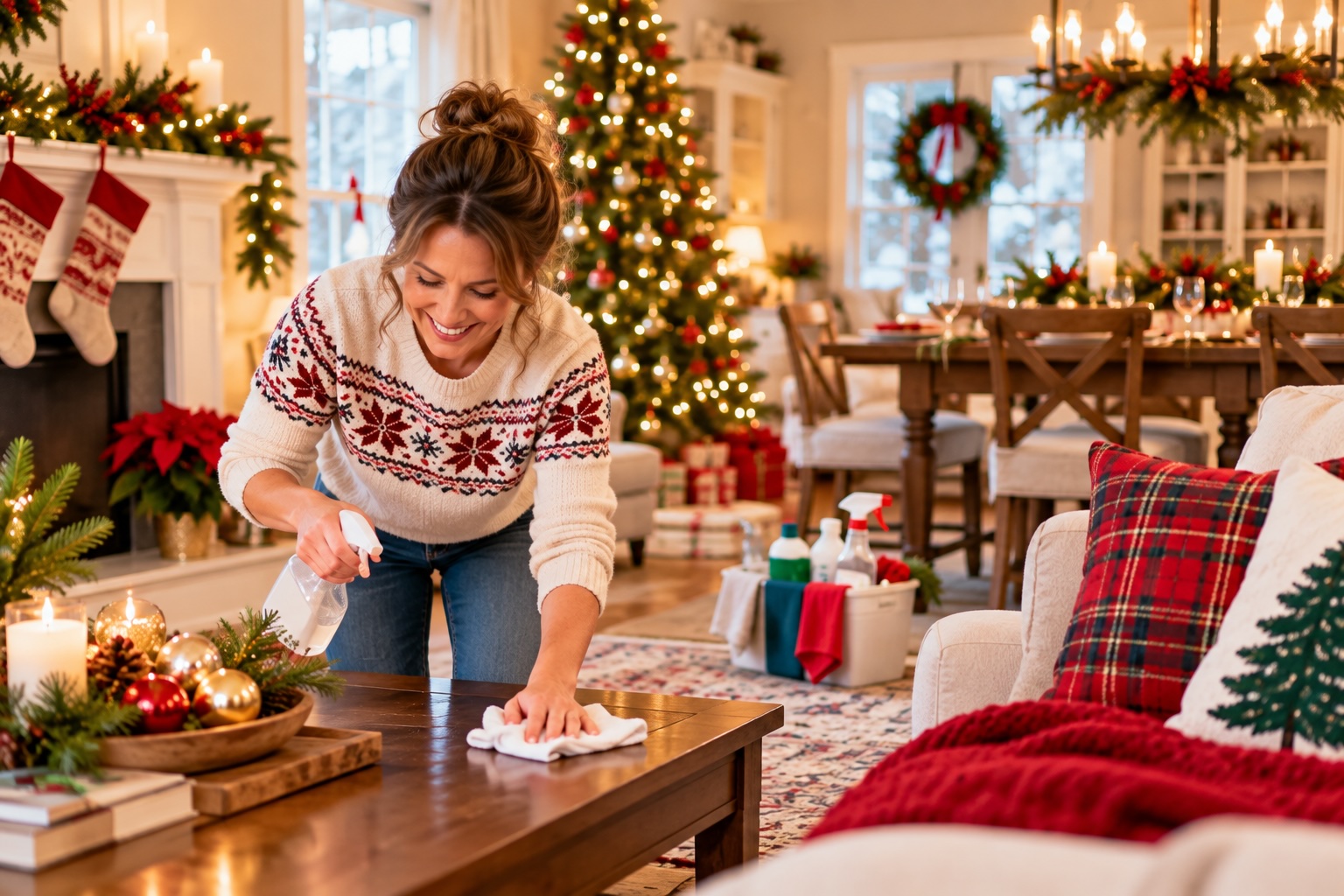
The holidays are when your house gets inspected. Not officially, of course. But your mother-in-law has eyes, the neighbors are coming for eggnog, and somehow that cobweb in the dining room chandelier is now the brightest thing in the house.
Good news: you don't have to clean everything. You need to clean the right things, the right way, in the right order.
Here's how to get the wood shining, the silver gleaming, the candle wax out of the tablecloth and the house ready for company, without spending every weekend in December on it.
Break Big Cleaning Jobs Into Small Ones
Don't try to clean the whole house in one Saturday. Spread the jobs over a few days, or a few weeks, depending on when the first guests arrive.
Clean first (what guests see):
• The entryway, because it's the first thing guests see
• The living room and dining room
• The guest bathroom. Break it into small jobs with my 7-Step Bathroom Cleaning.
• Floors and carpets
• The kitchen counters
Clean later, in January:
• The jumbled hall closet
• Dusty miniblinds in a bathroom nobody uses
• The garage
• Anything behind a closed door
Work top to bottom. Dust ceiling fixtures and fans first, then walls and furniture, and do the floors last. Everything you knock loose ends up on the floor, so the floor should only get cleaned once.
Shine Wood Furniture Without the Buildup
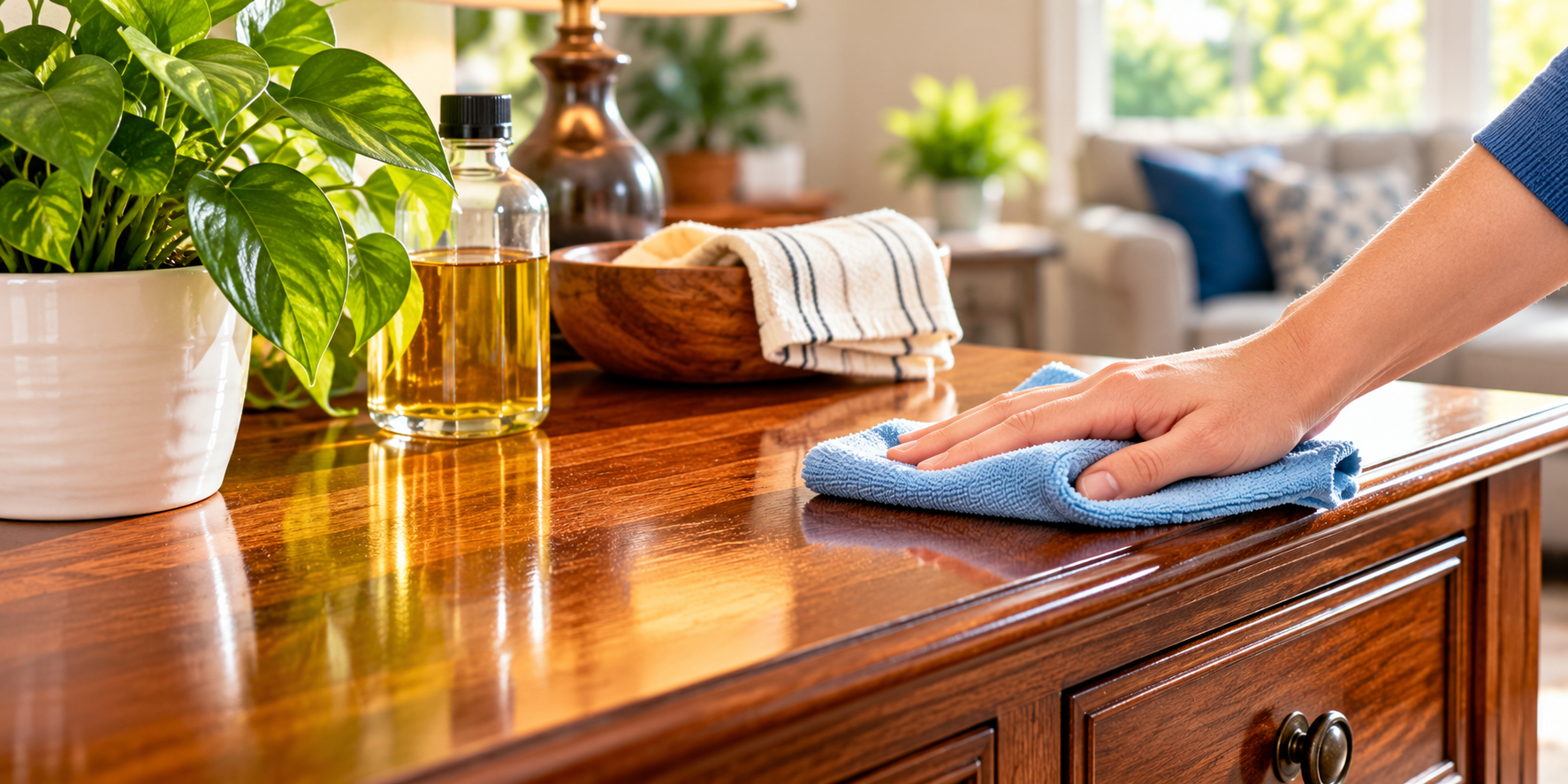
Skip the aerosol spray polish. It leaves a film that actually attracts dust, and after a few years of buildup, your table looks cloudy and feels sticky.
Use a soft microfiber cloth instead, barely dampened with water, and buff along the grain. That's it. For greasy fingerprints, add a single drop of dish soap to the water, wipe, then buff dry.
How to Get White Water Rings Out of Wood
That white ring from someone's eggnog glass is moisture trapped in the finish, not a stain on the wood. Try these in order, gentlest first:
1. Hair dryer: Set it to low heat and hold it a few inches from the ring, moving it constantly. The moisture often evaporates in a few minutes.
2. Mayonnaise: Rub a dab into the ring, leave it overnight, and wipe it off. The oil pushes the moisture out.
3. Oil-finished wood (like teak): Coat the spot with cooking oil, rub very gently with the finest steel wool (0000) or a light-duty plastic scrubber, then buff with a clean cloth. Test in a hidden spot first. Steel wool scratches lacquered and polished finishes.
Dark rings mean the water got through the finish and into the wood. That needs a furniture refinisher.
Vacuum Like You Mean It
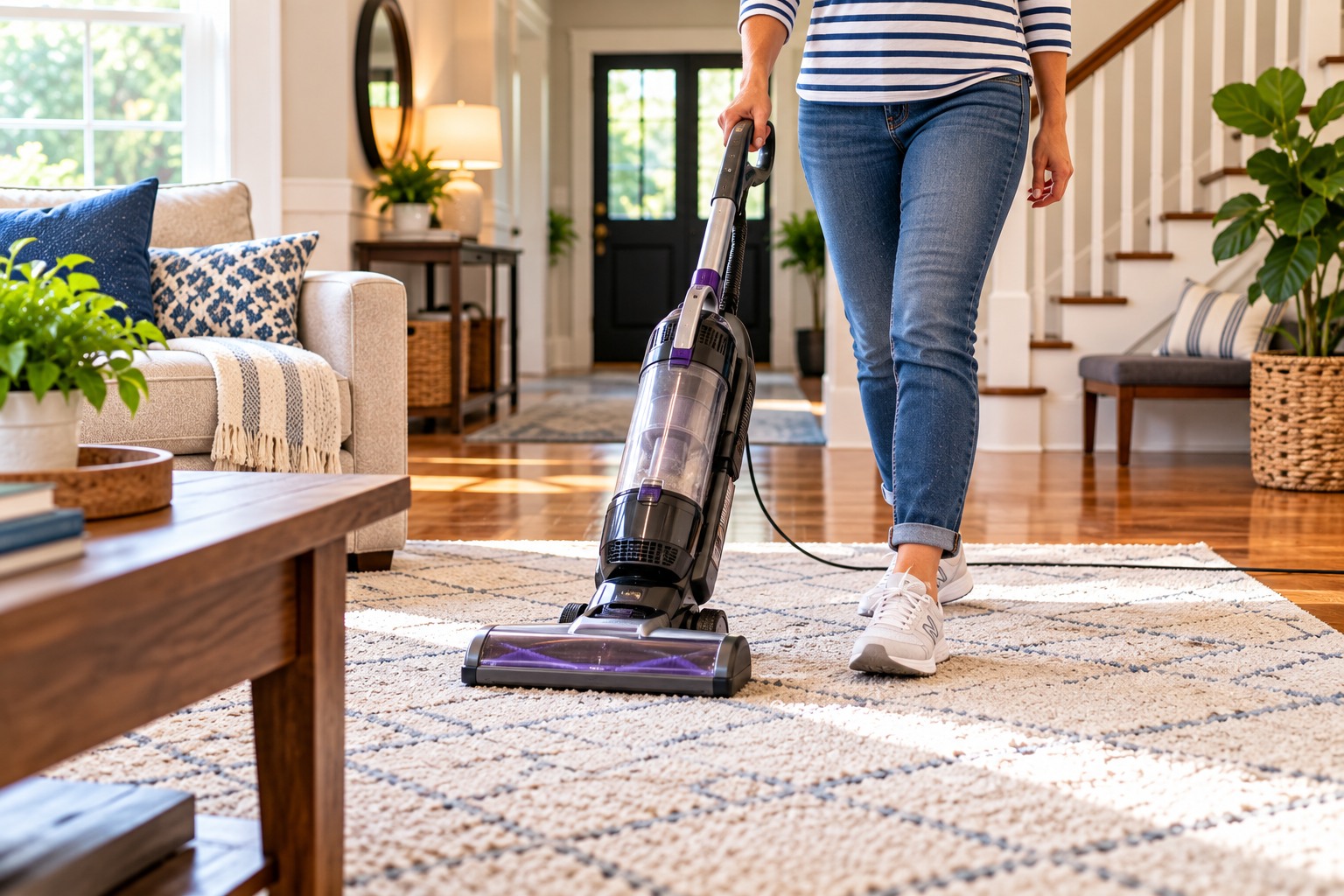
Most of us vacuum way too fast. To actually pull up the dirt, go over each section of carpet slowly, forward and back, for about 20 seconds. Then overlap the next row.
For hardwood floors, turn off the beater bar, or use the bare-floor setting. Spinning brushes can scratch and dent the finish. A canister vacuum with a floor brush, or a dust mop, works better.
And vacuum before the tree goes up and again after. Pine needles get everywhere. More tips: Vacuuming Secrets to Success.
Get Rid of the Ghosts of Christmas Past (Candle Wax)
Found last year's candle wax on the tablecloth? Here's how to get it out:
1. Harden it. Put the tablecloth in the freezer for 30 minutes, or hold an ice pack on the wax.
2. Scrape it. Use a butter knife or a plastic knife to flake off as much as you can.
3. Iron out what's left (cotton and linen only). Lay brown paper bags or paper towels on both sides of the stain. Press with a warm iron, no steam, and move to a clean spot on the paper as the wax soaks in.
4. Pretreat. Rub stain remover or liquid detergent into the colored mark the wax left behind.
5. Soak and wash. Soak in the hottest water the care label allows, then wash. Stubborn stains can take up to three rounds. Be patient.
6. Check before drying. If there's any color left, repeat the steps before it goes in the dryer.
Send dry-clean-only or delicate linens to the dry cleaner, and tell them it's candle wax. Never iron wax on polyester or other synthetic fabrics, because the heat melts them. More tips how to remove candle wax from carpet.
Make the Silver Sparkle
For sterling and antique silver: Use a silver polish and a soft cloth or an old cotton sock. Rub with straight, up-and-down strokes, not circles, which leave fine scratches. Twist a corner of the cloth to get into the crevices of the pattern, then rinse in warm water and buff dry right away.
For everyday silver-plated pieces with heavy tarnish: Use the baking soda trick.
1. Line a glass baking dish or the sink with aluminum foil, shiny side up.
2. Add 1 tablespoon of baking soda per quart of very hot water.
3. Lay the silver in so each piece touches the foil.
4. Wait 2 to 5 minutes. The tarnish transfers to the foil.
5. Rinse, and dry with a soft cloth.
Don't use the foil method on antiques, pieces with an intentional dark patina, or knives with hollow handles. Hot water can loosen the glue in the handles. And skip the toothpaste trick on good silver. Toothpaste is abrasive and leaves tiny scratches.
To store it: Wrap each piece in acid-free tissue or a silver cloth bag, and keep it in a drawer or chest. Never use rubber bands. They tarnish silver right through the plastic wrap.
More help: How to Clean Silverware.
Dust the Ceiling Fixtures, Fans and Vents
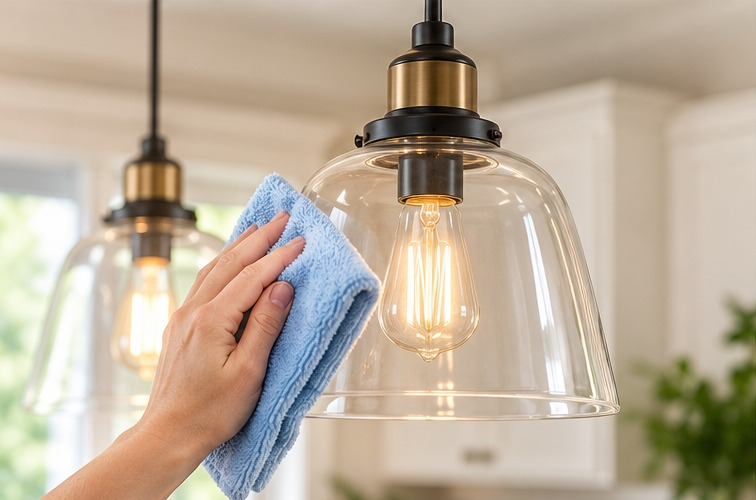
It's time to lose the Halloween look. Cobwebs are officially out of season.
Ceiling fans: Turn the fan off and let it stop completely. Slide an old pillowcase over each blade and pull it back toward you. The dust stays in the pillowcase instead of raining down on your head.
Vents and air returns: Use the vacuum's soft brush attachment, then wipe with a damp microfiber cloth.
Light fixtures and chandeliers:
1. Turn off the light and the wall switch, and let the bulbs cool.
2. Take a photo of the chandelier before you remove anything, so you know where every crystal goes back.
3. Take down glass shades and washable crystals. Wash them in warm, soapy water, rinse, and dry them with a lint-free cloth.
4. Wipe the frame with a barely damp cloth. Never spray cleaner directly on the fixture or near the wiring.
5. Replace any burned-out bulbs while you're up there.
On the ladder: Use a sturdy stepladder, not a chair. Keep three points of contact, and don't stand on the top step. If the fixture is over a stairwell or a two-story entry, hire someone.
More help: light fixture cleaning tips.
Wash the Walls, Cabinets and Baseboards
The walls may not look like they need a bath. But wipe one section, and you'll see the difference. Fingerprints by the light switches, scuffs in the hallway and a gray line along the baseboards all show up once guests are looking.
You'll need: two buckets, a sponge, a sponge mop for the high spots, hand dishwashing liquid and a clean towel.
1. Fill one bucket with warm water and a few drops of dish soap. Fill the other with plain water for rinsing.
2. Test on a hidden spot first, like behind a door. Flat and matte paint can rub off.
3. Wash the walls from the bottom up, so drips don't leave streaks on dry, dirty wall. Rinse the sponge in the plain-water bucket before dipping it back in the soapy one.
4. Dry each section with a clean towel as you go.
5. Do the cabinet fronts and baseboards the same way.
For scuff marks: Rub gently with a melamine sponge (like a Magic Eraser) on satin, semi-gloss or gloss paint. Go easy on flat paint, which it can polish to a shine or wear through.
More help: How to Clean Walls Without Damaging Paint.
Your Easy Holiday Cleaning Checklist
• Make a list of what guests will see, and what can wait until January
• Dust ceiling fans, light fixtures and vents first
• Wash the walls, cabinet fronts and baseboards
• Buff the wood furniture with a damp microfiber cloth
• Get rid of white water rings
• Polish the silver, and store it without rubber bands
• Get last year's wax out of the table linens
• Vacuum slowly, and turn off the beater bar on hardwood
• Clean the entryway and the guest bathroom
• Floors last
Holiday Cleaning FAQ
What should I clean before holiday guests arrive?
The entryway, the living room, the dining room, the guest bathroom, the kitchen counters and the floors. Skip closets and rooms behind closed doors until January.
How do you get candle wax out of a tablecloth?
Freeze it, and scrape off as much as you can. On cotton or linen, iron the rest out between brown paper bags. Then pretreat the leftover color, soak it in hot water, and wash. Don't put it in the dryer until the stain is gone.
What's the fastest way to clean tarnished silver?
For everyday silver plate, line a dish with foil, add hot water and 1 tablespoon of baking soda per quart, and soak the pieces for 2 to 5 minutes. For sterling and antiques, use silver polish and a soft cloth.
How do I get white rings off a wood table?
Try a hair dryer on low first, then mayonnaise left on overnight. White rings are moisture trapped in the finish, and they usually come out. Dark rings mean water got into the wood, which is a job for a refinisher.
Then Enjoy the Holidays
Once the hot spots are done, stop. You've cleaned the places people will actually see, and the house looks great. Now light a (real or flameless) candle, pour yourself something festive, and enjoy the season.
Keep the House Guest-Ready All Season
The big clean is done. The Daily Home Reset keeps the house that way with a 15-minute daily routine, so surprise guests don't send you into a panic.
And for the closets you didn't get to this year, Room by Room gives you a no-guilt plan to declutter every space, one room at a time. Your January project, sorted.
Keep Going
The house is ready for company. Make the rest of the season easier with these related guides:
• Holiday House Cleaning Hacks: The fastest way to make the house company-ready when time's short.
• 25 Easy Christmas Tips: Simplify gifts, decorating, dinner and guests.
• November House Cleaning Checklist: 15 things to clean before Thanksgiving.
• December House Cleaning Checklist: Keep the house holiday-ready all month.
• How to Clean Silverware: More ways to make the good silver shine.
• Cleaning Light Fixtures: Brighter rooms in minutes, no new bulbs required.
• How to Clean Walls Without Damaging Paint: Scuffs, fingerprints and grime, gone.
- Clean Home
- Clean
- Easy Holiday Cleaning Tips