The Pre-Thanksgiving Fridge Purge
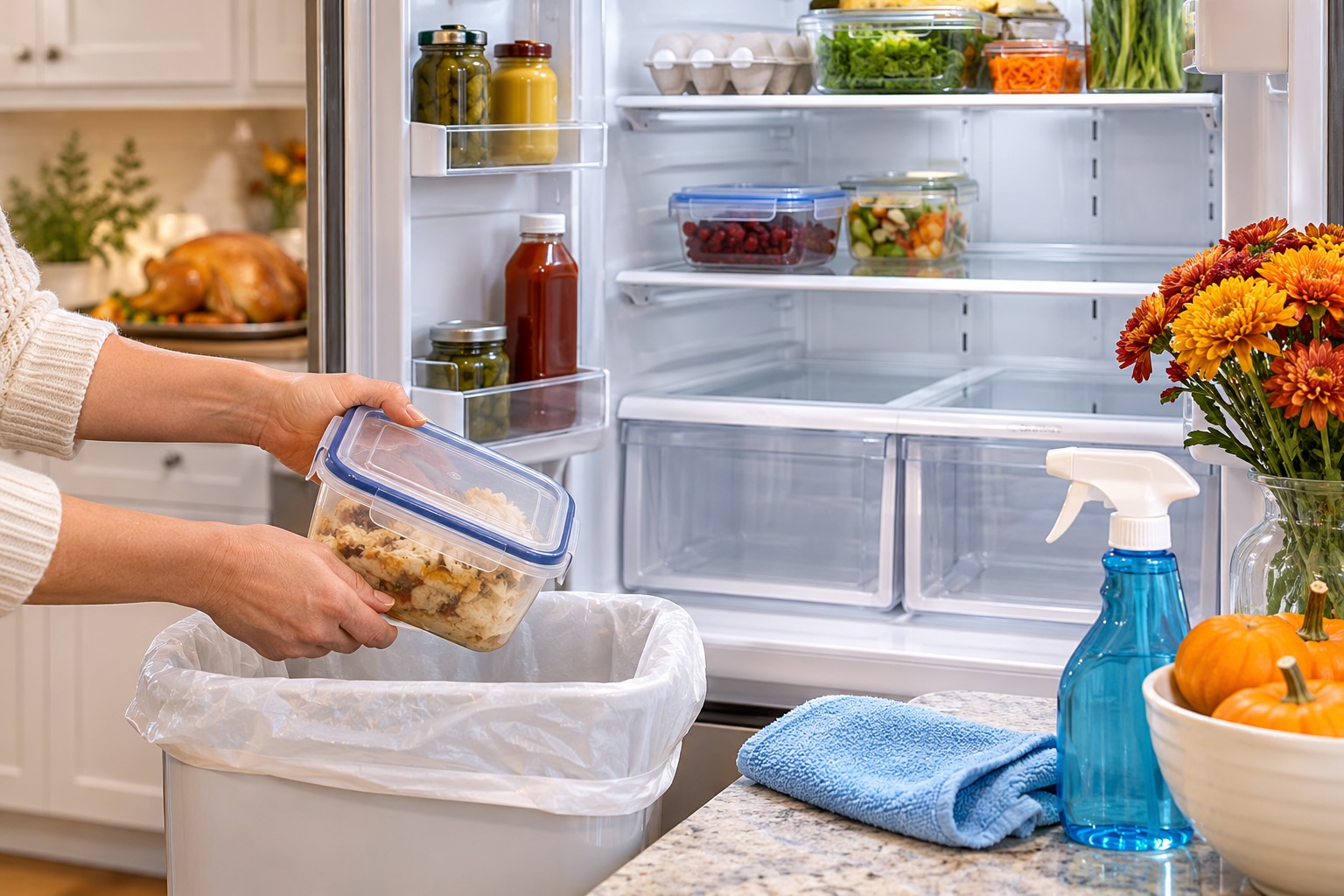
You bring home a 20-pound turkey, open the refrigerator door, and realize there's nowhere to put it.
That's because your fridge is already fully occupied by three half-empty jars of salsa, a pickle floating alone in a sea of brine, a lemon that's well on its way to becoming a fossil, and a mysterious container that may or may not contain soup.
Nobody's been brave enough to investigate since Labor Day.
Thanksgiving is the Super Bowl of refrigerators. Between the turkey, side dishes, pies, drinks, and enough leftovers to feed a small army, your fridge is about to earn its keep. And right now, it's not exactly in fighting shape.
The good news? You don't need an entire afternoon or a hazmat suit to get things under control. Just about an hour, a trash bag, and the willingness to part with that jar of mustard you've been moving around since last Thanksgiving.
Here's how to give your refrigerator a pre-Thanksgiving makeover, figure out what stays and what goes, and make room for the bird, the fixings, and all those glorious leftovers.
When to Clean Out the Fridge Before Thanksgiving
The sweet spot is the weekend before Thanksgiving. Here's why: a frozen turkey thaws in the refrigerator at about one day for every 4 to 5 pounds. A 20-pound bird needs four to five days of fridge time. That means the turkey moves in on the weekend before, and you want an empty shelf waiting for it.
WhenTwo weeks out The weekend before Monday or Tuesday Wednesday |
MissionStop buying groceries you don't need. Start eating down the fridge and freezer. Do the big purge, clean the shelves, and put the frozen turkey in to thaw. Shop for perishables. Make the pies and make-ahead sides. Quick check: toss anything that crept back in, and clear space for leftovers. |
What You Need
- A cooler with ice packs, to keep food cold while you work
- A trash bag and a recycling bin
- Baking soda and warm water
- Clean cloths or a sponge
- A marker and masking tape, for labeling
- An empty box or bin for the "eat this week" foods
Step 1: Empty It Out
Yes, all of it. You can't clean around a jar of olives. Start at the top shelf and work down, putting meat, dairy and anything else that spoils quickly straight into the cooler. Put condiments and jars on the counter. This is about to get interesting.
Step 2: Line Up the Mystery Jars
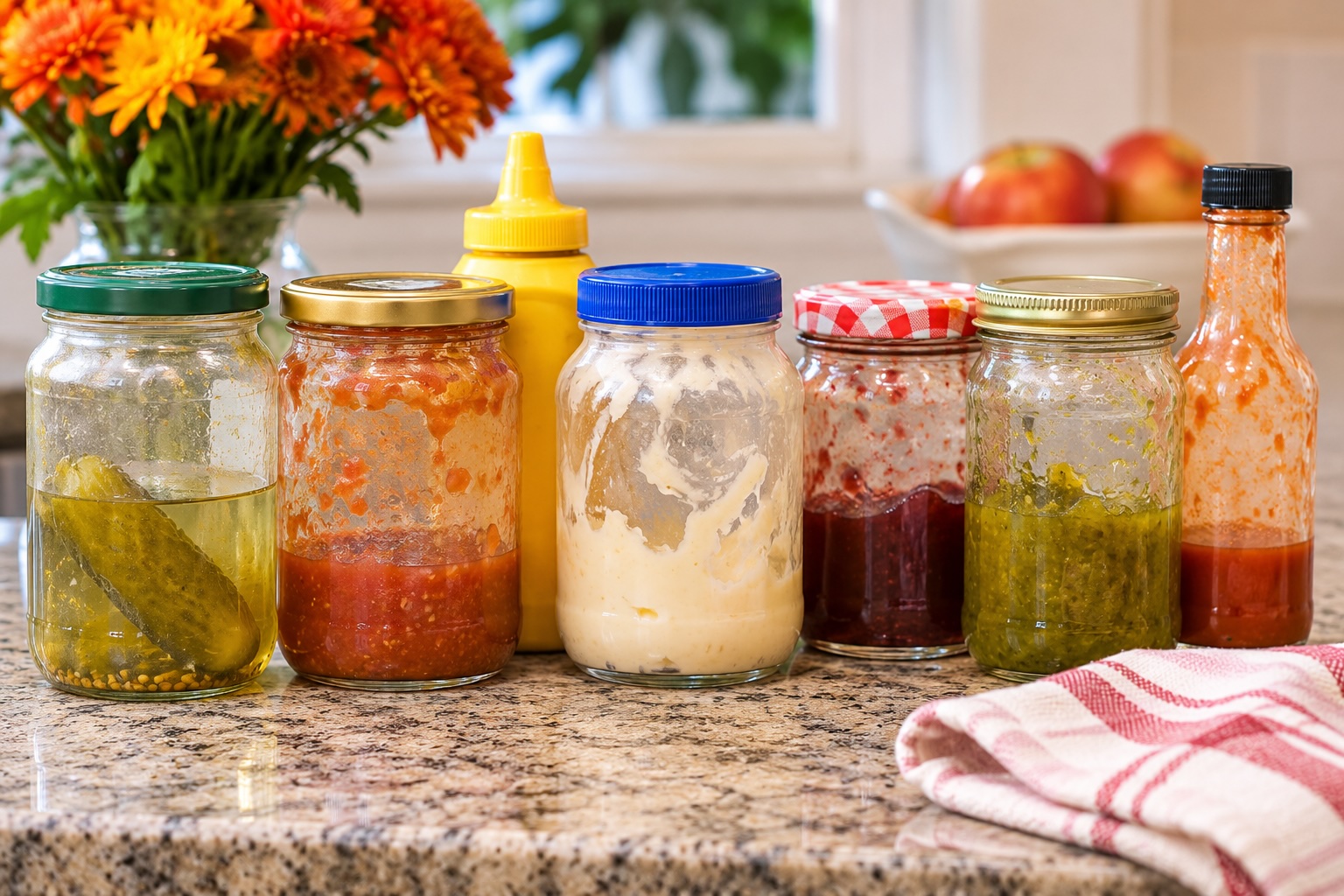
Now look at what's on your counter. Every fridge has a collection: the barbecue sauce from the Fourth of July, the fancy mustard someone gave you as a gift, the jar of capers you bought for one recipe in 2023. Time to face them.
Toss it, no debate, if:
- You can't remember what it is.
- You can't remember when you opened it.
- It has mold, an off smell, a bulging lid or a strange new color.
- It's leftovers more than four days old.
- You have two of the same thing. Combine them if they're both fresh, or keep the newer one.
For everything else, here's how long common opened condiments keep in the fridge:
Opened CondimentMayonnaise Ketchup Mustard Jam and jelly Jarred salsa Pickles Bottled salad dressing |
Keeps in the fridgeAbout 2 months About 6 months About a year 6 months to a year About a month 1 to 3 months 1 to 3 months |
Not sure about the rest? Check the food shelf life guide before you put it back. And if you're squinting at "best by" versus "use by," here's how to decipher a food label.
Step 3: Start an "Eat This Week" Bin
Some food is perfectly good, just not something you want hogging space during Thanksgiving week. The half bag of shredded cheese, the last two yogurts, the leftover rotisserie chicken. Put it all in one bin on an easy-to-reach shelf and make it this week's lunches and dinners. Tell the family that anything in the bin is fair game. Your teenagers will clean it out in a day.
Step 4: Clean the Shelves and Drawers
With the fridge empty, this takes 15 minutes.
- Pull out the drawers and removable shelves.
- Wash them in warm, soapy water. Let glass shelves warm to room temperature first. Hot water on a cold glass shelf can crack it.
- Wipe the inside walls and fixed shelves with a mix of 2 tablespoons of baking soda in a quart of warm water. It cleans, deodorizes, and doesn't leave chemical smells next to your food.
- Don't skip the door shelves and the rubber door seal. That's where the drips and crumbs hide.
- Dry everything well and put it back.
Fridge still smells a little funky? These fridge odor removal tips will take care of it.
Step 5: Check the Temperature
Before you load the fridge back up, put a fridge thermometer on the middle shelf. It should read 40°F or below, and the freezer should be at 0°F. A fridge packed full of Thanksgiving food warms up fast, especially with the door opening every three minutes. Here's why the refrigerator temperature matters.
Step 6: Reserve the Turkey Zone
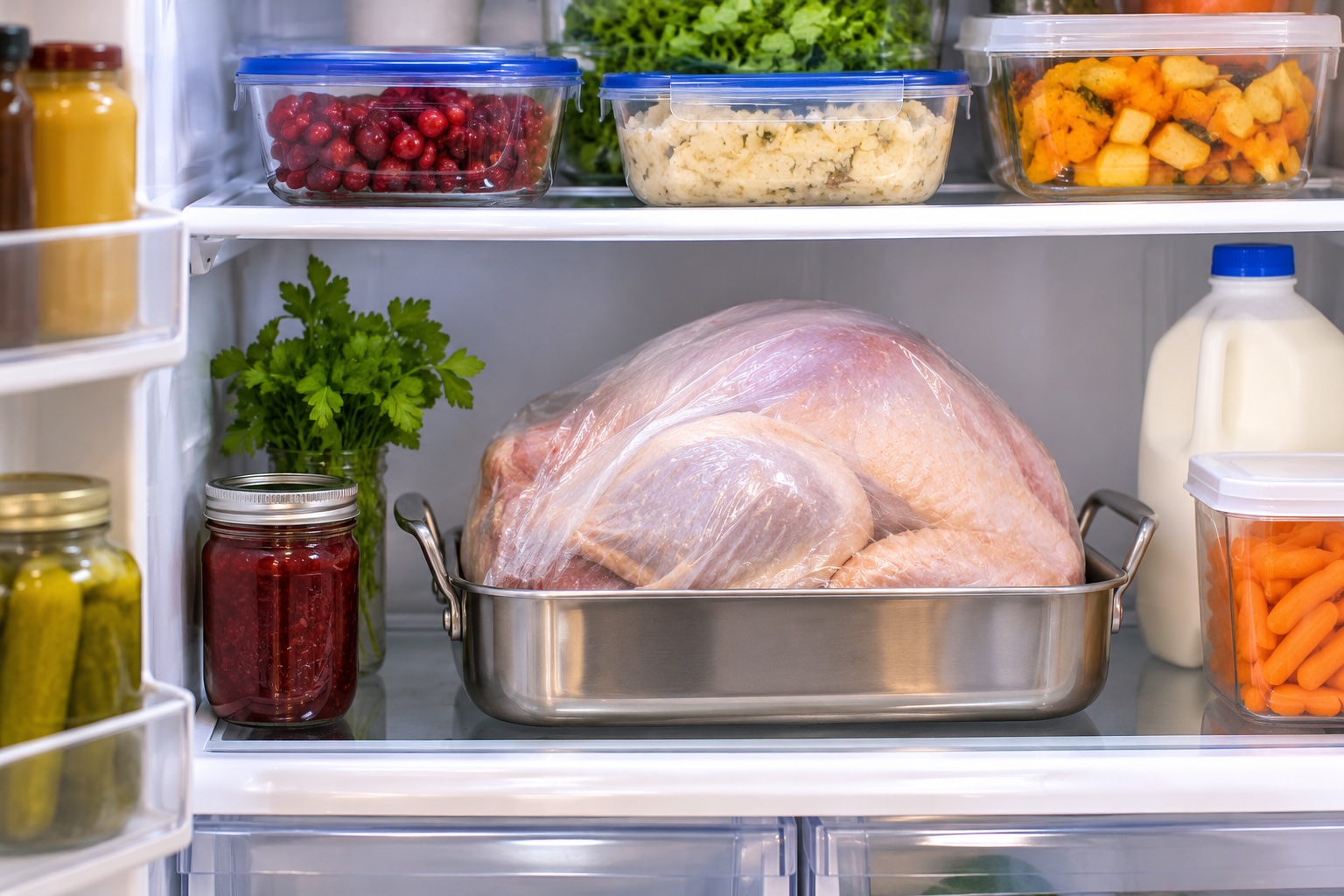
The turkey gets the bottom shelf. That's not negotiable. Raw poultry always goes on the lowest shelf so its juices can't drip onto anything else. Set the turkey in a rimmed pan or baking dish to catch drips while it thaws, and keep everything else away from it.
Clear a second spot now, too: a shelf for the pies and make-ahead sides. If you're making dishes ahead, measure your casserole dishes against the shelf height. Discovering the green bean casserole doesn't fit on Wednesday night is a special kind of holiday stress.
Step 7: Put It Back Like You Mean It
Before anything goes back in, check it once more. Then reload the fridge so you can see what you have:
- Top shelves: Leftovers, drinks and ready-to-eat foods
- Middle shelf: Dairy and eggs
- Bottom shelf: The turkey and other raw meat
- Drawers: Produce
- Door: Condiments only (it's the warmest spot in the fridge, so milk and eggs don't belong there)
Group the condiments in a small bin or lazy Susan, and you'll never lose a jar in the back again. More ideas: fridge food storage tips.
Don't Forget the Freezer
The freezer needs a purge, too. That's where leftover turkey, extra pie and next-day soup will end up. Toss anything freezer-burned, unlabeled or older than you'd like to admit. Use up the good stuff over the next two weeks, and you'll have room for leftovers. For what keeps and for how long, see these frozen food storage tips.
Plan for the Leftovers Now
Thanksgiving leftovers are the best part of Thanksgiving. Don't let them become next month's mystery containers.
- Stock up on containers with lids, plus freezer bags, before the big day.
- Put a roll of masking tape and a marker right by the fridge. Label every container with what's in it and the date.
- Get leftovers into the fridge within 2 hours of serving.
- Eat them within 3 to 4 days, or freeze them.
- Send guests home with leftovers. It's polite, and it frees up a shelf.
Pre-Thanksgiving Fridge Purge: Quick Answers
When should I clean out my fridge before Thanksgiving?
When should I clean out my fridge before Thanksgiving?
The weekend before. That gives you a clean, empty shelf when the frozen turkey needs to start thawing.
How long does it take to thaw a turkey in the refrigerator?
How long does it take to thaw a turkey in the refrigerator?
About one day for every 4 to 5 pounds. A 20-pound turkey needs four to five days. Thaw it on the bottom shelf in a pan to catch drips.
How long are Thanksgiving leftovers good for?
How long are Thanksgiving leftovers good for?
Three to four days in the refrigerator. Freeze anything you won't eat by then.
What's the best way to clean the inside of a refrigerator?
What's the best way to clean the inside of a refrigerator?
Empty it, wash the removable shelves and drawers in warm, soapy water, and wipe the inside with 2 tablespoons of baking soda dissolved in a quart of warm water. Dry everything before you put it back.
Keep Going
Get the whole kitchen ready for the holidays with these related guides:
- Fridge Food Storage Tips: What goes where, and how long it keeps.
- Food Shelf Life Guide: How long pantry, fridge and freezer foods last.
- Fridge Odor Removal Tips: Banish that funky smell for good.
- Easy Refrigerator Maintenance Tips: Keep your fridge running cold and efficient.
- Frozen Food Storage Tips: Freeze leftovers the right way.
- Kitchen Food Safety Tips: Keep holiday cooking safe from start to finish.
- Preparing for Holiday Entertaining: Get the whole house company-ready.
- Holiday Speed Cleaning Routine: Fast cleaning when the doorbell's about to ring.
Free 15-Minute Daily Reset Checklist
Get Notes on Keeping House
Fifteen minutes a day. No weekend cleaning marathons. No guilt. Sign up for my newsletter and I'll send you the printable checklist that makes it happen.
Send My ChecklistNo spam, ever. Unsubscribe anytime.

Free Printable
Notes on Keeping House
Sign up and get my 15-Minute Daily Reset Checklist. One timer, five zones, and a house that stays under control.
Send My ChecklistNo spam, ever. Just smart, funny tips for keeping house from Tara Aronson.