How to Vacuum Properly: 12 Secrets to Cleaner Floors
Vacuuming seems simple enough. Plug in the machine, push it around the room, admire the freshly cleaned carpet, and move on.
Except there's a difference between running a vacuum over the floor and actually getting the dirt out.
Dust, crumbs, pet hair, tracked-in grit, and all those mysterious little particles that appear to reproduce overnight settle deep into carpet fibers, along baseboards and under furniture. A quick once-over leaves a lot of them behind.
The good news: you don't need a more complicated cleaning routine. You need a better vacuuming technique.
These 12 vacuuming tips will help you clean carpets, rugs and hard floors better, keep your vacuum running well, and stop doing the job twice.
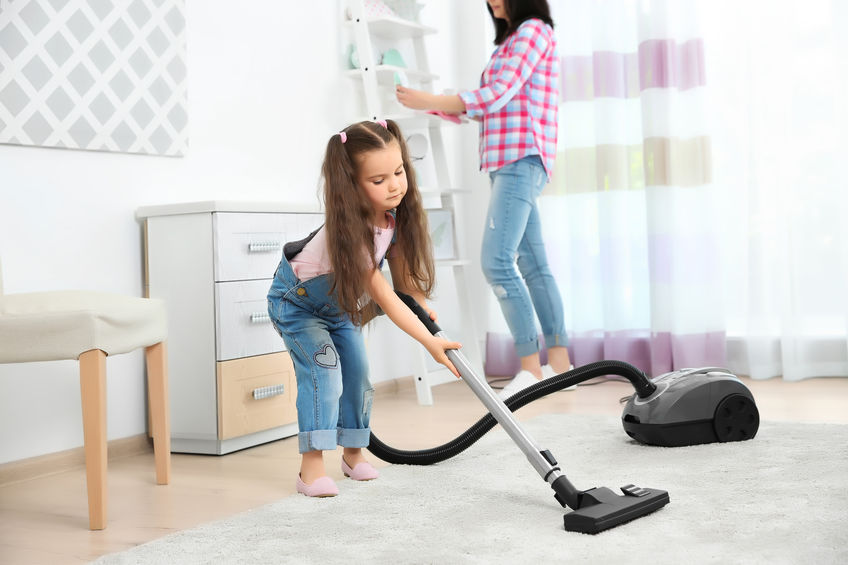
And yes, the kids can help.
How to Vacuum Properly: The Short Version
1. Set the vacuum for the floor you're cleaning.
2. Pick up everything first.
3. Go slowly.
4. Work in overlapping rows, then cross-hatch the high-traffic spots.
5. Use the crevice and upholstery tools for edges, corners and the sofa.
6. Empty the bin before it hits the fill line, and keep the filters and brush roll clean.
Here's how to do each one right.
1. Choose the Right Vacuum Setting for Your Floor
Carpets, area rugs, hardwood and tile don't all need the same treatment. Set up the machine for the floor before you start.
For Carpet
Use your vacuum's carpet setting. The spinning brush roll (also called the beater bar) loosens dirt buried in the fibers. Set the height so the vacuum glides: too low and it's a wrestling match, too high and it skims the top.
One exception: high-pile, shag and looped (Berber) carpet can fuzz, snag or unravel under an aggressive brush. Check your carpet's care instructions, and use the lowest brush speed or turn the brush off.
For Hard Floors
Use the hard-floor setting or a soft-bristle floor tool, and turn off the brush roll. A spinning brush scatters crumbs across hardwood and tile and can scratch the finish.
For Area Rugs
Check the rug's care label. Wool, silk, handmade and antique rugs need gentle suction and no brush roll, and some need professional cleaning. Vacuum fringe with the suction-only tool, from the rug's center out, so you don't swallow it.
The rule: match the vacuum to the floor, not the other way around.
2. Pick Up Before You Plug In
Vacuuming around shoes, toys, electrical cords and yesterday's abandoned backpack isn't efficient. It's an obstacle course.
Before you start:
• Pick up toys, shoes and loose belongings
• Move lightweight furniture out of the way
• Scan for coins, hairpins, Lego bricks and other small hard things that can jam the brush roll
• Move cords out of the path
• Check for spills or damp spots
A regular household vacuum is for dry messes only. Never vacuum liquids unless you're using a wet/dry vac.
Five minutes of picking up saves you much more time once the vacuum is running.
3. Slow Down
Here's the most important vacuuming secret: slow down.
Racing across the carpet might make the room look better, but the vacuum needs time to lift dirt out of the fibers. Use steady, controlled passes, not quick, jerky ones. Push forward slowly and pull back even more slowly. The backward pass is where most of the pickup happens.
Spend extra time on:
• Doorways and hallways
• Entryways
• The floor in front of the sofa
• Wherever the pets sleep
• Any path the family walks every day
These spots collect more dirt because they get more traffic.
You don't need to count exactly 20 seconds over every patch of carpet. You do need to move slowly enough for the vacuum to work. And if the carpet still looks dirty after one pass, make another.
4. Work in Overlapping Rows
Random vacuuming is how you end up cleaning the same spot three times while missing the area behind the chair entirely.
Instead, divide the room into sections and use the overlapping-row method:
1. Start at the far side of the room, so you work toward the door and don't walk over the clean carpet.
2. Push the vacuum forward in a straight line.
3. Pull it back over the same path.
4. Move over so the next pass overlaps the last one by a few inches.
5. Keep going until you've covered the section.
6. Move to the next section.
Think of mowing a lawn, minus the sunshine and the satisfaction of being outdoors.
5. Vacuum in More Than One Direction
Carpet fibers don't always let go of dirt in one direction. After your overlapping rows, make a second set of passes at a right angle to the first.
You don't have to do this every time. Save it for:
• High-traffic carpet
• Spots with embedded pet hair
• Rugs that haven't been vacuumed in a while
• Anywhere you still see debris
The goal is cleaner carpet, not an elaborate geometric pattern on the floor. Although I admit those freshly vacuumed carpet lines are satisfying.
6. Use the Attachments That Came With Your Vacuum
Crevice tool: use it for baseboards, between sofa cushions, furniture edges, stair corners, the gap between the fridge and the cabinets.
Upholstery tool: Use it for sofas, upholstered chairs, fabric headboards, cushions, mattresses.
Dusting brush: Use it for window sills, blinds, shelves, baseboards, lampshades, wood furniture.
Motorized pet tool: Use it for pet hair on upholstery, stairs and the car.
7. Don't Forget Edges and Corners
The middle of the carpet gets all the attention. Meanwhile, dust quietly settles along the baseboards.
Once a week, run the crevice tool around:
• Room corners
• Carpet edges and baseboards
• Behind and under furniture
• Stair edges
• Anywhere the main floor head can't reach
You don't need to detail every corner during a quick vacuum. But put them in your regular rotation. Otherwise, that innocent-looking line of dust eventually becomes a permanent design feature.
8. Vacuum Upholstered Furniture, Too
Your sofa collects more than the occasional lost remote. Dust, crumbs and pet hair settle into the fabric and between the cushions. Vacuum it every week or two, and more often where the pets lounge.
How to Vacuum a Sofa
1. Take off the throw pillows and the cushions.
2. Attach the upholstery tool.
3. Vacuum the seats, back and arms.
4. Run the crevice tool along the seams and into the corners.
5. Vacuum the deck under the cushions.
6. Vacuum both sides of each cushion, then put everything back.
Turn the suction down for delicate fabrics. Check the care tag first: if it says "X," vacuum only, no water or cleaners. And while you're in there, retrieve the missing coins, hair ties and whatever else the sofa has been collecting. Consider it a cleaning bonus.
9. Empty the Bin Before It's Full
A vacuum can't clean when the airflow is blocked, and an overfilled bin or bag blocks it. Empty a bagless bin when it reaches the fill line, or sooner. Change the bag when it's about two-thirds full. Don't wait until the machine sounds like it's struggling to breathe.
To keep the dust from going right back into the air, empty the bin slowly into a trash bag, outdoors if you can. If anyone in your house has allergies, have someone else take this job.
10. Clean the Filters and the Brush Roll
Vacuums need maintenance. Not exciting maintenance, admittedly. But necessary maintenance.
Check the Filters
Filters trap dust and protect the motor. Some are washable, others need replacing. Check your manual. Rinse washable filters in plain water only, and let them dry completely, at least 24 hours, before you put them back. A damp filter grows mildew and can damage the motor.
Cut Away Tangled Hair and Thread
Hair, string and carpet fibers wrap around the brush roll until it can barely spin. Turn off and unplug the vacuum (or remove the battery) first. Then snip the tangles with scissors or a seam ripper and pull them free. Once a month is enough for most homes. Do it every week if you have long-haired people or pets.
Check for Clogs
If suction suddenly drops, unplug the vacuum and check the hose, wand and attachments for clogs. A broom handle pushed gently through the hose clears most of them. If that doesn't work, take it in for repair. Don't take the motor apart.
A clean, well-maintained vacuum cleans better than one that's been ignored for months.
11. Vacuum Often Enough for Your Household
How often should you vacuum? A quiet home with little foot traffic doesn't need the same schedule as a house with three children, two dogs and a revolving door of neighborhood friends.
|
Area High-traffic carpet (entries, hallways, family room) Other carpeted rooms Hard floors Upholstered furniture Edges, corners and under furniture Guest room |
How often 2 or 3 times a week. Every day with kids and shedding pets. Once a week Once or twice a week, plus the kitchen and entry whenever there are crumbs Every week or two Once a week Before and after guests |
There's no prize for vacuuming an already-clean guest room every day. Focus on the places that actually need it.
What About Allergies?
If someone in your house has allergies, vacuum with a sealed HEPA vacuum. A HEPA filter traps fine dust, and "sealed" means the dust can't leak out around the filter and back into the room.
Vacuum when the allergic person isn't home, or have them wear a mask, and wait a couple of hours for the dust to settle before they come back. Vacuuming alone won't get rid of every allergen, but it's a big part of the job. (More on cleaning to control allergy symptoms.)
12. Teach Kids to Vacuum the Right Way

Vacuuming is one of the best chores for kids, and here's where we can make it a little more interesting.
Remember those neat lines in freshly vacuumed carpet? Turn them into a game. Ask your child to vacuum a small carpeted area slowly enough to leave a visible pattern. Or challenge them to make the first letter of their name in the carpet.
Gimme an L!
It's a simple way to show kids that good vacuuming takes more than racing around the room at top speed. Of course, stripes don't prove every speck of dirt is gone. The real goal is covering the entire area carefully.
Vacuuming Chores by Age
• Ages 4 to 5: Pick up the floor first, then use a handheld vacuum on crumbs under the table and on the car seats.
• Ages 6 to 8: Vacuum one small room or a rug with a lightweight stick vacuum, and use the crevice tool on the stairs.
• Ages 9 to 12: Vacuum whole rooms with the full-size vacuum, including edges, and empty the bin.
• Ages 13 and up: Vacuum the whole house, the sofa and the car, and clean the filters and brush roll.
(For chores in every room, see Chores for Kids by Age.)
How to Teach Kids to Vacuum
Start with one small room. Show your child how to:
1. Pick up toys and anything else on the floor.
2. Check the setting for the floor (carpet or hard floor).
3. Move slowly in overlapping rows.
4. Cover the whole area, edges included.
5. Turn off the vacuum and wrap the cord.
6. Put the vacuum away where it goes.
Then let them do it while you watch, and step back once they've got it. (Here's the method for teaching any chore.)
A few safety rules:
• Hands, hair, cords and dangling strings stay away from the brush roll.
• Unplug before anyone touches the brush roll or the bin.
• Adults handle broken glass, sharp debris, wet spills, and anything else that shouldn't go in a vacuum.
• Little kids don't run the vacuum near stairs.
How to Keep Carpets Cleaner Between Vacuuming
Good vacuuming habits help. So does keeping the dirt out in the first place.
• Put doormats at every outside door, one outside and one inside. Shake or vacuum them every week.
• Go shoes-off. Put a basket or a bench by the door so it's easy.
• Block the sun. Direct sunlight fades carpet over time. Close the shades or curtains during the brightest hours.
• Lift furniture. Don't drag heavy pieces across the carpet. Use furniture glides, or get help. Furniture cups under the legs help prevent dents.
• Blot spills right away. Blot, don't rub. Test any cleaner on a hidden spot first. Here's the carpet stain removal guide.
• Deep clean once a year or so. Check your carpet warranty. Many require professional hot-water extraction every 12 to 18 months to stay valid. Homes with kids and pets will want it more often.
Frequently Asked Questions About Vacuuming
What is the correct way to vacuum carpet?
Use the carpet setting, move slowly in overlapping rows, and make a second set of passes at a right angle in high-traffic areas. Keep the bin empty and the brush roll free of hair.
Should you push or pull a vacuum slowly?
Both, but pull back more slowly than you push. Most of the dirt comes up on the backward pass.
How many times should you vacuum over the same spot?
At least twice, forward and back. In high-traffic areas, go over it four to seven times. Keep going until no more debris comes up.
Is it better to vacuum in different directions?
Yes. Vacuuming in two directions, at a right angle to each other, lifts dirt from all sides of the carpet fibers. Do it in high-traffic areas and pet zones.
How often should carpets be vacuumed?
Vacuum high-traffic carpet two or three times a week, or every day with kids and pets. Vacuum less-used rooms once a week.
Why does my vacuum leave dirt behind?
The usual causes are a full bin or bag, a dirty filter, a clogged hose, hair wrapped around the brush roll, the wrong height or floor setting, or a worn belt. Unplug it and check each one.
Should I vacuum before cleaning carpets?
Yes. Vacuum thoroughly first, so the carpet cleaner can go after ground-in soil and stains instead of pushing around loose dirt.
The Secret to Better Vacuuming
The real secret isn't an expensive machine, a complicated schedule or perfect stripes in the carpet.
It's the right setting, slow passes, a system for covering the floor, and a vacuum you take care of.
Do those things every time, and you'll spend less time cleaning up the dirt you missed the first time. And if you can teach the kids to vacuum properly along the way? Even better.
Now if we could just teach the dog to stop shedding.
Keep Going
The floors are clean and the vacuum's back in the closet. Keep the rest of the house in shape with these related guides:
• Cleaning Carpets at Home: When vacuuming isn't enough, and how to deep clean carpet yourself.
• Carpet Stain Removal: How to get out wine, coffee, pet accidents and more.
• How to Clean Hardwood Floors: Protect the finish while you get the dirt up.
• Cleaning to Control Allergy Symptoms: How to cut down on dust, dander and pollen indoors.
• Weekly Cleaning Checklist: Fit vacuuming into a realistic weekly routine.
• Chores for Kids by Age: Jobs for every room in the house, from toddlers to teens.
• Weekly Chores for Kids by Age: Vacuuming, bathrooms, sheets and a sibling rotation.
• Teaching Kids Household Chores: The step-by-step method that makes chores stick.
As an Amazon Associate, I earn from qualifying purchases.
- Clean Home
- Clean
- Vacuuming Secrets To Success