15 Carpool Rules for Kids
That Make Every Ride Easier
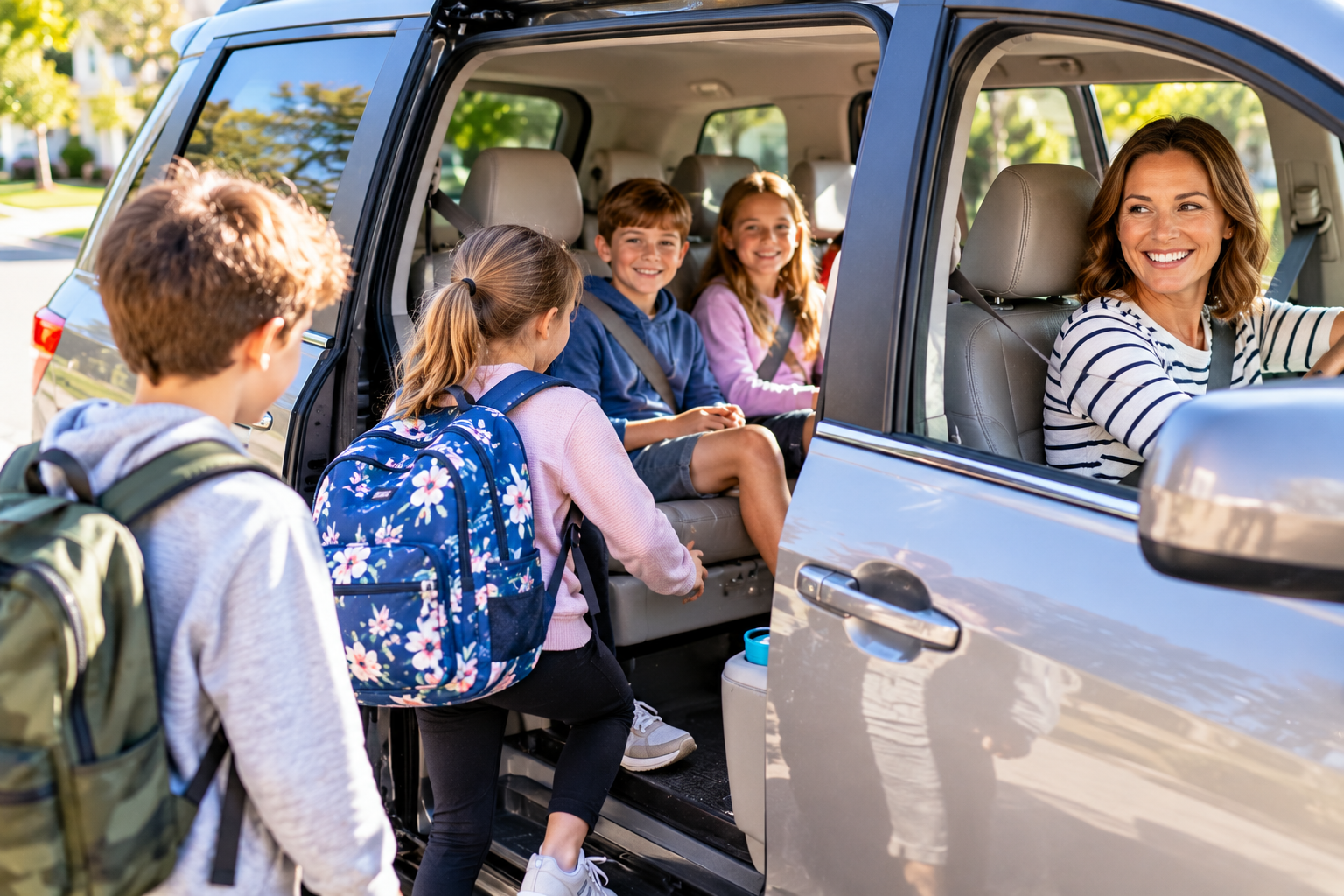
Carpooling is a wonderful idea. Parents share the driving, kids get where they need to go, and everyone saves a little time, gas, and sanity.
At least, that's the theory.
In practice, a carpool can quickly turn into a rolling argument about who gets the window seat, who touched whose backpack, and whether someone is breathing too loudly.
And that's before you've backed out of the driveway.
The solution isn't a complicated list of regulations worthy of a federal agency. It's a handful of clear carpool rules for kids that everyone understands before the first pickup.
These 15 rules will help keep the ride safe, reasonably peaceful, and free of unnecessary backseat drama.
1. Be Ready When the Car Arrives
Carpool pickup time is not the moment to start looking for your shoes. Or your backpack.
Or the permission slip that's apparently been living under your bed since Tuesday.
Kids should be ready to leave when the car arrives, with their belongings gathered and shoes firmly attached to their feet.
A good rule: Be ready five minutes before pickup.
That small habit keeps one late child from making everyone else late, too.
2. Wait in a Safe Place
Kids should wait in a designated, safe location away from moving traffic.
That means:
- Stay on the sidewalk or another safe waiting area.
- Don't run into the street when the car arrives.
- Wait until the vehicle has stopped completely.
- Follow the driver's instructions before approaching.
Enthusiasm is lovely. Running toward a moving vehicle is not.
3. Buckle Up Before the Car Moves
This is the most important carpool rule, and it isn't negotiable.
Every child must ride in the appropriate seat belt, booster seat, or car seat for their age, height, weight, and applicable state law.
Before the car moves:
- Everyone gets into the correct seating position.
- Every passenger is properly buckled.
- Seat belts stay fastened for the entire ride.
- Nobody shares a seat belt.
- Nobody rides in a cargo area or on someone else's lap.
Children should also use the back seat when recommended for their age and size.
The driver shouldn't have to ask three times whether everyone is buckled. This isn't a debate club. It's a safety rule.
5. Keep Your Hands to Yourself
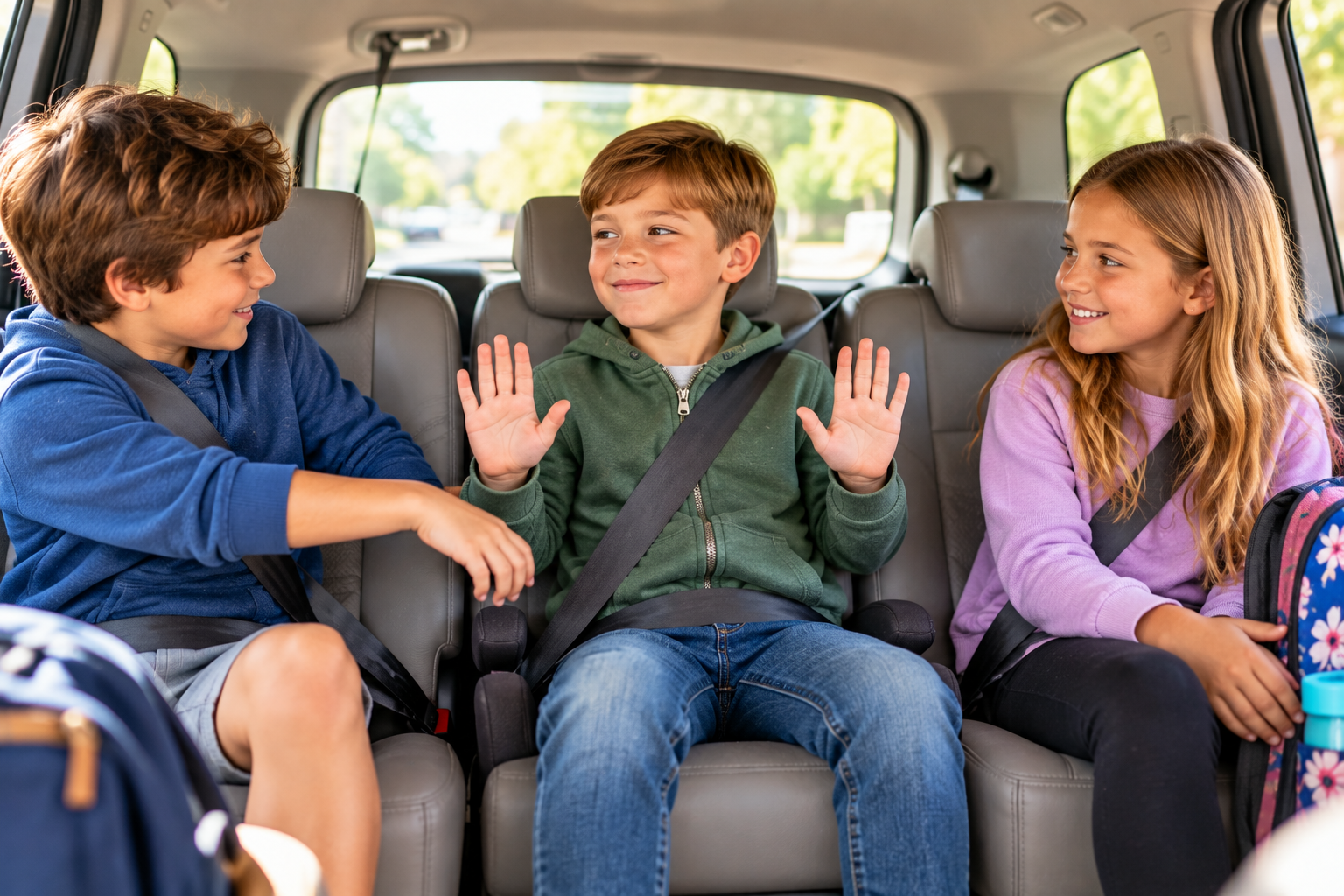
This rule deserves its own section because, apparently, the back seat has an invisible border dispute happening at all times.
- No pushing.
- No poking.
- No grabbing someone's hat, phone, backpack, or hair.
And absolutely no wrestling, even if somebody claims they were just kidding. A moving car is not the place for physical horseplay.
If you wouldn't want someone doing it to you, don't do it to the person sitting next to you. Simple. Revolutionary, even.
5. Use Your Indoor Voice
A little conversation is fine. In fact, that's part of the fun of riding with friends.
But there's a difference between chatting and conducting a shouting competition from the third row.
Kids should:
- Speak at a normal volume.
- Avoid screaming or shrieking.
- Keep music and videos quiet.
- Stop talking when the driver needs everyone's attention.
The driver needs to hear traffic, emergency vehicles, and what's happening around the car.
Nobody needs a surprise concert at full volume while merging onto the freeway.
6. Never Distract the Driver
The driver's first job is driving safely. Not settling arguments. Not finding a dropped pencil. Not deciding whose turn it is to choose the playlist.
Children should never:
- Grab or touch the driver.
- Throw anything.
- Block the driver's view.
- Touch vehicle controls.
- Demand that the driver turn around to look at something.
- Create distractions that interfere with driving.
If something can wait until the car stops, it waits. If there's an urgent safety problem, kids should tell the driver clearly and calmly.
7. Stay in Your Seat
Once everyone is buckled, everyone stays put until the driver says it's time to get out.
No changing seats at traffic lights. No leaning across the car to retrieve a toy.
No unbuckling because you're almost there. Almost there is still moving.
If something falls on the floor, leave it until the vehicle is safely parked. Whatever it is, it can survive another three minutes without you.
8. Respect Everyone's Personal Space
Carpools involve several people sharing a relatively small space. This makes personal boundaries particularly important.
Teach kids to:
- Keep their feet off other passengers.
- Avoid leaning on someone who doesn't want it.
- Keep backpacks and belongings in their assigned spaces.
- Ask before touching another person's things.
- Respect requests for a little quiet.
Not every child wants to chat the entire way to school.
Some would prefer to stare out the window and contemplate the injustice of having to wake up before sunrise. That's fine, too.
9. No Teasing, Bullying, or Excluding
A carpool should be a safe place for every child riding in it. That means no name-calling, cruel jokes, threats, embarrassing someone, or deliberately leaving one passenger out.
A joke isn't funny when the person on the receiving end is miserable.
And just because adults are sitting in the front seat doesn't mean they can't hear what's happening in the back.
If there's an ongoing problem between passengers, the adults should address it outside the car rather than expecting children to sort it out during the drive.
10. Keep Food and Drinks Under Control
Whether food is allowed in the car is up to the driver. Some families are fine with snacks. Others prefer not to discover crushed crackers in the seat cushions six months later.
Either policy is reasonable. If snacks are allowed:
- Ask before eating.
- Follow the driver's food rules.
- Avoid messy foods.
- Keep drinks in secure containers.
- Never share food without permission.
Food allergies are another important reason not to trade snacks casually.
And remember: eating while riding can pose a choking risk, particularly for younger children.
For younger passengers, save snacks for when the vehicle is parked.
11. Take Care of the Car
The carpool vehicle isn't a mobile playroom, and the driver shouldn't have to clean it like one.
Kids should:
- Keep shoes off seats.
- Avoid kicking seat backs.
- Leave vehicle buttons and controls alone.
- Put trash where the driver requests.
- Take personal belongings when they leave.
- Report spills or damage instead of hiding them.
A few crumbs happen. A melted chocolate bar mashed into the upholstery is another matter entirely.
12. Follow the Rules About Phones and Devices
Every carpool should have a simple policy for phones, tablets, games, and headphones.
For example:
- Keep volume low or use headphones when permitted.
- Don't show upsetting or inappropriate content to other passengers.
- Don't photograph or record other children without permission.
- Put devices away when the driver gives instructions.
- Never use a device to tease or embarrass someone.
Devices should also be secured so they don't become flying objects during sudden stops.
And kids should know that the driver isn't available to troubleshoot a game while navigating traffic.
13. Use Good Manners
Carpool etiquette doesn't require children to behave like miniature diplomats.
A few basic courtesies will do.
Say hello when you get in.
Say thank you when you get out.
Be respectful when the driver asks you to do something.
And remember that the driver is doing everyone a favor by getting them safely where they need to go.
Good manners won't eliminate every argument, but they do make the ride more pleasant.
14. Wait for Permission Before Getting Out
Arrival is not a signal to fling open the nearest door. Children should wait until the vehicle is fully stopped and the driver says it's safe to exit.
They should also:
- Use the designated exit side whenever possible.
- Check for bicycles, pedestrians, and other traffic.
- Keep hands and belongings clear of closing doors.
- Never step into traffic unexpectedly.
- Follow school pickup and drop-off procedures.
For younger children, an adult should supervise getting in and out as appropriate. A safe drop-off matters just as much as a safe pickup.
15. Speak Up When Something Is Wrong
Kids need to know the difference between tattling over a minor annoyance and reporting a genuine problem.
They should tell the driver if:
- A seat belt or restraint isn't working properly.
- Someone is hurt or feels sick.
- A passenger is being bullied.
- A door appears to be open or unsecured.
- Something dangerous is happening.
- They feel unsafe.
Children should never be afraid to report a safety concern. And the driver should listen without making them feel silly for speaking up.
A calm, clear warning is far more helpful than a backseat emergency committee shouting over one another.
The Five Carpool Rules Every Child Should Remember
Fifteen rules may sound like a lot, especially to a six-year-old who can't remember where yesterday's sweatshirt went.
So start with five essentials:
- Buckle up and stay buckled.
- Keep your hands and feet to yourself.
- Use a quiet voice and don't distract the driver.
- Stay seated until the driver says it's safe to get out.
- Treat everyone in the car with respect.
Everything else builds on those basics.
What If a Child Keeps Breaking the Carpool Rules?
Start with a reminder. Children get excited, distracted, and occasionally convinced that the back seat is the perfect place to rehearse a wrestling move.
But repeated problems need a consistent response.
First: Explain which rule was broken and why it matters.
Second: Give the child a clear opportunity to correct the behavior.
Third: If the problem continues, speak privately with the child's parent or guardian.
Finally: If the behavior repeatedly creates a safety risk, the adults may need to reconsider the riding arrangement.
Don't attempt to discipline children through an argument while driving. If a situation becomes unsafe, pull over somewhere safe before addressing it.
The goal is a safer carpool, not winning a debate with a third-grader at 35 miles per hour.
Set the Rules Before the First Ride
The easiest time to establish carpool expectations is before there's a problem. Parents and drivers should agree on the basics, including:
- Pickup and drop-off locations.
- Seat assignments and appropriate restraints.
- Food and drink policies.
- Device use.
- Behavior expectations.
- What happens if someone is late.
- How parents will communicate changes or concerns.
The driver should also have the necessary emergency contact information and know who is authorized to pick up each child.
A little planning prevents a surprising amount of confusion.
A Simple Carpool Rules Checklist for Kids
Review this with children before they begin riding with another family.
- I'm ready when the car arrives.
- I wait in a safe place.
- I buckle up correctly.
- I stay in my seat.
- I keep my hands and feet to myself.
- I use a normal speaking voice.
- I don't distract the driver.
- I'm kind to the other passengers.
- I follow the driver's rules about food and devices.
- I take my belongings and trash with me.
- I wait until it's safe to get out.
- I speak up if something is wrong.
You can print the checklist, review it at home, or go over the five essential rules before the first week of carpooling.
No notarized agreement required.
The Bottom Line: A Good Carpool Is a Team Effort
The best carpools aren't necessarily silent. Kids can laugh, talk, tell stories, and enjoy the ride.
But everyone needs to understand that riding together comes with responsibilities.
When children know the rules, drivers can concentrate on the road, parents can relax a little, and the ride becomes what it was supposed to be in the first place:
A convenient way to get everyone where they need to go.
Preferably without anyone announcing, "He's touching me!" before the first stop sign.
Keep Going
Make family transportation and everyday routines a little easier with these related guides:
- Carpool Survival Tips for Drivers: Practical ways to manage pickups, schedules, and backseat behavior.
- Family Car Organization Tips: Keep the car organized, stocked, and ready for everyday driving.
- Family Safety Tips: Everyday safety habits for a busy household.
- Family Life Tips: Simple ideas for keeping family routines manageable.
- Clean Home
- Car
- Carpool Rules For Kids