Monthly Chores for Kids by Age (the Jobs Nobody Remembers)
Daily chores keep the house picked up. Weekly chores keep it clean. Monthly chores are the ones that quietly pile up until you notice the blinds are gray, the sofa cushions are hiding a small snack bar, and nobody has seen the back of the closet since 2023.
Monthly chores teach kids something daily tasks don't: how to take care of a home, not just pick up after themselves. Making the bed matters. But learning to dust blinds, organize a closet and vacuum the couch teaches kids how to maintain the things they use every day.
Monthly chores also help kids:
- Learn new cleaning and organizing skills
- Take responsibility for shared family spaces
- Understand that housework doesn't happen magically
- Build confidence by finishing bigger jobs
- Get ready to run their own homes someday
And yes, they take a few things off your to-do list. Eventually. The first time, teaching your child to clean something properly takes longer than doing it yourself. That's part of the deal.
(For chores at every age, see Chores for Kids by Age.)
Monthly Chores at a Glance
|
Age 3 to 5 6 to 8 9 to 12 13 to 17 |
Monthly chores Wipe fingerprints off low cabinets, sort toys into bins, match shoes, dust low furniture Wipe walls, doors and light switches, dust shelves, weed out outgrown clothes, organize books and games Clean out the closet, vacuum the sofa, dust blinds, clean mirrors and inside windows, wipe the car dashboard Deep-clean closets, wash shower curtains, dust ceiling fans, clean the car inside, make simple clothing repairs |
Kids can do every chore listed for the younger ages, too.
Monthly Chores for Ages 3 to 5
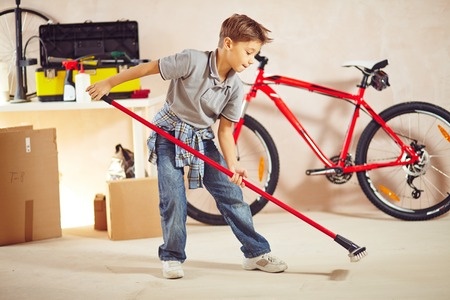
Preschoolers love helping, especially when the job comes with a tool that makes them feel grown-up. A child-size broom can be a surprisingly exciting piece of equipment.
Keep monthly chores short, simple and side by side with you:
• Sweep a small section of the garage or patio with a lightweight broom
• Wipe fingerprints off low cabinet doors with a damp cloth
• Sort toys into their bins
• Match shoes and put them back in the closet
• Wipe low baseboards
• Sort out the broken crayons and dried-up markers with you
• Dust low, sturdy furniture with a microfiber cloth
Give one instruction at a time. "Put all the toy cars in this bin" works much better than "Organize your bedroom." The first is a chore. The second is an invitation to rediscover every toy they've owned since birth.
Monthly Chores for Ages 6 to 8
Early elementary kids can handle more detailed jobs, and start doing familiar ones on their own with clear instructions and the right supplies.
• Wipe fingerprints off walls and doors
• Wipe light switches with a barely damp cloth (no drips into the switch)
• Dust shelves and furniture they can reach
• Wipe baseboards
• Help sort and organize bedroom drawers
• Pull outgrown clothes from the closet for you to check
• Sweep the garage floor
• Help vacuum the sofa with the upholstery attachment
• Wipe out storage bins and baskets
• Organize books, games and craft supplies
Give them a job they can finish. Instead of "Clean the playroom," try: "Put the games back on the shelf, throw away the paper scraps and wipe the table." Now your child knows exactly what needs to happen. And you won't have to debate whether moving three toys from the floor to the bed qualifies as cleaning.
Monthly Chores for Ages 9 to 12
Preteens can handle multi-step jobs, like cleaning out a closet or vacuuming the family room furniture.
• Clean out and reorganize their closet
• Sort clothes into keep, donate and toss piles, for you to approve
• Vacuum the sofa, cushions and crevices included
• Dust or wipe the blinds (here's how to clean window blinds)
• Clean mirrors and the inside of windows they can reach from the floor
• Wipe the car dashboard with a microfiber cloth
• Help organize garage shelves
• Wash out the wastebaskets, with you nearby
• Wipe fingerprints off doors and walls
• Dust furniture and shelves
• Wipe down leather furniture with a leather cleaner and a soft cloth, following the label
• Organize the family game closet, books and shared storage
Teach the whole job. If the job is vacuuming the sofa, show them how to take off the cushions, vacuum underneath, and put everything back. If the job is the closet, clothes go on hangers or shelves, not in a mysterious pile behind the door. A chore is finished when the space is ready to use again.
Monthly Chores for Teens (Ages 13 to 17)

Teenagers can handle most monthly cleaning jobs once they've learned how. They're also old enough to understand that a clean home takes more than occasionally carrying a dinner plate to the kitchen.
• Deep-clean and organize their closet
• Sort clothes and bag up donations
• Vacuum the upholstered furniture thoroughly
• Clean the windows and blinds they can reach
• Dust ceiling fans with an extendable duster or a pillowcase slipped over each blade, standing on the floor or a sturdy step stool, not a chair
• Wipe down light fixtures, with the switch off and the bulbs cool
• Wash the shower curtain and liner, following the care label
• Wipe down walls and doors
• Clean bathroom sinks and counters
• Wash and dry the trash cans
• Organize garage storage (leaving the chemicals and heavy equipment to you)
• Vacuum and wipe down the inside of the family car
• Sew on a button and make simple clothing repairs
• Organize the linen closet, the cleaning supplies or the holiday decorations
Give teens ownership. Instead of supervising every move, agree on what "done" looks like. A teen organizing a closet should:
1. Take out everything that doesn't belong
2. Sort the clothes and accessories
3. Set aside anything unwanted for you to review
4. Wipe the shelves
5. Put everything back neatly
6. Put away the supplies and toss the trash
Then check the finished work. You don't need to hover. You do need to follow through.
A Simple Monthly Chore Checklist for Families
You don't need a complicated chore chart. Pick a handful of jobs that make sense for your home, and assign them by each child's skills.
|
Room Bedrooms and closets Living room & family room Kitchen Bathrooms Garage and car |
Monthly jobs Sort clothes and shoes, remove what's not wanted, wipe shelves and drawers, vacuum under the bed, organize books and toys Vacuum the sofa, dust shelves and knickknacks, wipe fingerprints off doors, dust the blinds, organize games and remotes Wipe cabinet fronts, organize one pantry shelf or drawer, wash the trash can, wipe baseboards, sort reusable bags and containers Organize drawers, wipe cabinet fronts, wash the shower curtain, clean mirrors, restock supplies Sweep the floor, organize sports gear, sort seasonal stuff, vacuum the car, clear out the trash |
You don't have to do every job every month. Pick the ones that need attention and divide them up.
A 12-Month Plan (One Big Job a Month)
Want to make sure everything gets done at least once a year? Give each month a focus:
|
Month January February March April May June July August September October November December |
Family focus Closets: sort and donate what's outgrown after the holidays Kitchen: cabinet fronts and the pantry Windows, mirrors and blinds Garage and outdoor toys, before spring Bathrooms: drawers, cabinets and shower curtains The car, inside and out, before summer road trips Bedrooms: under the beds and the backs of the closets Back-to-school: desks, backpacks and school supplies Living room: sofa cushions, baseboards and the game closet Closets again: swap summer clothes for winter ones Linen closet and guest room, before holiday company Holiday decorations: sort and repair as they come out |
How to Make Monthly Chores Work Without Constant Reminders
A chore list is useful only when people actually follow it. Here's how to make that happen.
1. Pick a monthly cleaning day. The first Saturday of the month works. Put it on the family calendar. You don't need the whole weekend. An hour or two is plenty.
2. Assign specific jobs. "Help clean the house" isn't an assignment. "Vacuum the sofa cushions and put them back" is. Give each child a job with a clear beginning and end.
3. Get the supplies ready first. Gather the cloths, brushes and vacuum attachments before anyone starts. Otherwise, half the morning disappears while somebody searches for the dusting cloth. Usually the same somebody who was supposed to be dusting.
4. Show them first. Do it together before you expect them to do it alone. Point out which surfaces need special care and which supplies to use. Then let them practice.
5. Check the finished work. Don't expect perfection, but do expect the job to be done. If something needs fixing, show them what to fix. Don't redo every chore yourself, or they'll learn their work doesn't count.
6. Rotate the jobs. One month your preteen vacuums the sofa. The next month they clean out the closet or help with the car. Rotating also keeps one child from becoming the family's permanent trash-can specialist.
For the full method for teaching any chore, see Teaching Kids Household Chores.
Keep Monthly Chores Safe
Never assign a cleaning job a child can't do safely.
• Cleaning products: follow the label. Adults handle bleach, strong disinfectants and drain cleaners. Never mix products, especially bleach with ammonia or with acids like vinegar. They make toxic gases.
• Electrical fixtures: turn off the switch and let bulbs cool before cleaning. Repairs and taking fixtures apart are adult jobs.
• High places: no chairs, no ladders, no awkward reaching. A step stool or an extendable duster only.
• Heavy things: adults move furniture, full storage bins and garage equipment.
• Windows: kids clean only the inside of windows they can reach from the floor. No leaning out, and no outside upper-story windows.
• Garage hazards: gasoline, pesticides, power tools, sharp tools and car chemicals stay off kids' chore lists.
Age matters, but so do maturity, experience and physical ability. The goal is to teach useful skills, not create a trip to urgent care. If a child swallows a cleaning product, call Poison Control at 1-800-222-1222.
Frequently Asked Questions
What monthly chores can a 5-year-old do?
Dust low furniture, wipe fingerprints off cabinet doors, sort toys into bins, match shoes, and sweep a small area with a lightweight broom, with you working alongside.
What monthly chores can a 10-year-old do?
Vacuum the sofa, clean out their closet, dust the blinds, wipe doors and walls, clean mirrors, and help clean the inside of the car, after you've shown them how.
What monthly chores should teenagers do?
Organize closets, vacuum furniture, clean windows and blinds, wash the shower curtain, dust ceiling fans from the floor, clean the car's interior, and make simple clothing repairs. Leave hazardous chemicals, heights and heavy equipment to adults.
How many monthly chores should each child have?
One or two, on top of their daily and weekly chores. Add more as they get faster and more skilled.
Should kids get paid for monthly chores?
It's a family decision. Many families treat regular chores as part of family life and pay only for optional extra projects.
The Real Payoff of Monthly Chores
Yes, getting the kids involved makes your own workload lighter. But the bigger payoff comes later. A kid who learns to clean a window, organize a closet and vacuum the furniture is building skills they'll use long after they leave home.
And one day, standing in their own apartment wondering how the blinds got so dusty, they'll know exactly what to do.
You're welcome, kids.
Keep Going
The blinds are dusted and the closet is conquered. Build a complete family chore routine with these related guides:
• Chores for Kids by Age: The complete guide, with a chore chart for every age and how many chores to assign.
• Daily Chores for Kids by Age: The quick everyday jobs, by age and time of day.
• Weekly Chores for Kids by Age: Sheets, bathrooms, vacuuming and a sibling rotation.
• Seasonal Chores for Kids by Age: Spring planting, fall raking and winter shoveling.
• Bedroom Chores for Kids by Age: How to get kids to keep their own rooms clean.
• Teaching Kids Household Chores: The step-by-step method for teaching any chore.
• How to Clean Window Blinds: The dusty job nobody notices until it's really bad.
• Doing Laundry With Kids: Laundry chores at every age, and how to teach each step.
As an Amazon Associate, I earn from qualifying purchases.
- Clean Home
- Clean
- Monthly Chores for kids

Free Printable
Notes on Keeping House
Sign up and get my 15-Minute Daily Reset Checklist. One timer, five zones, and a house that stays under control.
Send My ChecklistNo spam, ever. Just smart, funny tips for keeping house from Tara Aronson.