Post-Thanksgiving Recovery: Your Cleanup Guide
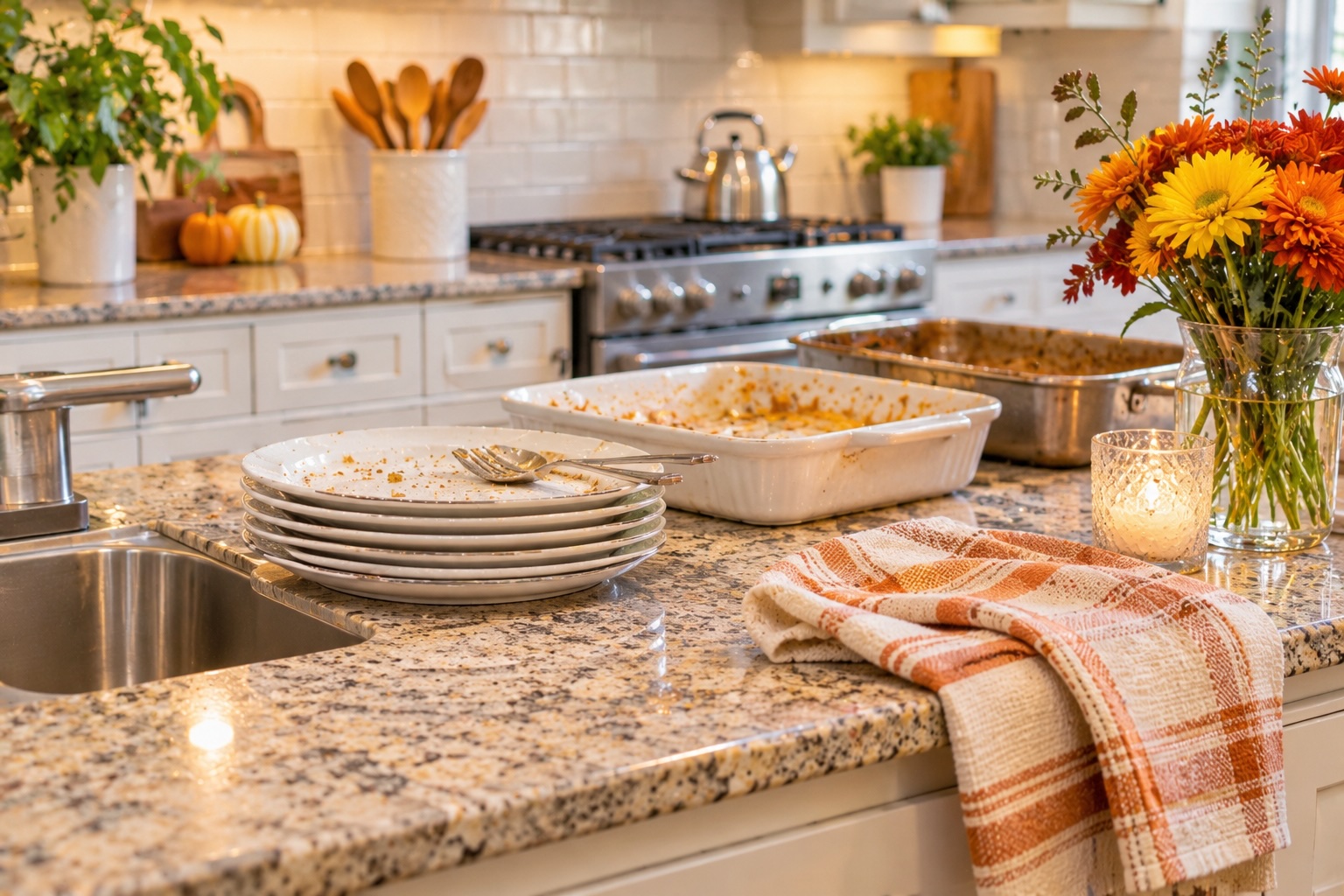
The guests are gone. The football game is over. Somebody's cousin finally found his car keys. And you are standing in a kitchen that looks like a gravy boat exploded in the middle of a wrestling match.
Welcome to the day after Thanksgiving, my friend. I've been helping people clean up after this holiday for nearly three decades, and I can promise you two things:
First, it's not as bad as it looks. Second, it's a little worse than it smells, because there's a pumpkin pie still sitting on the counter from last night and we need to talk about that.
This post-Thanksgiving cleanup guide covers the big three: the roasting pan that's been "soaking" since 9 p.m., the mystery spots on the carpet, and the leftovers you want to enjoy all weekend without spending Sunday on the bathroom floor. Let's go.
First, the 2-Hour Rule (Yes, Even Before the Dishes)
I know. You want to scrub the pan first because it's the most dramatic mess in the room. But the clock on your leftovers started ticking the moment that turkey came out of the oven.
The USDA's rule is simple: perishable food needs to go into the fridge or freezer within two hours of cooking. After that it's been hanging out in the "danger zone," between 40°F and 140°F, where bacteria multiply like relatives who heard you're making pie.
So here's the order of operations for any post-holiday cleanup:
1. Put the food away.
2. Deal with any fresh carpet spills (stains set fast).
3. Then, and only then, wage war on the roasting pan.
If you're reading this the morning after and the stuffing spent the night on the stovetop? I'm sorry. It goes in the trash. Not the fridge, not "just the top layer," the trash. When in doubt, throw it out. That's not my rule; that's the federal government's, and they're very serious people.
How to Store Thanksgiving Leftovers So Nobody Gets Sick
Don't wait for food to cool down
This is the biggest leftover mistake I see, and apparently I'm not alone: in a USDA study, about three-quarters of people said they'd let food cool to room temperature before refrigerating it. Don't.
Your grandmother did it, I know. Your grandmother also smoked in the car with the windows up. Hot food can go straight into the fridge.
Go shallow and go small
A giant tub of mashed potatoes stays warm in the middle for hours, even in the fridge. Divide leftovers into shallow containers no more than 2 inches deep so they chill fast and evenly.
Take the turkey off the bone
Don't shove the whole carcass in the fridge on its platter like a trophy. Carve the remaining meat off the bone, slice it into smaller pieces, and store it in shallow containers or zip-top bags. (Save the carcass in a bag for soup stock if you're ambitious. Freeze it if you're ambitious later.)
Label everything
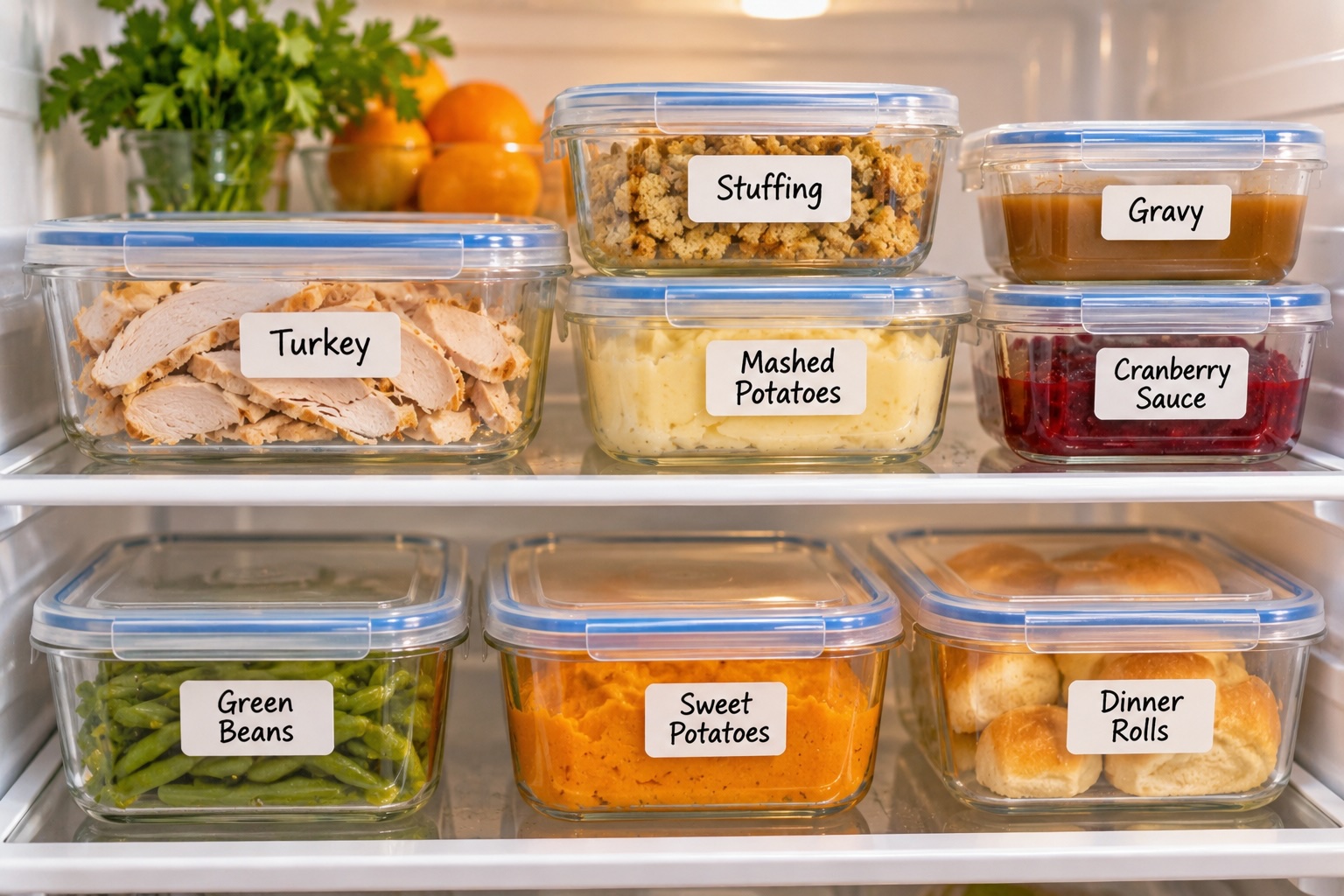
A strip of painter's tape and a Sharpie: "Turkey, Thurs." It takes five seconds and saves you from the Tuesday-morning sniff test, which is not a reliable test. Most of the bacteria that make you sick don't change how food looks, smells, or tastes.
Check your fridge temperature
Your refrigerator should be at 40°F or below. A packed holiday fridge with the door opening every four minutes can creep warmer, so a cheap fridge thermometer is worth its weight in turkey.
How long are Thanksgiving leftovers good?
Leftover
Turkey, ham, cooked meats
Stuffing, mashed potatoes, casseroles, vegetables
Gravy
Pumpkin & pecan pie
In the fridge
3 to 4 days
3 to 4 days
1 to 2 days
3 to 4 days
In the freezer (best quality)
2 to 6 months
2 to 3 months
2 to 3 months
1 to 2 months
Here's the easy way to remember it: the Monday after Thanksgiving is the last day to eat leftovers. If you can't finish it by then, freeze it before Monday. Food kept frozen at 0°F stays safe indefinitely; the times above are about taste and texture, not safety. (Gravy is the diva of the bunch. Eat it or freeze it within two days.)
And yes, pumpkin pie is an egg-and-milk custard. It belongs in the fridge, not on the counter under a dish towel where it has spent the night being a petri dish.
Sending leftovers home with guests
Generous! Also, a liability if Aunt Linda has a three-hour drive. If anyone's traveling more than two hours, pack their goodie bag in a cooler with ice or frozen gel packs. Everyone else gets it straight into their fridge when they walk in the door, and you can tell them I said so.
Reheating leftovers safely
- Reheat everything to an internal temperature of 165°F. Use a food thermometer and check in more than one spot, especially in dense dishes like stuffing and casseroles.
- In the microwave, cover the dish and stir or rotate it partway through. Microwaves have cold spots, and cold spots are where bacteria throw their after-party.
- Bring gravy, soups and sauces to a rolling boil on the stove.
- Don't reheat leftovers in a slow cooker. It heats too slowly to get food out of the danger zone fast enough. It's fine for keeping already-hot food warm.
- Frozen leftovers can go straight into the oven, microwave or a pot without thawing. It just takes a little longer.
Not sure about something? The USDA Meat and Poultry Hotline (1-888-674-6854) is staffed by real food safety experts, and they've heard every turkey question you could possibly ask.
How to Clean a Roasting Pan (Even a Burnt One)
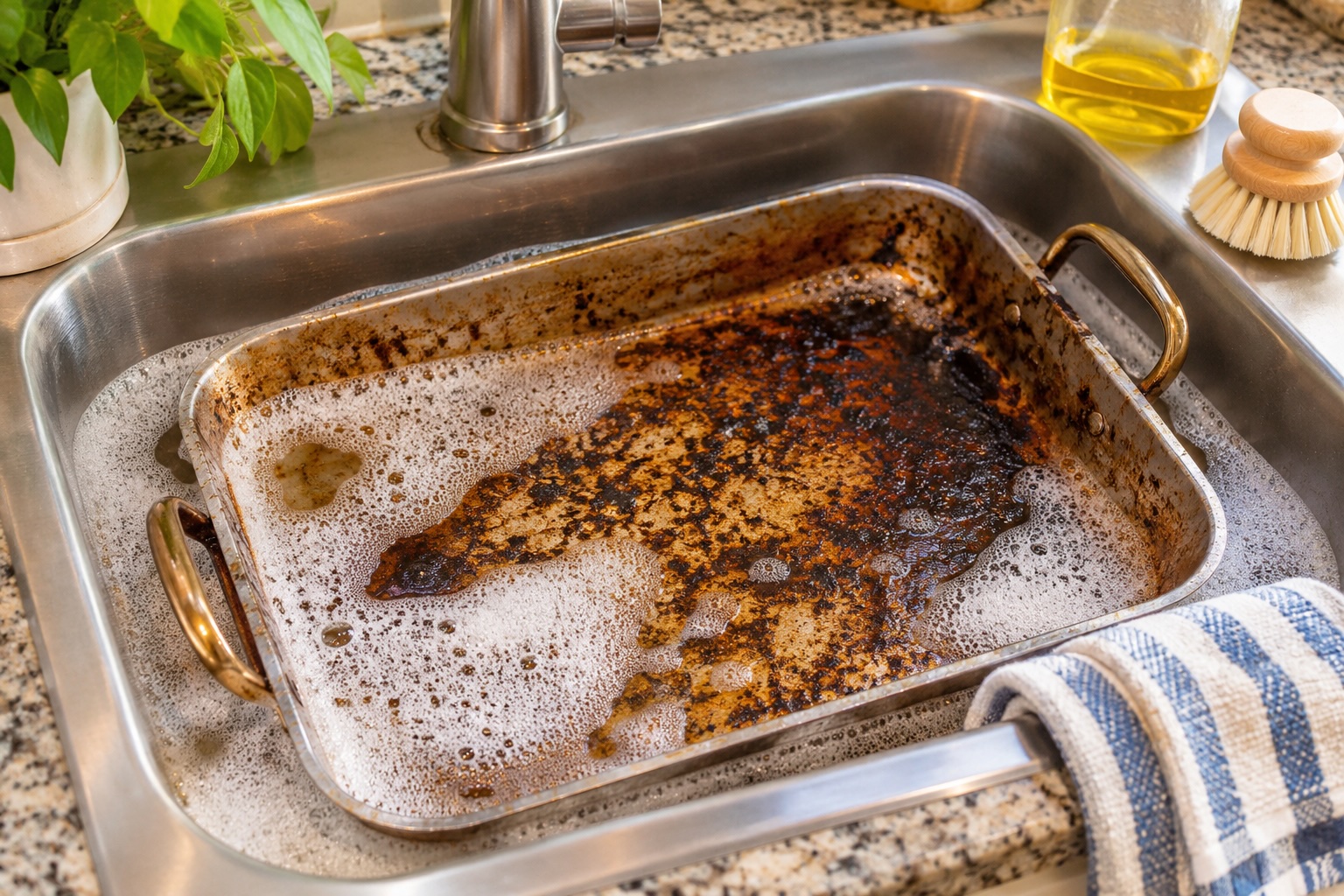
Now for the main event. Before you grab the steel wool and start scrubbing like you're trying to start a fire, figure out what your pan is made of. The wrong method can ruin a good pan, and the right one does most of the work for you.
Before you clean: get rid of the grease
Do not pour turkey fat down the drain. It will cool into a solid plug somewhere in your pipes, and you will be explaining yourself to a plumber on Black Friday at holiday rates.
Let the fat cool, then scrape it into an old can or a container lined with foil and toss it in the trash. Wipe the pan with a paper towel to get the last greasy film out. See maintaining your garbage disposal for more tips.
Stainless steel roasting pans
Stainless is the toughest pan in the cupboard, so you can bring out the big guns.
1. Set the pan across two burners. Add an inch or so of water, a good squirt of dish soap and two or three tablespoons of baking soda.
2. Bring it to a simmer for 10 to 15 minutes, scraping the bottom with a wooden spoon or spatula. Most of the stuck-on gunk will lift right off. (Fun fact: this is basically deglazing. You're making the world's worst gravy.)
3. Pour it out, let the pan cool a bit, and wash it as usual.
4. For brown stains or that rainbow sheen, make a paste of Bar Keepers Friend and a little water, rub it in with a damp sponge, and rinse well.
Aluminum roasting pans (the heavy kind)
Uncoated aluminum is lightweight and heats beautifully, but it's moody. Skip the baking soda boil; alkaline cleaners can darken and discolor aluminum. Instead, soak it in hot, soapy water, then scrub with a non-scratch scrubber.
If it's already dull or gray, simmer water with a couple of tablespoons of cream of tartar or a splash of white vinegar for 10 minutes to brighten it back up. And keep it out of the dishwasher, which will turn it a sad, chalky gray.
Nonstick roasting pans
Be gentle. No steel wool, no scouring powder, no oven cleaner. Fill the pan with hot water and dish soap, let it soak for an hour (or overnight if things got ugly), then wipe it out with a soft sponge or nylon scrubber. For stubborn spots, a paste of baking soda and water on a soft sponge will help without scratching the coating.
Enameled roasting pans (and that speckled granite-ware your mom had)
Enamel can take a baking soda paste just fine. Let it soak in hot soapy water, then scrub with a paste of baking soda and water and a nylon brush. For really burnt-on bits, simmer a little water with a couple of tablespoons of baking soda in the pan for 10 minutes, then scrape gently with a wooden spoon. Skip metal scrapers; they'll chip the enamel.
Disposable foil pans
Congratulations, past you made a great decision. Scrape out the food and let it go. If your town's recycling program takes aluminum foil, rinse it first; greasy foil usually isn't accepted.
And that roasting rack
The rack is the real villain here, with all those little crevices. Soak it in hot soapy water (your bathtub or a big cooler works if it doesn't fit in the sink), then scrub with a stiff brush. An old toothbrush gets into the corners. If the manufacturer says it's dishwasher-safe, let the dishwasher earn its keep.
How to Get Thanksgiving Stains Out of Carpet
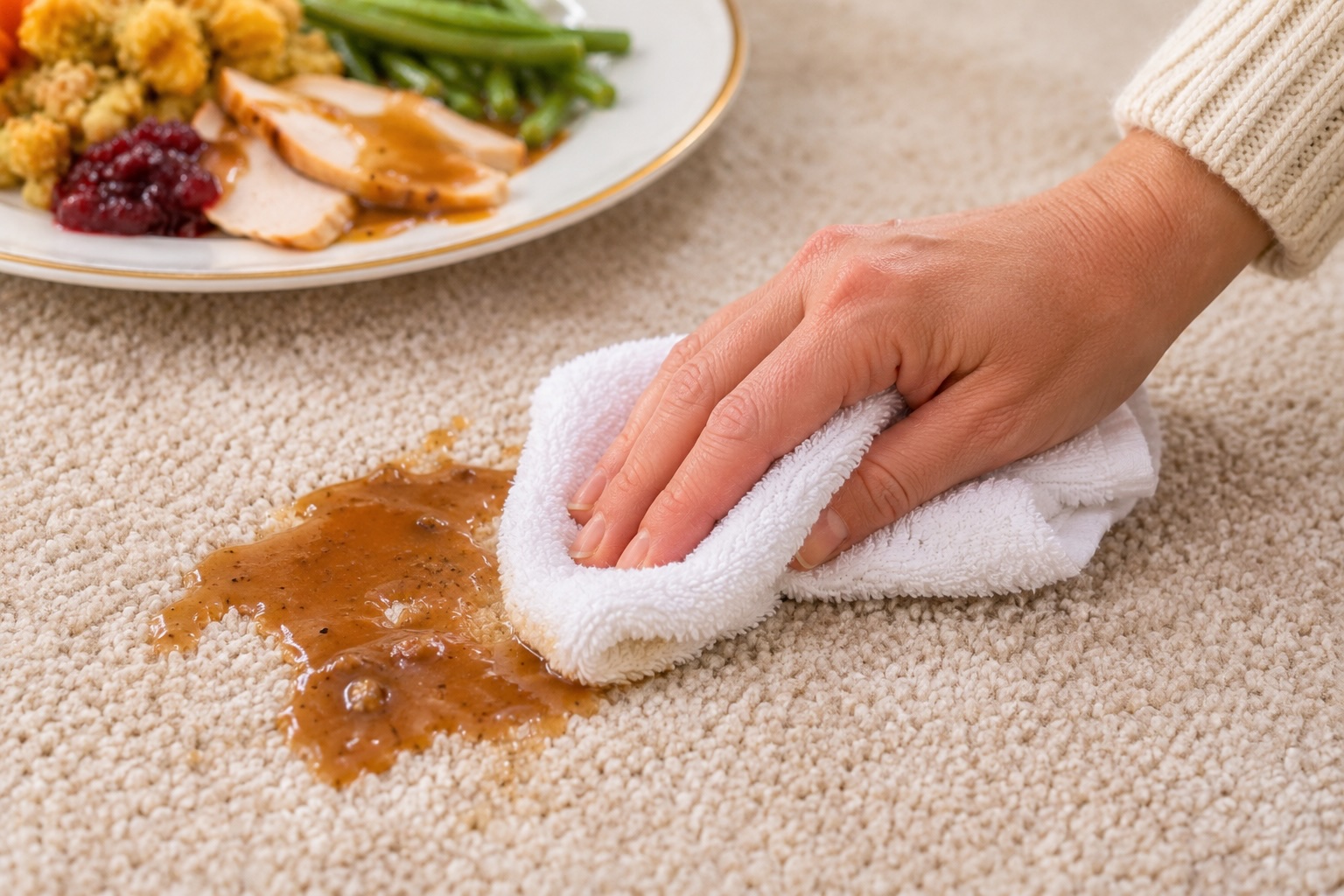
Somebody spilled the cranberry sauce. It's always the cranberry sauce. It's the most beautiful dish on the table and the most vindictive on the floor.
The carpet commandments
No matter what got spilled, these rules apply:
- Scrape, then blot. Never rub. Lift off solids with a spoon or the edge of a butter knife, then blot with a clean white cloth or paper towel. Rubbing pushes the stain deeper and frays the carpet fibers.
- Work from the outside in so you don't spread the stain into a bigger stain.
- Use cool water, not hot. Heat can cook sugars and proteins right into the fibers.
- Test first in a hidden spot, like inside a closet, to make sure your cleaner doesn't change the color of the carpet.
- Don't soak it. Too much liquid seeps into the pad and backing, and then you've got a mildew problem in addition to a cranberry problem.
- Rinse when you're done. Soap left in the carpet attracts dirt and leaves a sticky spot that gets darker over time. Blot with plain water, then blot dry.
My two go-to carpet stain solutions
- Dish soap solution: ¼ teaspoon of clear, dye-free dish soap in 1 cup of lukewarm water.
- Vinegar solution: ⅓ cup of white vinegar in ⅔ cup of water.
Put each in a spray bottle (labeled, please, we just talked about labeling) and you're ready for almost anything the holidays throw at your floors.
Gravy, butter and other grease stains on carpet
1. Scrape up as much as you can.
2. Sprinkle the spot with baking soda or cornstarch and let it sit for 15 minutes to soak up the grease. Vacuum it up.
3. Blot with the dish soap solution, working from the outside in.
4. Rinse with plain water and blot dry.
5. Still a ghost of a stain? A dry-cleaning solvent made for carpets (follow the label exactly and test first) is your next step.
Cranberry sauce and red wine stains on carpet
1. Scrape up the sauce or blot up the wine immediately. Keep blotting with a fresh section of cloth until nothing more comes up.
2. Blot with cool water.
3. Apply the dish soap solution and blot.
4. Follow with the vinegar solution and blot again. The vinegar helps break down those red pigments.
5. Rinse with water and blot dry.
6. On light-colored synthetic carpet only, a stubborn red stain may respond to a little 3% hydrogen peroxide dabbed on with a cloth. Test it first, because peroxide can bleach. Never use it on wool.
And skip the old "pour salt on it" trick. It can leave a crusty residue behind and doesn't do anything a clean towel can't do better.
Pumpkin pie, sweet potatoes and whipped cream
These have dairy, eggs and sugar in them, so cool water is a must. Scrape, blot, apply the dish soap solution, rinse and blot dry. If there's still a dull spot or a sour smell later, an enzyme-based carpet cleaner breaks down the protein. (Enzyme cleaners aren't safe for wool, so check your carpet first.)
Candle wax
Those pretty tapers on the table look less pretty dripped on the rug. Put ice cubes in a zip-top bag and hold them on the wax until it's brittle, then chip off as much as you can with a butter knife.
Lay a brown paper bag over what's left and press with a warm iron (no steam) for a few seconds at a time. The wax melts into the paper. Move to a clean section of paper and repeat.
Mud from the backyard football game
This is the one time I'll tell you to do nothing. Let the mud dry completely, then break it up and vacuum it. Scrubbing wet mud just grinds it in. Once it's vacuumed up, tackle any leftover discoloration with the dish soap solution.
Wool carpets and rugs
Wool is gorgeous and finicky. Skip ammonia, enzyme cleaners and hydrogen peroxide, all of which can damage wool fibers. Stick to blotting with cool water and a very mild dish soap solution, and call a professional for anything big.
Your Post-Thanksgiving Recovery Plan in 15 Minutes a Day
You don't have to fix everything Friday morning. Honestly, you shouldn't. Here's how I'd break it up:
- Thursday night: Food in the fridge within two hours. Blot any fresh spills. Fill the roasting pan with hot soapy water and walk away.
- Friday: Clean the roasting pan and rack. Treat any carpet stains you missed. Run the dishwasher one more time and call it a day.
- Saturday: Wash and put away the serving pieces, tablecloths and cloth napkins.
- Sunday: Leftover triage. Eat it, freeze it or toss it.
- Monday: Last call on fridge leftovers. Wipe down the fridge shelves while they're empty-ish.
And then go enjoy a turkey sandwich. You earned it.
Frequently Asked Questions About Post-Thanksgiving Cleanup
How long are Thanksgiving leftovers good in the fridge? Most Thanksgiving leftovers, including turkey, stuffing and sides, are good for 3 to 4 days in the refrigerator. Gravy should be eaten within 1 to 2 days. The easy rule: eat or freeze everything by the Monday after Thanksgiving.
Can I put hot leftovers straight into the refrigerator? Yes. You don't need to let food cool down first, and waiting can actually make it less safe. Divide it into shallow containers so it chills quickly.
What's the easiest way to clean a burnt roasting pan? For stainless steel, simmer water, dish soap and a few tablespoons of baking soda in the pan for 10 to 15 minutes, then scrape with a wooden spoon. For aluminum, nonstick and enamel, see the pan-specific steps above, since some methods can damage those finishes.
How do you get cranberry sauce out of carpet? Scrape up the sauce, blot with cool water, then blot with a mild dish soap solution followed by a white vinegar and water solution. Rinse with plain water and blot dry. Never rub.
Is it safe to eat leftover turkey after 5 days? No. The USDA recommends eating or freezing cooked turkey within 3 to 4 days. Harmful bacteria usually don't change how food looks or smells, so the sniff test won't tell you if it's safe.
What temperature should leftovers be reheated to? 165°F, checked with a food thermometer in several places. Gravies and sauces should come to a rolling boil.

If this year's Thanksgiving left you wondering how your house got so far behind so fast, I wrote a whole book about getting it back. The Daily Home Reset: A Room-by-Room System to Keep Your Home Clean, Calm, and Chaos-Free, 15 Minutes at a Time shows you how to keep your house company-ready with short daily bursts instead of weekend cleaning marathons, and it even includes an Emergency Reset chapter for restoring your home in under two hours.
You know, for the next time somebody says, "We're 20 minutes away!"
Keep Going
Get your whole house back in shape after the holidays with these related guides:
- How to Clean Your Oven: get the turkey drippings off the oven floor without the toxic fumes.
- How to Clean Your Refrigerator: the post-leftovers fridge reset, shelf by shelf.
- Holiday Tablecloth and Napkin Stain Removal: gravy, wine and candle wax on fabric.
- How to Clean Pots and Pans: care tips for every kind of cookware in your cupboard.
- Kitchen Cleaning Checklist the daily, weekly and monthly kitchen routine.
- Carpet Stain Removal Guide: your A-to-Z chart for spots and spills.
- Holiday Cleaning Schedule: how to stay ahead of the mess from Thanksgiving to New Year's.
- Preventative Home Maintenance Checklist: the seasonal tasks that keep small problems from becoming big ones.
Free 15-Minute Daily Reset Checklist
Get Notes on Keeping House
Fifteen minutes a day. No weekend cleaning marathons. No guilt. Sign up for my newsletter and I'll send you the printable checklist that makes it happen.
Send My ChecklistNo spam, ever. Unsubscribe anytime.

Free Printable
Notes on Keeping House
Sign up and get my 15-Minute Daily Reset Checklist. One timer, five zones, and a house that stays under control.
Send My ChecklistNo spam, ever. Just smart, funny tips for keeping house from Tara Aronson.