How to Clean Stone Floors (Without Wrecking Them)
Stone floors are gorgeous. They're also a bit of a diva. Marble, limestone, travertine and slate look like they could survive a stampede, and they can, but splash a little lemonade on marble and you'll have a dull spot that no amount of mopping will fix.
The catch is that the cleaners most of us keep under the sink are exactly what natural stone hates. Vinegar, bleach, bathroom sprays, even that all-purpose cleaner you swear by. Here's how to clean stone floors the right way, lift stains, and keep that expensive shine for decades.
This guide is for natural stone. For ceramic or porcelain tile (even the kind made to look like stone), see how to clean tile floors.
Stone Floor Cleaning at a Glance
How oftenDaily Weekly As needed Yearly |
What to doDust-mop or vacuum busy areas, blot spills right away Damp-mop with a pH-neutral stone cleaner, rinse and dry Treat stains with a poultice Do the water test, and reseal if the stone soaks it up |
Know Your Stone First
Stone comes in two families, and the difference decides what you can get away with.
- Marble, limestone, travertine and onyx are made of calcium carbonate, so acid eats them. Vinegar, lemon juice, wine, tomato sauce, soda and acidic cleaners all leave dull, etched spots. Treat these floors like the divas they are.
- Granite, slate, sandstone and quartzite are tougher and shrug off most acid. They still stain, and harsh cleaners still wear down the sealer, so they get the same gentle care.
Not sure what you've got? Treat it like marble. Gentle never hurt a stone floor.
What You Need to Clean Stone Floors
- A microfiber dust mop, or a vacuum with the beater bar turned off
- A microfiber mop (string mops leave too much water behind)
- Two buckets: one for cleaning solution, one for rinse water
- A pH-neutral cleaner made for natural stone
- A soft towel or dry microfiber mop
- Baking soda and plastic wrap for stains
How to Clean Stone Floors, Step by Step
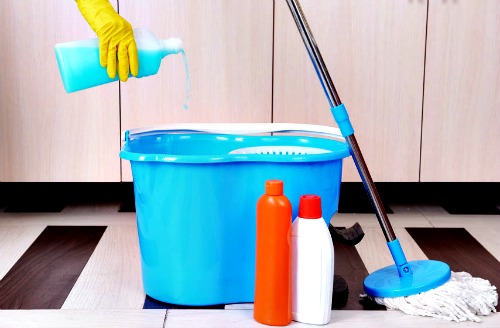
- Get the grit up. Dust-mop or vacuum the whole floor first. Sand is the stone floor's worst enemy. It acts like sandpaper underfoot and grinds the polish right off. Turn off the vacuum's beater bar so it doesn't scratch.
- Mix the cleaner. Use a pH-neutral stone cleaner in warm water, as the label directs. In a pinch, a few drops of mild dish soap in a gallon of warm water will do.
- Damp-mop in sections. Wring the mop until it's damp, not dripping. Puddles seep into the stone and the grout.
- Rinse. Go over the floor with a mop dipped in clean water to lift any leftover cleaner. Residue is what makes polished stone look cloudy.
- Dry it. Buff with a towel or dry microfiber mop. Water left to air-dry leaves spots, and stone shows every one.
What Never to Use on Stone Floors
- Vinegar or lemon. The internet loves vinegar for everything. Your marble does not. It etches calcium-based stone on contact.
- Bleach and ammonia. They break down the sealer and can dull or discolor the stone.
- Bathroom and tub-and-tile cleaners. Most are acidic, which makes them stone's worst nightmare.
- Abrasive powders, scrub pads and steel wool. They scratch polished stone instantly.
- Wax, oil soaps and "mop and shine" products. They build up into a cloudy, slippery film that traps dirt. Stone gets its shine from polishing and sealing, not from wax.
- Steam mops. High heat and moisture can break down the sealer. Skip them on natural stone.
How to Remove Stains From Stone Floors
Stone is porous, so stains soak in instead of sitting on top. The fix is a poultice, a paste that draws the stain back out as it dries.
- Mix baking soda with water into a paste about as thick as peanut butter.
- Spread it a quarter inch thick over the stain, a little past the edges.
- Cover it with plastic wrap, tape down the edges, and poke a few holes in the plastic.
- Leave it for 24 to 48 hours, until the paste is completely dry.
- Scrape it off with a plastic spatula, rinse and dry. Repeat for stubborn stains.
Coffee, tea or wine on light stone? Make the paste with 3% hydrogen peroxide instead of water. Test a hidden spot first, because peroxide can lighten dark stone.
Stain or etch? A stain is darker than the stone around it. An etch is a dull, lighter spot where acid ate the polish, and no poultice will fix it. Light etching on polished marble buffs out with a marble polishing powder. For deep etching, call a stone restoration pro.
How to Tell If Your Stone Floor Needs Sealing
Sealer is your stone floor's raincoat. It doesn't make stone stain-proof, but it buys you time to wipe up spills before they soak in.
Try the water test once a year. Sprinkle a few drops of water on the floor in a busy spot and wait 15 minutes. If the water still beads up, you're protected. If it soaks in and darkens the stone, it's time to reseal with a penetrating sealer made for natural stone.
How to Keep Stone Floors Looking Great
- Put doormats outside and inside every entry to catch the grit before it reaches the stone.
- Make it a no-shoes house. Your floor will thank you.
- Use coasters, trays and placemats wherever drinks and food land.
- Blot spills right away. Don't wipe, which spreads them. Blot.
- Put felt pads under every chair and table leg.
- Use rugs with a natural backing. Some rubber and vinyl rug backings can discolor stone.
Stone Floors: Quick Answers
What is the best way to clean natural stone floors?
Dust-mop first, then damp-mop with warm water and a pH-neutral stone cleaner. Rinse with clean water and dry the floor with a towel.
Can you use vinegar on stone floors?
No. Vinegar is acidic and etches marble, limestone and travertine. Even on tougher stone like granite and slate, it wears down the sealer over time.
Why does my marble floor have dull spots?
Those are etch marks from something acidic, like juice, wine or a cleaner. Light etching buffs out with marble polishing powder. Deep etching needs a stone restoration pro.
How often should stone floors be sealed?
Whenever they fail the water test. For most floors, that's every one to three years, and more often in kitchens and entries.
Keep Going
Get every floor in the house looking its best with these related guides:
- Tips for Cleaning Floors: The right way to clean every type of floor in your home.
- How to Clean Tile Floors: Streak-free ceramic and porcelain tile, plus clean grout.
- How to Clean Linoleum Floors: 12 easy tips to keep linoleum looking great.
- Tips for Cleaning Laminate Floors: Keep laminate shiny without water damage.
- How to Clean Hardwood Floors: Protect the finish and keep the shine.
- Vacuuming Secrets to Success: Get more dirt up in less time.
- Green Cleaning: Gentler cleaners for a healthier home.
- Kitchen Sync: Keep the busiest room in the house clean and organized.
- Clean Home
- Clean
- Stone Floor Cleaning tips